Facebook
 Google
 GitHub
 Linkedin
Schneider Electric Launches Open Software-Defined DCS
EcoStruxure Foxboro Software-Defined Automation shifts DCS architecture from proprietary hardware to open, flexible software-based control.
Schneider Electric has announced EcoStruxure Foxboro Software Defined Automation (SDA), describing it as the industry’s first open, software-defined distributed control system (DCS). The platform builds on the long-standing Foxboro DCS installed base while shifting the control architecture toward a decoupled, software-centric model. Most distributed control systems are still built around proprietary hardware. That hardware has been reliable for years, but it can become a constraint when plants need to expand, replace aging components, or connect newer digital tools. Foxboro SDA shifts the focus away from fixed hardware platforms toward software-based control, giving operators more room to modernize without tearing out the entire system.
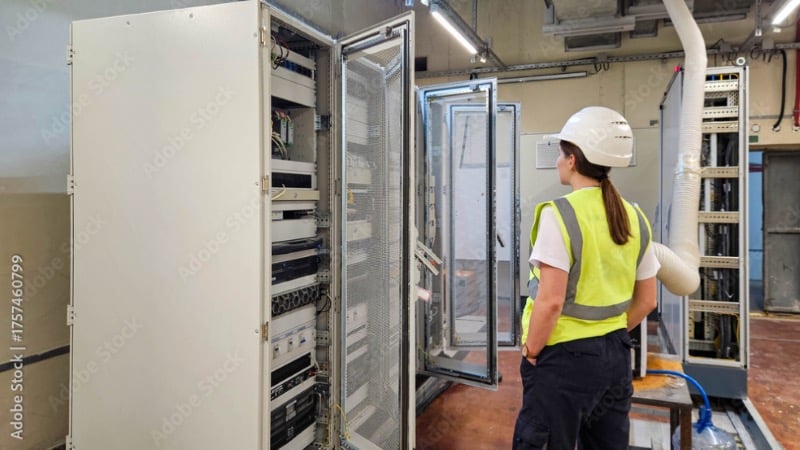
Industrial control cabinets typical of distributed control systems (DCS) environments in process and hybrid industries. Image used courtesy of Adobe Stock
Moving from Hardware-Bound to Software-Defined Control
Foxboro SDA centers on separating control logic from the physical hardware it traditionally runs on. Rather than binding applications to specific controller platforms, the system allows software to operate more independently, which makes interoperability and vendor flexibility easier to achieve. For facilities operating aging control systems, that shift offers a potential path to modernization without replacing entire infrastructures at once.
Schneider positions the system as particularly relevant to the hybrid and process industries, where uptime and lifecycle continuity are critical. In large process facilities, downtime or a forced control system upgrade is rarely a small issue. It can interrupt production, affect delivery timelines, and introduce costs that extend well beyond the control room. In research conducted with Omdia, Schneider Electric found that closed control architectures cost mid-sized industrial companies around 7.5% of annual revenue, largely due to downtime, inefficiencies, and compliance-related retrofits. For many operators, that level of recurring loss makes the case for more open architectures harder to ignore.
Foxboro SDA runs on EcoStruxure Automation Expert (EAE), Schneider’s software-defined automation platform. Instead of locking deployments into a single configuration model, the platform allows more tailored implementations while still meeting the high-availability requirements expected in process control environments.
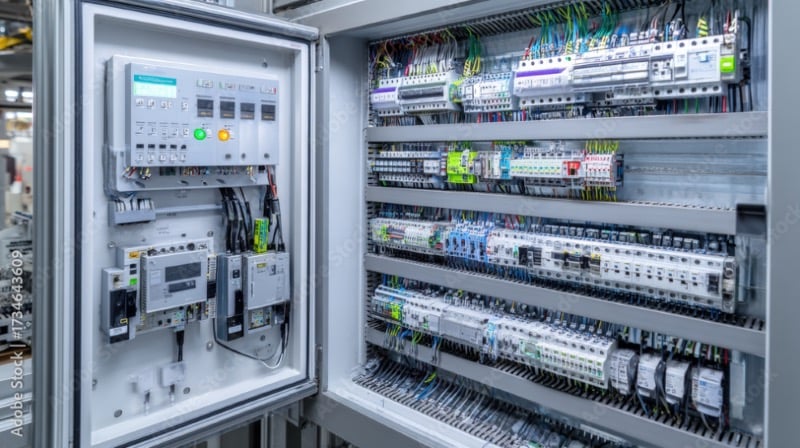
Interior view of an industrial control panel illustrating traditional hardware-based control architecture. Image used courtesy of Adobe Stock
Embedded Cybersecurity and IT/OT Convergence
Cybersecurity in Foxboro SDA is not treated as an add-on feature. It is incorporated into the system architecture from the outset, with design decisions aligned to IEC 62443-3-3 requirements and broader industrial cybersecurity practices.
As plants continue to converge information technology (IT) and operational technology (OT), control systems increasingly serve as both operational backbones and data hubs. The software-defined approach also makes it easier to connect control systems with analytics platforms, AI, and machine learning tools as plants expand their digital capabilities. Rather than isolating control functions, the platform keeps operational data accessible across the plant lifecycle, from early engineering and commissioning through day-to-day production and ongoing maintenance. Maintaining that continuity reduces the need for repeated manual reconfiguration and makes automated workflows easier to implement, while also giving operators clearer visibility into how the system is performing over time.
Supporting Lifecycle Modernization
Foxboro SDA puts a noticeable emphasis on lifecycle continuity. Many industrial plants are still running control systems that were installed years, sometimes decades, ago. Those systems may still be reliable, but aging hardware and vendor lock-in can make upgrades more complicated than they need to be. By decoupling software from hardware, Schneider Electric aims to preserve existing investments while giving operators a way to modernize in stages rather than through large-scale replacements. The platform is positioned as a way to modernize at a controlled pace rather than through large-scale, high-risk rip-and-replace projects.
A software-defined model also changes how costs are managed over the system lifecycle. When hardware refresh cycles are no longer mandatory, and maintenance can shift toward more predictive strategies, facilities have greater flexibility to control both capital and operating expenses.
Industry Perspective
Craig Resnick, Vice President at ARC Advisory Group, described the launch as a significant development in process automation. He noted that decoupling control logic from hardware allows manufacturers to scale and adapt systems more easily while protecting legacy automation investments.
Industrial operators are trying to maintain the reliability they depend on while also advancing digital upgrades. An open, software-defined DCS points to a different way of structuring control systems, one that moves away from hardware-bound architectures. Whether adopted quickly or phased in over time, software-defined automation changes how these systems are deployed, updated, and maintained over the long term.