Facebook
 Google
 GitHub
 Linkedin
Schneider Electric Joins GR3N to Deliver Industrial-Scale Recycling
Using Schneider Electric’s hardware and vendor-agnostic open automation system, EcoStruxure Automation Expert GR3N scales up its plastic recycling operations.
GR3N SA (GR3N) has signed a memorandum of understanding (MoU) with technology giant Schneider Electric to expand its Polyethylene Terephthalate (PET) recycling operations, championing a new industrial-scale facility supported by an open, flexible automation system.
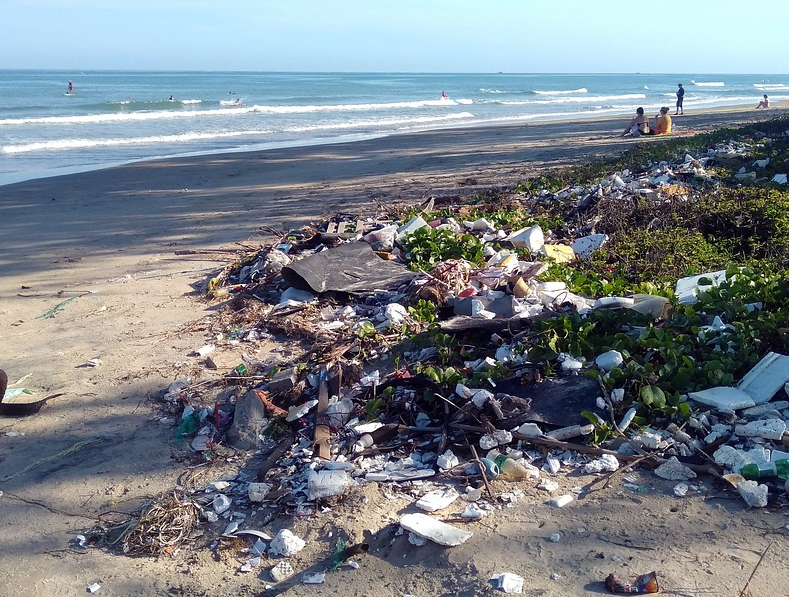
GR3N and Schneider Electric leverage each other's plastics recycling and automation expertise to combat plastic pollution, taking the challenge full circle. Image used courtesy of Pixabay
Plastics are Everywhere
According to the United Nations Development Programme, 79% of plastics reach landfills, 12% are incinerated, and around 9% are recycled. The challenges facing more thorough and dedicated recycling efforts are profitability, contamination, and chemicals. Plastic items can have various food or physical contaminants polluting them, which obstructs the waste stream and damages equipment used for sorting and cleaning.
Plastics come with different chemical makeups depending on what they have been made with, and they have different structures, so sorting them can be time-consuming and expensive. PET (found in food and beverage containers) is known to be 100% recyclable. Still, only clear bottles can be recycled in a batch and cannot be mixed with green bottles. Different plastic items have a unique resin code (ranging from #1 to #7) to give some idea of plastic complexity. For instance, PET’s is #1. The most widely recycled plastics have resin codes #1 and #2, with the latter assigned to high-density polyethylene, HDPE.
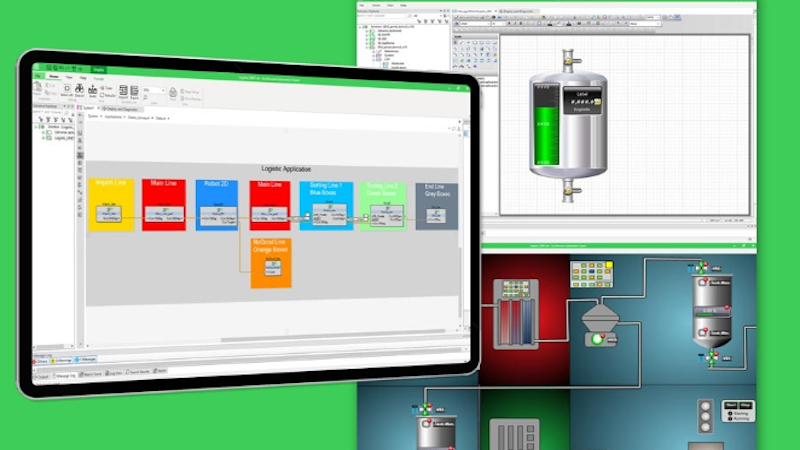
The EcoStruxure Automation Expert unties existing system hardware from software to allow upgrades to the latest automation software. Image used courtesy of Schneider Electric
According to Global Plastics Outlook from the Organisation for Economic Cooperation and Development (OECD), the use of plastics worldwide is expected to triple between 2019 and 2060, climbing from an already sizable 460 million tonnes (Mt) to a staggering 1 231 Mt per year.
This is a worrying projection, given what we know about the harmful effects plastics have on the environment: polluting waterways, breaking down into microplastics, damaging the stomachs of seabirds, and traveling within the sensitive food chains of marine organisms.
A First-of-a-Kind Manufacturing Plant
GR3N’s Microwave-Assisted DEpolymerization (MADE) technology employs microwaves during alkaline hydrolysis to dissemble PET and polyester-based plastics into terephthalic acid (TPA) and ethylene glycol (MEG). The process accommodates PET-based bottles and textiles and accommodates up to 70% impurity. GR3N intends to scale the operations of its MADE-installed demonstration plant, which employs a 500 kg polymerization reactor and depolymerization reactor to process 60 kg of PET per hour, which equates to around 2,000 bottles.
Back in July of last year, GR3N signed an MoU with Intecsa Industrial to construct a first-of-a-kind manufacturing facility dedicated to recycling 40,000 tons of PET into virgin-like PET. The first industrial-scale facility will be based in Spain and employ GR3N’s MADE technology.
ExoStruxure Automation allows the expansion of recycling efforts. Video used courtesy of Schneider Electric
GR3N employed Schneider Electric’s modular, hardware-agnostic industrial automation system (EcoStruxure Automation Expert) at the demonstration site to expand its recycling operations. The EcoStruxure solution provides flexible resizing of industrial operations by decoupling hardware from software, enabling software system upgrades while retaining existing hardware-based infrastructure.
The solution allows users to integrate operational and business data (supporting information technology and operational technology convergence) in real-time, set up communication between assets, controllers, and visualization devices, and reuse software designs on a shared runtime platform for system reconfigurations.
The vendor and hardware-agnostic nature of EcoStruxure meant that GR3N could design a solution to fit their operational goals without the concern of supply chain issues and being tied down by specific vendors. The vendor-agnostic solution also allows the setting up of centralized or distributed controls based on system needs. Schneider Electric also says its EcoStruxure solution helps customers speed up time to market by reducing human errors during the development phase by 40%. The company adds that its software-centric approach could help reduce engineering costs by 30%.
The recently signed MoU between GR3N and Schneider Electric will support GR3N in scaling up its PET recycling operations, aiming to expand to commercial-scale operations by 2027. Together, GR3N and Schneider Electric are working on establishing a climate-conscious, closed-loop system for the plastics industry.