Facebook
 Google
 GitHub
 Linkedin
New Industrial Ethernet Switch From Weidmuller
Weidmuller is expanding its line of ethernet switches with the BasicLine Series B unmanaged switch with QoS configuration and standard Broadcast Storm protection.
Industrial automation equipment today uses more ethernet devices than ever before. This is due to the large amounts of data transmitted to and from each network device and the Ethernet protocol’s fast configuration.
With so many devices now using industrial ethernet protocols like ProfiNet, EtherNet/IP, and EtherCAT, it is pivotal for equipment manufacturers to use ethernet switches designed for industrial applications. Recently, Weidmuller announced the release of the BasicLine Series B unmanaged switch product line.
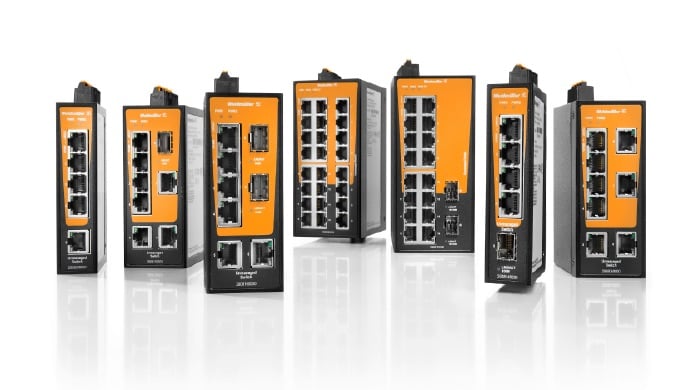
The BasicLine Series B collection. Image used courtesy of Weidmuller
BasicLine Series B Unmanaged Switch
Equipment manufacturers use ethernet switches to build a private network of connected devices. Devices such as HMIs, servo drives, robots, and vision systems all use ethernet to communicate with the control system. For this data to have a high-speed connection to the controller, high-quality ethernet switches are required.
The Series B switches come in configurations of 5 to 24 ports and include Gigabit and SFP interfaces with support for ProfiNet and EtherNet/IP. Installation requires no tools, as the terminal connections use Weidmuller’s “push-in” technology, and the DIN rail mounting system uses a spring-loaded clip. The switch is unmanaged; therefore, QoS configuration is managed using DIP switches on the exterior of the switch, which operate on either AC or DC power.
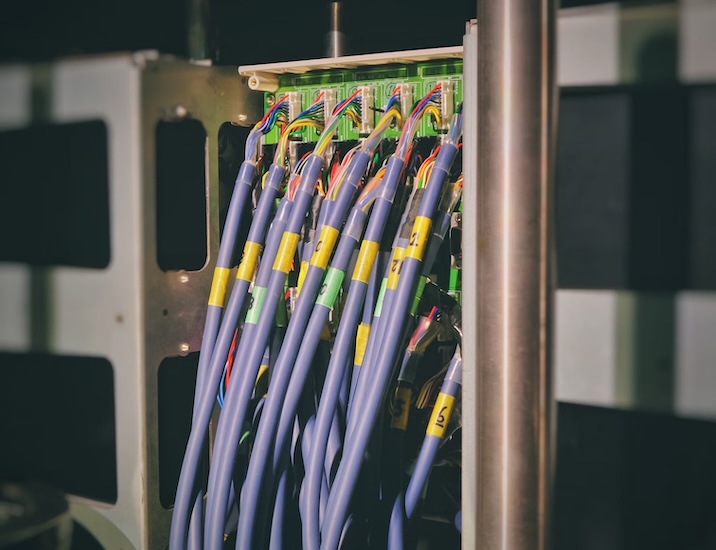
Network connections in a server room show multiple connections to one network. Image used courtesy of Unsplash
Network Availablity
With all these devices constantly broadcasting data, traffic slows the entire network. This can cause connection problems, resulting in slower reactions from connected devices. The BasicLine Series B switches offer Broadcast storm protection to help alleviate this problem. The internal firmware monitors the traffic through the switch. As the traffic begins to build, excessive traffic from specific devices will be dropped or blocked to relieve data congestion. This results in a higher availability of data through the switch.
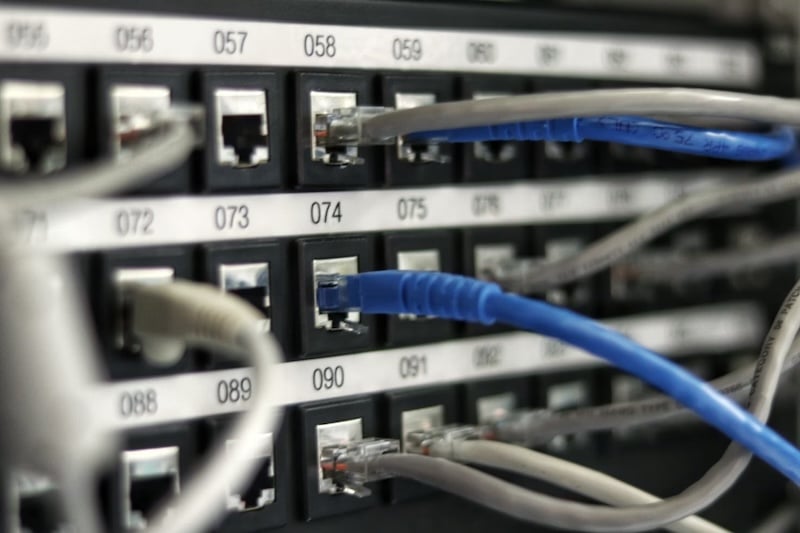
Image of Ethernet switch connections. Image used courtesy of Unsplash
Managed VS Unmanaged
The BasicLine Series B switches are unmanaged, meaning there is no software to configure the switch–essentially, they are plug-and-play devices. Any configuration is done through DIP switches on the body of the switch.
A managed switch has advanced control over the network and is typically configured with a web interface or additional software. The switch can be configured for optimal network performance, and each port can have additional configurations to aid in network security or VLAN support.
Choosing a managed or unmanaged switch comes down to your network requirements. Today more devices such as servo drives and robots use time synchronization or CIP for safety signals. These protocols are sensitive to network disruptions that a managed switch can filter out, and most device manufacturers will insist you use a managed switch. Another reason to use a managed switch is when combining networks. If your equipment needs to connect to the company network, a managed switch can isolate access to specific devices to secure your equipment from outside attacks further.
Related Content