Facebook
 Google
 GitHub
 Linkedin
Why Connector Design Still Matters in Industrial Systems
Binder updated its M12 and M16 connectors with triangular molding to improve strain relief, reduce twisting, and extend cable life.
Binder has introduced updated M12 and M16 connectors featuring a new triangular molding geometry designed to improve durability where cable assemblies most often fail. By redistributing bending, pulling, and twisting forces at the cable-entry point, the design aims to extend service life in demanding industrial environments. Used in automation, robotics, conveyors, and machinery, the revised connectors also improve grip during installation and help reduce dirt buildup around critical connection points.
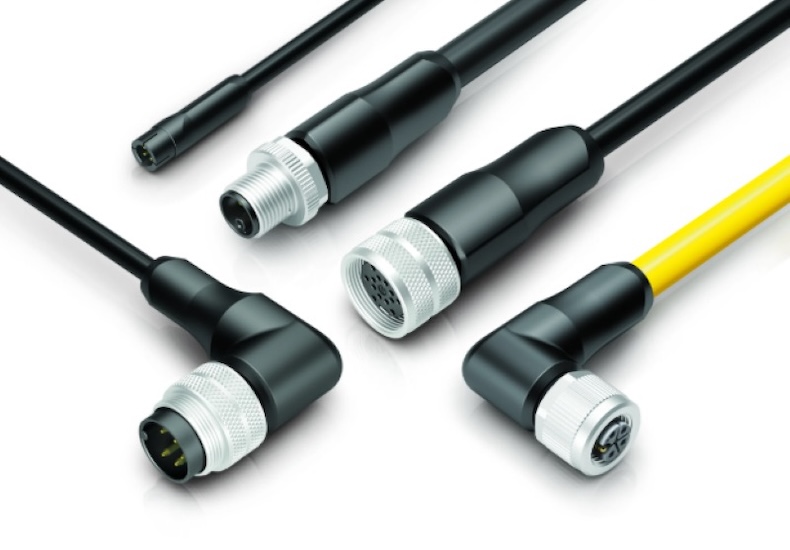
Updated M12 and M16 connectors with triangular molding are designed to improve strain relief, reduce twisting, and extend cable life in demanding applications. Image used courtesy of Binder
A Mechanical Problem Most Systems Run Into
In many industrial setups, connectors aren’t sitting still. Cables are constantly moving as conveyors flex them, robotic arms bend them, and cable chains cycle them thousands of times a day. Over time, that repeated motion leads to fatigue. Stress builds at the point where the cable meets the connector housing, and that’s usually where cracks or failures appear first.
The triangular molding is designed to spread those forces out. The geometry distributes bending and tensile loads more evenly across the transition area, preventing stress from building up in one spot. It also improves resistance to twisting. It’s a simple idea, but it targets one of the most common real-world issues with cable assemblies.
Not Just Strength, Also Usability
The shape change isn’t only about durability. It also changes how the connector feels during use. The triangular design gives a better grip when installing or removing it. That becomes important in tight spaces. It also reduces areas where dirt can accumulate. That matters in industrial settings where oil, dust, and residue tend to collect around connection points. Anything that makes cleaning easier helps keep things running longer.
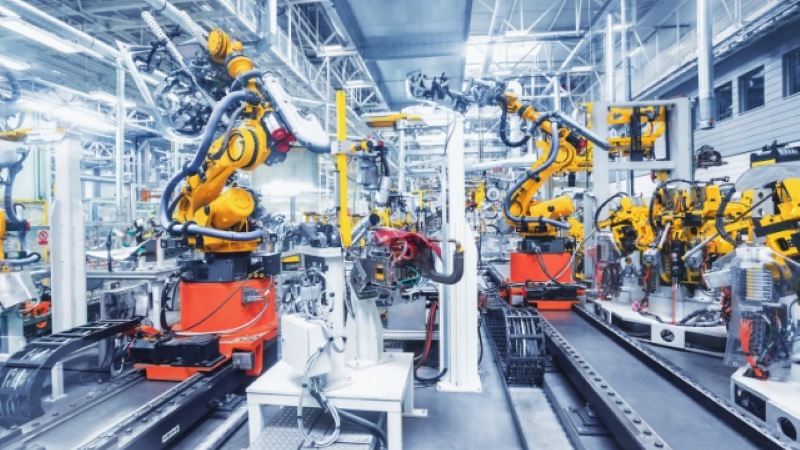
Industrial environments like robotics and automation systems, place constant mechanical stress on cables and connectors, making durability at the connection point critical. Image used courtesy of Binder
They’re popular because they strike a balance. Small enough to fit into tight spaces, but robust enough to handle harsh environments. The K- and L-coded versions are typically used for power transmission, where reliability becomes even more important.
Updated M16 Connectors for Signal Applications
The same triangular molding is also being used in Binder’s M16 series 425 connectors. These are designed more for signal transmission in machinery and equipment. They support up to 12 contacts, with voltages up to 150 V and currents up to 3 A. The connectors are rated IP67 and IP68 when mated and locked, which makes them suitable for environments with moisture, dust, or washdown conditions.
They’re available in both shielded and unshielded versions and are molded directly onto PUR cables, which are commonly used due to their flexibility and resistance to wear. Again, the electrical specs aren’t the story here. The update focuses on reinforcing the physical connection in environments where cables don’t stay in place.
A Small Change That Actually Matters
M12 connectors are already a standard across industrial systems. They’re used for sensors, actuators, and communication links because they’re compact, rugged, and easy to integrate. You’ll find them in automation systems, robotics, conveyor lines, packaging equipment, and more. This isn’t a major shift in connector technology. It’s a targeted improvement to an area that tends to fail over time. In systems where uptime matters, that kind of change has a real impact. Better force distribution means longer service life. Improved grip makes installation easier. Cleaner geometry reduces maintenance issues. These small revisions can make the difference in the long run.
Related Content