Facebook
 Google
 GitHub
 Linkedin
Yaskawa, FANUC Invest in U.S. Facilities for Robot Production
New U.S. facilities from FANUC and Yaskawa aim to expand robot production, create jobs, and enhance supply chain resilience.
FANUC and Yaskawa are making major U.S. investments to strengthen domestic robotics manufacturing. Yaskawa will open an 800,000-square-foot facility in Franklin, Wisconsin, for high-volume industrial robot production, while FANUC has completed a 650,000-square-foot expansion in Auburn Hills, Michigan. Together, these projects aim to boost U.S. supply chain resilience, expand workforce training, and improve access to advanced automation technologies—helping the United States compete globally in industrial robotics and meet growing automation demands.
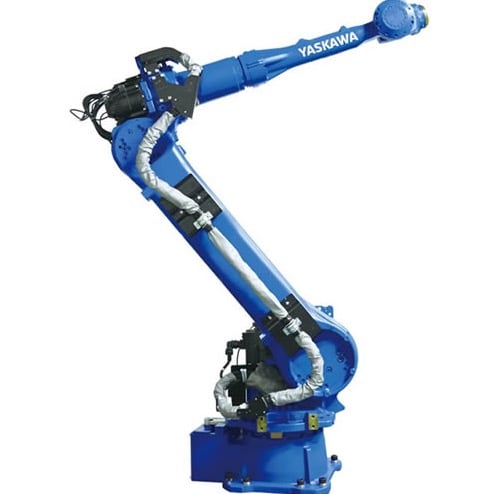
Yaskawa’s GP35L 35 kg payload industrial robot offers customers a 2538 mm horizontal and 4449 mm vertical reach. Image used courtesy of Yaskawa
Industrial Robotics Market Growth
The industrial robotics market is growing exponentially, with a projected increase of $3,212.3 million by 2030 at a compound annual growth rate of 5.8% from 2030.
Compared to China, the U.S. lacks firm strategies to bolster its robotics footprint, resulting in low rates of adoption and a lagging national industry. To combat this, the U.S. Congress has added a first-year depreciation allowance as part of the “Big Beautiful Bill” (until 2029, unless extended) to encourage the adoption of robotics equipment, including palletizers, welding systems, industrial robots, and conveyors.
By promoting the onshoring of top international robotics and automation companies (including Fanuc, ABB, and Yaskawa), decreasing the country's dependency on imports, and creating more job possibilities, the U.S. is also attempting to strengthen the robustness of its supply chain. Other benefits include more knowledge sharing and collaboration amongst U.S. engineers and international experts, improving the diversity of thinking, and fostering innovation.
Yaskawa
Yaskawa plans to build an industrial robotics production facility in Franklin (Wisconsin), strengthening its market reach in North America. This means, for the first time, the company’s high-volume industrial robots will be made on U.S. soil. The robots will be produced at the Franklin facility and transported to Yaskawa Motoman’s Miamisburg factory (Ohio) or to customers within the Americas for robotic systems integration. The new Franklin facility will also centralize multiple Motion and Drive facilities across the next three to eight years, eventually establishing a manufacturing, training, and packaging hub covering 800,000 square feet. The large-scale facility will house the Drives and Motion Division headquarters for North America.
The new facility is intended to help build out Yaskawa’s footprint in the U.S., expanding its customer base while providing advanced products and services to customers across the nation and worldwide. The company supports growth in industrial robotics production in the U.S., helping bolster supply chain resilience and grow the U.S. economy.
FANUC America
Last year, FANUC America announced the completion of its 650,000-square-foot facility for enhanced product manufacturing (West Campus, Auburn Hills, Michigan). The $110 million investment will meet demand for advanced automation and robotics technologies.
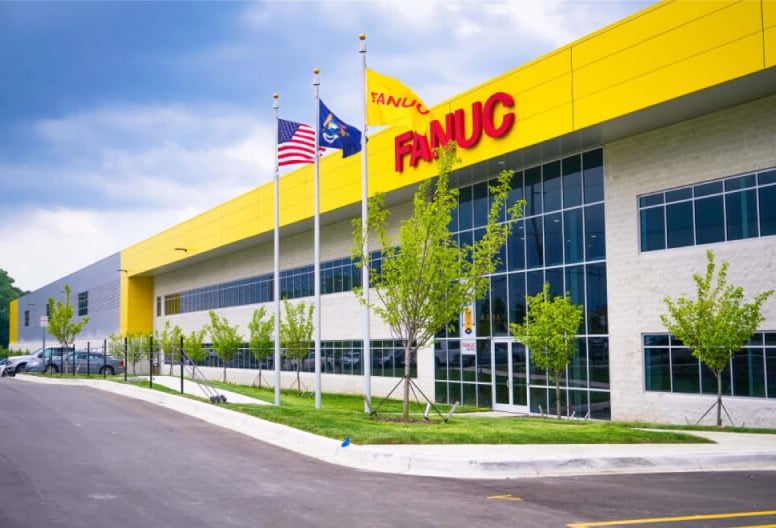
FANUC’s West Campus Facility provides warehouse space for more than 6,000 robots, readily available spare parts, and tailored automation systems. Image used courtesy of FANUC
The FANUC Academy, a world-leading robotics and automation training center in the United States, is set to call the West Campus its permanent home. FANUC will have invested over $250 million to establish its presence in the North American market, including the new FANUC Academy.
Summary
Strategic investments from leading foreign robotics and automation businesses like FANUC and Yaskawa promote product and service accessibility to customers, increase the availability of high-level skills-based jobs, advance training in robotics and automation, and help the U.S. enhance its manufacturing capacity and competitive edge across global markets.
Related Content