Facebook
 Google
 GitHub
 Linkedin
A Legacy of Factory and Motion Control: Mitsubishi Electric Automation
Showcase, manufacturing, repair, and research: Join Control.com for a recap of our team’s recent visit to the US HQ of Mitsubishi Electric Automation, and see where the magic happens.
Industrial automation isn’t just the label given to a single controller, or the installation of a network of various products, nor even a whole catalog of devices on a factory floor. It’s really the entire scope of hardware and software that provides input and information that runs behind the scenes of our entire world: past, present, and future.
Mitsubishi Electric Automation provides a vast array of control and robotic system components, and the Control.com engineering team was lucky enough to visit the US HQ near Chicago and explore the technical innovation demonstrations of the showroom, walk through the manufacturing and repair centers, and finally, explore the research facility that develops solutions for all kinds of modern manufacturing challenges.
A Showroom That Walks Through Time
You might expect a tour of automation components to start with the advent of the first modular process and motion controllers, but for Mitsubishi, the claim to fame is from the 1990s. A Mitsubishi Movemaster, one of the first robot versions, featured in the famous Jurassic Park laboratory scene, carefully recreated in the showroom.
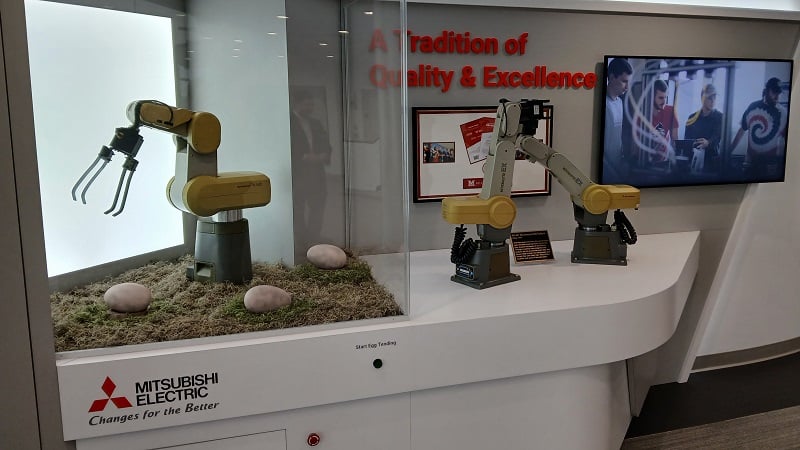
Figure 1. A prehistoric marvel awaits visitors in the showroom.
Beyond theatrical applications, Mitsubishi certainly still provides a look at a rich history of automation, starting with modular controllers from the 1970s. These controllers have evolved into the iQ-R standard of the modern era. What has improved since the beginning? It may be simple, but we can point to drastic improvements in size, computation speed, storage capacity, and networking capabilities.
Motion control is another major aspect of Mitsubishi’s portfolio. Since the 1980s, both servo drives and VFDs have contributed to moving the world. As a testament, while boarding the airplane during the trip, a clear-fronted cabinet revealed Mitsubishi FR series VFDs that maneuver the jet bridge for passengers at the airport.
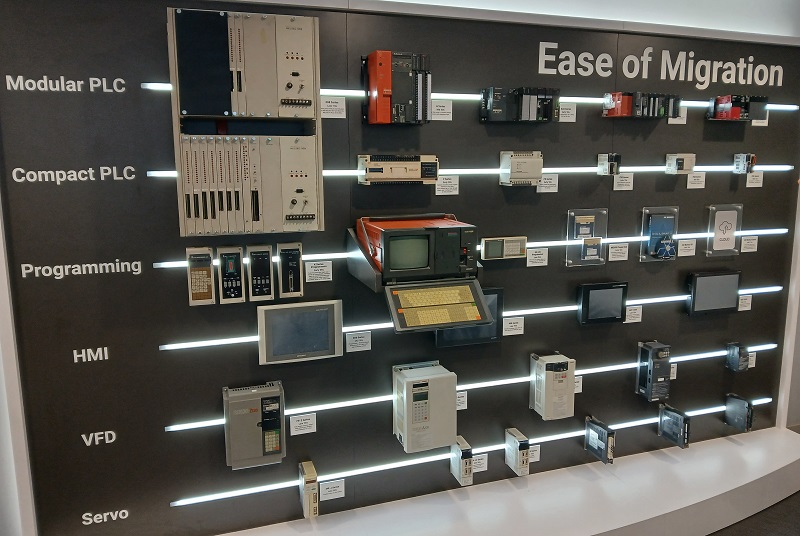
Figure 2. Control through the decades with Mitsubishi.
The showroom provides several demonstrations of technology, with a few standout exhibits. A full-sample manufacturing line shows the full product suite assembling products. A motion demo provides nine electronically geared axes to prove coordinated commands at an extremely high RPM. The importance of network timing is also illustrated with an interactive demo that pits time-sensitive networking (TSN) against cyclic and acyclic Ethernet signalling for zero-delay coordinated motion.
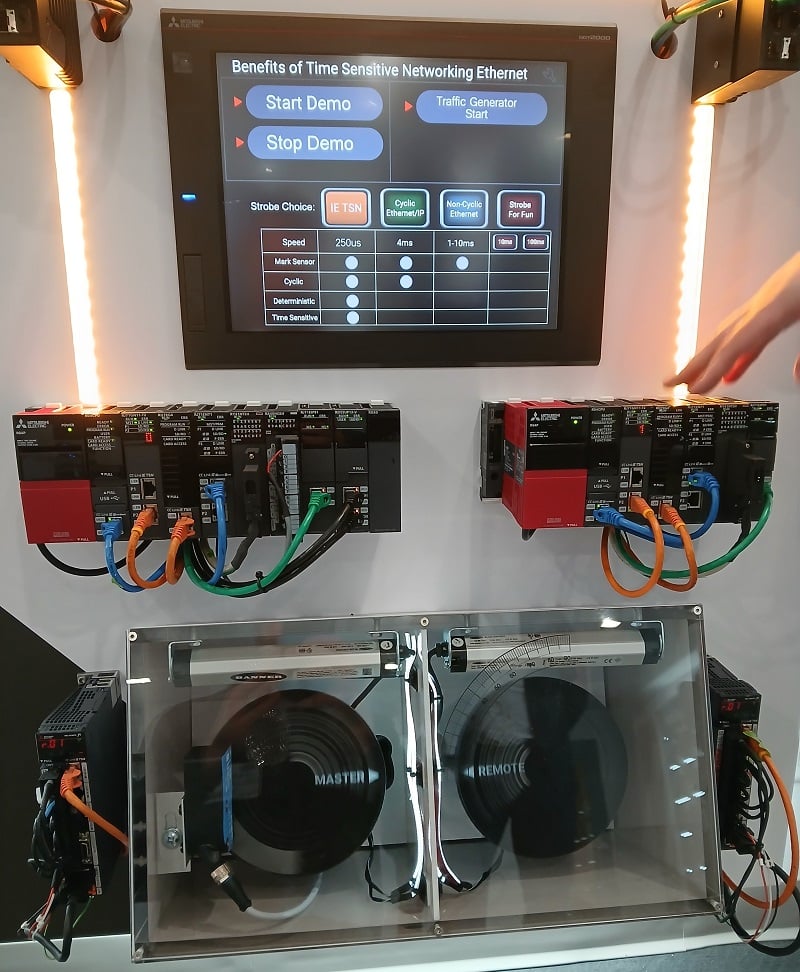
Figure 3. This time-sensitive networking (TSN) demo illustrated the critical nature of timing between two synced axes as network traffic grows and becomes inconsistent.
Manufacturing and Repair
The Chicago facility houses two very important pieces of Mitsubishi’s solution portfolio. Although other locations actually create the components themselves, this facility builds panels to support standard and custom machine centers for customers. A full UL508 shop produces the cabinets from design to shipping for CNC, robotic cell, and general factory applications.
A commitment to customers goes far beyond the shipping of a brand-new product. When downtime is on the line, you can’t simply upgrade the system every time a component fails. Mitsubishi supports many generations of its robot, motion, and control hardware, providing repair services for a wide range of products. Not only are the devices repaired, but they are also tested to ensure proper form, fit, and function before returning to the end user.
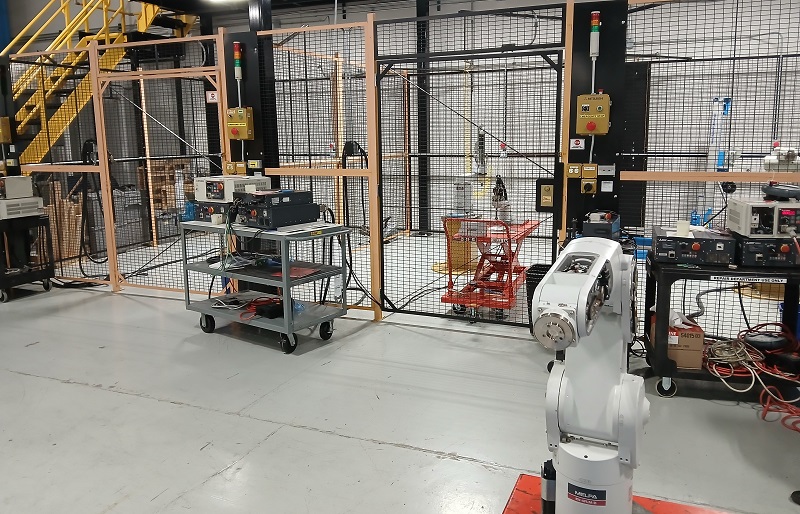
Figure 4. Robots in repair (front) and final test (back) stages of service.
Research: The Next Generation
Let's face it: the industry relies on equipment that works and performs at its peak for decades. For this reason, we sometimes get so tied up in the daily grind of working with legacy equipment that we fail to spend enough time focusing on the industry's future. Fortunately, manufacturers like Mitsubishi devote countless hours to experimenting, developing, and teaching the skills required to handle the future where hardware, software, and data collide.
The mechatronics center provides a picture of this innovation, where all kinds of new solutions enable robots to work with CNC machines, end effectors, and AI-assisted vision, all incorporated into solutions for end users and education.
STEM education is particularly key because, although it doesn't provide direct ROI for schools, it certainly helps equip the workforce with the skills necessary to create a return for companies. Many of these schools must rely on partnerships and government grants to invest in the equipment, and companies like Mitsubishi are working hard to ensure that what schools receive is a full setup of top-notch hardware and curriculum that wraps these skills into classes that can then be configured and delivered to meet local industry needs.
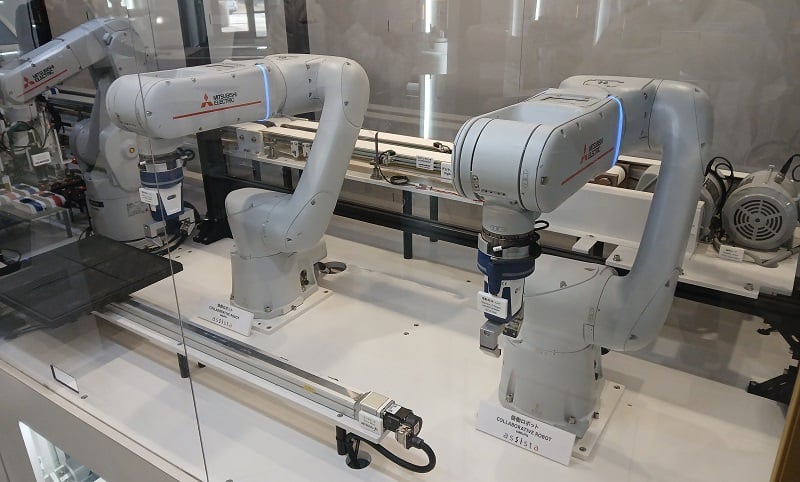
Figure 5. Innovation in automation and robotics is key to Mitsubishi’s success.
One Stop for Factory Automation
There is a certain risk for companies that offer an entire end-to-end solution to customers. The way I see it, if you say you can do, well, everything, can you still expect to do everything well? For companies like Mitsubishi, a long history of reliability across many product verticals allows them to work in harmony to help create that single solution, and it's impressive to see this displayed from the moment you see the showcase welcome center.
As we might say, "Automation, uh… finds a way."
Related Content