Facebook
 Google
 GitHub
 Linkedin
OPC UA Implementation: Rockwell, Siemens, and Beckhoff
Machine-to-machine (M2M) communication is a critical component of the modern connected facility. OPC UA stands out as an open protocol for making the link between shop floor and cloud systems.
In previous articles, we have reviewed the principles of OPC UA and explored the KEPServerEX and Ignition OPC UA-enabled platforms. We have examined how each integrates the protocol to shape data interoperability, visualization, and reporting in industrial environments.
In this article, we will continue to explore how the OPC UA protocol affects industrial automation on several platforms, focusing on three leading PLC brands: Rockwell Allen-Bradley, Siemens SIMATIC, and Beckhoff TwinCAT.
OPC UA with Rockwell Automation
Allen-Bradley (Rockwell Automation) easily combines OPC UA to improve system controls and device compatibility. Similar to other applications we have explored, Rockwell’s support for the OPC UA protocol facilitates real-time data transport, data contextualization, and flexibility that constitutes an automation ecosystem.
OPC UA interacts with Rockwell’s FactoryTalk suite allowing users to immediately enter data into SCADA and MES (manufacturing execution) systems. Even though Rockwell’s architecture emphasizes simplicity of integration, setting Logix PLCs for cross-vendor OPC UA communication does require relatively more setup.
Ethernet IP adapters such as 1756-EN4TR and 5068-AEN2TR provide high performance communications which are crucial for real-time OPC UA data exchange. There are also multiple modules for scalability, depending on the data load requirements and system and network architecture.
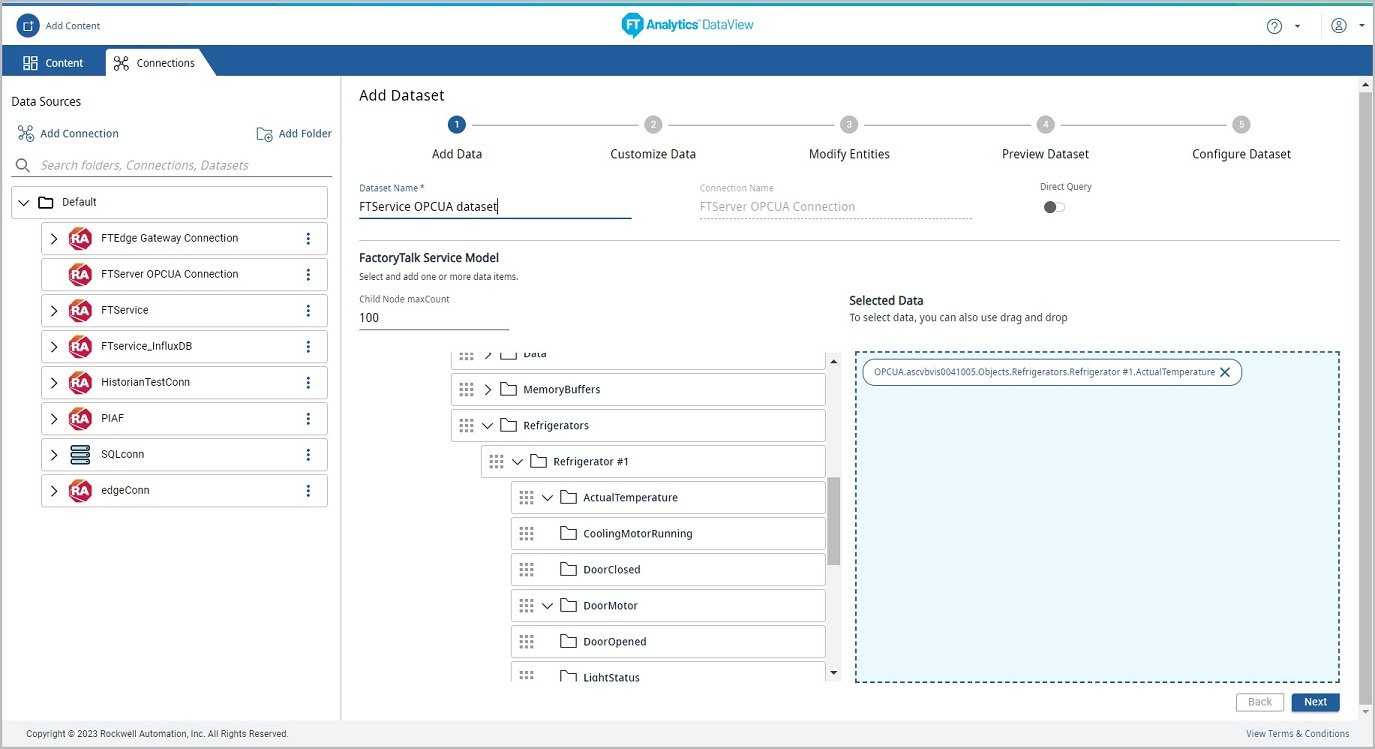
Figure 1. FactoryTalk Analytics by Rockwell Automation fully supports OPC UA. Image used courtesy of Rockwell Automation
An OPC UA server for Rockwell systems may link to a FactoryTalk Gateway to grant access to device data. By doing this, clients such as SCADA or outside systems can access PLC data via authenticated OPC UA channels. Role-based access controls fulfill cybersecurity requirements.
Rockwell’s data aggregation approach centers on FactoryTalk Historian SE. OPC UA allows data to be arranged hierarchically, helping to integrate machine data with other data sources. FactoryTalk View SE is a module that provides native connectivity with OPC UA and gives users a strong solution for data visualization. Dashboards can be updated with real-time changes depending on the data aggregation techniques employed.
OPC UA with Siemens SIMATIC
Siemens SIMATIC OPC UA implementation supports sophisticated plant automation and multiple site coordination by matching modern Industry 4.0 needs. The platform’s architecture is strong and provides great data dependability, especially towards other elements of the Siemens ecosystem.
The SIMATIC WinCC suite includes modules that enable client and server configurations, such as the CP 343-1 and CP 443-1, allowing data interchange between Siemens PLCs and outside systems. The SIMATIC OPC UA Configuration Console allows users to specify tags, security levels, and communication protocols.
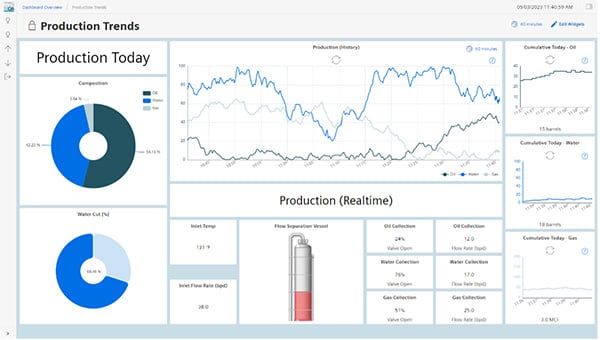
Figure 2. A demo dashboard created with WinCC Unified and OPC UA support. Image used courtesy of Siemens
WinCC’s Historian and Data Monitor allows users to consolidate historical data for analytics. OPC UA lets WinCC users define aggregation frequencies to match production cycles, guaranteeing that data delivered to WinCC is dependable and high frequency. Additional pre-processing in the Siemens PLC can be used to reduce the burden on the historian and enhance performance.
The WinCC Unified system helps generate real-time dashboards and create customized reports using data provided by OPC UA. This software permits extensive customization and easy access to many machine characteristics and performance measures. It also benefits from web browser and mobile support via HTML5 compatibility.
OPC UA with Beckhoff TwinCAT
Beckhoff TwinCAT’s integration with OPC UA emphasizes open communication, which is crucial in distributed and adaptable control systems. One major difference for Beckhoff is how TwinCAT integrates with OPC UA into the TwinCAT 3 architecture, letting users install OPC UA clients and servers straight on the PLC. This reduces the need for additional gateways and other middleware.
TwinCAT 3, which is Beckhoff’s most advanced software suite, permits the installation of OPC UA software in both client and server forms. In comparison with external OPC UA modules employed by other brands, the close interaction with the PLC program allows for improved performance, real-time configuration changes, and faster data exchange rates.
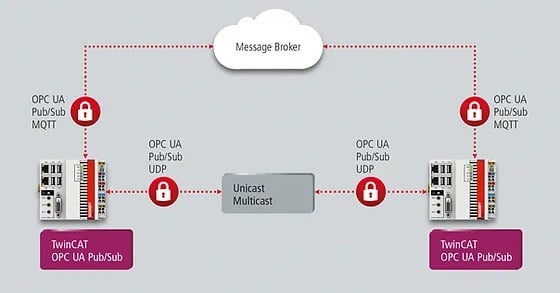
Figure 3. Example architecture of OPC UA publish/subscribe in TwinCAT 3. Image used courtesy of Beckhoff
TwinCAT Analytics is Beckhoff’s data aggregation solution. The software leverages aggregation and pre-processing inside the PLC program, making it particularly advantageous for Edge applications.
Beckhoff’s HMI ecosystem offers visualization and reporting capabilities through web-based applications.
A Brief Comparative Analysis of OPC UA Implementations
While Rockwell provides great integration inside its own ecosystem, Siemens shines with multi-facility layouts. Beckhoff is notable for its modularity, which is appropriate for edge-based solutions. All three platforms offer enhanced compliance with cybersecurity requirements.
All three brands offer sophisticated aggregation and data visualization features. While some platforms may excel in bigger scale systems, others allow for more efficient data processing and transmission rates.
In many cases, businesses may have existing significant brand investments and hesitate to evaluate alternatives. The common denominator for these brands, and many others, is their strong support for OPC UA. While every PLC brand presents its own unique advantages, leveraging OPC UA across different PLCs enhances interoperability without sacrificing compatibility. Let us remember that OPC UA provides a standard communication protocol that is platform-agnostic.