Facebook
 Google
 GitHub
 Linkedin
Using OPC UA | Industrial Connectivity with KEPServerEX
Learn about how one example platform, KEPServerEX by PTC, uses OPC UA to integrate machine centers with various communication protocol differences, the ultimate goal of M2M integration.
Achieving operational efficiency in modern automated processes relies on optimized communication between devices, machines, and higher-level systems. The landscape of modern industrial automation encompasses a wide diversity of components, comprising complex system architectures. This presents significant challenges to achieving optimal data flows.
In my previous article on Machine-to-Machine integration with OPC UA, we talked about how OPC UA helps solve these challenges by providing a unified standard for interoperability that is also platform-agnostic. In this article, we will delve into PTC’s communication platform, providing an overview of the KEPServerEX system and how it leverages OPC UA to enable real-time data exchange to build solutions that are vertically and horizontally integrated.
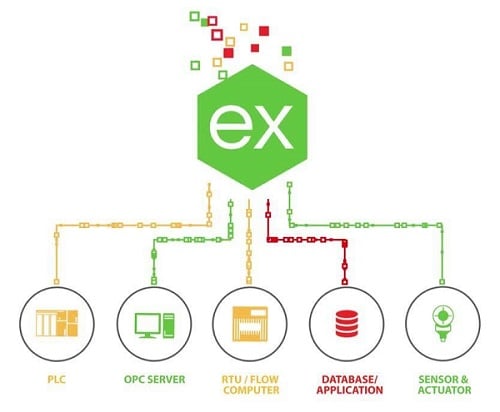
Figure 1. KEPServerEX is a well-known industrial connectivity platform. Image used courtesy of PTC
History of KEPServerEX
KEPServerEX was first developed by Kepware Technologies in 1996, aiming to be among the first OPC-based communication software for PLC and SCADA applications. Throughout the next fifteen years, the use of KEPServerEX expanded significantly. As automation systems grew in size and complexity, KEPServerEX continuously added new drivers to support this. In 2010, KEPServerEX first introduced support for OPC UA (Unified Architecture), meeting new demands for security and interoperability.
Kepware Technologies was acquired by Parametric Technology Corporation (PTC) in 2016. PTC is well-known for ThingWorx, its Internet of Things (IoT) platform. The acquisition and subsequent synergy significantly expanded KEPServerEX’s scope to include Industry 4.0, IoT, and cloud-based connectivity and analytics, such as Microsoft Azure and Amazon Web Services.

Figure 2. PTC acquired Kepware Solutions in 2016. Image used courtesy of PTC
Overview of KEPServerEX
KEPServerEX supports over 150 industrial protocols, including full support of all OPC standards (OPC UA, OPC DA, and OPC HDA). OPC DA (Data Access) is, in a way, a lite version of UA, focusing on simple interfaces that require real-time data exchange. OPC HDA (Historical Data Access) specializes in aggregating and analyzing historical data for logging and trend detection. OPC UA, which we covered in the previous article, is the most comprehensive OPC platform.
Other popular protocols supported by KEPServerEX include:
- Modbus (TCP and RTU)
- Siemens: PROFIBUS, PROFINET, and S7
- CANopen and CAN Bus
- Ethernet/IP
- Allen-Bradley: DeviceNet and ControlNet
- Beckhoff: EtherCAT
- MQTT (Message Queuing Telemetry Transport)
By supporting such a wide array of protocols, KEPServerEX brings to the table many of the same benefits of OPC UA, including unified data management, system-agnosticism, and interoperability. Its full embrace of OPC UA alone achieves this.
Typical System Architecture Using KEPServerEX
Let’s first review what a typical system architecture looks like in order to better understand how KEPServerEX fits into an industrial network. The first thing we need to do is visualize KEPServerEX’s role as a communication gateway that governs the flow of data between field devices (horizontal flow) and toward enterprise-level systems (vertical flow).
The image below shows a representation of a system architecture using KEPServerEX. Let us describe each of the layers from the diagram.
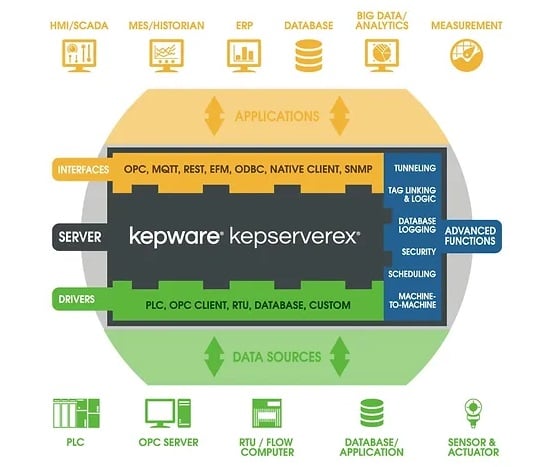
Figure 3. The typical architecture of a system using KEPServerEX. Image used courtesy of PTC
The bottom layer is “Data Sources”. It is sometimes understood as the lowest level in the hierarchy, which is why it is also known as the “Field Devices” layer. Although, if we follow the structure established in the ISA-95 pyramid of automation, to call this layer Field Devices is not entirely accurate, given that it also encompasses PLCs and databases. To better visualize this, we need to change from a systems perspective with hierarchies to the perspective of a data gateway. Doing that, it is easier to see that the “Data Sources” layer includes anything that can provide relevant input about the system.
The KEPServerEX software itself sits in the middle layer, which is known as the “Gateway” layer. The program acts as a central hub that aggregates data from the sources and translates different communication protocols into a unified format, which is typically OPC UA. Another important feature of KEPServerEX is the ability to act as both server and client.
In addition to aggregation, KEPServerEX has the ability to process data before transferring it to the next layer. Processing data helps reduce network traffic by forwarding only what is necessary.
The “Applications” layer comprises higher-level systems such as SCADAs, Enterprise Resource Planning (ERP), Databases, and Reporting applications. OPC UA enables secure data transmission to multiple platforms that may employ IoT and cloud-based technologies. Data is more likely to be consumed in this layer.
Keep in mind though, that in both the Application and Data Sources layers, communication is bidirectional. This means that each connection point can be given the ability to send and/or receive information regardless of their primary scope in the architecture.
For example, a PLC connected to a KEPServerEX endpoint can transfer multiple data points about the machine or process it controls. At the same time, the same PLC can receive data from other machines (PLC-controlled or not) via the Kepware server. This is one way that machine interlocks can be established.
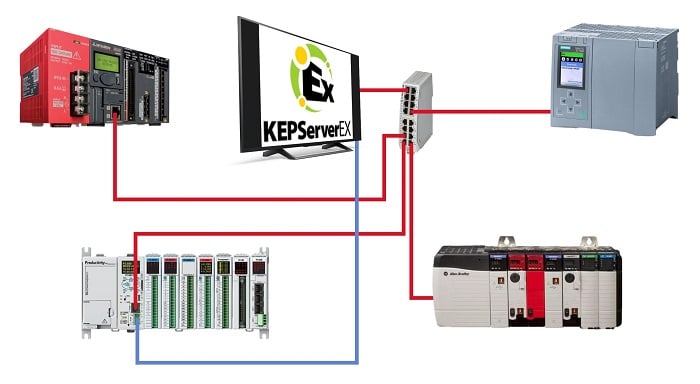
Figure 4. A diagram showing multiple PLCs connected to a Kepware server. Image used courtesy of Control.com
KEPServerEX is a vital communication gateway very popular in modern industrial automation. In this article, we have provided an overview of the platform, describing what a typical system architecture looks like. In the following article, we will dive deeper into the most important functions of KEPServerEX.
Related Content