ABB water flow meter Modbus FEX100-MB need to help

Dear all
Thank for watching and reading
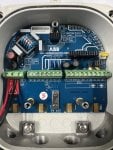
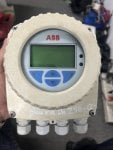
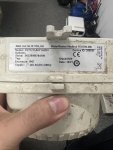
I have ABB water flow meter
Model : FET1211A0Y1A2M1
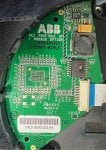
We have problem with modbus mainboard
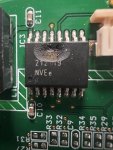
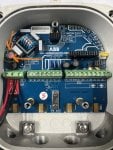
We found ic with 16 pin on this board broken and can’t not reading the name of this IC .
I need to change this but can not find wich IC can replace for this boadr .
Please help me “ dataset “ of this and if i want to change the new IC , we need to know about what ?
Thank you and best regard
 

Attachments

Dear all
Thank for watching and reading
I have ABB water flow meter
Model : FET1211A0Y1A2M1
We have problem with modbus mainboard
We found ic with 16 pin on this board broken and can’t not reading the name of this IC .
I need to change this but can not find wich IC can replace for this boadr .
Please help me “ dataset “ of this and if i want to change the new IC , we need to know about what ?
Thank you and best regard
Most industrial communication option cards from this era rely on a few industry-standard SOIC-16 transceivers. Take a close look at the remaining laser etching with a magnifying glass or a bit of rubbing alcohol to see if you can spot any of these prefixes:
SN65ALS1176 or SN75ALS176 family (Very common in Profibus/Modbus hardware).
ADM1485 / ADM1486 (Analog Devices high-speed differential bus transceivers).
MAX1487 / MAX3082 or similar (Maxim Integrated / Analog Devices RS-485 transceivers).
ISO3082 / ISO1450 (If it is an isolated transceiver, which is highly probable given the separate power section nearby).
2. How to Confirm the Pinout
Before ordering a part, you can use a multimeter on continuity mode to trace the pins of IC3 to confirm if it matches standard RS-485/Profibus configurations:
Power & Ground: Find which pins tie directly to the nearby bypass capacitors (C10 and C11). Usually, VCC is a corner pin (like Pin 16) and GND is the opposite corner (like Pin 8).
The Output Lines: Trace the pins on the right side of the IC (Pins 9–16, right next to your red circle). They will lead straight down to the white ribbon cable/connector pins that interface with the external terminal block. If two pins go through small series resistors or TVS protection diodes directly to the data lines, it is absolutely an RS-485 transceiver.
3. A Critical Warning for the Repair
Replacing the IC with a hot-air rework station is straightforward, but do not plug the board back in immediately after soldering a new chip. Because the IC experienced a catastrophic overvoltage blowout, you must check the surrounding components first:
Check C10 and C11: Make sure these capacitors aren't shorted to ground.
Check upstream logic: Trace the RX/TX lines on the left side of IC3 back toward the unpopulated space (IC2) or main processor. If the surge was massive, it may have blown right through the transceiver and killed the controller chip down the line, which would render the card unrepairable. Check for shorts between the local VCC and GND planes before powering it back up
 
Most industrial communication option cards from this era rely on a few industry-standard SOIC-16 transceivers. Take a close look at the remaining laser etching with a magnifying glass or a bit of rubbing alcohol to see if you can spot any of these prefixes:
SN65ALS1176 or SN75ALS176 family (Very common in Profibus/Modbus hardware).
ADM1485 / ADM1486 (Analog Devices high-speed differential bus transceivers).
MAX1487 / MAX3082 or similar (Maxim Integrated / Analog Devices RS-485 transceivers).
ISO3082 / ISO1450 (If it is an isolated transceiver, which is highly probable given the separate power section nearby).
2. How to Confirm the Pinout
Before ordering a part, you can use a multimeter on continuity mode to trace the pins of IC3 to confirm if it matches standard RS-485/Profibus configurations:
Power & Ground: Find which pins tie directly to the nearby bypass capacitors (C10 and C11). Usually, VCC is a corner pin (like Pin 16) and GND is the opposite corner (like Pin 8).
The Output Lines: Trace the pins on the right side of the IC (Pins 9–16, right next to your red circle). They will lead straight down to the white ribbon cable/connector pins that interface with the external terminal block. If two pins go through small series resistors or TVS protection diodes directly to the data lines, it is absolutely an RS-485 transceiver.
3. A Critical Warning for the Repair
Replacing the IC with a hot-air rework station is straightforward, but do not plug the board back in immediately after soldering a new chip. Because the IC experienced a catastrophic overvoltage blowout, you must check the surrounding components first:
Check C10 and C11: Make sure these capacitors aren't shorted to ground.
Check upstream logic: Trace the RX/TX lines on the left side of IC3 back toward the unpopulated space (IC2) or main processor. If the surge was massive, it may have blown right through the transceiver and killed the controller chip down the line, which would render the card unrepairable. Check for shorts between the local VCC and GND planes before powering it back up
Thank you bro so much
Thank for all your notification and i will take care about it
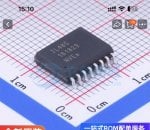
And i found this one 90% same visual because the broken one already miss some part so i try find on google , i hope this one same dataset
 

Attachments

Top