Load control by Droop vs isochronous in island mode

We have two gas turbine generators in droop mode when they are connected to a public grid.

If a grid main breaker opened or tripped, large one change the conrol mode to isochronous mode and the other one stays in droop mode.

I have a question.
When a grid main breaker tripped, which generator maintain the frequency ?
Which generator control the megawatts output from the load changes ?
 
jackson,

You neglected to say if the site uses any kind of power management system (sometimes called a PMS) or some kind of "load sharing" control system. The explanation below presumes NO power management system OR "load sharing" system--just a unit operating in Isochronous Speed Control and a unit operating in Droop speed control, with no external system trying to adjust load/frequency, just a conscious, experienced, well-trained operator who is focused and paying attention to the island load and the loads on the two machines.

The Isochronous machine will control the frequency, and it will do so by varying its load as the load changes. So, if the Isoch GT is rated for 25 MW and is carrying (producing) 14 MW when operating in island mode with the Droop machine, running at 4 MW out of a rating of 10 MW, if the load on the island decreases by 2 MW the effect on the island will be that the frequency will start to increase. The Isoch unit will respond to the frequency increase and reduce its load by 2 MW to keep the island frequency at setpoint. The Droop machine will keep running at 4 MW.

Let's say the island load in this example has increased, over time to approximately 27 MW. The Isoch machine would be carrying 23 MW and the Droop machine would still be carrying 4 MW (the presumption is no changes were made from the above paragraph--except the total island load increased to 27 MW). Let's also say the island load has the potential to increase above 30 MW, which would mean if nothing were done to the current operating condition that the Isoch machine would hit its maximum output when its load went above 25 MW, and the island frequency would start to decrease below setpoint. So, the conscious, experienced and well-trained operator would increase the load on the Droop machine by let's say 5 MW (from 4 MW to 9 MW). This would cause the island frequency to start to increase--but the Droop machine would reduce it's load by the same amount--5 MW--to keep the island frequency at setpoint. So, the Isoch machine would be at 18 MW, the Droop machine would be at 9 MW, and if the island load did increase to 30 MW (from 27 MW), the Isoch machine would increase it's load to 21 MW to keep the island frequency at rated, while the Droop machine remained at 9 MW.

The Isoch machine is the machine that maintains frequency--and it does so by adjusting its load, automatically, to respond to the changes in the island load. BUT, it can only do so if the load on the Isoch machine doesn't exceed the Isoch machine's maximum rating OR the load on the Isoch machine doesn't go below 0 MW. And, the ONLY way to keep the load on the Isoch machine within its operating limits is to change the load on the Droop machine. One CANNOT change load manually on the Isoch machine.

Again, the explanation above presumes NO power management system or "load sharing" system is in use at the plant, just a human operator paying attention to the system frequency and the loads on the machines.

Hope this helps!!!
 
Hello CSA thanks for the reply but I did not understand this part
QUOTE="CSA, post: 208388, member: 189"]


Let's say the island load in this example has increased, over time to approximately 27 MW. The Isoch machine would be carrying 23 MW and the Droop machine would still be carrying 4 MW (the presumption is no changes were made from the above paragraph--except the total island load increased to 27 MW). Let's also say the island load has the potential to increase above 30 MW, which would mean if nothing were done to the current operating condition that the Isoch machine would hit its maximum output when its load went above 25 MW, and the island frequency would start to decrease below setpoint. So, the conscious, experienced and well-trained operator would increase the load on the Droop machine by let's say 5 MW (from 4 MW to 9 MW). This would cause the island frequency to start to increase--but the Droop machine would reduce it's load by the same amount--5 MW--to keep the island frequency at setpoint. So, the Isoch machine would be at 18 MW, the Droop machine would be at 9 MW, and if the island load did increase to 30 MW (from 27 MW), the Isoch machine would increase it's load to 21 MW to keep the island frequency at rated, while the Droop machine remained at 9 MW.


Hope this helps!!!
[/QUOTE]

If I increase the load in the droop operating gas turbine from 4mw to 9mw than the frequency of that gas turbine is going to go lower,no?

Also what happens when there is a PMS?
 
You caught me.

There is a typo (like some other contributors to Control.com, I am not my own best proofreader).

"This would cause the island frequency to start to increase--but the Droop Isoch machine would reduce its load by the same amount--5 MW--to keep the island frequency at setpoint."

When two or more synchronous generators are synchronized with each other NO generator can have a different frequency than the other(s). Full stop. Period.

As was written (without typos) the Isoch machine will sense any change in frequency--whether by a Droop machine changing the load it is carrying or motors or other electrical devices starting or stopping--and adjust its fuel flow-rate to maintain the system frequency setpoint for ALL THE MACHINES SYNCHRONIZED TOGETHER ON THE SYSTEM/GRID.

Droop machines don't attempt to control frequency--they will respond to frequency disturbances that the system experiences, but they do not automatically attempt to return the system frequency to normal; that's the function of an Isoch machine, or machines being operated with a PMS (Power Management System) or a trained and conscious operator.

When there's a PMS, the configuration and programming of the PMS--if its configured and programmed to do so--could adjust the load(s) of one (or more) machine to attempt to keep from exceeding the maximum load of any machine which is synchronized to the system from exceeding the load limit or dropping below 0 MW. Some PMSs can do this; some can't; most don't do it very well (at least in the beginning, and without a lot of trial-and-error tuning). Some PMSs are primarily load-shedding systems which try to keep a system running by disconnecting block(s) of load when the system is over-loaded (which can happen in unusual circumstances, or when one or more machines suddenly trip and can't be quickly restarted and re-synchronized). There's usually some kind of control matrix in a PMS that which operators have to choose the machine which is the primary frequency control unit, and the standby frequency control machine, etc. Many operators are not properly trained to understand this aspect of system operation, nor do they have a good grasp of what the PMS does and how it does it. (This goes for the PMS programmer(s) as well; programmable controllers are wonderful things--but ONLY when the programmer understands the process, and system frequency control is not widely understood or explained in most textbooks and references.)

That's about it. Remember: EVERY synchronous generator synchronized to (operating in parallel with) to a system or grid runs at the same frequency as all the other machines synchronized to the system. Full stop. Period. No matter if its two machines or two hundred machines. The system frequency controls the speed of all synchronous generators--and their prime movers--through magnetic forces inside the generator which lock the generator rotors into a speed that is directly related to system frequency (F=((P*N)/120) is the formula.)

Sometimes, if there is a large discrepancy between the size (power rating) of one machine versus another machine (say, a 750 kW machine and a 30 MW machine are synchronized together (with no other machines)) the smaller machine may not be able to have much, if any, effect on the system frequency (the speed of the larger machine). This is kind of rare, but it does happen.
 
You caught me.

There is a typo (like some other contributors to Control.com, I am not my own best proofreader).

"This would cause the island frequency to start to increase--but the Droop Isoch machine would reduce its load by the same amount--5 MW--to keep the island frequency at setpoint."

When two or more synchronous generators are synchronized with each other NO generator can have a different frequency than the other(s). Full stop. Period.

As was written (without typos) the Isoch machine will sense any change in frequency--whether by a Droop machine changing the load it is carrying or motors or other electrical devices starting or stopping--and adjust its fuel flow-rate to maintain the system frequency setpoint for ALL THE MACHINES SYNCHRONIZED TOGETHER ON THE SYSTEM/GRID.

Droop machines don't attempt to control frequency--they will respond to frequency disturbances that the system experiences, but they do not automatically attempt to return the system frequency to normal; that's the function of an Isoch machine, or machines being operated with a PMS (Power Management System) or a trained and conscious operator.

When there's a PMS, the configuration and programming of the PMS--if its configured and programmed to do so--could adjust the load(s) of one (or more) machine to attempt to keep from exceeding the maximum load of any machine which is synchronized to the system from exceeding the load limit or dropping below 0 MW. Some PMSs can do this; some can't; most don't do it very well (at least in the beginning, and without a lot of trial-and-error tuning). Some PMSs are primarily load-shedding systems which try to keep a system running by disconnecting block(s) of load when the system is over-loaded (which can happen in unusual circumstances, or when one or more machines suddenly trip and can't be quickly restarted and re-synchronized). There's usually some kind of control matrix in a PMS that which operators have to choose the machine which is the primary frequency control unit, and the standby frequency control machine, etc. Many operators are not properly trained to understand this aspect of system operation, nor do they have a good grasp of what the PMS does and how it does it. (This goes for the PMS programmer(s) as well; programmable controllers are wonderful things--but ONLY when the programmer understands the process, and system frequency control is not widely understood or explained in most textbooks and references.)

That's about it. Remember: EVERY synchronous generator synchronized to (operating in parallel with) to a system or grid runs at the same frequency as all the other machines synchronized to the system. Full stop. Period. No matter if its two machines or two hundred machines. The system frequency controls the speed of all synchronous generators--and their prime movers--through magnetic forces inside the generator which lock the generator rotors into a speed that is directly related to system frequency (F=((P*N)/120) is the formula.)

Sometimes, if there is a large discrepancy between the size (power rating) of one machine versus another machine (say, a 750 kW machine and a 30 MW machine are synchronized together (with no other machines)) the smaller machine may not be able to have much, if any, effect on the system frequency (the speed of the larger machine). This is kind of rare, but it does happen.
thank you very much
 
jackson,

You neglected to say if the site uses any kind of power management system (sometimes called a PMS) or some kind of "load sharing" control system. The explanation below presumes NO power management system OR "load sharing" system--just a unit operating in Isochronous Speed Control and a unit operating in Droop speed control, with no external system trying to adjust load/frequency, just a conscious, experienced, well-trained operator who is focused and paying attention to the island load and the loads on the two machines.

The Isochronous machine will control the frequency, and it will do so by varying its load as the load changes. So, if the Isoch GT is rated for 25 MW and is carrying (producing) 14 MW when operating in island mode with the Droop machine, running at 4 MW out of a rating of 10 MW, if the load on the island decreases by 2 MW the effect on the island will be that the frequency will start to increase. The Isoch unit will respond to the frequency increase and reduce its load by 2 MW to keep the island frequency at setpoint. The Droop machine will keep running at 4 MW.

Let's say the island load in this example has increased, over time to approximately 27 MW. The Isoch machine would be carrying 23 MW and the Droop machine would still be carrying 4 MW (the presumption is no changes were made from the above paragraph--except the total island load increased to 27 MW). Let's also say the island load has the potential to increase above 30 MW, which would mean if nothing were done to the current operating condition that the Isoch machine would hit its maximum output when its load went above 25 MW, and the island frequency would start to decrease below setpoint. So, the conscious, experienced and well-trained operator would increase the load on the Droop machine by let's say 5 MW (from 4 MW to 9 MW). This would cause the island frequency to start to increase--but the Droop machine would reduce it's load by the same amount--5 MW--to keep the island frequency at setpoint. So, the Isoch machine would be at 18 MW, the Droop machine would be at 9 MW, and if the island load did increase to 30 MW (from 27 MW), the Isoch machine would increase it's load to 21 MW to keep the island frequency at rated, while the Droop machine remained at 9 MW.

The Isoch machine is the machine that maintains frequency--and it does so by adjusting its load, automatically, to respond to the changes in the island load. BUT, it can only do so if the load on the Isoch machine doesn't exceed the Isoch machine's maximum rating OR the load on the Isoch machine doesn't go below 0 MW. And, the ONLY way to keep the load on the Isoch machine within its operating limits is to change the load on the Droop machine. One CANNOT change load manually on the Isoch machine.

Again, the explanation above presumes NO power management system or "load sharing" system is in use at the plant, just a human operator paying attention to the system frequency and the loads on the machines.

Hope this helps!!!
I have another question,if the operator increased as you say " Let's also say the island load has the potential to increase above 30 MW, which would mean if nothing were done to the current operating condition that the Isoch machine would hit its maximum output when its load went above 25 MW, and the island frequency would start to decrease below setpoint. So, the conscious, experienced and well-trained operator would increase the load on the Droop machine by let's say 5 MW (from 4 MW to 9 MW). This would cause the island frequency to start to increase--but the Droop machine would reduce it's load by the same amount--5 MW--to keep the island frequency at setpoint. So, the Isoch machine would be at 18 MW, the Droop ISOCH machine would be at 9 MW, and if the island load did increase to 30 MW (from 27 MW), the Isoch machine would increase it's load to 21 MW to keep the island frequency at rated, while the Droop machine remained at 9 MW."
If the trained operator increased the power of the turbine operating in droop then in that case the frequency of the grid would change and it would decrease because the turbine operating in droop mode increased it's power, and it would have the same frrequency of the turbine running in isochronous mode because for the gas turbine being operated in droop mode it would give us the same frequency of the ISOCH gas turbine only if it was operating at 4MW so if I am operating a droop and an isochronous gas turbine,should not the droop reemain at a fixed power output so that way it's frequency does not change?
 
WTF?

Are you suggesting, nikidi.control, that the two machines in this example —one operating in Droop Speed Control mode and the other operating in Isochronous Speed Control mode—could run at two different frequencies?

If the electrical load on the system (the total watts/kW/MW of all the electric motors and lights and electric tea kettles and computers and computer monitors and televisions and cellphone chargers) is stable during any period and someone increases the load being carried (powered) by the Droop machine the immediate effect of the increased torque being produced by the Droop machine’s prime mover will be to increase the frequency of the system. BUT the Isoch machine will sense the increase in frequency and reduce its torque and the amount of the system load it is carrying (powering) to maintain the system frequency at its normal value. The electrical load is not changing—only the amount of load being provided by each of the two machines is changing. The two machines, synchronized with each other, act as one machine to supply the electrical power required by the system at the rated frequency. And because the system is an AC (alternating current) system the frequency of the system is critical to the stability of the system. If the amount of torque being produced by the prime movers driving the generators synchronized together on the system is more or less than the amount of torque required by the loads on the system then the frequency of the system will be higher or lower than the rated system frequency. The job of the governor of the Isoch machine’s prime mover is to adjust the energy flow-rate into the prime mover to keep the system frequency at rated (50- or 60 Hertz). The Isoch machine’s prime mover governor senses changes in speed—which is directly related to system frequency—and changes the load being carried by the Isoch machine to maintain system frequency as the system load changes OR the amount of generation being carried by the Droop machine changes.

An AC power system produces electrical power at a constant frequency. It does so by changing the amount of generation as the amount of the system load changes OR the amount of generation changes (the amount of power being produced by the Droop machines synchronized to the AC power system). If nothing or no one adjusts the amount of generation as the amount of load changes OR the amount of generation changes (a Droop machine is synchronized to the system and its load is being increased OR a machine suddenly trips (is removed from the system) the effect will be the frequency of the system will change.

An AC power system can produce the electrical power required by the loads on the system at any frequency—but the electric motors receiving power from the system will not operate at their normal speed (and, in general, the largest group of loads on a system are electric motors driving water pumps and air conditioning compressors and fans and factories and refineries and refrigerators and fans, etc.) and for them to operate properly and efficiently they need a constant and stable AC system frequency.

It’s like a train carrying passengers and/or freight; if it doesn’t move at a relatively constant average speed then the train won’t be on schedule and people and won’t arrive on time (or they’ll be early). The passengers and freight will arrive, but they won’t be on schedule and that can create lots of knock-on effects (problems).

If the electrical power coming out of the socket on the wall isn’t at a constant frequency, bad things can start happening. Lights will be brighter or dimmer than normal; refrigerators won’t work properly or efficiently; chargers will excessively heat up; pumps won’t move fluids/gases at the required rate; the AC clock on the wall will be fast or slow.

All prime movers and the generators they drive need to act as a single prime mover and generator to provide power to the load of the AC power system—which is really a lot of “small” loads which all appear as one large load. Droop Speed Control allows multiple prime movers and the generators they drive to work stably together to act as one very large prime mover and generator. (THIS is one aspect of the load-sharing feature of Droop Speed But nowhere on Planet Earth.) The AC power system however needs either one Isoch machine to maintain the system frequency OR trained power system operators to anticipate and respond to system changes to maintain a stable system frequency so that everything runs properly and efficiently. On a small AC power system, a single Isochronous machine can do that—as long as the system operators understand the limits of the Isoch machine and act accordingly. In an ideal world, a PMS could do this, but the programming intelligence to do this entirely without human assistance or intervention isn’t quite ready.

Yet.

But nowhere on Planet Earth on any AC power system can any generator (or generators) run at any frequency other than the frequency of the entire AC power system it is (or they are) synchronized to. Full stop. Period. Not no how. Not no way. Not ever. Never.

If you are trying to describe something else, please try again. In this example of two machines synchronized together, one operating in Isoch mode and the other operating in Droop mode, they are both ALWAYS operating at the same frequency. The operator can ONLY change the load of the Droop machine, which will cause the load of the Isoch machine to change by an exactly equal amount—in order to maintain system frequency. If the operator tries to change the load of the Isoch machine using the Isoch machine’s governor controls all the operator will “succeed” in doing is changing the frequency of the system—AND of BOTH machines.
 
WTF?

Are you suggesting, nikidi.control, that the two machines in this example —one operating in Droop Speed Control mode and the other operating in Isochronous Speed Control mode—could run at two different frequencies?

If the electrical load on the system (the total watts/kW/MW of all the electric motors and lights and electric tea kettles and computers and computer monitors and televisions and cellphone chargers) is stable during any period and someone increases the load being carried (powered) by the Droop machine the immediate effect of the increased torque being produced by the Droop machine’s prime mover will be to increase the frequency of the system. BUT the Isoch machine will sense the increase in frequency and reduce its torque and the amount of the system load it is carrying (powering) to maintain the system frequency at its normal value. The electrical load is not changing—only the amount of load being provided by each of the two machines is changing. The two machines, synchronized with each other, act as one machine to supply the electrical power required by the system at the rated frequency. And because the system is an AC (alternating current) system the frequency of the system is critical to the stability of the system. If the amount of torque being produced by the prime movers driving the generators synchronized together on the system is more or less than the amount of torque required by the loads on the system then the frequency of the system will be higher or lower than the rated system frequency. The job of the governor of the Isoch machine’s prime mover is to adjust the energy flow-rate into the prime mover to keep the system frequency at rated (50- or 60 Hertz). The Isoch machine’s prime mover governor senses changes in speed—which is directly related to system frequency—and changes the load being carried by the Isoch machine to maintain system frequency as the system load changes OR the amount of generation being carried by the Droop machine changes.

An AC power system produces electrical power at a constant frequency. It does so by changing the amount of generation as the amount of the system load changes OR the amount of generation changes (the amount of power being produced by the Droop machines synchronized to the AC power system). If nothing or no one adjusts the amount of generation as the amount of load changes OR the amount of generation changes (a Droop machine is synchronized to the system and its load is being increased OR a machine suddenly trips (is removed from the system) the effect will be the frequency of the system will change.

An AC power system can produce the electrical power required by the loads on the system at any frequency—but the electric motors receiving power from the system will not operate at their normal speed (and, in general, the largest group of loads on a system are electric motors driving water pumps and air conditioning compressors and fans and factories and refineries and refrigerators and fans, etc.) and for them to operate properly and efficiently they need a constant and stable AC system frequency.

It’s like a train carrying passengers and/or freight; if it doesn’t move at a relatively constant average speed then the train won’t be on schedule and people and won’t arrive on time (or they’ll be early). The passengers and freight will arrive, but they won’t be on schedule and that can create lots of knock-on effects (problems).

If the electrical power coming out of the socket on the wall isn’t at a constant frequency, bad things can start happening. Lights will be brighter or dimmer than normal; refrigerators won’t work properly or efficiently; chargers will excessively heat up; pumps won’t move fluids/gases at the required rate; the AC clock on the wall will be fast or slow.

All prime movers and the generators they drive need to act as a single prime mover and generator to provide power to the load of the AC power system—which is really a lot of “small” loads which all appear as one large load. Droop Speed Control allows multiple prime movers and the generators they drive to work stably together to act as one very large prime mover and generator. (THIS is one aspect of the load-sharing feature of Droop Speed But nowhere on Planet Earth.) The AC power system however needs either one Isoch machine to maintain the system frequency OR trained power system operators to anticipate and respond to system changes to maintain a stable system frequency so that everything runs properly and efficiently. On a small AC power system, a single Isochronous machine can do that—as long as the system operators understand the limits of the Isoch machine and act accordingly. In an ideal world, a PMS could do this, but the programming intelligence to do this entirely without human assistance or intervention isn’t quite ready.

Yet.

But nowhere on Planet Earth on any AC power system can any generator (or generators) run at any frequency other than the frequency of the entire AC power system it is (or they are) synchronized to. Full stop. Period. Not no how. Not no way. Not ever. Never.

If you are trying to describe something else, please try again. In this example of two machines synchronized together, one operating in Isoch mode and the other operating in Droop mode, they are both ALWAYS operating at the same frequency. The operator can ONLY change the load of the Droop machine, which will cause the load of the Isoch machine to change by an exactly equal amount—in order to maintain system frequency. If the operator tries to change the load of the Isoch machine using the Isoch machine’s governor controls all the operator will “succeed” in doing is changing the frequency of the system—AND of BOTH machines.
What I am saying is that they should run at the same frequency otherwise we are going to have problems!What I am saying is that the load on the DROOP machine does not change in reality when the load requested by the system has increased ,what happens is that the ISOCH machine changes its load so that the frequency of the system stays the same,and since the DROOP can function at the given frequency of the system (let's say 50 herz) at a certain load (lets say 10 MW) it has to stay at that load and the ISOCH machine and only the ISOCH machine changes its load (staying at the same frequency) to give the system the right load so that we can stay at the same frequency.Is this what you are saying?

But now I have a question about an example,lets say we have two gas turbines,operating in parallel,connected to the same grid.The maximum output power these two gas turbines can dish out is 20MW for each of them cause they are identical machines.Now the system is operating with a machine in ISOCH mode at 50hz and the other one in DROOP.Now the DROOP machine can run at 50hz at a power of 10MW.So till' 30 MW we can run this way,we get at maximum 20MW from the ISOCH machine at 50hz and 10MW from the DROOP machine at 50hz.What if now the grid need a power of 35 MW,what would we do in that case?I cannot give more power from the ISOCH because that one can give us only 20MW,so I need to get 15 MW from the other gas turbine,the one operating in DROOP,but that one,if it changes its load,from 10MW to 15 MW it will change its frequency,so what does the conscious operator or the PMS do in this case?
 
You seem to be upset about something....

The conscious, well-trained and experienced operator would adjust the load on the Droop machine to keep the load on the Isoch machine from ever reaching its rated output (or zero) based on the anticipated load on the system. THAT'S what an experienced, well-trained and conscious operator would do.

A well-programmed PMS would do the same. But, even the best PMSs can't always anticipate load changes all the time and require manual intervention from an experienced, well-trained, conscious operator in order to keep the system running at the proper frequency. Automation is only so good--no matter what the salespeople say.

Most PMSs are PACs (Programmable Action Controllers) or PLCs (Programmable Logic Controllers) which can be used in warehouses and roofing factories and chicken processing plants. While there are some VERY knowledgeable and skilled PAC/PLC programmers those that understand AC power systems and frequency response under a variety of conditions, and that's where the problem begins: lack of knowledge and experience with AC power systems using multiple generator sets. This is where experienced, well-trained and conscious operators can help during commissioning and when problems arise--they understand how things should work and can explain (in some cases, anyway) to the programmers what happened and what didn't happen, so that the programming of the PMS can be improved and made more "intelligent" and reliable.

But, plant managers and owners (investors) just see dollar signs when automation salespeople are talking about reducing manpower and training of the operators with "smarter" automation systems. That's possible for a variety of applications, but AC power systems are not as well understood--or documented--as many people think they are. There are many textbooks and references and even control system manufacturer-produced documentation that are blatantly wrong about Droop speed control. (NO machine (prime mover and generator), when synchronized to a grid with other machines (prime movers and their generators), EVER changes speed when being loaded and unloaded, and yet that one of the most pervasive descriptions of Droop Speed Control--and while it may be true for a single generator and its prime mover operating in Droop Speed Control that is experiencing an increase in load on the system it is powering, it's NOT true for machines synchronized to a grid with other generators.

And an experience, well-trained and conscious operator would respond properly to raise the machine/system frequency back to normal.

I say "conscious" operator because they all believe that small, islanded power systems don't require much in the way of manual intervention--and, in fact, many of them are scared to death of losing their jobs if they make a manual change and a unit trips, or worse, the plant blacks out. They will eventually learn--after a few events, including one or three black-outs--that manual intervention is required sometimes, even during normal operation. It's NOT a set-it-and-forget-it thing. The operator(s) can't be reading the newspaper or surfing the Internet and expect the plant/system controls to do everything--even if the salesperson said it could. (You know how to tell when most salespeople are lying, right? When their lips are moving. And, especially when it comes to selling PMSs that someone else configures and programs and has to support.)
 
Actually, this is ANOTHER benefit of Droop Speed Control.

"So till' 30 MW we can run this way,we get at maximum 20MW from the ISOCH machine at 50hz and 10MW from the DROOP machine at 50hz.What if now the grid need a power of 35 MW,what would we do in that case?I cannot give more power from the ISOCH because that one can give us only 20MW,so I need to get 15 MW from the other gas turbine,the one operating in DROOP,but that one,if it changes its load,from 10MW to 15 MW it will change its frequency, ..."

If the Isoch machine is already at its rated output and the load on the system increases, the Droop machine WILL change its frequency AS IT increases the fuel flow-rate to accommodate the additional load the Isoch machine can't support. That's the secondary benefit of Droop Speed Control--grid support. If that didn't happen then the system would just continue to lose frequency in a death spiral until the system went black because of under-frequency protection. But, because the Droop Machine "picked up" the additional load--even though the system frequency decreased--the system stands a better chance of surviving the inattention of the operator(s) than it might otherwise have.

Again, the PMS or the operator(s), or the Operations Supervisor, should have noticed the Isoch machine was nearing its rated output and been proactive by loading the Droop machine to reduce the load on the Isoch machine so that it could respond to anticipated load changes. Experienced operators will know what to anticipate and when, in most cases anyway, so even if the PMS doesn't respond appropriately (and it might--this time; or, it might not...) the operator(s) (or the Operations Supervisor) should be paying attention (consciously) and taken appropriate action before the system frequency decreased.

The details of what would happen (if there were no PMS or it wasn't programmed to respond appropriately) would be that the operator would need to click on RAISE SPEED/LOAD until the system frequency went to normal, and then continue raising load to reduce the load on the Isoch machine. Again--attempting to lower load (in this case) directly on the Isoch machine would result in reducing the system frequency even more! Any manual load changes on the system in your example have to made with the Droop machine's controls; using the Isoch machine's controls to attempt to change its load will only result in changing the system frequency setpoint, and that's NOT what should happen.

When I say PMSs aren't all their cracked up to be I speak from experience. I have traveled to several sites where the plant personnel were INSISTING the Mark* turbine controls weren't working correctly. And in every case it was proven the PMS hadn't responded correctly--either because it wasn't programmed correctly OR the operators hadn't made the appropriate matrix selections to allow the PMS to respond correctly. They were ADAMANT and DEMANDING that the Mark* be made to work "properly" when they didn't even know or understand how it should operate and would operate. So, pardon me if I'm not a fan of PMSs. I've been yelled at MORE THAN ONCE because plant personnel were certain the problem was the Mark* and as the OEM field engineer it was my job, therefore, to fix it, and it wasn't the Mark*'s fault. (I was even asked to leave one site because I couldn't convince them otherwise, and it took two more field service people over several weeks to finally convince them it was the site personnel who hadn't operated the PMS correctly. Fortunately, there was an SOE recorder at the plant and it clearly showed no operators had changed PMS matrix selections in weeks! At the end, the PMS supplier had to get their programmer to site, and he agreed (reluctantly, I'm told) that the operators hadn't made the appropriate selections.)
 
You seem to be upset about something....

The conscious, well-trained and experienced operator would adjust the load on the Droop machine to keep the load on the Isoch machine from ever reaching its rated output (or zero) based on the anticipated load on the system. THAT'S what an experienced, well-trained and conscious operator would do.

A well-programmed PMS would do the same. But, even the best PMSs can't always anticipate load changes all the time and require manual intervention from an experienced, well-trained, conscious operator in order to keep the system running at the proper frequency. Automation is only so good--no matter what the salespeople say.

Most PMSs are PACs (Programmable Action Controllers) or PLCs (Programmable Logic Controllers) which can be used in warehouses and roofing factories and chicken processing plants. While there are some VERY knowledgeable and skilled PAC/PLC programmers those that understand AC power systems and frequency response under a variety of conditions, and that's where the problem begins: lack of knowledge and experience with AC power systems using multiple generator sets. This is where experienced, well-trained and conscious operators can help during commissioning and when problems arise--they understand how things should work and can explain (in some cases, anyway) to the programmers what happened and what didn't happen, so that the programming of the PMS can be improved and made more "intelligent" and reliable.

But, plant managers and owners (investors) just see dollar signs when automation salespeople are talking about reducing manpower and training of the operators with "smarter" automation systems. That's possible for a variety of applications, but AC power systems are not as well understood--or documented--as many people think they are. There are many textbooks and references and even control system manufacturer-produced documentation that are blatantly wrong about Droop speed control. (NO machine (prime mover and generator), when synchronized to a grid with other machines (prime movers and their generators), EVER changes speed when being loaded and unloaded, and yet that one of the most pervasive descriptions of Droop Speed Control--and while it may be true for a single generator and its prime mover operating in Droop Speed Control that is experiencing an increase in load on the system it is powering, it's NOT true for machines synchronized to a grid with other generators.

And an experience, well-trained and conscious operator would respond properly to raise the machine/system frequency back to normal.

I say "conscious" operator because they all believe that small, islanded power systems don't require much in the way of manual intervention--and, in fact, many of them are scared to death of losing their jobs if they make a manual change and a unit trips, or worse, the plant blacks out. They will eventually learn--after a few events, including one or three black-outs--that manual intervention is required sometimes, even during normal operation. It's NOT a set-it-and-forget-it thing. The operator(s) can't be reading the newspaper or surfing the Internet and expect the plant/system controls to do everything--even if the salesperson said it could. (You know how to tell when most salespeople are lying, right? When their lips are moving. And, especially when it comes to selling PMSs that someone else configures and programs and has to support.)
I am not upset about anything,I dont get how you arrived in that conclusion.I am on this site to make questions and have asnwers and answer to people if I know something that might help them
 
I want to awaken you to a dirty little secret of single-shaft gas turbines (this includes machines with Reduction Gears between the turbine and generator).

When a gas turbine is running at Base Load (Base Load selected and active) and the grid frequency decreases the power output of the machine will decrease as the grid frequency decreases. This happens because the speed of the machine--including the axial compressor--will slow down as frequency decreases. When the axial compressor slows down the air flow through the machine decreases, which means the axial compressor discharge pressure also decreases, and if the fuel flow-rate remained constant the gas turbine exhaust temperature would rise. So, the turbine control system will sense the decrease in axial compressor discharge and the rising exhaust temperature and start reducing the fuel to prevent an exhaust overtemperature condition--which could lead to a trip of the machine.

This infuriates some people as they've never heard of it, but it's a known fact in the business; it contributed to a couple of near-nationwide blackouts on the Malaysian peninsula a couple of decades ago when MANY machines were running at Base Load and a block of generation was suddenly disconnected from the grid. And, it isn't just GE machines that will operate this way--other gas turbines from other manufacturers use a very similar control scheme to optimize power output (when grid frequency is at rated!) and protect against exhaust overtemperature. Many grid regulators and supervisors are often very surprised to learn about this aspect of single-shaft gas turbine operation, too. When this happens and the gas turbine output decreases it actually hurts grid stability and lowers grid frequency even further--the exact opposite of what everyone wants to happen (and what should happen to support grid stability until the frequency can be returned to normal).

So, don't think that just because a gas turbine running at Base Load--in EITHER Isoch or Droop--will continue to put out rated power when the frequency of the grid it is synchronized to decreases, because it won't (unless there is a specific control scheme to allow it to temporarily do so, or the machine has Peak Load capability AND the experience, well-trained and conscious operator (and the Operations Supervisor) switch the machine to Peak Load operation. Almost everyone (including some TAs) think the gas turbine should INCREASE its output during a grid frequency decrease situation, as it would if the machine were operating at Part Load in Droop Speed Control. But that's not the case.

Gas turbines are amazing machines, but they also have to be properly controlled and protected. And most operators and Operations Supervisors and Plant Managers and plant owners/investors don't know all the ins and outs of gas turbine operation during abnormal situations such as grid frequency disturbances. (In the same way that single-shaft gas turbines will actually decrease power output during a grid frequency disturbance when operating with Base Load selected and active, they will INCREASE power output during a grid frequency increase event--because the axial compressor speeds up and the axial compressor discharge pressure increases and the exhaust temperature decreases, so the turbine control system will increase fuel flow-rate (unless there is a specific control scheme to allow temporary operation during this type of grid frequency event). This will actually cause the grid frequency to increase even more--which is the opposite of what everyone wants to happen, even if they think it should remain constant.)

These things will happen if a single-shaft gas turbine is operating at Base Load in Isoch mode, too. Base Load (and Peak Load) only cares about maximizing gas turbine power production by putting as much fuel as possible into the machine. If the machine is already at Base Load and a grid frequency decrease event occurs the gas turbine control system will keep trying to maximize gas turbine power output AND protect the machine if required to prevent exhaust overtemperature.

Most power plant operators think that during a grid frequency disturbance THEIR MACHINE(S) should NOT experience any change in power output--whether they are operating in Isoch or Droop mode, at Part Load or Base (or Peak) Load. And that's simply NOT TRUE. When operating at Part Load in Droop Speed Control mode the grid regulators WANT EVERY machine to be changing load as necessary to support grid stability. And, as we have learned: EVERY SYNCHRONOUS GENERATOR synchronized to a grid with other machines will ALL run at the same frequency--ALWAYS. To think otherwise is simply not understanding basic AC power system fundamentals.

That's all for today!
 
I want to awaken you to a dirty little secret of single-shaft gas turbines (this includes machines with Reduction Gears between the turbine and generator).

When a gas turbine is running at Base Load (Base Load selected and active) and the grid frequency decreases the power output of the machine will decrease as the grid frequency decreases. This happens because the speed of the machine--including the axial compressor--will slow down as frequency decreases. When the axial compressor slows down the air flow through the machine decreases, which means the axial compressor discharge pressure also decreases, and if the fuel flow-rate remained constant the gas turbine exhaust temperature would rise. So, the turbine control system will sense the decrease in axial compressor discharge and the rising exhaust temperature and start reducing the fuel to prevent an exhaust overtemperature condition--which could lead to a trip of the machine.

This infuriates some people as they've never heard of it, but it's a known fact in the business; it contributed to a couple of near-nationwide blackouts on the Malaysian peninsula a couple of decades ago when MANY machines were running at Base Load and a block of generation was suddenly disconnected from the grid. And, it isn't just GE machines that will operate this way--other gas turbines from other manufacturers use a very similar control scheme to optimize power output (when grid frequency is at rated!) and protect against exhaust overtemperature. Many grid regulators and supervisors are often very surprised to learn about this aspect of single-shaft gas turbine operation, too. When this happens and the gas turbine output decreases it actually hurts grid stability and lowers grid frequency even further--the exact opposite of what everyone wants to happen (and what should happen to support grid stability until the frequency can be returned to normal).

So, don't think that just because a gas turbine running at Base Load--in EITHER Isoch or Droop--will continue to put out rated power when the frequency of the grid it is synchronized to decreases, because it won't (unless there is a specific control scheme to allow it to temporarily do so, or the machine has Peak Load capability AND the experience, well-trained and conscious operator (and the Operations Supervisor) switch the machine to Peak Load operation. Almost everyone (including some TAs) think the gas turbine should INCREASE its output during a grid frequency decrease situation, as it would if the machine were operating at Part Load in Droop Speed Control. But that's not the case.

Gas turbines are amazing machines, but they also have to be properly controlled and protected. And most operators and Operations Supervisors and Plant Managers and plant owners/investors don't know all the ins and outs of gas turbine operation during abnormal situations such as grid frequency disturbances. (In the same way that single-shaft gas turbines will actually decrease power output during a grid frequency disturbance when operating with Base Load selected and active, they will INCREASE power output during a grid frequency increase event--because the axial compressor speeds up and the axial compressor discharge pressure increases and the exhaust temperature decreases, so the turbine control system will increase fuel flow-rate (unless there is a specific control scheme to allow temporary operation during this type of grid frequency event). This will actually cause the grid frequency to increase even more--which is the opposite of what everyone wants to happen, even if they think it should remain constant.)

These things will happen if a single-shaft gas turbine is operating at Base Load in Isoch mode, too. Base Load (and Peak Load) only cares about maximizing gas turbine power production by putting as much fuel as possible into the machine. If the machine is already at Base Load and a grid frequency decrease event occurs the gas turbine control system will keep trying to maximize gas turbine power output AND protect the machine if required to prevent exhaust overtemperature.

Most power plant operators think that during a grid frequency disturbance THEIR MACHINE(S) should NOT experience any change in power output--whether they are operating in Isoch or Droop mode, at Part Load or Base (or Peak) Load. And that's simply NOT TRUE. When operating at Part Load in Droop Speed Control mode the grid regulators WANT EVERY machine to be changing load as necessary to support grid stability. And, as we have learned: EVERY SYNCHRONOUS GENERATOR synchronized to a grid with other machines will ALL run at the same frequency--ALWAYS. To think otherwise is simply not understanding basic AC power system fundamentals.

That's all for today!
hmmm interesting bit of information,thank you
 
Hi all,
I have been encountering some issues that relatable to this thread, and wondering if someone can help educate me in this matter.
First of all I am new (just started working in powerplant for a paper making factory)

We have 2 units of GE 6F rated at 80MW each, with Mark IVe control system. Our powerplant is just supplying the power only for our own factory ( island) and didnt have national grid connection. The maximum factory uses load as of now is around 65MW.

We only running one unit of GT at one time (enough to support the load) running at Isochronous speed control.
Also in Island mode ON.

The problem that we encountered is when we started the other one GT and after synchronised, with intended to run at preselect mode, the newly started GT couldn’t loading the load ( just merely 1MW) it cannot raise the load as per preselected value at 6MW.

Why is this happening, is there anything that we missed, such as turning off the island mode for the new GT or manually raising the excitation ,etc .
Is there anything we as the operator can do, hoping someone can helps me out to understand this better.

Big thanks
 
@EzzatHassim,

YOU neglected to say if your site uses any kind of power management system ("PMS").... Pretty important to know for responding to your questions--which should have been its own thread.

I have seen about six or eight different versions of "Island Mode" control implemented on GE-design heavy duty gas turbines. Most have been on machines packaged by the GE factory in Belfort, France. So, it's not possible to say with any certainty what, exactly, Island Mode means on your machines.

As has been written, for a captive system being supplied by two or more (but not seven or nine) generators and their prime movers it's technically possible to have one machine running in Isochronous Speed Control mode, and a second (or even a third or fourth) running in Droop Speed Control mode. And if this system IS NOT tied to any large ("infinite") grid/system this could be properly called and islanded system--because it's running independently of a larger grid/system to supply power to a load (plant?) that is also not connected to any larger grid/system. The machine running in Isochronous Speed Control mode will change its load in order to regulate/maintain the system frequency, and the machines running in Droop Speed Control mode will just continue running at whatever load they are set to run at (whether it be in Pre-Selected Load Control mode or "free governor mode"--also known as straight Droop Speed Control mode (because Pre-Selected Load Control mode runs "on top" of Droop Speed Control mode)).

Based on past experience, many plants like yours use some kind of external power management system to send commands to two or more machines supplying an islanded load (such as your captive power plant). These PMSs can take all manner of schemes of monitoring system frequency and sending commands to multiple machines, and they can have matrices of which machines should be loaded first, second, third, etc., and which should be unloaded first, second, third, etc. They can (barely) effectively regulate frequency of the system with all machines (generators and their prime movers) running in Droop Speed Control--but it's not usually really pretty to watch or operate these systems because the programming of the PMSs can be, ..., well, ..., messy--to say the least.

Sometimes the Mark* turbine controls are programmed to operate in something called Isochronous Load Sharing mode--but that requires the individual Mark* turbine control panels to communicate with each other to know what loads the other machines are at and which machine should be loaded or unloaded as the grid/system frequency changes with the addition or subtraction of load(s).

But, based on the information provided I won't hazard a guess as to what is happening at your installation. I suspect there is some kind of "load sharing" (PMS) system running in the background that isn't configure properly--but it could also be that there is some mode selection that the operators need to make on the HMIs of the two machines when two machines are running simultaneously. (Maybe the machine that was running first in Island Mode has to have Island Mode de-selected.?.?.?)

Again, there's just not enough information to say what might have happened or what is happening. And there are a myriad of ways the system can be configured and programmed to achieve basically the same effect. But, when one machine is running in Isochronous Speed Control mode independent of a PMS (or similar system) and a second machine is started and synchronized with the first and the second machine is running in Droop Speed Control mode and also independent of a PMS (or similar system) what should happen is that as the second machine is loaded by the operator the first machine should reduce it's load by an equal amount in order to keep the system frequency at or very near rated.

What many new operators don't fully understand is that the frequency of a grid/system (large or small) is most affected by two things: First, the amount of load on the system at any instant in time, and, second, the amount of generation on the system at the same instant in time. For example, if a grid/system (large or small) has a total load of 50 MW the total amount of generation must be equal to 50 MW in order for the grid/system frequency to be at or very near rated. If a large load (very large electric motor-drive centrifugal compressor, for example) is started and nothing is done to change the total amount of load being generated then the grid/system frequency will decrease. Similarly, if a part of the load of the grid/system is suddenly disconnected ("tripped") from the grid/system and nothing is done to change the total amount of load being generated then the grid/system frequency will increase. If the grid system has one machine operating in Isochronous Speed Control mode then in the first case the Isoch machine will automatically increase it's power output to make the total power generation equal to the required power (the amount of load(s) on the grid/system)--and the other machines will remain at the power output they were already producing. In the second example, again, the Isoch machine would decrease its power output to make the total power generation equal to the required power (the amount of load(s) on the grid/system).

It's as simple as that. If the total amount of power generation connected to a grid system exceeds the amount of power required by the load(s) connected to the grid/system, then grid/system frequency will be higher than normal unless something is done (automatically or manually) to decrease the load of one or more machines providing power to the grid. The amount of power being generated will still be equal to the amount of power required--but the extra energy flowing into one or more of the machines is in excess of what's required to produce that power and that causes the grid/system frequency to be higher than normal. Same thing happens if the load is higher than the amount of generation connected to the grid/system--the load as seen on meters and display is whatever is required by the load(s) of the grid system but there isn't enough energy flowing into one or more of the machines synchronized to the grid/system to keep the grid/system running at rated frequency.

This is how AC (Alternating Current) power systems operate and respond to changes in load throughout the day, the week, the month and the year. The grid/system regulators/operators are responsible for keeping the total amount of power on the grid/system equal to the amount of power required by all the loads drawing power from the grid--and they do that by watching the grid/system frequency and adjusting the loads of one or more power plants as necessary. They may ask for some power plants to shut down at times, or for others to start at times.

Frequency is one of the most important factors to be monitored and controlled on any AC power system/grid. And, the frequency of a generator (and the number of magnetic poles of the generator rotor) determines the speed of the generator and its prime mover--especially when synchronized to a well-regulated grid/system with any number of other generators and their prime movers. Machine speed and grid/system frequency are directly related.

And that's the end of today's lesson on DroopSpeedControl.com.

We're glad you found us. I'm sure you will have a lot more questions--and that you would like to have them all answered quickly. You may, as you did with this thread, find similar threads which you want to add your specific (but unrelated) question to--and that's when you should start a new thread. Remember: EVERY GE-DESIGN FRAME 6F MACHINE IS NOT LIKE EVERY OTHER GE-DESIGN FRAME 6F HEAVY DUTY GAS TURBINE. They all suck air into the axial compressor, compress that air and send it into combustors where fuel is added and combusted and they direct those hot combustion gases through the turbine section and into the machine exhaust and ultimately to atmosphere. But they DON'T all do it in the same way, or with the same auxiliaries, or with the same control schemes (basic control schemes are usually pretty common and standardized, to an extent--but can be customized to meet a certain installation's operation requirements--and GE Belfort is more than willing to make changes to satisfy Customers). So, when you post please provide as much information as you can. This site doesn't use avatars, which could be used by posters to provide a lot of basic information about the fuels at their sites, the types of control systems at their sites, the type of combustion systems at their sites, etc., which would be very helpful. So, unfortunately, posters often have to provide the same information multiple times.... Them's the breaks, as they say.

And finally, if you find information provided in response to your posts here helpful--or not--it's very much appreciated if you will provide some feedback so that others reading the thread now and in the future can see what was useful and what was not.

Tchau!

Oh, yeah--I don't always proofread my writings very well, so there may be an occasional--unintentional--typographical error, or I may get increase and decrease confused from time to time. Don't shoot the messenger. Please
 
@EzzatHassim,

YOU neglected to say if your site uses any kind of power management system ("PMS").... Pretty important to know for responding to your questions--which should have been its own thread.

I have seen about six or eight different versions of "Island Mode" control implemented on GE-design heavy duty gas turbines. Most have been on machines packaged by the GE factory in Belfort, France. So, it's not possible to say with any certainty what, exactly, Island Mode means on your machines.

As has been written, for a captive system being supplied by two or more (but not seven or nine) generators and their prime movers it's technically possible to have one machine running in Isochronous Speed Control mode, and a second (or even a third or fourth) running in Droop Speed Control mode. And if this system IS NOT tied to any large ("infinite") grid/system this could be properly called and islanded system--because it's running independently of a larger grid/system to supply power to a load (plant?) that is also not connected to any larger grid/system. The machine running in Isochronous Speed Control mode will change its load in order to regulate/maintain the system frequency, and the machines running in Droop Speed Control mode will just continue running at whatever load they are set to run at (whether it be in Pre-Selected Load Control mode or "free governor mode"--also known as straight Droop Speed Control mode (because Pre-Selected Load Control mode runs "on top" of Droop Speed Control mode)).

Based on past experience, many plants like yours use some kind of external power management system to send commands to two or more machines supplying an islanded load (such as your captive power plant). These PMSs can take all manner of schemes of monitoring system frequency and sending commands to multiple machines, and they can have matrices of which machines should be loaded first, second, third, etc., and which should be unloaded first, second, third, etc. They can (barely) effectively regulate frequency of the system with all machines (generators and their prime movers) running in Droop Speed Control--but it's not usually really pretty to watch or operate these systems because the programming of the PMSs can be, ..., well, ..., messy--to say the least.

Sometimes the Mark* turbine controls are programmed to operate in something called Isochronous Load Sharing mode--but that requires the individual Mark* turbine control panels to communicate with each other to know what loads the other machines are at and which machine should be loaded or unloaded as the grid/system frequency changes with the addition or subtraction of load(s).

But, based on the information provided I won't hazard a guess as to what is happening at your installation. I suspect there is some kind of "load sharing" (PMS) system running in the background that isn't configure properly--but it could also be that there is some mode selection that the operators need to make on the HMIs of the two machines when two machines are running simultaneously. (Maybe the machine that was running first in Island Mode has to have Island Mode de-selected.?.?.?)

Again, there's just not enough information to say what might have happened or what is happening. And there are a myriad of ways the system can be configured and programmed to achieve basically the same effect. But, when one machine is running in Isochronous Speed Control mode independent of a PMS (or similar system) and a second machine is started and synchronized with the first and the second machine is running in Droop Speed Control mode and also independent of a PMS (or similar system) what should happen is that as the second machine is loaded by the operator the first machine should reduce it's load by an equal amount in order to keep the system frequency at or very near rated.

What many new operators don't fully understand is that the frequency of a grid/system (large or small) is most affected by two things: First, the amount of load on the system at any instant in time, and, second, the amount of generation on the system at the same instant in time. For example, if a grid/system (large or small) has a total load of 50 MW the total amount of generation must be equal to 50 MW in order for the grid/system frequency to be at or very near rated. If a large load (very large electric motor-drive centrifugal compressor, for example) is started and nothing is done to change the total amount of load being generated then the grid/system frequency will decrease. Similarly, if a part of the load of the grid/system is suddenly disconnected ("tripped") from the grid/system and nothing is done to change the total amount of load being generated then the grid/system frequency will increase. If the grid system has one machine operating in Isochronous Speed Control mode then in the first case the Isoch machine will automatically increase it's power output to make the total power generation equal to the required power (the amount of load(s) on the grid/system)--and the other machines will remain at the power output they were already producing. In the second example, again, the Isoch machine would decrease its power output to make the total power generation equal to the required power (the amount of load(s) on the grid/system).

It's as simple as that. If the total amount of power generation connected to a grid system exceeds the amount of power required by the load(s) connected to the grid/system, then grid/system frequency will be higher than normal unless something is done (automatically or manually) to decrease the load of one or more machines providing power to the grid. The amount of power being generated will still be equal to the amount of power required--but the extra energy flowing into one or more of the machines is in excess of what's required to produce that power and that causes the grid/system frequency to be higher than normal. Same thing happens if the load is higher than the amount of generation connected to the grid/system--the load as seen on meters and display is whatever is required by the load(s) of the grid system but there isn't enough energy flowing into one or more of the machines synchronized to the grid/system to keep the grid/system running at rated frequency.

This is how AC (Alternating Current) power systems operate and respond to changes in load throughout the day, the week, the month and the year. The grid/system regulators/operators are responsible for keeping the total amount of power on the grid/system equal to the amount of power required by all the loads drawing power from the grid--and they do that by watching the grid/system frequency and adjusting the loads of one or more power plants as necessary. They may ask for some power plants to shut down at times, or for others to start at times.

Frequency is one of the most important factors to be monitored and controlled on any AC power system/grid. And, the frequency of a generator (and the number of magnetic poles of the generator rotor) determines the speed of the generator and its prime mover--especially when synchronized to a well-regulated grid/system with any number of other generators and their prime movers. Machine speed and grid/system frequency are directly related.

And that's the end of today's lesson on DroopSpeedControl.com.

We're glad you found us. I'm sure you will have a lot more questions--and that you would like to have them all answered quickly. You may, as you did with this thread, find similar threads which you want to add your specific (but unrelated) question to--and that's when you should start a new thread. Remember: EVERY GE-DESIGN FRAME 6F MACHINE IS NOT LIKE EVERY OTHER GE-DESIGN FRAME 6F HEAVY DUTY GAS TURBINE. They all suck air into the axial compressor, compress that air and send it into combustors where fuel is added and combusted and they direct those hot combustion gases through the turbine section and into the machine exhaust and ultimately to atmosphere. But they DON'T all do it in the same way, or with the same auxiliaries, or with the same control schemes (basic control schemes are usually pretty common and standardized, to an extent--but can be customized to meet a certain installation's operation requirements--and GE Belfort is more than willing to make changes to satisfy Customers). So, when you post please provide as much information as you can. This site doesn't use avatars, which could be used by posters to provide a lot of basic information about the fuels at their sites, the types of control systems at their sites, the type of combustion systems at their sites, etc., which would be very helpful. So, unfortunately, posters often have to provide the same information multiple times.... Them's the breaks, as they say.

And finally, if you find information provided in response to your posts here helpful--or not--it's very much appreciated if you will provide some feedback so that others reading the thread now and in the future can see what was useful and what was not.

Tchau!

Oh, yeah--I don't always proofread my writings very well, so there may be an occasional--unintentional--typographical error, or I may get increase and decrease confused from time to time. Don't shoot the messenger. Please
Firstly, that was fast!
Thank you and I am really truly glad that I found this forum. I am sure I will come back for more when I need some clarification. The situation here is I am working at China based factory that was opened in Malaysia ( I am a Malaysian) and right now most of the employees are Chinese and its hard for me to communicate and learn too.
The Chinese also didnt really bother to share the knowledge and information because of the language barrier, but the works still needs to be and we are in between that.

To answer your question,
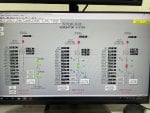
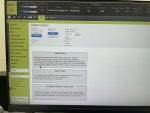
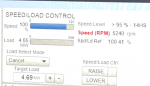
As far as I know, There are external PMS installation here, ( or it isnt?) where its uses excitation trimmer (manually adjust)to regulate the power output at 33kV to regulate the power factor. (Done by electrical operator) This is mostly use when there are one steam turbine were synchronized with the gas turbine. (Sorry I forgot to provided this information before) . Here is the interface ( see picture 1)
IMG_1173-compressed.jpeg

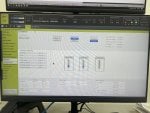
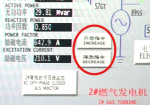
The GT Mark interface also have one which says at the generator-excitation page,
KV/KVAR control ( Raise & Lower) button. ( Picture 2)
(I didnt really understand why would need external excitation controller if the Mark already have one.)
IMG_1177-compressed.jpeg
After all, i am still new and on learning process and would hope you would explain to me.

Is it possible that the PMS is only used when the steam turbine is synchronised? Because the way that it works is that the steam turbine is operated manually, with preselected load ( by governing the steam valve based on available steam pressure) .
So in the situation, the load of steam turbine is constant and the first GT running in Isoch is the one that controlling the up and downs in load ( fluctuates around 1 to 2 MW).
Thats the story of when 1 GT is synchronised with steam turbine.

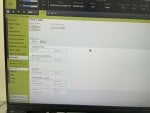
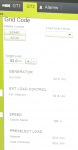
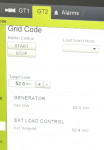
Came back to the origin of my first question for when 1 GT is synchronised with another second GT where synchronised but couldn’t share the load. I didnt know what PMS that would be managing that. And the best guess that I can do is there are one page in Mark* that named Grid Code
(picture 3) where this page there are selector for Master Control - Start&Stop button.
IMG_1178-compressed.jpegMaybe this is the PMS controller that you said for when two GT is running simultaneously? I mean should the Isoch GT needed to be set as Master?


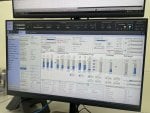
This evening, we tried again running the second GT and synchronised with the first GT, but same as before, couldn’t get the load up, even when set to preselect mode. It shows status “Spinning reserve” instead. The set target load on preselect is 9MW but the highest load it could get is just around 4MW. Heres the picture. ( This is before we start Preselect load mode.
IMG_1174-compressed.jpeg

I hope I can get a little explanation (if not all) in whats going on, whats am I facing and what should I do.

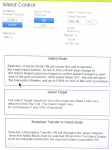
P/S : answering your question on whats Island mode of our machine means ,as far as i understand, when island mode is on, the GT will be the lead GT that will control the grid frequency in occurence of grid connection is loss.
i attached a picture of the page.
IMG_1179-compressed.jpeg

Very much Thanks
 
@EzzatHassim,

I apologize in advance for the length of this reply. And, I also apologize for the grammar and any typographical errors.

WOW! I really don't know where to start. If it were me and I were assigned to commission the GTs at the site, I would run as fast as I could to the KL airport and take the first plane I could get to Dubai or Doha. And work my way home from there. I simply cannot imagine working with both the Chinese and GE Belfort on the same job. It hurts my mind just thinking about it.

Don't confuse PSS (Power System Stabilizer) with PMS (Power Management System)--the two are not the same. PSS is almost always included with GE-design generators these days--and it has very little to do with kV or kVAR control (but it does have to do with the stability of either). Whatever they are using at your plant is probably some sort of PMS, just called something different.

You threw a new wrench into the works here--the steam turbine. WHAT IS THE SOURCE OF THE STEAM FOR THE STEAM TURBINE? Does the factory use steam in its process(es)?

I really do detest Pre-Selected Load Control; it is being misused just about everywhere in the world. AND, in many places in the world grid/system regulators are banning its use. Because when a grid experiences frequency deviations Pre-Selected Load Control acts in EXACTLY THE OPPOSITE MANNER than it should respond and contributes to grid instability and can make frequency disturbances worse.

To get a generator and its prime mover to produce stable power at any load it is necessary to control the energy flow-rate into the prime mover--and in this case, by control I mean stably control the energy flow-rate into the prime mover. If the source of the steam for the steam turbine is from the gas turbine exhaust heat that means that the pressure, flow-rate and temperature of the steam will vary with gas turbine load (because as the gas turbine is loaded and unloaded the exhaust temperature generally changes). If the HRSG (Heat Recovery Steam Generator--essentially a boiler that uses gas turbine exhaust heat to produce the steam) has auxiliary duct burners that can somewhat smooth out the steam temperature and flow-rate fluctuations and therefore the amount of electrical power being produced--but it comes at a cost as duct burners can be expensive to run.

In your first post to this thread, you said the power plant was being operated independently of the grid/utility. Is that always the case? Because the description of "Island Mode" is extremely confusing--and I've read it several times in the last 12 hours or so.

1737627247878.png

Let's try to understand the "Island Mode" description one sentence at a time, beginning with the second sentence.

"...As Such, this unit [the Lead Island turbine] will step change to the Island Target output and begin to control Island Frequency upon loss of the grid connection...."

That sounds reasonable. What it seems to be implying is by enabling Island Mode for a machine that machine is going to switch to frequency control very quickly (and that's usually Isochronous Speed Control mode for GE-design heavy duty gas turbines) when the grid connection is lost (intentionally or unintentionally). So for example, let's say that the load of the plant is 62.5 MW and the machine is producing 76.4 MW. What should happen--if the switch to Island Mode was automatic on loss of the grid connection--is that the load of the Lead Island turbine will "jump" to 62.5 MW from 76.4 MW, in other words, it will in a split second--literally--lose about 13.9 MW of its output. That's usually called a "bump change" in load, anything more than a couple of MW. (And they think they have a way of preventing a bump change--usually called bumpless transfer--and we'll get to that shortly.)

Essentially what this sentence is saying is that upon enabling Island Mode for the machine in question the governor function of the Mark* turbine control system will switch to frequency control mode (Isochronous Speed Control mode) when the grid connection is lost to adjust the machine's output to control the frequency to match the Island Target Freq Target Setpoint (the adjustment box at the top right of the snippet above). From the Island Target Freq Frequency Target adjustment box and the values below the Island Target Freq Frequency Setpoint adjustment box that was 100.2% of rated frequency at the time the photo was taken. And the values below the target frequency setpoint field are very confusing: Target Reference (100.2%) and Target (51.76 MW). WHERE DOES THE "Target Reference" VALUE GET SET/ADJUSTED? Because it doesn't appear there is a Target setpoint/reference adjustment field on this photo. (And why is the value below the adjustment box called Target Reference, when the description above the adjustment box is Target Setpoint???) It's simply not possible to set a load target reference for a machine operating as the frequency control machine--the Island Turbine. Not normally.

Look, when a machine is operating as the frequency control machine for a system (and that is usually Isochronous Speed Control mode) IT IS NOT POSSIBLE TO MANUALLY CHANGE THE LOAD OF THE MACHINE--EITHER WITH THE RAISE SPEED/LOAD OR LOWER SPEED/LOAD TARGETS OR BY USING PRE-SELECTED LOAD CONTROL. The function of Isochronous Speed Control mode is to adjust machine load--automatically--as the load on the system--the number lights and electric motors and air conditioners and computers and televisions and fans and tea kettles--changes to maintain the system frequency at or very near rated (or to the frequency setpoint, which is usually 100.0%). As was written before, if one tries to increase the load of a machine operating in Isochronous Speed Control mode all that will happen is that the system frequency will increase. The load on the system--the number lights and electric motors and air conditioners and computers and televisions and fans and tea kettles--WILL NOT CHANGE when someone tries to increase the load being produced by the Isochronous Speed Control machine. It's NOT POSSIBLE to produce more power than all of the load(s) on the system are using/requiring (well, it is possible, but not when a very small number of machines or only one machine are powering a system). (I'm speaking here of one machine operating to supply the load of the system--not in parallel with any other machines operating in Droop Speed Control mode). One cannot--or should not be able to--use Pre-Selected Load Control when frequency control mode (Isochronous Speed Control mode) is active. Full stop. Period.

Which brings us to the second sentence of the Island Mode description:

"...With Island Mode OFF, the unit will open the Generator Breaker and go to FSNL [Full Speed-No Load] on loss of the Grid Connection."

So, this description as photographed seems to be saying that by enabling Island Mode for G2 (or is it GT2--I'm SOOO Confused!!!) when the facility is connected to the utility grid that upon loss of the grid connected G2 (or is GT2) will automatically switch to Island Mode (Isochronous Speed Control mode) and control the plant frequency to the Island Target Frequency Target Setpoint [Target Reference]. However, if Island Mode IS NOT enabled for this machine when the grid connection is lost the machine will open (trip) the generator breaker and go to FSNL (typically 100.3% of rated speed). To me, that's somewhat confusing, as written and photographed. So, if the plant is connected to the grid and machine (G2 (or is it GT2?) is selected to be the Island Mode machine for the plant then while it is connected to the grid the value of Island Freq Target Frequency in the adjustment box and in the description below are not active--unless and until the grid connection is lost.

Let's say that G1 (GT1) and G2 (GT2) are both synchronized together and the plant is connected to the grid. G2 (GT2) has its Island Mode enabled and G1 (GT1) does not have its Island Mode enabled. And the grid connection is lost (intentionally or unintentionally). This last sentence of the Island Mode description says that when the grid connection is lost G1's (GT1) generator breaker will be opened and the machine will remain running and go to FSNL, and G2 (GT2) will switch to Island Mode operation (Isochronous Speed Control mode). That seems to reflect what you said--that the entire plant load is less than one gas turbine's rating, so, only one machine needs to be running to supply the plant load(s).

Okay, let's move on to the Island Target description:

"The Island Target should be set to the expected island Load once detached from the grid. The Island Target may be set between 0 and 10% of Base Load."

*!!!WOW!!!* And I do mean *!!!WOW!!!*. Again, one CANNOT SET A LOAD REFERENCE (MW) FOR A MACHINE OPERATING IN ISOCHRONOUS SPEED CONTROL MODE!!! One can set a plant frequency setpoint but why would it be anything other than 100.0%--for a normally functioning plant? The load will be whatever is required to maintain the frequency setpoint, which one would think, would be 100.0% percent of rated frequency. AND: From the photograph, the Island Target Freq Frequency Setpoint is a FREQUENCY setpoint (reference)--NOT A LOAD REFERENCE. How does one set a load target of between 0% and 10% of Base Load using a frequency target adjustment box? There is no Island Load adjustment box on this screen. There is a "Target" value, expressed in MW below the frequency adjustment box, but there doesn't appear to be a way to change the "Target" MW value.

Okay, let's try to keep moving to the next description, Bumpless Tranfer to Island Mode:

"Selection of Bumpless Transfer ON will disregard the Target Setpoint. Note that Island Mode must be selected ON and the Pre-Island Output must be manually matched to the expected Island Load within 5%.

Just another *!!!WOW!!!* here, folks.

I'm going to make a SWAG (Scientific Wild-Arsed Guess) at what this is trying to say--because I don't even want to try to describe what it is actually saying. So, when the plant is connected to the grid and G2 (or is it GT2?) is chosen to be the Lead Island turbine and Bumpless Transfer for G2 (or is it GT2?) is selected when the grid connection is lost (either intentionally or unintentionally) the governor WILL NOT switch to Isochronous Speed Control mode (Island Mode) but will change the machine's load to match the Target Setpoint (??????) which should have been adjusted prior to the loss of the grid connection to within 5% of the actual expected Island Load. There's just so much wrong with this that it's mind-numbing. (Can you see why if I was sent to commission the gas turbines I would have already called the travel service and made my flight arrangements to leave???)

So, I continue to ask where the load Target Setpoint is adjusted? It can't be Pre-Selected Load Load Reference value. And there's no adjustment box for a load value on this page as photographed. There is a Target value of 51.76 MW--but is it actually a target/reference/setpoint or the actual operating machine load at the time the photograph was taken? I think the value of Target is the actual operating load of the machine at the time the photograph was taken--because at the upper left corner of your photograph is says the machine load is 51.8 MW (which is 51.76 MW rounded up to a value with a single decimal place from a value with two decimal places). So, AGAIN I ask: Where is the Load Target value adjusted/set?

What it seems to be trying to say is that if the plant is connected to the grid and G2 is selected as the Lead Island turbine and Bumpless Transfer is desired then the actual machine operating load should be set to within 5% of the plant load before the grid connection is opened. But we don't know where the Load Target adjustment box is! And we don't know what happens after the grid connection is opened. This makes absolutely zero sense to me at all--trying to automate something that can be manually achieved easily, but by automating it so many problems are created. Not the least of which is writing a description of what this function/control scheme actually does.


Here's my guess, @EzzatHassim, the plant designers (the Chinese, probably) are trying to provide a means for the factory and power plant to continue to run if the connection to the grid is lost for whatever reason. So, they have this thing they call Island Mode (Isochronous Speed Control mode) which can be selected while the machine is connected to the grid which tells the machine it is selected on (and it should only be ONE of the GTs!!!) to be the frequency control machine when the grid connection is lost. (Again, it would be unusual to try to select Island Mode for both machines, whether or not the plant is connected to the grid.) If the grid connection is suddenly lost then the Island Load turbine will switch to Isochronous Speed Control mode and it's load will drop very quickly to reduce the plant frequency to match the Island Frequency Target Reference (Setpoint), which under normal conditions would most likely be 100.0%, maybe a little higher but not too much higher than 100.0%. It will probably hunt a little (meaning that the frequency will drop a little below the Island Frequency Target Reference (Setpoint) and then a little above the Island Frequency Target Reference (Setpoint) before eventually settling at or very near the Island Frequency Target Reference (Setpoint).

If it is known in advance that the plant is going to be separated from the grid it is possible to manually adjust the Island Machine Load (where and how to do that is a mystery at this point) to be very close to the expected plant load when the grid connection is lost to try to reduce the sudden drop in machine load when the grid connection is opened. But, how that process is automated and how it actually works in reality and if any other operator action is required after the grid connection is lost can only be answered by consulting the application code (programming) in the Mark* turbine control. Myself, I wouldn't try it without fully reviewing the application in the Mark* and probably asking some questions of GE Belfort and the Chinese engineering group.

That's about all I can offer at this time. PSS and PMS are not the same thing. One (PSS) attempts to limit generator terminal voltage disturbances with some hocus-pocus (it does work--but testing it and explaining how it works are both very difficult to do!); and the other (PMS) sends commands to the turbine control system to control load and/or frequency when disconnected from the grid, and sometimes even when multiple machines are synchronized to the grid. PMS operation can be very confusing and complicated to implement and to describe--and most often, when implemented by third-party groups it doesn't work very well. If at all.

If the steam turbine gets it steam from a boiler or source other than the gas turbine exhaust I can understand how it can be operated when the plant is separated from the grid. But, if it gets it's steam from the gas turbine exhaust then I don't really understand how it can be operated in any kind of load control--Pre-Selected Load Control or otherwise. For most cogeneration plants (where the steam is produced using the gas turbine exhaust heat) the steam turbine control valves are eventually just opened fully (100%) and the power that is produced is entirely a function of the steam flow produced by the gas turbine exhaust heat/flow. There would be ways to augment/supplement gas turbine exhaust temperature/flow OR some steam might be redirected to a condenser if flow got too high for the desired steam turbine power output. But, that would involve some pretty complicated valving and control schemes.

Again, in my opinion--based on the information provided and my experience--selecting Island Mode when the plant is connected to the grid does nothing, EXCEPT prepare the machine to switch to Isochronous Speed Control mode (frequency control mode) when the grid connection is lost or opened. The machine continues to operate in Droop Speed Control mode when the plant is connected to the grid, and automatically switches to frequency control (Isochronous Speed Control mode) when the plant gets separated from the grid (either intentionally or unintentionally). I completely DON'T UNDERSTAND how a machine load target (reference) can be set--or how it is set--when the machine is operating in Island Mode. Full stop. Period. When the plant is connected to the grid one can set a Pre-Selected Load Control reference (target) and the Mark* will adjust the machine load to match the Pre-Selected Load Control reference (target)--but when the grid connection is lost (intentionally or unintentionally) and the machine switches to Island Mode (Isochronous Speed Control mode) the load will be adjusted to whatever it needs to be to match the loads (lights and electric motors and air conditioners and computers and televisions and tea kettles) of the system being supplied in order to make the plant frequency equal to the Island Target Freq Target Target Setpoint (Target Reference), which should normally be 100.0% or something very close to that.

GE Belfort, France, always has a better idea. They are in the business of changing very long-standing control schemes because they can, and they fully and completely believe if it isn't invented in Belfort, France, then it should be modified to the ideas and concepts and beliefs of the employees of GE Belfort, France. And, they quite often do this without proper testing before implementing their modified control schemes, and it takes nearly an act of God to get them to fix it when it doesn't work. Throw in Chinese engineering and thinking and beliefs into the situation and things can get mixed up very quickly--with fingers being pointed in all directions to try to assess blame and responsibility, with little to nothing being done to troubleshoot and resolve the problem (because it's always the other party's fault--and what usually ends up happening is that the Mark* turbine control system gets blamed for anything and everything).

It's pretty important to know that most commissioning personnel are young people without a lot of experience and who don't really want to be working far away from home where their family and friends are. They are sent to the field to "get" experience, and once they "have" experience they immediately want to get out of working in the field. Most commissioning personnel have little or no experience actually operating plants or equipment--they quite often don't even have a full understanding of the design of the plant and equipment. Commissioning personnel are just sent to the plant to "get it working" and leave it to the plant operators to figure out the details. (Ask me how I know--I was one of those people when I first got started "in the business" of field engineering. I just didn't want to leave the field, and stayed in the business for almost 40 years. Very unheard of. I didn't want to be a manager, or a designer, or work every day in an office (BORING!). I did work with some experienced field people in the beginning, but they all moved on to other jobs or took a management job and didn't work more than 10 years or so in the field.) So, don't expect to get really great instructions or explanations or descriptions from the commissioning personnel.)

These days, there is usually a document that describes how a plant was intended to work BEFORE the plant was built and commissioned. For your site, it's probably written in Chinese, but you may get lucky and there is a version in Malay you can get your hands on and study. But, remember--that document expresses the intent. And often things don't work as intended and have to be modified and the manual doesn't get updated to reflect the changes. But, still, understanding what the intent was can quite often help to resolve the issue.

As to why it's not possible to load a second gas turbine when the plant is separated from the grid, I have some suspicions but without being able to see the application code running in the Mark* turbine control and without understanding if there is or isn't a PMS of some sort or name that is trying to control frequency and load I can't say anything for certain. I could ask you a LOT of questions, but I don't think you will be able to get all the answers. And, really--it's not reasonable to expect that you can learn how to operate your plant as designed with explicit instructions from afar. All I can do is provide some concepts and examples and ideas--but without being able to actually examine and review how the Mark* turbine controls are programmed and what the complete electrical control scheme is for the plant it's just not possible to teach you how to operate your plant over the World Wide Web.

I would like to see trends (using the Trender function of ToolboxST) of data from BOTH gas turbines when you are trying to operate them synchronized to each other and separated from the grid. I would need to see the loads of the two machines, the frequency of the plant (it will be the same for both machines when the two are synchronized together), the modes of operation for both machines--including which one(s) are selected to be operating in Island Mode, and if either or both are actually operating in Pre-Selected Load control mode. I would also need to see the TNR (Turbine Speed References) of both machines, and the TNRI (Isochronous Speed Reference) of both machines, as well as the values of the logic signals L70R and L70L.

Again, it shouldn't be possible for the Island Mode machine to be operated in Pre-Selected Load Control mode, but it should be possible for the other GT operating in Droop Speed Control mode to be operated in Pre-Selected Load Control mode (though it's not necessary to operate the machine in Pre-Selected Load Control mode; free governor mode--or "straight" Droop Speed Control mode will work just fine). (REMEMBER: It's absolutely NOT necessary to continuously operate a GE-design turbine in Pre-Selected Load Control mode at all times when it's not at rated power output!!! The load won't drift wildly--unless the system frequency drifts wildly.)

I would suggest, if the machines are separated from the grid, that after synchronizing the second machine to the Island Load machine, and without the second machine operating in Island Mode, to just use the RAISE SPEED/LOAD and LOWER SPEED/LOAD buttons to raise and lower the load of the second machine and see what happens to the loads of BOTH machines--and to the frequency of the plant. If it's still not possible to change the load of the second machine then there is something unusual (in my estimation and experience) about the configuration of the two machines. Or there's a PMS of some sort (like the DCS???) that's sending commands to the second machine and not allowing the second machine to increase load. And I also would need to see the trends of the data of the two machines as outlined above.

But without this information there's not much more I can add to this discussion. Those descriptions on that last photo you attached are just crazy--based on my experience. They were obviously written by engineers who, while they may be very smart, they aren't always the best at explaining or teaching others what they know--especially in writing. And, again, these two groups of people can overcomplicate something so fast it will make your head spin at 5000 RPM--by themselves. Imagine the two of them trying to automate something like this to work when it's connected to the grid and when it's not. And, it's not just the language difference. It's cultural for both groups. And engineers are really bad at using different words to mean the same things (like Reference and Setpoint and Target.... AARRGGH!!)--one would expect engineers, who are supposed to be trained to think logically, to use one word to describe something--not three words. Why have a machine called G2 and GT2? Why not just call it G2 or GT2 on all the screens? Or Rosmin, or Bala?

Anyway, I'd say you are in for a pretty wild ride. It sounds like people are simply trying over and over again to do the same thing and expecting different results ("Oh, look! It worked this time, we don't know why it didn't work before but we can stop trying to fix it because it worked this time. Just don't ask us why it worked this time and it didn't work before. But, see, it works!") Ask me how I know this. Because this isn't my first rodeo, @EzzatHassim.

Any typographical errors or misspellings are my own; I'm not the best proof-reader of my own writing. I think I caught most everything (after four re-reads!).
 
@EzzatHassim,

I have some observations and a couple of questions.

1737654680811.png

In this snippet above it says the "Status" is Isochronous Speed Ctrl. Is the plant connected to the grid in the five photos you posted above? (Why not call it "Island Mode"? In the good old days, there used to be three horizontal rows for the Status fields and why not tell the operator/supervisor the machine is in Island Mode by adding another horizontal row to this display?)


1737654300521.png

In this snippet of GT2 (or is G2?) operating, there is a drop down selector labeled "Load Select Mode". But it doesn't show any Load Control mode as being selected. What are the various Load Select Modes available in the drop-down selector?

Just below that is an adjustment box labeled "Target Load". Is that adjustment box for the Pre-Selected Load Control reference (command)? (Why not label the adjustment box as Pre-Selected Load Control if it is the Pre-Selected Load Control reference (command)???)

Below that is an area labeled as "Preselect Load" and it has two values--Setpoint and Load Command. They are both at 52.0 MW--which is the same value as appears in the adjustment box labeled as "Load Target". (WHY are seemingly the same values referred to as target and reference and command??? It's SOOOO CONFUSING!!!) If the machine is actually operating in Pre-Selected Load Control mode--how does the operator/supervisor know Pre-Selected Load Control made is active? (Look I know there are new HMI philosophies and color codes and screens since I left the field, but how does one know some key information like what mode is selected (Pre-Selected Load Control; Base Load; External Load Control (which might be from the DCS (or is it ECS?) or PMS) looking at this screen? It's seemingly crucial information (to me, anyway) that seems to be missing from this display.)

1737656233274.png

In the snippet above from GT1 (or is G1?), the Target Load Value is 4.69 MW. and the Load was 4.65 MW. How was the operator trying to raise the load--using the Target Load adjustment box? Or using the Speed/Load Ctrl buttons to the right of the Target Load adjustment box?

Was GT1 (or is it G1?) in Droop Speed Control mode--meaning it was NOT in Island Mode?
(It seems to be because in my experience a machine can't be in Spinning Reserve if it's in Isochronous Speed Control mode.)

Look, if the operator was using the Target Load (Pre-Selected Load Control reference/command) adjustment box to try to change load and the machine wasn't actually IN Pre-Selected Load Control mode the ONLY way to change load (if it's not in External Load Control mode (which seems to be an option from the first snippet above!)) is by using the Speed/Load Ctrl buttons on a display.

1737656907857.png

What do the two buttons circled in red on this DCS (ECS?) display do? Are they Speed/Load Ctrl buttons to change load? (SPEED/LOAD CTRL buttons are the "manual" way to load/unload a machine.)

Using Pre-Selected Load Control to continuously operate a GE-design heavy duty gas turbine is not a good way to operate a machine--for many reasons. I've already mentioned how it can exacerbate grid frequency disturbances and make a bad situation worse. (It's been covered many times on Control.com.) And, it's just plain lazy. It's a lazy person's way of operating a machine. And, it's a non-thinking person's way of operating a machine--because they ASSUME that if there is no load reference/target/command when the machine is running at some load between generator breaker closure (after synchronization) and Base Load that the machine will "take off" and wildly change load for no reason. And, that's simply not true. Not at all. As long as the frequency of the system/grid the machine is synchronized to is stable the output of a machine operating at Part Load (a load between breaker closure after synchronization and Base Load) without Pre-Selected Load Control enabled and active the fuel flow-rate into the machine will be stable. Full stop. Period.

And if the frequency of the grid is unstable then EVERY machine synchronized to that grid is going to experience frequency deviations. Full stop. Period. Some people (very) mistakenly believe that when the grid frequency is unstable THEIR MACHINE SHOULD BE STABLE--meaning the load of their machine(s) should not be changing. And, that's simply untrue and physically impossible. They believe that if the machine is being operated in Pre-Selected Load Control at Part Load when the grid/system it is synchronized to is experiencing frequency deviations that the load of their machine will be "more stable" or that it should even be perfectly stable because Pre-Selected Load Control is enabled and active. And, that is also simply not true. Never has been. Never will be. And, it defeats one of the benefits of Droop Speed Control--which is that when the frequency of the grid/system a machine is synchronized to is not at rated then machines running in Droop Speed Control at Part Load will automatically change their electrical power output in order to try to keep the grid frequency from getting too far out of control. Droop Speed Control WILL NOT return a grid/system to normal frequency, but it will prevent a bad situation from becoming worse--UNLESS Pre-Selected Load Control is active, and then the machine will do exactly the opposite of what it should do which contributes to the problems.

In the good old days, operators had to push and/or hold a button to change load, or they had to twist and/or hold a bat handle switch to change load. And they did so while watching the wattmeter (or the MW meter). Nowadays they have to click on the RAISE SPEED/LOAD or LOWER SPEED/LOAD "button" with the mouse to change load (manually). There was no Pre-Selected Load Control. And some operators think that they have to continuously click on the RAISE or LOWER SPEED/LOAD button to change load by a significant amount and that will eventually damage their mouse button finger because it so hard to click the mouse button and it's repetitive (but, really, how often do operators have to change load--manually or automatically???). And, that was not true in the early good old days of GE HMIs. One could hover the mouse over the RAISE SPEED/LOAD or LOWER SPEED/LOAD buttons and press and hold the left button of the mouse down and the load would change until the load got to where the operator was told to put it. Well, some people in GE decided that wasn't a good idea, so they changed it so that multiple clicks on the RAISE SPEED/LOAD or LOWER SPEED/LOAD buttons would be "accumulated" and would keep changing the reference until the number of clicks expired. In that scenario as the operator quickly clicked on a RAISE or LOWER button the number of clicks would appear as a small number on the face of the button and when the operator stopped clicking the number would decrement until reaching 0. I don't know if this has changed recently, or because of the new HMI philosophies, but it was one of the way GE tried to make it easier for operators (who, whether they will admit it or not, have a really cushy job when the machine is running at steady state condition (stable output)).

There's another way the machine load can be changed without the operator hurting his/her mouse button finger. And that is to set the desired load in the Pre-Selected Load Control reference ("Load Target") (or setpoint or command) and then enabling Pre-Selected Load Control. Pre-Selected Load Control will ramp the load up or down to the desired value. At that point all the operator has to do is click ONCE on either RAISE SPEED/LOAD or LOWER SPEED/LOAD to cancel/abort Pre-Selected Load Control. And, magically, the machine will stay at the load it's currently at--until the load needs to be changed. That's the best use of Pre-Selected Load Control--to make significant load changes by entering the desired load value into the command (reference; setpoint; target) field and then enabling Pre-Selected Load Control and letting it do the work of raising or lowering the load to the desired value. Once it reaches the value, it won't exceed the load so if the operator gets distracted it's going to stay at that load. When the operator remembers, he can then click ONCE or RAISE SPEED/LOAD or LOWER SPEED/LOAD to cancel/about Pre-Selected Load Control and the machine will remain at its current load.

But using Pre-Selected Load Control to change load and then leaving Pre-Selected Load Control continuously active is not advisable. And in some parts of the world it is not allowed--and that trend is probably going to continue to grow.

And, if the operators at your plant are using "Target Load" to change load without Pre-Selected Load Control being active, well, ..., that's not going to work--at all. (I've seen this happen several times over 4 decades--operators changing the Pre-Selected Load Control command (reference; target; setpoint) without enabling Pre-Selected Load Control enabled and active and then complaining the Mark* wasn't working properly. Yes; it does happen--especially at newly commissioned plants... )

Also, for machines with External Load Control it might be that the external control system sending commands to the Mark* turbine control system is sending commands that will cancel Pre-Selected Load Control preventing it from actually changing load. An external load command (target; reference; setpoint) might be coming from the DCS (or is it ECS?) or the PMS (or whatever it's called).

There's several possibilities for why G1 (or is GT1?) can't be loaded; that's just a couple of them. (Maybe they are trying to use Target Load (Pre-Selected Load Control???), or the external load reference function is enabled and canceling Target Load (Pre-Selected Load Control).)

As an operator (or technician) you can really make yourself a very valuable employee if you will learn how to use the Trender function of ToolboxST. It is really truly an extremely powerful troubleshooting too. While you're learning how to use it, if you record data during start-ups and shutdowns and when the machine is operating at steady state conditions or just changing load those trends can be invaluable when some problem occurs and people need a normal condition to compare against. Running Trender WILL NOT TRIP THE TURBINE!!! It has so many good features, and it's not too difficult to learn how to use.

Trender could be an invaluable tool to watch several data values and even logic values while a problem is occurring--like trying to determine why the load of G1 (or is it GT1?) isn't changing when the operators and their supervisors (or the commissioning personnel) think it should be changing.

Anyway, if you will investigate the questions above and provide some answers you just might find the problem with not being able to load the second machine when the plant is not connected to the grid.
 

Attachments

Top