Facebook
 Google
 GitHub
 Linkedin
Helllo,you can ask the resident engineer to see what is the problem in this case.I would suggest you to se the functional description document to understand what is going to better see the implications.Also are you trying to start up the gas turbine in droop or isochronous,because,unless a software is implemented.You should be starting the other turbine in droop mode anyway,I think that might be the problem,but anyway I suggest you to see the functional descriptionHi all,
I have been encountering some issues that relatable to this thread, and wondering if someone can help educate me in this matter.
First of all I am new (just started working in powerplant for a paper making factory)
We have 2 units of GE 6F rated at 80MW each, with Mark IVe control system. Our powerplant is just supplying the power only for our own factory ( island) and didnt have national grid connection. The maximum factory uses load as of now is around 65MW.
We only running one unit of GT at one time (enough to support the load) running at Isochronous speed control.
Also in Island mode ON.
The problem that we encountered is when we started the other one GT and after synchronised, with intended to run at preselect mode, the newly started GT couldn’t loading the load ( just merely 1MW) it cannot raise the load as per preselected value at 6MW.
Why is this happening, is there anything that we missed, such as turning off the island mode for the new GT or manually raising the excitation ,etc .
Is there anything we as the operator can do, hoping someone can helps me out to understand this better.
Big thanks
Load control by Droop vs isochronous in island mode
- Thread starter jackson
- Start date
Scroll to continue with content
@EzzatHassim,
When two or more machines (generators and their prime movers) are synchronized together supplying load(s)—ONLY ONE MACHINE SHOULD BE OPERATING IN ISOCHRONOUS SPEED CONTROL MODE (ISLAND MODE AT YOUR INSTALLATION). If two or more machines are operating simultaneously in Isochronous Speed Control mode the two Isochronous machines will usually fight each other for control of the system frequency—and it’s usually an ugly battle (especially if the loads on the grid are changing, particularly by large amounts) and can lead to blackouts. You mentioned something in your first post about both GTs being in Island Mode when the second machine couldn’t be loaded.
If the second machine being synchronized was also in Island Mode then it’s conceivable that could be at least part of the cause of being unable to load the machine (that would be unusual in my experience—but possible, nonetheless—not knowing what the application code is and knowing what the HMI displays look like (YIKES!)).
Again there’s a lot we don’t know about the equipment, configuration and programming.
I could use a te tarik right now! Selamat petang!
When two or more machines (generators and their prime movers) are synchronized together supplying load(s)—ONLY ONE MACHINE SHOULD BE OPERATING IN ISOCHRONOUS SPEED CONTROL MODE (ISLAND MODE AT YOUR INSTALLATION). If two or more machines are operating simultaneously in Isochronous Speed Control mode the two Isochronous machines will usually fight each other for control of the system frequency—and it’s usually an ugly battle (especially if the loads on the grid are changing, particularly by large amounts) and can lead to blackouts. You mentioned something in your first post about both GTs being in Island Mode when the second machine couldn’t be loaded.
If the second machine being synchronized was also in Island Mode then it’s conceivable that could be at least part of the cause of being unable to load the machine (that would be unusual in my experience—but possible, nonetheless—not knowing what the application code is and knowing what the HMI displays look like (YIKES!)).
Again there’s a lot we don’t know about the equipment, configuration and programming.
I could use a te tarik right now! Selamat petang!

@WTF?
The source of the steam for steam turbine is supplied from another incenerator boiler, which is separate from HRSG . The steam generated from HRSG is supplied to the process for paper making.
Yes, my working place only use our in house electricity, excluded and not connected to the national grid at all.
Thank tou for your expansion on the island mode and the bumpless transfer, now i understand much better on those. I didnt have anyone explaining that to me even a year working here already.
But the thing i didnt understand is our plant is not connected to the national grid, how do i differentiate the“grid” mentioned there is the internal plant grid or the national grid? Is it the grid that connected by 52L breaker? As far as i know, we only use 52G breaker.
The “target reference “ value adjustment is the from above them. The island target frequency target setpoint. )See its the same as 100.20%)
The G2 is same as GT2. I dont know who made the HMI, for sure it needs improvement, we even have some discrepancy between GT1 and GT2 HMI design.
I get it. Either me is confused . Theres no adjustment for target load. How do we set one? You did said that i couldn’t be the target load is set at the preselect load.
Maybe its on the “Grid Code” page?
Yes you’re correct, the load displayed is the actual currently load has been handled by the machine (GT2) at that time the photograph was taken.
Yes, as youre saying, as for now, it is only one GT is running (GT2) and its on the island mode ON. Its display status running on “Isochcronous speed control” all the time as we are running at the fluctuations of load at constant frequency.
I will try my best to get the trend data for you, as of now, i am still working on learning to get my way through the trender( theres no one can teach me here). I wonder how much more time of experience i would be needed in order to be like you ( to get on the field engineering) because thats been my goal actually. Would appreciate some tips too.
The list of drop down selection of the “Load select mode” is
Yes the below adjustment box labelled “Target Load” is the for preselected load command.
In the snippet of GT1 where the target load value is 4.69MW and the load was 4.65MW ; yes adjustments can be made by inserting value at the load adjustment box.
( its the same at the “grid code” page)
But in that picture, the preselected mode has not been selected yet. The Target Load is “auto”. The actual load ( on top left corner) will follow the target load value.
Answering your question, i didnt know the GT1 is running in Droop or what, it only displays Spinning reserve while we are trying to share the load from the GT2 aftwr synchronized both of them.
While on GT2 its always displaying Isochrounous speed control.
The two red circled buttons on DCS display is the button the electrical staff regulate the excitation manually in order to regulate the power factor between ST and GT generator ( if the steam turbine is online) .
If only one GT is online, theres nothing can do to regulate the power factor as both MW and MVAR is produced by only one generator.
There are no GE commissioning tech. The GT has been commissioned last 2 years and after been commissioned we already running the GT1 at the start. During that time our plant load was only around 40MW, and theres a problem with the HRSG. Since that, we only operating GT2 for more than a year until the GT1 HRSG been fixed. And now HRSG 1 been fixed and we are ready to start running back GT1 and here we are.
Actually last 2 days There are one control TFA from fieldcore, but she didn’t happened to really understand the Chinese (communication barrier) and
Seems like didnt really deep into technical of operations. Cant help either.
Updates as of today,
We did actually manage and successfully load the GT1.
The method is by reducing the Target setpoint ( 100.2%) of GT2 to 100.05% while keeping 100.0% at the GT1. Then the GT1 can be load up according to our preselected load value. And the running status displayed “ Preselect Load”.
Mindblown isnit
The source of the steam for steam turbine is supplied from another incenerator boiler, which is separate from HRSG . The steam generated from HRSG is supplied to the process for paper making.
Yes, my working place only use our in house electricity, excluded and not connected to the national grid at all.
Thank tou for your expansion on the island mode and the bumpless transfer, now i understand much better on those. I didnt have anyone explaining that to me even a year working here already.
But the thing i didnt understand is our plant is not connected to the national grid, how do i differentiate the“grid” mentioned there is the internal plant grid or the national grid? Is it the grid that connected by 52L breaker? As far as i know, we only use 52G breaker.
The “target reference “ value adjustment is the from above them. The island target frequency target setpoint. )See its the same as 100.20%)
The G2 is same as GT2. I dont know who made the HMI, for sure it needs improvement, we even have some discrepancy between GT1 and GT2 HMI design.
I get it. Either me is confused . Theres no adjustment for target load. How do we set one? You did said that i couldn’t be the target load is set at the preselect load.
Maybe its on the “Grid Code” page?
Yes you’re correct, the load displayed is the actual currently load has been handled by the machine (GT2) at that time the photograph was taken.
Yes, as youre saying, as for now, it is only one GT is running (GT2) and its on the island mode ON. Its display status running on “Isochcronous speed control” all the time as we are running at the fluctuations of load at constant frequency.
I will try my best to get the trend data for you, as of now, i am still working on learning to get my way through the trender( theres no one can teach me here). I wonder how much more time of experience i would be needed in order to be like you ( to get on the field engineering) because thats been my goal actually. Would appreciate some tips too.
The list of drop down selection of the “Load select mode” is
- preselect
- Base
- External
Yes the below adjustment box labelled “Target Load” is the for preselected load command.
In the snippet of GT1 where the target load value is 4.69MW and the load was 4.65MW ; yes adjustments can be made by inserting value at the load adjustment box.
( its the same at the “grid code” page)
But in that picture, the preselected mode has not been selected yet. The Target Load is “auto”. The actual load ( on top left corner) will follow the target load value.
Answering your question, i didnt know the GT1 is running in Droop or what, it only displays Spinning reserve while we are trying to share the load from the GT2 aftwr synchronized both of them.
While on GT2 its always displaying Isochrounous speed control.
The two red circled buttons on DCS display is the button the electrical staff regulate the excitation manually in order to regulate the power factor between ST and GT generator ( if the steam turbine is online) .
If only one GT is online, theres nothing can do to regulate the power factor as both MW and MVAR is produced by only one generator.
There are no GE commissioning tech. The GT has been commissioned last 2 years and after been commissioned we already running the GT1 at the start. During that time our plant load was only around 40MW, and theres a problem with the HRSG. Since that, we only operating GT2 for more than a year until the GT1 HRSG been fixed. And now HRSG 1 been fixed and we are ready to start running back GT1 and here we are.
Actually last 2 days There are one control TFA from fieldcore, but she didn’t happened to really understand the Chinese (communication barrier) and
Seems like didnt really deep into technical of operations. Cant help either.
Updates as of today,
We did actually manage and successfully load the GT1.
The method is by reducing the Target setpoint ( 100.2%) of GT2 to 100.05% while keeping 100.0% at the GT1. Then the GT1 can be load up according to our preselected load value. And the running status displayed “ Preselect Load”.
Mindblown isnit
@EzzatHassim,
Congratulations on the accomplishment. I'm not clear on exactly how this happened, or of the conditions.
This is going to take me a while to work through. I realize English is not your first language so I may have some questions about your grammar choices--it's not a criticism, I just want to be sure I'm properly responding to your statements/questions.
It would be EXTREMELY helpful if you can answer the questions or respond to the questions or statements in bold below, please!!! (Sometimes I bold a word or two in a statement just for emphasis--you don't have to respond to those one or two words in bold; only the full questions in bold, or any full sentence/statement in bold.)
Were BOTH machines in Island Mode when GT1 was started, synchronized with GT2, and successfully loaded?
Where (what HMI display) is the Pre-Selected Load Control command/reference/target/setpoint being adjusted?
Is it on this display--the "Target Load" adjustment box?
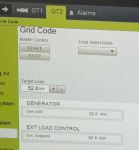
I also want to point out the area at the bottom of the snippet, EXT LOAD CONTROL, and the value in the field: 52.4 MW. I suspect that this is the "result" of a command or commands from an external load/frequency control method (PMS??? or the DCS/ECS). What is the value of EXTERNAL LOAD CONTROL Ext. Setpoint for GT1 when GT1 is running and synchronized to GT2 and you are attempting or actually loading GT1?
Thank you for clarifying what happens when you click on "Load Select Mode". SOMEWHERE on one of the HMI displays it should indicate the load control (select) mode--either as Auto or Preselect or Base. Maybe on the "Overview" HMI display???
For a GE-design heavy duty gas turbine driving a generator and NOT operating in Isochronous Speed Control mode (or NOT OPERATING in Island Mode/Island Turbine at your plant) the gas turbine IS ALWAYS operating in Droop Speed Control mode between FSNL and Base Load. EVEN if Pre-Selected Load Control mode is selected (because Pre-Selected Load Control mode runs "on top of" Droop Speed Control by modifying the Turbine Speed Reference (Mark* signal name TNR). Personally, I think if the HMI tells you it's operating in Isochronous Speed Control mode when it is operating in Isochronous Speed Control mode then it should tell you when its operating in Droop Speed Control mode or Base Load when it's not in Isochronous Speed Control mode. (Confusing, but think about it.) Again, maybe on the "Overview" HMI display??? The HMIs seem to have some very serious--and confusing--issues.
I suspect GT1 was not in Island Mode if you are using Pre-Selected Load Control to control it's power output. (Because a properly configured GE Mark* turbine control system would not allow enabling Pre-Selected Load Control or External Load Control when Isochronous Speed Control (Island Turbine mode) is active! It would probably allow someone to change the Pre-Select Load Control reference/target/setpoint/command value, but it wouldn't allow the Mark* to use the value to actually control machine load. And maybe that's also part of the confusion--that people think that by changing the "Load Target" value (the Pre-Selected Load Control reference/target/setpoint/command) value that Pre-Selected Load Control is ALWAYS active.?.?.?)
But I'm really unclear about how reducing the Island Target Freq Target Setpoint of GT2 allowed GT1 to be loaded.... I need to think about that one for a while. I STILL suspect there is some external load control (PMS???) that is at work "in the background" that is hampering operations. While writing the previous sentence one possible explanation came to mind and that is that with GT2's Island Target Freq Target Setpoint at 100.2% that means the frequency of the plant was at 50.1 Hz ((100.2%*50Hz)/100)=50.1 Hz) and that is "high" so the external load control (PMS???) won't allow GT1 to be loaded, or keeps sending commands to GT1 to reduce load when the operator tries to increase load with the system frequency at 50.1 Hz.
Again, somewhere very near that "Load Control" drop-down box there should be some indication of WHICH of the modes (if any) are active!!! It should not be necessary to search other HMI displays to find which mode is actually active--unless the active Load Control mode is displayed in the "Load Control" drop-down box.?.?.?
You wrote:
"In the snippet of GT1 where the target load value is 4.69MW and the load was 4.65MW ; yes adjustments can be made by inserting value at the load adjustment box.
( its the same at the “grid code” page)"
The ONLY time the Load Target value is going to be active is when Pre-Selected Load Control is active AND the machine IS NOT operating in Isochronous Speed Control Mode. (Or at least that's the way it was on EVERY GE Mark* turbine control system I worked on for nearly 40 years.) You can change the reference/target/setpoint/command value for Pre-Selected Load Control as often as you would like--but unless Pre-Selected Load Control is enabled and active the Mark* isn't going to adjust the machine load to match the reference/target/setpoint/command value.
The same is true for any External Load Control reference/target/setpoint/command value--the Mark* won't adjust the machine load to match the value unless External Load Control Reference is active AND the machine IS NOT operating in Isochronous Speed Control Mode.
AND, I SINCERELY wish you and the operators at your plant would stop using Pre-Selected Load Control--at least for a testing/familiarization period. It's NOT necessary--and if you all would just try it you would see it's not necessary. I completely understand that someone (probably the GE commissioning personnel) told operations supervisors it was "necessary" to use Pre-Selected Load Control to operate the machine at all times. But, one must remember: GE commissioning personnel (FieldCorp) ARE NOT TRAINED TO BE OPERATORS! (They should be at least minimally trained as operators, but they aren't. Sad, isn't it?) Whatever they learn about operating a GT was by word-of-mouth from colleagues and watching colleagues. They DO NOT understand, nor can they explain, Droop Speed Control (which is central to operating any prime mover driving a generator). The work of commissioning is very different from operating a machine, though it does involve operating the machine and in many cases giving some instruction to the operators who will be operating the machines.
And I'm EXTREMELY confused about what you are calling Pre-Selected (or Pre-Select Load Control). Do you mean Target Load on the Grid Code HMI display? You also mentioned Pre-Selected Load Control in relation to the steam turbine generator. What kind of turbine control system does the steam turbine-generator use, and does it actually have a place or field where an operator can set a load reference/target/setpoint/command value (in MW)?
About the "Grid Code" HMI display.... Well, Grid Code refers to special logic and selection buttons that is required in some parts of the world to satisfy grid operators/regulators. Whoever did the HMI for Nine Dragon Selangor was VERY lazy and decided to modify the Grid Code display for your installation's island operation requirements and didn't bother to change the name of the page (to something like "Island Mode" or "Island Control" or "Island Operation" ...) which is probably contributing to some of the confusion at the site. In addition the labels/descriptions for the functions on that page are horrendously confusing also. As are some of the descriptions and designations on other pages.
" But the thing i didnt understand is our plant is not connected to the national grid, how do i differentiate the“grid” mentioned there is the internal plant grid or the national grid? Is it the grid that connected by 52L breaker? As far as i know, we only use 52G breaker."
I'm sorry for any confusion. A "grid" is anything from a plant like yours (supplying a paper mill) to the Malaysian national grid. Grid refers to "transmission and distribution system"--and your plant (installation) is a small grid in this sense. The power is being generated onsite and transmitted (through the cables and wires connecting the various loads to the generation bus) distributed onsite to everywhere electric power is required (offices; residences (probably; I don't know for sure); and the paper mill and its operations). I will try to think of some other way to differentiate the plant grid from the national grid--maybe just something like that? Plant grid or national grid?
You would be connected to the national grid through 52L (most likely as 52L usually refers to a "line" connection breaker--such as one connecting a power plant to a national grid). 52L is also sometimes referred to a "tie-line" breaker--again, a breaker connecting (tying) a power plant to a national grid.
52G refers to the generator breaker of a machine (prime mover and generator--a gas turbine-driven (or steam turbine-driven) generator in your onsite power plant).
Thank you for clarifying the source of the steam for the steam turbine.
Yes; it is certainly mind-blowing. Actually, I think the application code (configuration and programming) in the Mark* is good, but the HMI configuration and displays are shite. Pure shite--at least when it comes to how the machines AT YOUR plant are and need to be operated. As others have said before on Control.com, as a commissioning engineer more time is spent fixing HMI errors than correcting programming or configuration. What comes out of the GE facility for HMIs is usually not very good and needs a lot of "massaging" to get it to be correct and match the way the machine is built and to be operated at a particular installation.
Congratulations on the accomplishment. I'm not clear on exactly how this happened, or of the conditions.
This is going to take me a while to work through. I realize English is not your first language so I may have some questions about your grammar choices--it's not a criticism, I just want to be sure I'm properly responding to your statements/questions.
It would be EXTREMELY helpful if you can answer the questions or respond to the questions or statements in bold below, please!!! (Sometimes I bold a word or two in a statement just for emphasis--you don't have to respond to those one or two words in bold; only the full questions in bold, or any full sentence/statement in bold.)
Were BOTH machines in Island Mode when GT1 was started, synchronized with GT2, and successfully loaded?
Where (what HMI display) is the Pre-Selected Load Control command/reference/target/setpoint being adjusted?
Is it on this display--the "Target Load" adjustment box?
I also want to point out the area at the bottom of the snippet, EXT LOAD CONTROL, and the value in the field: 52.4 MW. I suspect that this is the "result" of a command or commands from an external load/frequency control method (PMS??? or the DCS/ECS). What is the value of EXTERNAL LOAD CONTROL Ext. Setpoint for GT1 when GT1 is running and synchronized to GT2 and you are attempting or actually loading GT1?
Thank you for clarifying what happens when you click on "Load Select Mode". SOMEWHERE on one of the HMI displays it should indicate the load control (select) mode--either as Auto or Preselect or Base. Maybe on the "Overview" HMI display???
For a GE-design heavy duty gas turbine driving a generator and NOT operating in Isochronous Speed Control mode (or NOT OPERATING in Island Mode/Island Turbine at your plant) the gas turbine IS ALWAYS operating in Droop Speed Control mode between FSNL and Base Load. EVEN if Pre-Selected Load Control mode is selected (because Pre-Selected Load Control mode runs "on top of" Droop Speed Control by modifying the Turbine Speed Reference (Mark* signal name TNR). Personally, I think if the HMI tells you it's operating in Isochronous Speed Control mode when it is operating in Isochronous Speed Control mode then it should tell you when its operating in Droop Speed Control mode or Base Load when it's not in Isochronous Speed Control mode. (Confusing, but think about it.) Again, maybe on the "Overview" HMI display??? The HMIs seem to have some very serious--and confusing--issues.
I suspect GT1 was not in Island Mode if you are using Pre-Selected Load Control to control it's power output. (Because a properly configured GE Mark* turbine control system would not allow enabling Pre-Selected Load Control or External Load Control when Isochronous Speed Control (Island Turbine mode) is active! It would probably allow someone to change the Pre-Select Load Control reference/target/setpoint/command value, but it wouldn't allow the Mark* to use the value to actually control machine load. And maybe that's also part of the confusion--that people think that by changing the "Load Target" value (the Pre-Selected Load Control reference/target/setpoint/command) value that Pre-Selected Load Control is ALWAYS active.?.?.?)
But I'm really unclear about how reducing the Island Target Freq Target Setpoint of GT2 allowed GT1 to be loaded.... I need to think about that one for a while. I STILL suspect there is some external load control (PMS???) that is at work "in the background" that is hampering operations. While writing the previous sentence one possible explanation came to mind and that is that with GT2's Island Target Freq Target Setpoint at 100.2% that means the frequency of the plant was at 50.1 Hz ((100.2%*50Hz)/100)=50.1 Hz) and that is "high" so the external load control (PMS???) won't allow GT1 to be loaded, or keeps sending commands to GT1 to reduce load when the operator tries to increase load with the system frequency at 50.1 Hz.
Again, somewhere very near that "Load Control" drop-down box there should be some indication of WHICH of the modes (if any) are active!!! It should not be necessary to search other HMI displays to find which mode is actually active--unless the active Load Control mode is displayed in the "Load Control" drop-down box.?.?.?
You wrote:
"In the snippet of GT1 where the target load value is 4.69MW and the load was 4.65MW ; yes adjustments can be made by inserting value at the load adjustment box.
( its the same at the “grid code” page)"
The ONLY time the Load Target value is going to be active is when Pre-Selected Load Control is active AND the machine IS NOT operating in Isochronous Speed Control Mode. (Or at least that's the way it was on EVERY GE Mark* turbine control system I worked on for nearly 40 years.) You can change the reference/target/setpoint/command value for Pre-Selected Load Control as often as you would like--but unless Pre-Selected Load Control is enabled and active the Mark* isn't going to adjust the machine load to match the reference/target/setpoint/command value.
The same is true for any External Load Control reference/target/setpoint/command value--the Mark* won't adjust the machine load to match the value unless External Load Control Reference is active AND the machine IS NOT operating in Isochronous Speed Control Mode.
AND, I SINCERELY wish you and the operators at your plant would stop using Pre-Selected Load Control--at least for a testing/familiarization period. It's NOT necessary--and if you all would just try it you would see it's not necessary. I completely understand that someone (probably the GE commissioning personnel) told operations supervisors it was "necessary" to use Pre-Selected Load Control to operate the machine at all times. But, one must remember: GE commissioning personnel (FieldCorp) ARE NOT TRAINED TO BE OPERATORS! (They should be at least minimally trained as operators, but they aren't. Sad, isn't it?) Whatever they learn about operating a GT was by word-of-mouth from colleagues and watching colleagues. They DO NOT understand, nor can they explain, Droop Speed Control (which is central to operating any prime mover driving a generator). The work of commissioning is very different from operating a machine, though it does involve operating the machine and in many cases giving some instruction to the operators who will be operating the machines.
And I'm EXTREMELY confused about what you are calling Pre-Selected (or Pre-Select Load Control). Do you mean Target Load on the Grid Code HMI display? You also mentioned Pre-Selected Load Control in relation to the steam turbine generator. What kind of turbine control system does the steam turbine-generator use, and does it actually have a place or field where an operator can set a load reference/target/setpoint/command value (in MW)?
About the "Grid Code" HMI display.... Well, Grid Code refers to special logic and selection buttons that is required in some parts of the world to satisfy grid operators/regulators. Whoever did the HMI for Nine Dragon Selangor was VERY lazy and decided to modify the Grid Code display for your installation's island operation requirements and didn't bother to change the name of the page (to something like "Island Mode" or "Island Control" or "Island Operation" ...) which is probably contributing to some of the confusion at the site. In addition the labels/descriptions for the functions on that page are horrendously confusing also. As are some of the descriptions and designations on other pages.
" But the thing i didnt understand is our plant is not connected to the national grid, how do i differentiate the“grid” mentioned there is the internal plant grid or the national grid? Is it the grid that connected by 52L breaker? As far as i know, we only use 52G breaker."
I'm sorry for any confusion. A "grid" is anything from a plant like yours (supplying a paper mill) to the Malaysian national grid. Grid refers to "transmission and distribution system"--and your plant (installation) is a small grid in this sense. The power is being generated onsite and transmitted (through the cables and wires connecting the various loads to the generation bus) distributed onsite to everywhere electric power is required (offices; residences (probably; I don't know for sure); and the paper mill and its operations). I will try to think of some other way to differentiate the plant grid from the national grid--maybe just something like that? Plant grid or national grid?
You would be connected to the national grid through 52L (most likely as 52L usually refers to a "line" connection breaker--such as one connecting a power plant to a national grid). 52L is also sometimes referred to a "tie-line" breaker--again, a breaker connecting (tying) a power plant to a national grid.
52G refers to the generator breaker of a machine (prime mover and generator--a gas turbine-driven (or steam turbine-driven) generator in your onsite power plant).
Thank you for clarifying the source of the steam for the steam turbine.
Yes; it is certainly mind-blowing. Actually, I think the application code (configuration and programming) in the Mark* is good, but the HMI configuration and displays are shite. Pure shite--at least when it comes to how the machines AT YOUR plant are and need to be operated. As others have said before on Control.com, as a commissioning engineer more time is spent fixing HMI errors than correcting programming or configuration. What comes out of the GE facility for HMIs is usually not very good and needs a lot of "massaging" to get it to be correct and match the way the machine is built and to be operated at a particular installation.
@WTF?
Hi , I really appreciate your time of support and pouring massive new knowledge for a newbie like me. Thank you very much. Spending time on this forum has give me a lot compared to a year working here.
Sorry for my bad grammar,I will try my best to explain better and try to answer you as much as i can.
Answering your bold questions,
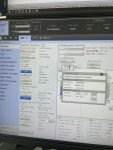
Hi , I really appreciate your time of support and pouring massive new knowledge for a newbie like me. Thank you very much. Spending time on this forum has give me a lot compared to a year working here.
Sorry for my bad grammar,I will try my best to explain better and try to answer you as much as i can.
Answering your bold questions,
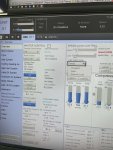
- Both machine is put on Island Mode, GT2 is already are, but when starting GT1, we also put it ON island mode prior synchronization with GT2. But before loading the GT1, we closed the 52L breaker( didnt have in Mark, but in DCS electrical screen) I believe this is not matter since there are no written documentation that said the generator is connected to the 52L switchgear. But we have display status of 52L in Mark screen. Either closed or open position. Then, we turn the Island mode OFF for GT1. They say this step “may not matter”. And then we reduce the GT2 Target frequency from 100.2% to 100.05%. Next, elect Preselect Load at the Load Select Mode drop down list. And click the box at the Target Load and the pop up box appear named L90PSEL_CMD. then insert the intended Load value at the Setpoint and Confirm. I attach the image for your reference.
- We can access the Pre selected Load control command either from the Overview page and the Grid Code page of the Mark*. Its the same. i think from the Overview page is just a shortcut from the Grid Code page for operator easy access to monitor other parameters while adjusting the Target Load value.
- Im sorry but i didnt have the information on The value of the “External Load Control” “Ext setpoint” for GT1 when we are doing the test because we didnt open this “Grid Code” page and just adjusting the preselect load at the Overview page. to be honest they didnt even bother to open this “Grid Code” page ever.
- The steam turbine use DCS control system, where the steam turbine operator use Increase and Decrease button for control valve of inlet steam into the steam turbine. They named the control page -DEH ( i attach the picture)
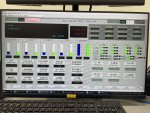 the operation is ; When they got stronger steam pressure from the incenerator boiler, they can increase the opening of the steam inlet and the Load will be automatically increased . ( GT load will be reduced automatically) When the supplied steam pressure is lower, they will decrease the valve opening and the Steam turbine load will he automatically reduced. (GT load will be automatically increased)Thats all I know for now. Since there are no Malaysian operator for steam turbine that I can ask further.
@EzzatHassim,
You wrote: "Both machine is put on Island Mode, GT2 is already are, but when starting GT1, we also put it ON island mode prior synchronization with GT2...."
Ummm, in my experience that isn't going to work--having two machines operating in Island Mode (Isochronous Speed Control mode) is NOT good at all. But you haven't had the kind of problem I would expect to see so it seems there's still more to the configuration of the plant and possibly of the generator control modes than what is done with a typical machine.
Next you wrote: "... But before loading the GT1, we closed the 52L breaker( didnt have in Mark, but in DCS electrical screen) I believe this is not matter since there are no written documentation that said the generator is connected to the 52L switchgear. But we have display status of 52L in Mark screen. Either closed or open position. Then, we turn the Island mode OFF for GT1. They say this step “may not matter”. ...
This should NOT be necessary at all--to close 52L. And I ask: Is there what's referred to as a SLD (Single Line Diagram) of the three generators and the 52L breaker(s) that you can share with us? (A single-line diagram shows a single line for the outputs of three-phase equipment and shows how they are all connected to each other (if they are connected to each other) and how they are connected to a national grid--using one or more tie-line breakers. It's pretty important that we know how these machines are connected to each other (if they are) and to the national grid (using one tie-line breaker for two machines or two tie-line breakers for two machines--and if the steam turbine can be connected to the national grid or not and how it would be connected to the national grid.) I ask because if you close GT2's 52G while GT2 is connected to the national grid with Isochronous Speed Control mode active (when Island Mode is selected for GT2) that would be very bad--VERY ugly. And there doesn't seem to be any problem at all. Which is odd--but not maybe because I'm making some assumptions with the high-voltage electrical side of the plant and the interconnection to the national grid.
In the description of Island Mode it talks about what will happen to the machine when the machine is separated from the grid (national grid, I presume). It implies that when Island Mode is selected while the machine is running and connected to the grid (national grid, I presume) that IF the connection to the national grid is lost (either because someone at the plant opens the interconnecting breaker (52L???) or something from the grid (national grid) side opens the interconnecting breaker (52L???). So, in my personal opinion that also implies that the Mark* has some means of knowing when the interconnecting breaker to the national grid is open or closed. You write that "...there are no written documentation that said the generator is connected to the 52L switchgear. But we have display status of 52L in Mark screen. Either closed or open position. Then, we turn the Island mode OFF for GT2. They say this step may not matter."... So, it would seem that GT2 knows if the interconnecting breaker (I assume (and I HATE assuming anything--ever!!!) that the interconnecting breaker is 52L--because that's usually the nomenclature GE uses for a tie-line breaker (a breaker that connects a generator or a plant of multiple generators to a larger grid (like the national grid)). BUT, I don't know if there's a 52L for GT2 AND a 52L for GT1 and if the steam turbine has it's own 52G and 52L, also.
And then you wrote: "... And then we reduce the GT2 Target frequency from 100.2% to 100.05%. Next, elect Preselect Load at the Load Select Mode drop down list. And click the box at the Target Load and the pop up box appear named L90PSEL_CMD. then insert the intended Load value at the Setpoint and Confirm."
This makes no sense to me at all--why it's necessary to reduce the GT2 target frequency to be able to load GT1. But then I obviously don't understand precisely how the high-voltage side of the plant (from the generator breaker to the plant transmission and distribution system and then how the plant high-voltage side is connected to the national grid. So, until I know more about the high-voltage side of the plant I can't make any more comments about how or why things should or shouldn't be done.
Thank you for showing what happens when someone clicks on Target Load; that's very helpful to me. L90PSEL_CMD is the name of the target/reference/setpoint/command for Pre-Selected Load Control. (The first L in the signal name usually stands for 'Logic' but not in this particular signal name... 90 is the GE device number for an automatic governor/control function. PSEL stands for Pre-SELected Load Control, and the _CMD stands for the analog value of the Pre-Selected Load Control function--the target, the reference, the setpoint, the command (they are all used interchangeably (unfortunately) by GE). The person who wrote the Pre-Selected Load Control bit of code decades ago used L90PSEL for some unknown reason (which has also been used as the logic signal that indicates Pre-Selected Load Control is active) instead of some other signal that didn't begin with L (which is almost exclusively reserved for logic signals--signals that are either "0" or "1"). So, that drop-down is how the Pre-Selected Load Control target/reference/setpoint/command is set or adjusted (using the UP/DOWN arrows).
What I haven't seen is ANYWHERE on the photos of the HMI displays where they indicate what Load Select Mode is active, if any. One can change the Pre-Selected Load Control target/reference/setpoint/command at any time--even if Pre-Selected Load Control IS NOT ACTIVE!!! Yes--even if Pre-Selected Load Control IS NOT ACTIVE. UNLESS Pre-selected Load Control is active then the value of the Pre-Selected Load Control target/reference/setpoint/command DOESN'T MEAN ANYTHING. And on all the machines I worked on when Isochronous Speed Control was active (so when Island Mode is active on your machines) it WAS NOT POSSIBLE to enable Isochronous Speed Control and use it to control the load of the machine running in Isochronous Speed Control mode. So, if Island Mode is enabled for either gas turbine-generator it should not be possible to use Target Load (Pre-Selected Load Control) when Island Mode (Isochronous Speed Control mode) is active. And if it is possible to use Pre-Selected Load Control to control the load of a machine in Island Mode (Isochronous Speed Control) then some very unusual logic/sequencing has been implemented in the Mark* turbine control system(s).
So, getting back to Load Select Mode--the drop-down box immediately above the Load Target drop-down box in the two photos at the top of your post--SOMEWHERE on the HMI (on one or more of the displays) it should indicate which Load Select Mode is active, if any. Because how can one know if the Target Load value (the Pre-Selected Load Control target/reference/setpoint/command) should be working???
That goes for External Load Control--how does one know if it's active and if it should be working if there's no indication that it is or isn't active? (Those HMIs have a LOT of confusing problems and odd indications--as well as some missing indications, also...!)
I could describe the assumptions I'm making--but it would take several paragraphs or I would have to draw the single-line diagram I'm assuming (and, again, I HATE assuming anything, ever!!!)--and write what I think should be happening and how to do some of the things you want to do. But, there are too many unknowns right now, and if I haven't already I would probably be making a fool of myself because I can't look at the application running in the Mark* turbine control systems and I don't know what the actual single-line diagram is. So, I would be spending a lot of time detailing my assumptions (which are most likely at least partially incorrect) and then writing what I think the procedure should be (which would also likely be at least partially incorrect). So, it might be necessary to rewrite the whole thing if all of the information could be provided to me. And that's a LOT of time and effort.
I could make some educated guesses IF I had the single-line diagram--or whatever the engineering firm that drew it up calls it. But, still, I would be making assumptions about the Mark* application code and since GE Belfort was likely involved in the programming of the Mark* turbine control systems for the job (because they have responsibility for the 6F class of machines) that could be a huge mistake on my part (we already know how many errors there are on the HMIs!). GE Belfort may be outsourcing the engineering for some machines to India or China, also, and not doing a very good job of supervising and reviewing the work before it gets sent to the field--including the HMIs. (Remember, the factory engineers for GE quite often don't have any hands-on experience running equipment, and don't get any operational training--except what their colleagues may or may not tell them, which may or may not be fully correct. Yes, it's true--even in the US.) So, there are too many intangibles for me to be making any suggestions or suggesting operational procedures. I have tried to ease my way out of this thread--but I'm very curious to find out what is really happening, knowing full well that I don't have and will probably never get all the information I need to be of proper help.
All I can say is: WOW! Really, just !!!WOW!!! And if had been sent to site to help commission this plant I would have left in less than 48 hours if I arrived on site to find this situation.
If you can get me a copy of something that shows how all the GTs (and the ST) are connected to the high-voltage bus, and how the high-voltage bus is connected to the national grid I might try writing up something brief. But, for sure, without that this is all I got, friend.
You wrote: "Both machine is put on Island Mode, GT2 is already are, but when starting GT1, we also put it ON island mode prior synchronization with GT2...."
Ummm, in my experience that isn't going to work--having two machines operating in Island Mode (Isochronous Speed Control mode) is NOT good at all. But you haven't had the kind of problem I would expect to see so it seems there's still more to the configuration of the plant and possibly of the generator control modes than what is done with a typical machine.
Next you wrote: "... But before loading the GT1, we closed the 52L breaker( didnt have in Mark, but in DCS electrical screen) I believe this is not matter since there are no written documentation that said the generator is connected to the 52L switchgear. But we have display status of 52L in Mark screen. Either closed or open position. Then, we turn the Island mode OFF for GT1. They say this step “may not matter”. ...
This should NOT be necessary at all--to close 52L. And I ask: Is there what's referred to as a SLD (Single Line Diagram) of the three generators and the 52L breaker(s) that you can share with us? (A single-line diagram shows a single line for the outputs of three-phase equipment and shows how they are all connected to each other (if they are connected to each other) and how they are connected to a national grid--using one or more tie-line breakers. It's pretty important that we know how these machines are connected to each other (if they are) and to the national grid (using one tie-line breaker for two machines or two tie-line breakers for two machines--and if the steam turbine can be connected to the national grid or not and how it would be connected to the national grid.) I ask because if you close GT2's 52G while GT2 is connected to the national grid with Isochronous Speed Control mode active (when Island Mode is selected for GT2) that would be very bad--VERY ugly. And there doesn't seem to be any problem at all. Which is odd--but not maybe because I'm making some assumptions with the high-voltage electrical side of the plant and the interconnection to the national grid.
In the description of Island Mode it talks about what will happen to the machine when the machine is separated from the grid (national grid, I presume). It implies that when Island Mode is selected while the machine is running and connected to the grid (national grid, I presume) that IF the connection to the national grid is lost (either because someone at the plant opens the interconnecting breaker (52L???) or something from the grid (national grid) side opens the interconnecting breaker (52L???). So, in my personal opinion that also implies that the Mark* has some means of knowing when the interconnecting breaker to the national grid is open or closed. You write that "...there are no written documentation that said the generator is connected to the 52L switchgear. But we have display status of 52L in Mark screen. Either closed or open position. Then, we turn the Island mode OFF for GT2. They say this step may not matter."... So, it would seem that GT2 knows if the interconnecting breaker (I assume (and I HATE assuming anything--ever!!!) that the interconnecting breaker is 52L--because that's usually the nomenclature GE uses for a tie-line breaker (a breaker that connects a generator or a plant of multiple generators to a larger grid (like the national grid)). BUT, I don't know if there's a 52L for GT2 AND a 52L for GT1 and if the steam turbine has it's own 52G and 52L, also.
And then you wrote: "... And then we reduce the GT2 Target frequency from 100.2% to 100.05%. Next, elect Preselect Load at the Load Select Mode drop down list. And click the box at the Target Load and the pop up box appear named L90PSEL_CMD. then insert the intended Load value at the Setpoint and Confirm."
This makes no sense to me at all--why it's necessary to reduce the GT2 target frequency to be able to load GT1. But then I obviously don't understand precisely how the high-voltage side of the plant (from the generator breaker to the plant transmission and distribution system and then how the plant high-voltage side is connected to the national grid. So, until I know more about the high-voltage side of the plant I can't make any more comments about how or why things should or shouldn't be done.
Thank you for showing what happens when someone clicks on Target Load; that's very helpful to me. L90PSEL_CMD is the name of the target/reference/setpoint/command for Pre-Selected Load Control. (The first L in the signal name usually stands for 'Logic' but not in this particular signal name... 90 is the GE device number for an automatic governor/control function. PSEL stands for Pre-SELected Load Control, and the _CMD stands for the analog value of the Pre-Selected Load Control function--the target, the reference, the setpoint, the command (they are all used interchangeably (unfortunately) by GE). The person who wrote the Pre-Selected Load Control bit of code decades ago used L90PSEL for some unknown reason (which has also been used as the logic signal that indicates Pre-Selected Load Control is active) instead of some other signal that didn't begin with L (which is almost exclusively reserved for logic signals--signals that are either "0" or "1"). So, that drop-down is how the Pre-Selected Load Control target/reference/setpoint/command is set or adjusted (using the UP/DOWN arrows).
What I haven't seen is ANYWHERE on the photos of the HMI displays where they indicate what Load Select Mode is active, if any. One can change the Pre-Selected Load Control target/reference/setpoint/command at any time--even if Pre-Selected Load Control IS NOT ACTIVE!!! Yes--even if Pre-Selected Load Control IS NOT ACTIVE. UNLESS Pre-selected Load Control is active then the value of the Pre-Selected Load Control target/reference/setpoint/command DOESN'T MEAN ANYTHING. And on all the machines I worked on when Isochronous Speed Control was active (so when Island Mode is active on your machines) it WAS NOT POSSIBLE to enable Isochronous Speed Control and use it to control the load of the machine running in Isochronous Speed Control mode. So, if Island Mode is enabled for either gas turbine-generator it should not be possible to use Target Load (Pre-Selected Load Control) when Island Mode (Isochronous Speed Control mode) is active. And if it is possible to use Pre-Selected Load Control to control the load of a machine in Island Mode (Isochronous Speed Control) then some very unusual logic/sequencing has been implemented in the Mark* turbine control system(s).
So, getting back to Load Select Mode--the drop-down box immediately above the Load Target drop-down box in the two photos at the top of your post--SOMEWHERE on the HMI (on one or more of the displays) it should indicate which Load Select Mode is active, if any. Because how can one know if the Target Load value (the Pre-Selected Load Control target/reference/setpoint/command) should be working???
That goes for External Load Control--how does one know if it's active and if it should be working if there's no indication that it is or isn't active? (Those HMIs have a LOT of confusing problems and odd indications--as well as some missing indications, also...!)
I could describe the assumptions I'm making--but it would take several paragraphs or I would have to draw the single-line diagram I'm assuming (and, again, I HATE assuming anything, ever!!!)--and write what I think should be happening and how to do some of the things you want to do. But, there are too many unknowns right now, and if I haven't already I would probably be making a fool of myself because I can't look at the application running in the Mark* turbine control systems and I don't know what the actual single-line diagram is. So, I would be spending a lot of time detailing my assumptions (which are most likely at least partially incorrect) and then writing what I think the procedure should be (which would also likely be at least partially incorrect). So, it might be necessary to rewrite the whole thing if all of the information could be provided to me. And that's a LOT of time and effort.
I could make some educated guesses IF I had the single-line diagram--or whatever the engineering firm that drew it up calls it. But, still, I would be making assumptions about the Mark* application code and since GE Belfort was likely involved in the programming of the Mark* turbine control systems for the job (because they have responsibility for the 6F class of machines) that could be a huge mistake on my part (we already know how many errors there are on the HMIs!). GE Belfort may be outsourcing the engineering for some machines to India or China, also, and not doing a very good job of supervising and reviewing the work before it gets sent to the field--including the HMIs. (Remember, the factory engineers for GE quite often don't have any hands-on experience running equipment, and don't get any operational training--except what their colleagues may or may not tell them, which may or may not be fully correct. Yes, it's true--even in the US.) So, there are too many intangibles for me to be making any suggestions or suggesting operational procedures. I have tried to ease my way out of this thread--but I'm very curious to find out what is really happening, knowing full well that I don't have and will probably never get all the information I need to be of proper help.
All I can say is: WOW! Really, just !!!WOW!!! And if had been sent to site to help commission this plant I would have left in less than 48 hours if I arrived on site to find this situation.
If you can get me a copy of something that shows how all the GTs (and the ST) are connected to the high-voltage bus, and how the high-voltage bus is connected to the national grid I might try writing up something brief. But, for sure, without that this is all I got, friend.
@WTF?
Yes, for me its also mind numbing why need to put both machine on Island Mode ON, then if loss connection situation ,which GT will be decided to do the be the lead unit for step change as per description, right? In my best guess, the GT2 should only put on Island Mode ON as it were running on Isochcronous speed control. Thats it. GT1 shouldn’t be put on Island Mode ON too! Even before synchronizing with GT2.
Yes, as I said, closing 52L is not necessary because there are no 52L breaker found in the Single Line Diagram of the electrical DCS . I have been asking since the begining of time, where are they? And nobody can give me a straight answer.
The latest answer that I got from Chinese operator is : 52L is the same place at 52G while showing me the Generator Circuit Breaker (GCB) panel. What?
I knew it couldn’t be true, because I knew 52L is use for National grid connection.
And I knew 52G is the only one that we use here( for our own 11kV-33kV step up transformer)
I attach the 33kV system single line diagram for you.
The first picture is the detailed diagram of breaker from generator to transformer.
The second picture is the 33kV bus distribution diagram - distributing the power through out our entire factory.
The third picture is the generally simplified of our 33kV distribution diagram.
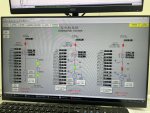
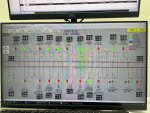
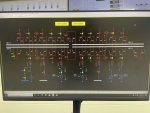 From the diagram, there ARE NO 52L breaker found! I dont understand why the Electrical Supervisor emphasised that we need to close that prior synchronizing our GT1 machine. Even currently our running GT2 - supplying the power through out our entire factory didnt need its 52L closed! ITS OPEN.
Maybe theres some confusion, but our power plant is not connected to outside (national grid) . Only for our own usage. We didnt even have national grid transmission line installed here.
The indicator for when the Preselect Load is active is : it will be displayed in the box under the “Load Select Mode”, after we click the box and drop down list of option
1)Preselect
2)Base
3)External Load
When we opt for Preselect, then the box will display Preselect.
Until the Preselect option hasn’t been chose, the Target Load Value won’t mean anything. I agreed with you.
Quoting you
“it should indicate which Load Select Mode is active, if any. Because how can one know if the Target Load value (the Pre-Selected Load Control target/reference/setpoint/command) should be working???”
We both can agree on that, and your assumption is exactly correct.
You said
“it WAS NOT POSSIBLE to enable Isochronous Speed Control and use it to control the load of the machine running in Isochronous Speed Control mode.”
Yes, true, we didnt adjust (using preselect load control) on GT2 that running on Isoch.
This is done only on GT1 the other day during loading up test. And it is not running on Isoch. (I dont know what GT1 mode is on, maybe droop on top of preselect load control, as you explain before)
Only GT2 is running on Isoch.
I hope I answered all your question without missing anything information. I try my best to provide it as my knowledge at this time. Its really hard working here with limited resources and information. To be honest, its exhausting for me to come working here everyday just to be treated like a stump. All I was instructed to do just a simplest task as possible and theres not so much space for me to gain experience with all important information been left out.
I realise you opened another conversation about helping me on Trender and working in field, I will respond to that too later. Im glad that finally I could get someone to guide me through this career path which I have been seeking out.
Give me a heads up if you planned on coming in Malaysia and I would bring you to the best Teh Tarik place!
Adios!
Yes, for me its also mind numbing why need to put both machine on Island Mode ON, then if loss connection situation ,which GT will be decided to do the be the lead unit for step change as per description, right? In my best guess, the GT2 should only put on Island Mode ON as it were running on Isochcronous speed control. Thats it. GT1 shouldn’t be put on Island Mode ON too! Even before synchronizing with GT2.
Yes, as I said, closing 52L is not necessary because there are no 52L breaker found in the Single Line Diagram of the electrical DCS . I have been asking since the begining of time, where are they? And nobody can give me a straight answer.
The latest answer that I got from Chinese operator is : 52L is the same place at 52G while showing me the Generator Circuit Breaker (GCB) panel. What?
I knew it couldn’t be true, because I knew 52L is use for National grid connection.
And I knew 52G is the only one that we use here( for our own 11kV-33kV step up transformer)
I attach the 33kV system single line diagram for you.
The first picture is the detailed diagram of breaker from generator to transformer.
The second picture is the 33kV bus distribution diagram - distributing the power through out our entire factory.
The third picture is the generally simplified of our 33kV distribution diagram.
From the diagram, there ARE NO 52L breaker found! I dont understand why the Electrical Supervisor emphasised that we need to close that prior synchronizing our GT1 machine. Even currently our running GT2 - supplying the power through out our entire factory didnt need its 52L closed! ITS OPEN.Maybe theres some confusion, but our power plant is not connected to outside (national grid) . Only for our own usage. We didnt even have national grid transmission line installed here.
The indicator for when the Preselect Load is active is : it will be displayed in the box under the “Load Select Mode”, after we click the box and drop down list of option
1)Preselect
2)Base
3)External Load
When we opt for Preselect, then the box will display Preselect.
Until the Preselect option hasn’t been chose, the Target Load Value won’t mean anything. I agreed with you.
Quoting you
“it should indicate which Load Select Mode is active, if any. Because how can one know if the Target Load value (the Pre-Selected Load Control target/reference/setpoint/command) should be working???”
We both can agree on that, and your assumption is exactly correct.
You said
“it WAS NOT POSSIBLE to enable Isochronous Speed Control and use it to control the load of the machine running in Isochronous Speed Control mode.”
Yes, true, we didnt adjust (using preselect load control) on GT2 that running on Isoch.
This is done only on GT1 the other day during loading up test. And it is not running on Isoch. (I dont know what GT1 mode is on, maybe droop on top of preselect load control, as you explain before)
Only GT2 is running on Isoch.
I hope I answered all your question without missing anything information. I try my best to provide it as my knowledge at this time. Its really hard working here with limited resources and information. To be honest, its exhausting for me to come working here everyday just to be treated like a stump. All I was instructed to do just a simplest task as possible and theres not so much space for me to gain experience with all important information been left out.
I realise you opened another conversation about helping me on Trender and working in field, I will respond to that too later. Im glad that finally I could get someone to guide me through this career path which I have been seeking out.
Give me a heads up if you planned on coming in Malaysia and I would bring you to the best Teh Tarik place!
Adios!
@EzzatHassim,
So, you say there is no national grid connection from/to the plant. Now I'm even more curious about what drives the 52L status....! You say it changes state on the GE Mark* HMIs; do you know what is happening when it changes state? Can you ask what the operators are doing when they say they are closing or opening 52L? If there is no 52L then why is it on the HMI display? (It can easily be "hidden" using CIMVIEW, and unhidden at any time.)
On some HMIs it's possible to hover the mouse cursor over a signal name or signal data value and in a second or two a description will pop up; it might give you some kind of clue, though I wouldn't trust what it says 100%. If you have access to ToolboxST you can search for 52L and see what comes up. You're not really interested in the pin definition of the signal name, but where the signal name is written to. If the value of 52L is "driven by" a discreet (contact) input to the Mark* there should be a description of that input (called the "longname") and it should tell you which terminal board the signal is wired to, the channel, and the I/O Pack(s) associated with that terminal board. Again, I wouldn't 100% trust what information the HMI or ToolboxST gives for the signal associated with the status of 52L, but I would then use that information to try to get more information from someone (electrical department technicians??).
- - - - - - - - - - - - - - - - - - - -
So, here's a scenario that IS NOT your power plant (because, while we know a lot more about the plant each time you supply answers and information, there are still important things we do not know) but it could be your power plant. Three synchronous generators (machines)--the prime mover types don't matter. Two of the machines have the same prime mover rating; the third is much smaller than the other two. They can all be synchronized to the same bus--which means when synchronized to the bus they are synchronized together. One, two or all three can be synchronized to the bus. There is a facility nearby (maybe a paper plant--who knows?) that uses the electric power from the plant. Generally, the facility load(s) are fairly constant--both the real load (MW) and the reactive load (MVAr)--but they do change through the day, week, month and even year. There is NO national grid connection to the plant--for incoming power from the national grid or for sending "excess power" to the national grid (this could/would happen over the same grid connection, but I wanted to be clear: there is NO national grid connection).
I also want to be clear that I have spent a good deal of time reading and re-reading the scenario and information provided with it BUT I'm not the best proof-reader of my own writing. Especially when I just finished writing something and I want to get it to the person who needs it. So, any errors or typos (like writing GT2 when I should have written GT1, or writing increase when I should have written decrease...) are mine. I can usually correct them up to 24 hours after I post but not later than that, unfortunately.
The three machines (at least the two larger machines) share some signals. One of them is which speed control mode the machines are operating in (Isochronous Speed Control mode, or Droop Speed Control mode, and possibly even if either of the machines is at rated power output (Base Load), because Base Load IS NOT a speed control mode--it's and exhaust temperature control mode. GT1 know what speed control mode GT2 is operating in, and GT2 knows what speed control mode GT1 is operating in. Another signal they share with each other is the status of each machine's generator breaker, 52G. So, GT1 knows if GT2's generator breaker is open or closed, and GT2 knows if GT1's generator breaker is open or closed. There may be other signals but for this scenario that's all we need to know for now.
I don't know how the power plant gets started (because the gas turbine SFCs (Static Frequency Converters) use a LOT of AC (Alternating Current) power while the GTs are being started. But let's just say in the beginning of this scenario both GTs are NOT running and producing power. (Perhaps it's the smaller machine (perhaps a steam turbine???) that supplies the power to the power plant when neither GT1 nor GT2 is running and producing power. Or there's a LARGE diesel generator that can supply power to the power plants (and maybe other critical loads in the facility that gets its power from the power plant. But we don't know that.) BUT, if there truly is NO grid connection of any kind (even just to power the SFCs during power plant start-up) then whatever the source of electricity is that's being used to start the power plant MUST be running in Isochronous Speed Control mode to maintain frequency for the power plant. And, for the purposes of this scenario, it's a very large diesel generator and its governor is running in Isochronous Speed Control mode to control the frequency of the power plant loads it powers by its connection to the plant grid (it might even be a 33kV grid...!).
Power plant management wants to start GT2 and is also preparing for the smaller machine to be started shortly afterwards. The nearby facility that gets its electrical power from the power plant is ready to start the loads in the facility. So, after all the proper checks and preparations are made and the GT2 GE Mark* HMI display indicates READY TO START, at the appropriate time the operator chooses AUTO control from the Turbine Control Mode drop-down box AND chooses Droop Speed Control mode and initiates a START for the machine. We'll skip all that happens during a START, but the machine reaches FSNL (Full Speed-No Load; essentially 100% of rated speed) and is ready to synchronize to the plant grid. When the facility people are ready, the power plant operators synchronize GT2 to the plant grid--in Droop Speed Control mode!!! (because the very large diesel generator is operating in Isochronous Speed Control mode and it's not normal to have two machines synchronized to the same (plant) grid both operating in Isochronous Speed Control mode. (It's presumed that the electrical loads in the power plant and some critical loads in the nearby facility total 7 to 9 MW. I know that's a very large diesel generator, but it could also be multiple diesel generators with ONE of them operating in Isochronous Speed Control mode. Or it could be the smaller generator in the power plant--maybe it's a steam turbine-generator and it gets its steam from a boiler of some sort, maybe a waste incinerator.... But for the purposes of this scenario, it's a very large diesel generator.
Synchronization was likely done with the GT2 Generator Control Mode in AUTO. And GT2 will try to go to it's Spinning Reserve value (usually somewhere around 5 or 6 MW). What will happen at this time is that the load of the very large diesel generator will decrease by the 5 or 6 MW GT2 is producing. And, the facility people nearby will then start bringing their plant equipment on line. As the nearby facility's load increase, the load on the very large diesel generator will increase--but the load on GT2 will remain at Spinning Reserve (5 or 6 MW, in this scenario). As the load on the very large diesel generator starts to get near the rated power output of the of the diesel generator the power plant management has decided to shut down the very large diesel generator. In order to do this they need a few minutes when the load of the nearby facility are stable and not changing very much, and the facility crew obliges and tells the power plant staff they are ready. The first thing the power plant operators do is start manually loading GT2--which reduces the load on the very large diesel generator. When the load on the very large diesel generator is below 1 MW (but NOT at zero MW--just some small positive amount of power) the operator switches the very large diesel generator to Droop Speed Control mode. Now BOTH the very large diesel generator and GT2 are both in Droop Speed Control mode, the frequency of the power plant and the nearby facility is at or VERY NEAR 50.0 Hz (because the load the two generator-sets are providing is stable) and the power plant operator opens the generator breaker of the very large diesel generator leaving only GT2 providing the power for the power plant AND the nearby facility, and then initiates a STOP of the very large diesel generator. Very shortly after the very large diesel generator's breaker is opened the power plant operator switches GT2 to Isochronous Speed Control mode, and the power plant staff inform the nearby facility personnel they can now continue bringing their facility loads up without worry.
After many hours the nearby facility is running normally producing whatever it is they produce. And all is well in the power plant control room.
After a few weeks it's decided to start GT1 just to "exercise" it and let it run lightly loaded for a few hours. So, all the check are performed, the power plant operators set the speed control of GT1 to Droop Speed Control mode and GT1's GE Mark* HMI indicates READY TO START and a START of GT1 is initiated. The machine successfully reaches FSNL and is ready to be synchronized and the operator puts GT1 Generator Control Mode to AUTO and the machine is synchronized to the power plant grid along with GT2. As GT1 load increases to its Spinning Reserve value the load on GT2 decreases by and equal amount and the two machines are "sharing" in powering the loads connected to power plant grid and the nearby facility. Power plant management decides to increase the load on GT1 by another 10 MW--which causes the load on GT2 to decrease by 10 MW, and the power plant grid frequency remains stable at or very near 50 Hz. All is well.
But, then power plant management decides to put GT1 in Isochronous Speed Control mode. So, the very well-trained and at least partially trained power plant operators make preparations for that order. One of the things they did was call the nearby facility and ask if the facility loads are going to remain stable for a few minutes. After a minute or so the nearby facility says the loads are stable and should remain so for an hour or so.
All the power plant operators really have to do is switch GT2 from Isochronous Speed Control mode to Droop Speed Control mode and then in a short time (less than a minute) switch GT1 to Isochronous Speed Control mode. (Someone suggested trying to put GT1 in Isochronous Speed Control mode before switching GT2 to Droop Speed control mode, and they actually tried to do that--but the Mark* turbine control knows that GT2 is operating in Droop Speed Control mode and wouldn't accept the command. (So the operators hopefully re-learned something they should have learned in their operations training).) And very shortly after that little "test" they switched GT2 from Isochronous Speed Control mode to Droop Speed Control mode and then quickly switched GT1 to Isochronous Speed Control mode from Droop Speed Control mode. Once everything looked stable for a couple of minutes the power plant operations staff called the nearby facility control room to tell them that the switch was successful (just a nice courtesy to let the nearby facility staff know the status of the switching).
Power plant management then wanted to decrease the load on GT2 by about 5 MW (who knows why power plant management want to do these things, ... but a smart operations supervisory staff knows that this is good training for the power plant operators, and power plant management can also sleep easier if everything works as it should). To do this the power plant operator manually decrease the load of GT2 by 5 MW.
In this scenario the power plant operators DON'T use Pre-Selected Load Control to change load, OR, if they have a large load change to make (which would require a LOT of mouse clicks which can cause a RSI (repetitive stress injury) and possibly disable operators who have to make many mouse clicks in quick succession ... NOT!) they can put the desired load value (target/reference/setpoint/command) into the Pre-Selected Load Control command value field and then select Pre-Selected Load Control mode and watch the Mark* ramp the machine's load up or down until reaching the desired load--at which time the power plant operator clicks on either RAISE SPEED/LOAD or LOWER SPEED/LOAD to cancel (abort) Pre-Selected Load Control, and magically the machine load stays relatively constant unless there are large load changes in the nearby facility which will temporarily cause the load of the Droop Machine to change briefly (maybe) but the Isochronous Speed Control machine will adjust its load and the Droop Machine's load will return to what it was before the load disturbance from the nearby facility. (There may even be a selection called CANCEL in the drop-down box used to enable Pre-Selected Load control) in a field called "Load Select Control"...) Magic--pure magic. That's Droop Speed Control!!! It's NOT necessary to continuously operate a machine running in Droop Speed Control using Pre-Selected Load Control.
Just as power plant management is readying to tell the operators to shut down GT1, GT2 develops a high vibration problem, and the vibration is increasing at a high rate and almost before the power plant operators could take any action GT2 is tripped by its Mark* turbine control system. The power plant (and nearby facility) frequency will immediately decrease, hopefully by less than an amount that might trigger either some kind of load shedding or a generator protective relay trip (Underfrequency, most likely) and the well-trained and slightly experienced operators under the direction of their well-trained operations supervisor immediately start increasing the load of GT1 manually, which starts to bring the frequency of the system closer to normal. The phone is ringing--it's the nearby facility calling to ask what is happening and how long before the system is returned to normal. The operations supervisor assures the nearby facility caller that all is well and the power plant operators are already working to restore the frequency and it won't take more than a minute or two.
As soon as the power plant operations supervisor hangs up the phone he sees that the frequency of the system (the power plant grid and the nearby facility) is very nearly up to rated, and he instructs one of the power plant operators to put GT1 in Isochronous Speed Control mode. The frequency quickly jumps to very near rated, and everyone in the power plant control room breathes a sigh of relief--except for the Maintenance Department personnel who have quickly entered the power plant control room to ask why GT2 has tripped only to learn there was a high-high vibration condition. The Maintenance Department personnel start asking for lots of data--and one of the well-trained and slightly experienced power plant operators says to wait about 15-30 minutes. The power plant control room notifies the nearby facility that all is well and the emergency is over for now. And the operator accesses the Trip Log files (to be reviewed using Trender) and the Alarm Log files to see what GT2 process alarms had occurred in the 8-hour period before the high-high vibration trip and assemble it for the anxiously waiting Maintenance Department personnel.
At this point it's decided to bring up (start) the third, smaller generator and synchronize it to GT1. So, the machine (could be a steam turbine) is brought up to speed and temperature (a process that usually requires hours and a competent, trained and experienced group of people (bringing up vacuum on the condenser; warming up and draining steam lines and steam valves; etc.)), and the machine is finally at rated speed waiting to be synchronized. The operators ensure the prime mover control system is in Droop Speed Control and the machine is synchronized and loaded to, let's say about 25-30% of rated load. As the load on the smaller machine is increased the load on GT1 decreases by an equal amount and the plant grid and nearby facility system frequency remains at or very near rated. (This is because, by default, the typical Isochronous Speed Control reference is usually 100%, plus-or-minus 0.13% (these are, or at least used to be, GE's standard Isoch governor setpoints). And, since GT1 is the larger of the two machines (by rating) and is operating in Isochronous Speed Control mode it controls the frequency of BOTH machines--yes both machines. That's because when two (or more--up to an almost infinite number on some national grids) machines are synchronized together they all run at the same frequency--and since frequency and generator speed are related the speed of the machines are all at the value dictated by the number of magnetic poles of the generator rotors.
The formula that dictates machine speed or frequency is: F=(P*N)/120, where F is frequency in Hz; P is the number of magnetic poles of the generator; and N is the speed of the generator rotor in RPM. So, a 50.0 Hz synchronous generator with a two-pole generator rotor will spin at 3000 RPM when the generator is producing 50.0 Hz. A 50.0 Hz synchronous generator with a four-pole generator rotor will operate at 1500 RPM to produce 50.0 Hz. And when generators (and the prime movers driving them) are synchronized together on a grid--large or small--it's the frequency that dictates the speeds of the generator rotors. (The number of poles of a synchronous generator is a fixed valve, and an even number, and can't generally be changed during operation--it's a function of how the machine was designed and constructed, and therefore to be operated.)
So, in the power plant since GT1 is controlling plant grid and the nearby facility system frequency (they are one and the same) the smaller generator rotor is going to spin at the speed dictated by the frequency of the plant grid and the number of magnetic poles of the generator rotor. (Just as all the electric motors and tea kettles and lights and fans and computers and computer monitors drawing power from a grid all can be thought of to appear as one single load, all the generators synchronized together on that same grid are really acting as one single generator--and they need to do that because a grid physically can't have one machine operating at 50.7 Hz, another operating at 49.9 Hz, another operating at 51.3 Hz, another operating at 49.7 Hz, etc. In order for 50.0 Hz (or something very near 50.0 Hz) to come out of the wall socket or be applied to a very large motor ALL of the generators synchronized to the grid supplying power and acting as one single generator supplying one single load ALL have to be operating at 50.0 Hz. And they will because of two magnetic fields at work inside the generator--one on the generator rotor, and one on the generator stator. Those magnetic forces keep the generator rotor spinning at the frequency of the current flowing in the generator stator--and do so with EXTREME FORCE. (It's not impossible for a generator to "slip a pole" and for a brief period of a fraction of a second to spin faster than it should be spinning BUT as the magnetic poles of the two field come into alignment again the magnetic forces are going to try to capture the generator rotor again--effectively stopping the generator rotor very quickly and the holding it in synchronism--and the resultant physical forces on the generator rotor and the coupling between the generator rotor and the prime mover mean that something is going to break--catastrophically.)
I hope this helps to understand how a typical islanded plant with multiple generators would be operated without an external frequency/load control system sending commands to the generator prime mover governors. MANY people have been convinced that machines can't and don't operate like the scenario above--but I can assure you that many do and with well-trained and even slightly experienced operators, most all serious upsets can be avoided and the plants can run reliably. It's also because most people are or have been convinced that when a machine is operating in Isochronous Speed Control that the operators don't have to do a thing to it. And, in terms of controlling its load that's somewhat very true. Operators can’t set a desired load for a machine operating in Isochronous Speed Control mode. They can't directly raise or lower the Isoch machine's load using the machine's control system. BUT they can change the load on the Isoch machine using the Droop machine(s) synchronized with the Isoch machine. Say for example, the load on the Isoch machine is approaching the rating of the machine's prime mover (let's say it's 50 MW). If the operator doesn't do anything and the load on the system increase they the Isoch machine is going to reach it's maximum output and then it can't raise its load any higher. Many of these people that say Isochronous Speed Control doesn't work have experiences at a power plant where the operators weren't trained and didn't have good operations supervisors and there were all manner of problems trying to "make" it work like someone thought or read it should work. Well-trained and experienced operators--and their operations supervisors--will take pre-emptive action and start increasing the load on one or more of the Droop machines synchronized to the Isoch machine, decreasing the load on the Isoch machine. They change the load on the Isoch machine by changing the load on a Droop machine (or more than one depending on the size of the grid and the number of machines synchronized to the grid)--NOT by changing the Isoch machine's load directly using the Isoch machine's control system.
The same thing happens when the load(s) on the grid have been steadily decreasing over time and the load on the Isoch machine is getting closer and closer to 0 MW. If the power plant operators allow the Isoch machine's load to go "negative" then the machine's reverse power relay will operate to open the Isoch machine's generator breaker and possibly even initiate an automatic machine shutdown. And at that point there is no Isoch machine on the grid controlling frequency. Neither this scenario nor the one above are good scenarios--and that's, again, where proper training and familiarization of the power plant operators (or national grid regulators/operators) is needed to anticipate bad scenarios and take corrective action to avert a bad scenario.
This is what has fostered the amazing increase in the number of so-called PMSs (Power Management Systems) to control plant frequency and sometimes load and reactive power. But, since there aren't a lot of good control system programmers who have a good knowledge of AC power generation principles and fundamentals and they don't usually have a very well-written document spelling out the requirements of such a system for a particular plant they don't usually work very well, if at all. And people are even more convinced that the problem is the Mark* turbine control system--when it's not. If it's not operated by well-trained and slightly experience people under the direction of experienced supervisors and/or trainers then, well, bad things and "unexplained" things are going to happen. And the Mark* continues to get the blame because it doesn't operate the way some people THINK it should operate.
The above are the very BASIC principles and fundamentals of the operation of a small AC power generation, transmission and distribution system. But, they apply to every AC power generation, transmission and distribution system regardless of size. The difference is that on some very large (called "infinite") grids there is no machine operating in Isochronous Speed Control mode. The grid regulators/operators balance the amount of generation on the grid to keep the grid frequency at or near rated--and some do a really good job; others not so good. And, if there are machines which regularly trip--removing their generation from the grid--that, too, can cause problems. Or, if large blocks of loads--like a very large factory or refinery--get disconnected from the grid that can also cause problems. But well-trained grid regulators and operators can anticipate some of these occurrences and be pro-active and ready for them. Most large (infinite) grids have some "spinning reserve" running on the grid at any time. These are machines that are NOT always operating at rated power output--meaning that they have the ability to increase load relatively quickly (they don't have to started--which can take hours for some machines). And grid regulators/operators also have agreements with some power plants to start and stop during the day--sometimes twice a day!--to help control grid frequency. They also have agreements with some power plants to be able to directly control the load(s) of machines in the power plants, raising or lower load as necessary to help control grid frequency. But, for very large, infinite grids there sometimes aren't single machines with the power rating to be able to immediately respond to grid frequency disturbances, so grid regulators/operators do it multiple machines and agreements with various power plants.
In truth, it can be very complicated (sometimes needlessly) and more involved than this--and Droop Speed Control is a very powerful control scheme, and very simple. It's so simple it's genius. And it's been around since the beginning of AC power generation, transmission and distribution. It's entirely misunderstood--but one reason for that is it just works. And works very well. So, some people--without really thinking it through--make some assumptions about what Droop Speed Control is and what it does. And these people have complete and unwavering faith in their assumptions. Which are usually wrong, and sometimes very wrong. They just want it to be the way they think it should be using their assumptions.
I'm sure you will need some time to digest this in your mind. Just remember: When the load(s) on a grid (of any size) increase or decrease the immediate effect of that change in load is to change the frequency of the grid. If nothing is done to decrease or increase the amount of power being generated by the generators synchronized to the grid the grid frequency is going deviate from normal--and the way to return it to normal is to decrease or increase the load(s) of one or generators and prime movers on the grid. When the load being supplied to the grid is equal to the load being consumed by the grid then the frequency will be constant. It's all about F=(P*N)/120 It really is that simple--though the number of all of the possible scenarios that can upsets and deviations are very large, it all boils down to this when one wants to have a constant frequency on an AC power grid. And all the machines synchronized to that grid share one thing in common: The frequency of the grid. No extra wires between control systems. No external frequency or load control systems. Just the basics and a few well-trained and experienced operators (in the power plants, and in the grid system control room)---all looking at the frequency of the grid.
- - - - - - - - - - - - - - - - - - - -
Just curious--but what's this mean on the 33kV system screenshot? (Upper left area of the screenshot.) I also notice there is provision for two more GTs.?.?.? (Lower right area of the screenshot.) Hmmmm...
I would also like to see photos of the Overview HMI display showing the Master Control and Speed/Load Control sections of the display for GT2--and if GT1 is restarted and synchronized, the same for GT1 while synchronized and loaded. Please.
And, there should be a way to find out what is causing the value of 52L to change. It most likely has to be done with ToolboxST, and even if the machine(s) is(are) running the machine(s) WILL NOT trip if all you are doing is searching the application and configuration to find out what makes the 52L change. This would be great information from GT1 while its running and GT1 while it's not running and when it is running. If there's any way you can watch to see what is happening when the value of 52L changes--that would be great to know.
Thanks!
So, you say there is no national grid connection from/to the plant. Now I'm even more curious about what drives the 52L status....! You say it changes state on the GE Mark* HMIs; do you know what is happening when it changes state? Can you ask what the operators are doing when they say they are closing or opening 52L? If there is no 52L then why is it on the HMI display? (It can easily be "hidden" using CIMVIEW, and unhidden at any time.)
On some HMIs it's possible to hover the mouse cursor over a signal name or signal data value and in a second or two a description will pop up; it might give you some kind of clue, though I wouldn't trust what it says 100%. If you have access to ToolboxST you can search for 52L and see what comes up. You're not really interested in the pin definition of the signal name, but where the signal name is written to. If the value of 52L is "driven by" a discreet (contact) input to the Mark* there should be a description of that input (called the "longname") and it should tell you which terminal board the signal is wired to, the channel, and the I/O Pack(s) associated with that terminal board. Again, I wouldn't 100% trust what information the HMI or ToolboxST gives for the signal associated with the status of 52L, but I would then use that information to try to get more information from someone (electrical department technicians??).
- - - - - - - - - - - - - - - - - - - -
So, here's a scenario that IS NOT your power plant (because, while we know a lot more about the plant each time you supply answers and information, there are still important things we do not know) but it could be your power plant. Three synchronous generators (machines)--the prime mover types don't matter. Two of the machines have the same prime mover rating; the third is much smaller than the other two. They can all be synchronized to the same bus--which means when synchronized to the bus they are synchronized together. One, two or all three can be synchronized to the bus. There is a facility nearby (maybe a paper plant--who knows?) that uses the electric power from the plant. Generally, the facility load(s) are fairly constant--both the real load (MW) and the reactive load (MVAr)--but they do change through the day, week, month and even year. There is NO national grid connection to the plant--for incoming power from the national grid or for sending "excess power" to the national grid (this could/would happen over the same grid connection, but I wanted to be clear: there is NO national grid connection).
I also want to be clear that I have spent a good deal of time reading and re-reading the scenario and information provided with it BUT I'm not the best proof-reader of my own writing. Especially when I just finished writing something and I want to get it to the person who needs it. So, any errors or typos (like writing GT2 when I should have written GT1, or writing increase when I should have written decrease...) are mine. I can usually correct them up to 24 hours after I post but not later than that, unfortunately.
The three machines (at least the two larger machines) share some signals. One of them is which speed control mode the machines are operating in (Isochronous Speed Control mode, or Droop Speed Control mode, and possibly even if either of the machines is at rated power output (Base Load), because Base Load IS NOT a speed control mode--it's and exhaust temperature control mode. GT1 know what speed control mode GT2 is operating in, and GT2 knows what speed control mode GT1 is operating in. Another signal they share with each other is the status of each machine's generator breaker, 52G. So, GT1 knows if GT2's generator breaker is open or closed, and GT2 knows if GT1's generator breaker is open or closed. There may be other signals but for this scenario that's all we need to know for now.
I don't know how the power plant gets started (because the gas turbine SFCs (Static Frequency Converters) use a LOT of AC (Alternating Current) power while the GTs are being started. But let's just say in the beginning of this scenario both GTs are NOT running and producing power. (Perhaps it's the smaller machine (perhaps a steam turbine???) that supplies the power to the power plant when neither GT1 nor GT2 is running and producing power. Or there's a LARGE diesel generator that can supply power to the power plants (and maybe other critical loads in the facility that gets its power from the power plant. But we don't know that.) BUT, if there truly is NO grid connection of any kind (even just to power the SFCs during power plant start-up) then whatever the source of electricity is that's being used to start the power plant MUST be running in Isochronous Speed Control mode to maintain frequency for the power plant. And, for the purposes of this scenario, it's a very large diesel generator and its governor is running in Isochronous Speed Control mode to control the frequency of the power plant loads it powers by its connection to the plant grid (it might even be a 33kV grid...!).
Power plant management wants to start GT2 and is also preparing for the smaller machine to be started shortly afterwards. The nearby facility that gets its electrical power from the power plant is ready to start the loads in the facility. So, after all the proper checks and preparations are made and the GT2 GE Mark* HMI display indicates READY TO START, at the appropriate time the operator chooses AUTO control from the Turbine Control Mode drop-down box AND chooses Droop Speed Control mode and initiates a START for the machine. We'll skip all that happens during a START, but the machine reaches FSNL (Full Speed-No Load; essentially 100% of rated speed) and is ready to synchronize to the plant grid. When the facility people are ready, the power plant operators synchronize GT2 to the plant grid--in Droop Speed Control mode!!! (because the very large diesel generator is operating in Isochronous Speed Control mode and it's not normal to have two machines synchronized to the same (plant) grid both operating in Isochronous Speed Control mode. (It's presumed that the electrical loads in the power plant and some critical loads in the nearby facility total 7 to 9 MW. I know that's a very large diesel generator, but it could also be multiple diesel generators with ONE of them operating in Isochronous Speed Control mode. Or it could be the smaller generator in the power plant--maybe it's a steam turbine-generator and it gets its steam from a boiler of some sort, maybe a waste incinerator.... But for the purposes of this scenario, it's a very large diesel generator.
Synchronization was likely done with the GT2 Generator Control Mode in AUTO. And GT2 will try to go to it's Spinning Reserve value (usually somewhere around 5 or 6 MW). What will happen at this time is that the load of the very large diesel generator will decrease by the 5 or 6 MW GT2 is producing. And, the facility people nearby will then start bringing their plant equipment on line. As the nearby facility's load increase, the load on the very large diesel generator will increase--but the load on GT2 will remain at Spinning Reserve (5 or 6 MW, in this scenario). As the load on the very large diesel generator starts to get near the rated power output of the of the diesel generator the power plant management has decided to shut down the very large diesel generator. In order to do this they need a few minutes when the load of the nearby facility are stable and not changing very much, and the facility crew obliges and tells the power plant staff they are ready. The first thing the power plant operators do is start manually loading GT2--which reduces the load on the very large diesel generator. When the load on the very large diesel generator is below 1 MW (but NOT at zero MW--just some small positive amount of power) the operator switches the very large diesel generator to Droop Speed Control mode. Now BOTH the very large diesel generator and GT2 are both in Droop Speed Control mode, the frequency of the power plant and the nearby facility is at or VERY NEAR 50.0 Hz (because the load the two generator-sets are providing is stable) and the power plant operator opens the generator breaker of the very large diesel generator leaving only GT2 providing the power for the power plant AND the nearby facility, and then initiates a STOP of the very large diesel generator. Very shortly after the very large diesel generator's breaker is opened the power plant operator switches GT2 to Isochronous Speed Control mode, and the power plant staff inform the nearby facility personnel they can now continue bringing their facility loads up without worry.
After many hours the nearby facility is running normally producing whatever it is they produce. And all is well in the power plant control room.
After a few weeks it's decided to start GT1 just to "exercise" it and let it run lightly loaded for a few hours. So, all the check are performed, the power plant operators set the speed control of GT1 to Droop Speed Control mode and GT1's GE Mark* HMI indicates READY TO START and a START of GT1 is initiated. The machine successfully reaches FSNL and is ready to be synchronized and the operator puts GT1 Generator Control Mode to AUTO and the machine is synchronized to the power plant grid along with GT2. As GT1 load increases to its Spinning Reserve value the load on GT2 decreases by and equal amount and the two machines are "sharing" in powering the loads connected to power plant grid and the nearby facility. Power plant management decides to increase the load on GT1 by another 10 MW--which causes the load on GT2 to decrease by 10 MW, and the power plant grid frequency remains stable at or very near 50 Hz. All is well.
But, then power plant management decides to put GT1 in Isochronous Speed Control mode. So, the very well-trained and at least partially trained power plant operators make preparations for that order. One of the things they did was call the nearby facility and ask if the facility loads are going to remain stable for a few minutes. After a minute or so the nearby facility says the loads are stable and should remain so for an hour or so.
All the power plant operators really have to do is switch GT2 from Isochronous Speed Control mode to Droop Speed Control mode and then in a short time (less than a minute) switch GT1 to Isochronous Speed Control mode. (Someone suggested trying to put GT1 in Isochronous Speed Control mode before switching GT2 to Droop Speed control mode, and they actually tried to do that--but the Mark* turbine control knows that GT2 is operating in Droop Speed Control mode and wouldn't accept the command. (So the operators hopefully re-learned something they should have learned in their operations training).) And very shortly after that little "test" they switched GT2 from Isochronous Speed Control mode to Droop Speed Control mode and then quickly switched GT1 to Isochronous Speed Control mode from Droop Speed Control mode. Once everything looked stable for a couple of minutes the power plant operations staff called the nearby facility control room to tell them that the switch was successful (just a nice courtesy to let the nearby facility staff know the status of the switching).
Power plant management then wanted to decrease the load on GT2 by about 5 MW (who knows why power plant management want to do these things, ... but a smart operations supervisory staff knows that this is good training for the power plant operators, and power plant management can also sleep easier if everything works as it should). To do this the power plant operator manually decrease the load of GT2 by 5 MW.
In this scenario the power plant operators DON'T use Pre-Selected Load Control to change load, OR, if they have a large load change to make (which would require a LOT of mouse clicks which can cause a RSI (repetitive stress injury) and possibly disable operators who have to make many mouse clicks in quick succession ... NOT!) they can put the desired load value (target/reference/setpoint/command) into the Pre-Selected Load Control command value field and then select Pre-Selected Load Control mode and watch the Mark* ramp the machine's load up or down until reaching the desired load--at which time the power plant operator clicks on either RAISE SPEED/LOAD or LOWER SPEED/LOAD to cancel (abort) Pre-Selected Load Control, and magically the machine load stays relatively constant unless there are large load changes in the nearby facility which will temporarily cause the load of the Droop Machine to change briefly (maybe) but the Isochronous Speed Control machine will adjust its load and the Droop Machine's load will return to what it was before the load disturbance from the nearby facility. (There may even be a selection called CANCEL in the drop-down box used to enable Pre-Selected Load control) in a field called "Load Select Control"...) Magic--pure magic. That's Droop Speed Control!!! It's NOT necessary to continuously operate a machine running in Droop Speed Control using Pre-Selected Load Control.
Just as power plant management is readying to tell the operators to shut down GT1, GT2 develops a high vibration problem, and the vibration is increasing at a high rate and almost before the power plant operators could take any action GT2 is tripped by its Mark* turbine control system. The power plant (and nearby facility) frequency will immediately decrease, hopefully by less than an amount that might trigger either some kind of load shedding or a generator protective relay trip (Underfrequency, most likely) and the well-trained and slightly experienced operators under the direction of their well-trained operations supervisor immediately start increasing the load of GT1 manually, which starts to bring the frequency of the system closer to normal. The phone is ringing--it's the nearby facility calling to ask what is happening and how long before the system is returned to normal. The operations supervisor assures the nearby facility caller that all is well and the power plant operators are already working to restore the frequency and it won't take more than a minute or two.
As soon as the power plant operations supervisor hangs up the phone he sees that the frequency of the system (the power plant grid and the nearby facility) is very nearly up to rated, and he instructs one of the power plant operators to put GT1 in Isochronous Speed Control mode. The frequency quickly jumps to very near rated, and everyone in the power plant control room breathes a sigh of relief--except for the Maintenance Department personnel who have quickly entered the power plant control room to ask why GT2 has tripped only to learn there was a high-high vibration condition. The Maintenance Department personnel start asking for lots of data--and one of the well-trained and slightly experienced power plant operators says to wait about 15-30 minutes. The power plant control room notifies the nearby facility that all is well and the emergency is over for now. And the operator accesses the Trip Log files (to be reviewed using Trender) and the Alarm Log files to see what GT2 process alarms had occurred in the 8-hour period before the high-high vibration trip and assemble it for the anxiously waiting Maintenance Department personnel.
At this point it's decided to bring up (start) the third, smaller generator and synchronize it to GT1. So, the machine (could be a steam turbine) is brought up to speed and temperature (a process that usually requires hours and a competent, trained and experienced group of people (bringing up vacuum on the condenser; warming up and draining steam lines and steam valves; etc.)), and the machine is finally at rated speed waiting to be synchronized. The operators ensure the prime mover control system is in Droop Speed Control and the machine is synchronized and loaded to, let's say about 25-30% of rated load. As the load on the smaller machine is increased the load on GT1 decreases by an equal amount and the plant grid and nearby facility system frequency remains at or very near rated. (This is because, by default, the typical Isochronous Speed Control reference is usually 100%, plus-or-minus 0.13% (these are, or at least used to be, GE's standard Isoch governor setpoints). And, since GT1 is the larger of the two machines (by rating) and is operating in Isochronous Speed Control mode it controls the frequency of BOTH machines--yes both machines. That's because when two (or more--up to an almost infinite number on some national grids) machines are synchronized together they all run at the same frequency--and since frequency and generator speed are related the speed of the machines are all at the value dictated by the number of magnetic poles of the generator rotors.
The formula that dictates machine speed or frequency is: F=(P*N)/120, where F is frequency in Hz; P is the number of magnetic poles of the generator; and N is the speed of the generator rotor in RPM. So, a 50.0 Hz synchronous generator with a two-pole generator rotor will spin at 3000 RPM when the generator is producing 50.0 Hz. A 50.0 Hz synchronous generator with a four-pole generator rotor will operate at 1500 RPM to produce 50.0 Hz. And when generators (and the prime movers driving them) are synchronized together on a grid--large or small--it's the frequency that dictates the speeds of the generator rotors. (The number of poles of a synchronous generator is a fixed valve, and an even number, and can't generally be changed during operation--it's a function of how the machine was designed and constructed, and therefore to be operated.)
So, in the power plant since GT1 is controlling plant grid and the nearby facility system frequency (they are one and the same) the smaller generator rotor is going to spin at the speed dictated by the frequency of the plant grid and the number of magnetic poles of the generator rotor. (Just as all the electric motors and tea kettles and lights and fans and computers and computer monitors drawing power from a grid all can be thought of to appear as one single load, all the generators synchronized together on that same grid are really acting as one single generator--and they need to do that because a grid physically can't have one machine operating at 50.7 Hz, another operating at 49.9 Hz, another operating at 51.3 Hz, another operating at 49.7 Hz, etc. In order for 50.0 Hz (or something very near 50.0 Hz) to come out of the wall socket or be applied to a very large motor ALL of the generators synchronized to the grid supplying power and acting as one single generator supplying one single load ALL have to be operating at 50.0 Hz. And they will because of two magnetic fields at work inside the generator--one on the generator rotor, and one on the generator stator. Those magnetic forces keep the generator rotor spinning at the frequency of the current flowing in the generator stator--and do so with EXTREME FORCE. (It's not impossible for a generator to "slip a pole" and for a brief period of a fraction of a second to spin faster than it should be spinning BUT as the magnetic poles of the two field come into alignment again the magnetic forces are going to try to capture the generator rotor again--effectively stopping the generator rotor very quickly and the holding it in synchronism--and the resultant physical forces on the generator rotor and the coupling between the generator rotor and the prime mover mean that something is going to break--catastrophically.)
I hope this helps to understand how a typical islanded plant with multiple generators would be operated without an external frequency/load control system sending commands to the generator prime mover governors. MANY people have been convinced that machines can't and don't operate like the scenario above--but I can assure you that many do and with well-trained and even slightly experienced operators, most all serious upsets can be avoided and the plants can run reliably. It's also because most people are or have been convinced that when a machine is operating in Isochronous Speed Control that the operators don't have to do a thing to it. And, in terms of controlling its load that's somewhat very true. Operators can’t set a desired load for a machine operating in Isochronous Speed Control mode. They can't directly raise or lower the Isoch machine's load using the machine's control system. BUT they can change the load on the Isoch machine using the Droop machine(s) synchronized with the Isoch machine. Say for example, the load on the Isoch machine is approaching the rating of the machine's prime mover (let's say it's 50 MW). If the operator doesn't do anything and the load on the system increase they the Isoch machine is going to reach it's maximum output and then it can't raise its load any higher. Many of these people that say Isochronous Speed Control doesn't work have experiences at a power plant where the operators weren't trained and didn't have good operations supervisors and there were all manner of problems trying to "make" it work like someone thought or read it should work. Well-trained and experienced operators--and their operations supervisors--will take pre-emptive action and start increasing the load on one or more of the Droop machines synchronized to the Isoch machine, decreasing the load on the Isoch machine. They change the load on the Isoch machine by changing the load on a Droop machine (or more than one depending on the size of the grid and the number of machines synchronized to the grid)--NOT by changing the Isoch machine's load directly using the Isoch machine's control system.
The same thing happens when the load(s) on the grid have been steadily decreasing over time and the load on the Isoch machine is getting closer and closer to 0 MW. If the power plant operators allow the Isoch machine's load to go "negative" then the machine's reverse power relay will operate to open the Isoch machine's generator breaker and possibly even initiate an automatic machine shutdown. And at that point there is no Isoch machine on the grid controlling frequency. Neither this scenario nor the one above are good scenarios--and that's, again, where proper training and familiarization of the power plant operators (or national grid regulators/operators) is needed to anticipate bad scenarios and take corrective action to avert a bad scenario.
This is what has fostered the amazing increase in the number of so-called PMSs (Power Management Systems) to control plant frequency and sometimes load and reactive power. But, since there aren't a lot of good control system programmers who have a good knowledge of AC power generation principles and fundamentals and they don't usually have a very well-written document spelling out the requirements of such a system for a particular plant they don't usually work very well, if at all. And people are even more convinced that the problem is the Mark* turbine control system--when it's not. If it's not operated by well-trained and slightly experience people under the direction of experienced supervisors and/or trainers then, well, bad things and "unexplained" things are going to happen. And the Mark* continues to get the blame because it doesn't operate the way some people THINK it should operate.
The above are the very BASIC principles and fundamentals of the operation of a small AC power generation, transmission and distribution system. But, they apply to every AC power generation, transmission and distribution system regardless of size. The difference is that on some very large (called "infinite") grids there is no machine operating in Isochronous Speed Control mode. The grid regulators/operators balance the amount of generation on the grid to keep the grid frequency at or near rated--and some do a really good job; others not so good. And, if there are machines which regularly trip--removing their generation from the grid--that, too, can cause problems. Or, if large blocks of loads--like a very large factory or refinery--get disconnected from the grid that can also cause problems. But well-trained grid regulators and operators can anticipate some of these occurrences and be pro-active and ready for them. Most large (infinite) grids have some "spinning reserve" running on the grid at any time. These are machines that are NOT always operating at rated power output--meaning that they have the ability to increase load relatively quickly (they don't have to started--which can take hours for some machines). And grid regulators/operators also have agreements with some power plants to start and stop during the day--sometimes twice a day!--to help control grid frequency. They also have agreements with some power plants to be able to directly control the load(s) of machines in the power plants, raising or lower load as necessary to help control grid frequency. But, for very large, infinite grids there sometimes aren't single machines with the power rating to be able to immediately respond to grid frequency disturbances, so grid regulators/operators do it multiple machines and agreements with various power plants.
In truth, it can be very complicated (sometimes needlessly) and more involved than this--and Droop Speed Control is a very powerful control scheme, and very simple. It's so simple it's genius. And it's been around since the beginning of AC power generation, transmission and distribution. It's entirely misunderstood--but one reason for that is it just works. And works very well. So, some people--without really thinking it through--make some assumptions about what Droop Speed Control is and what it does. And these people have complete and unwavering faith in their assumptions. Which are usually wrong, and sometimes very wrong. They just want it to be the way they think it should be using their assumptions.
I'm sure you will need some time to digest this in your mind. Just remember: When the load(s) on a grid (of any size) increase or decrease the immediate effect of that change in load is to change the frequency of the grid. If nothing is done to decrease or increase the amount of power being generated by the generators synchronized to the grid the grid frequency is going deviate from normal--and the way to return it to normal is to decrease or increase the load(s) of one or generators and prime movers on the grid. When the load being supplied to the grid is equal to the load being consumed by the grid then the frequency will be constant. It's all about F=(P*N)/120 It really is that simple--though the number of all of the possible scenarios that can upsets and deviations are very large, it all boils down to this when one wants to have a constant frequency on an AC power grid. And all the machines synchronized to that grid share one thing in common: The frequency of the grid. No extra wires between control systems. No external frequency or load control systems. Just the basics and a few well-trained and experienced operators (in the power plants, and in the grid system control room)---all looking at the frequency of the grid.
- - - - - - - - - - - - - - - - - - - -
Just curious--but what's this mean on the 33kV system screenshot? (Upper left area of the screenshot.) I also notice there is provision for two more GTs.?.?.? (Lower right area of the screenshot.) Hmmmm...
I would also like to see photos of the Overview HMI display showing the Master Control and Speed/Load Control sections of the display for GT2--and if GT1 is restarted and synchronized, the same for GT1 while synchronized and loaded. Please.
And, there should be a way to find out what is causing the value of 52L to change. It most likely has to be done with ToolboxST, and even if the machine(s) is(are) running the machine(s) WILL NOT trip if all you are doing is searching the application and configuration to find out what makes the 52L change. This would be great information from GT1 while its running and GT1 while it's not running and when it is running. If there's any way you can watch to see what is happening when the value of 52L changes--that would be great to know.
Thanks!
@EzzatHassim,
Where do the SFCs get their power from?
Can you post a photo of the 11 kV system display? Are there 52L breakers there?
Can you post a photo of the Diesel Generator display?
Where do the SFCs get their power from?
Can you post a photo of the 11 kV system display? Are there 52L breakers there?
Can you post a photo of the Diesel Generator display?
@EzzatHassim,
***IMPORTANT CORRECTION***
In the 11th paragraph (which begins with "All the power plant operators really have to do is switch GT2 from Isochronous Speed Control mode to Droop Speed Control mode ..." This sentence should read:
"...Someone suggested trying to put GT1 in Isochronous Speed Control mode before switching GT2 to Droop Speed control mode, and they actually tried to do that--but the Mark* turbine control knows that GT2 is operating inDroop Isochronous Speed Control mode and wouldn't accept the command...."
Sincere apologies for any confusion. There are several spelling and grammar errors throughout the document but they don't seriously affect the description as much as the error in the sentence above. (Again, I can't make any edits to the response after about 24 hours, and I didn't catch this one until today...)
It's been crickets (meaning silence--no response) since response #28 & #29 were posted....
***IMPORTANT CORRECTION***
In the 11th paragraph (which begins with "All the power plant operators really have to do is switch GT2 from Isochronous Speed Control mode to Droop Speed Control mode ..." This sentence should read:
"...Someone suggested trying to put GT1 in Isochronous Speed Control mode before switching GT2 to Droop Speed control mode, and they actually tried to do that--but the Mark* turbine control knows that GT2 is operating in
Sincere apologies for any confusion. There are several spelling and grammar errors throughout the document but they don't seriously affect the description as much as the error in the sentence above. (Again, I can't make any edits to the response after about 24 hours, and I didn't catch this one until today...)
It's been crickets (meaning silence--no response) since response #28 & #29 were posted....
@WTF?
Hi, really sorry for the delay, I have been away for few days and didnt get time to check my email.
Yes, you’re correct, the SFC gets the power from diesel generators 4units of 1.6MW each (usually when our plant trips, diesel generators will be use for blackstart and in the meantime provide power for essential electricity throughout our factory)
SFC use power from 11kV distribution bus bar.
if we want to use electricity for essential power throughout our factory during the blackout ( while waiting for GT startup) , the 11kV will be feed through the transformer 11kV-33kV and supply the 33kV bus bar. ( we transmitting 33kV to our paper factory)
The diesel generators has their own control system and it’s automatically share the load between them.
Quoting you
“at the appropriate time the operator chooses AUTO control from the Turbine Control Mode drop-down box AND chooses Droop Speed Control mode and initiates a START for the machine”
Yes operator chose AUTO control for the turbine control mode. But we didnt have to choose Droop Speed Control Mode. There are no options or button for that in our Mark HMI.
To the part of GT running FSNL, and then synchronized.
After synchronized GT2 to the factory grid , while diesel generators is still online and on around 4MW( usually) (plant smaller machine / essential electric usage, HRSG water pump included)
We, the GT operators will open the page of Island control and will starts to increase the value ofIsland Target Freq to 100.20% to starts taking load from the diesel generators. Then the diesel generators load will gradually transferred to GT2 and diesel generator will be stop. Next, we will gradually permitting the plant to starts loading up ( turning on their big machine etc) and the GT2 load starts increasing.
GT2 maintain on Isoch speed control the entire days, weeks, months.
When steam turbine come online, when reach rated speed, the electrical operator will do the synchronising on the DCS electrical section.
After synchronised, the steam turbine operator will control the steam valve opening (associated with their governor system) based on my understanding.
The steam turbine operator will monitor the incoming steam pressure from the incenerator boiler and regulate the opening of the steam valve. When the boiler is burning more fuel or burning higher CV fuel (solid fuel) or the incenerator’s fuel feeding operator is efficiently controlling the fuel feeding conveyor, the steam pressure will eventually increase more than 5.3Mpa and the steam turbine operator will regulate the opening of the steam valve by increasing the opening. Hence, the steam turbine load eventually increased. And vice versa. Currently, the boiler fuel feeding is controlled manually on the DCS (regulating the speed of the conveyor) and the steam turbine is also considered controlled by manually on the DCS control room.
Quoting you
“Just curious--but what's this mean on the 33kV system screenshot? (Upper left area of the screenshot.) I also notice there is provision for two more GTs.?.?.? (Lower right area of the screenshot.) Hmmmm...”
Those two clickable box is the interface for synchronising program.
Usually, as of now, they only using them for synchronising steam turbine into the grid while one GT (GT2 in current scenario) is already online (connected to factory grid)
They also have synchronizer for GT generator, but we never use it. (maybe its for manual syncing.We usually just use auto synchronizer on Mark HMI.
There also have synchronizer for bus coupler etc. (because from the 33kV system i sent before, you can see the generator and transformers connected to different busbar . I attach the pop up for you.
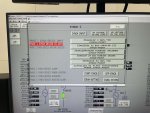
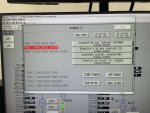
Yes you are correct! There are provisions for another 2 units of Gas Turbine which are in their planning for expansion (adding another 2 lines of paper machine production for the second phase. I am not sure when.
There are no Master control at the Overview display , only have speed load control section. I attached full picture of Overview page.
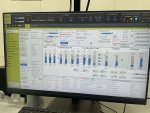
The 52L breaker is controlled (open/close) by the electrical operator at the presence of electrical supervisor. (On electrical DCS screen) I think its for manual closing of the breaker on the DCS.
I attach picture for your reference.
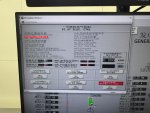
The SFC gets the power from 11kV system, which is supplied by diesel generators during blackstart. (extra information, the 11kV can also be supplied to 11kV-33kV transformer ( working in reverse compared normal operation which is usually that transformer is a step down 33kV -11kV) to be able supply power to 33kV bus bar system.
No there are no 52L breaker elsewhere, i have been looking for it since early working here and been asking electrical operator both Chinese and Local. All of them didn’t know where it was. Or is it even exist?
Picture 11kV
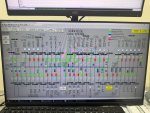
Picture diesel generator
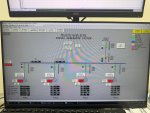
There are no control command for us on HMI display to change the control mode ( Isoch / Droop) as far as i know, its automatically.
Its okay I also didnt mind for some of the error, I surely will ask if I am confused. Thank you very much tho, for your time spending so much time replying to me and trying to figure out whats going on in my plant. Reading your post really helped me getting into the insights. Learned so much. I really appreciate it so so much.
Yes I am really sorry for the few days silence without reply, I am on holiday for few days and didnt check my email. Even after reading your reply, i would need some time to be able to reply to you to gather as much information that i can provide to avoid any confusion. Forgive me for the crickets . But I can assure you, as long as I am not dead, I will keep responding, with some time.
Hi, really sorry for the delay, I have been away for few days and didnt get time to check my email.
Yes, you’re correct, the SFC gets the power from diesel generators 4units of 1.6MW each (usually when our plant trips, diesel generators will be use for blackstart and in the meantime provide power for essential electricity throughout our factory)
SFC use power from 11kV distribution bus bar.
if we want to use electricity for essential power throughout our factory during the blackout ( while waiting for GT startup) , the 11kV will be feed through the transformer 11kV-33kV and supply the 33kV bus bar. ( we transmitting 33kV to our paper factory)
The diesel generators has their own control system and it’s automatically share the load between them.
Quoting you
“at the appropriate time the operator chooses AUTO control from the Turbine Control Mode drop-down box AND chooses Droop Speed Control mode and initiates a START for the machine”
Yes operator chose AUTO control for the turbine control mode. But we didnt have to choose Droop Speed Control Mode. There are no options or button for that in our Mark HMI.
To the part of GT running FSNL, and then synchronized.
After synchronized GT2 to the factory grid , while diesel generators is still online and on around 4MW( usually) (plant smaller machine / essential electric usage, HRSG water pump included)
We, the GT operators will open the page of Island control and will starts to increase the value ofIsland Target Freq to 100.20% to starts taking load from the diesel generators. Then the diesel generators load will gradually transferred to GT2 and diesel generator will be stop. Next, we will gradually permitting the plant to starts loading up ( turning on their big machine etc) and the GT2 load starts increasing.
GT2 maintain on Isoch speed control the entire days, weeks, months.
When steam turbine come online, when reach rated speed, the electrical operator will do the synchronising on the DCS electrical section.
After synchronised, the steam turbine operator will control the steam valve opening (associated with their governor system) based on my understanding.
The steam turbine operator will monitor the incoming steam pressure from the incenerator boiler and regulate the opening of the steam valve. When the boiler is burning more fuel or burning higher CV fuel (solid fuel) or the incenerator’s fuel feeding operator is efficiently controlling the fuel feeding conveyor, the steam pressure will eventually increase more than 5.3Mpa and the steam turbine operator will regulate the opening of the steam valve by increasing the opening. Hence, the steam turbine load eventually increased. And vice versa. Currently, the boiler fuel feeding is controlled manually on the DCS (regulating the speed of the conveyor) and the steam turbine is also considered controlled by manually on the DCS control room.
Quoting you
“Just curious--but what's this mean on the 33kV system screenshot? (Upper left area of the screenshot.) I also notice there is provision for two more GTs.?.?.? (Lower right area of the screenshot.) Hmmmm...”
Those two clickable box is the interface for synchronising program.
Usually, as of now, they only using them for synchronising steam turbine into the grid while one GT (GT2 in current scenario) is already online (connected to factory grid)
They also have synchronizer for GT generator, but we never use it. (maybe its for manual syncing.We usually just use auto synchronizer on Mark HMI.
There also have synchronizer for bus coupler etc. (because from the 33kV system i sent before, you can see the generator and transformers connected to different busbar . I attach the pop up for you.
Yes you are correct! There are provisions for another 2 units of Gas Turbine which are in their planning for expansion (adding another 2 lines of paper machine production for the second phase. I am not sure when.
There are no Master control at the Overview display , only have speed load control section. I attached full picture of Overview page.
The 52L breaker is controlled (open/close) by the electrical operator at the presence of electrical supervisor. (On electrical DCS screen) I think its for manual closing of the breaker on the DCS.
I attach picture for your reference.
The SFC gets the power from 11kV system, which is supplied by diesel generators during blackstart. (extra information, the 11kV can also be supplied to 11kV-33kV transformer ( working in reverse compared normal operation which is usually that transformer is a step down 33kV -11kV) to be able supply power to 33kV bus bar system.
No there are no 52L breaker elsewhere, i have been looking for it since early working here and been asking electrical operator both Chinese and Local. All of them didn’t know where it was. Or is it even exist?
Picture 11kV
Picture diesel generator
There are no control command for us on HMI display to change the control mode ( Isoch / Droop) as far as i know, its automatically.
Its okay I also didnt mind for some of the error, I surely will ask if I am confused. Thank you very much tho, for your time spending so much time replying to me and trying to figure out whats going on in my plant. Reading your post really helped me getting into the insights. Learned so much. I really appreciate it so so much.
Yes I am really sorry for the few days silence without reply, I am on holiday for few days and didnt check my email. Even after reading your reply, i would need some time to be able to reply to you to gather as much information that i can provide to avoid any confusion. Forgive me for the crickets . But I can assure you, as long as I am not dead, I will keep responding, with some time.
@EzzatHassim,
Welcome back, and I understand about being away; it's no problem. I was just wondering if I wrote too much or it was not very relevant and there were too many mistakes to be readable.
Let's start with analyzing this section of the GE Mark* HMI Overview display; I'll try to work from the top down of the grey section. Almost every GE-design HDGT I have ever worked on has a MASTER CONTROL section--on this display it's also labeled 'Turbine Control Mode'. And, it's apparently a drop-down box that probably has OFF, CRANK, FIRE, AUTO and possibly REMOTE, maybe even EXTERNAL LOAD CONTROL (this still puzzles me greatly--if the function, EXTERNAL LOAD CONTROL is used and where the load target/reference/setpoint/command comes from (I suspect it's the DCS--but that's just a guess). In this photo it appears AUTO mode is selected as the MASTER CONTROL mode ('Turbine Control Mode'), and that's also confirmed by the field which is direct to the right of the 'Breaker Status' labeled as 'Control State'--directly below the label it reads 'Auto'.
Directly below 'Turbine Control Mode' is another drop-down box labelled 'Synch Control' [Mode]. At the present time it reads 'Synch Off' but the drop-down selections are probably Auto, Manual, Synch Check, and Synch Off (again these are guesses).
To the right of the 'Synch Control' [Mode] box there is a label 'Start Status' and that's where it reads 'Isochronous Speed Ctrl'.
Below the 'Synch Control' [Mode] box there is a label 'Turbine State'. I have an idea that may have indications such as Pre-Selected Load Control (when NOT in Isochronous Speed Control (Island Mode)), Part Load, Base Load, Full Speed-No Load, etc. (again these are guesses).
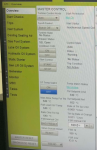
Below the 'Turbine State' area there is an area labelled 'Breaker Status' and it is showing '52L Open' in the photo. I have a suspicion that 52L is actually the name of the breaker that supplies 11 kV power to the SFC--but, again, that's a guess. Some GE Mark* HMIs have a feature enabled that when you hover the mouse cursor over a signal or value or status (just move the cursor to be "on top of" the signal/value/status that it will display the Mark* signal name that causes the signal/value/status to change state or value. That would be a huge step forward in trying to understand this 52L issue--at least for me. When you go into ToolboxST it will help to locate the signal faster if we know the exact name (usually it would be something like L52L--but (sorry!) that's just a guess...).
Below the 'Breaker Status' field there is a 'Cooldown Ctrl' area with two buttons: ON and OFF. That's used for putting the machine on COOLDOWN (often called "turning gear") when it's been at zero speed (0 RPM) or for testing or maintenance. If I recall correctly, some GE-design 6FA HDGTs have an actual turning gear mechanism, while some use the SFC for COOLDOWN. Whatever the case may be, it's usually starting COOLDOWN operation usually requires using the SFC to get the rotor turning and then either an AC electric motor-driven turning gear mechanism takes over as the machine coasts down to a low speed or the SFC keeps the rotor turning at a low speed. Because it's customary to use the SFC to get the shaft rotating either for a turbine START or for COOLDOWN operation that's why the 52L status is shown immediately above the 'Cooldown Ctrl' area.... (yet again--just a guess...).
Below the 'Cooldown Ctrl' area is the 'Start Control' area, used for STARTING the turbine-generator after selecting some Master Control mode OTHER THAN OFF and when the display indicates READY TO START (somewhere.?.?.?).
Below the 'Start Control' area is 'ST Temp Match' usually used for helping to get a steam turbine driven by steam created using the exhaust heat from an HRSG ("boiler") which the GT exhausts into. I don't know if that's actually being used or not, but for now it's outside the scope of this thread.
Most of the indications and selections below 'ST Temp Match' are related to temperature matching. The 'FSR Manual Ctrl' area(FSR stands for Fuel Stroke Reference) is typically used only for troubleshooting and is also outside the scope of this thread. The value of FSR Manual Ctrl (also called "FSR GAG") should always be 100% or there will be a Process Alarm indicating otherwise--and it should only be less than 100% if there is some kind of troubleshooting going on.
'Servo Suicide Reset' is an interesting feature I've never actually seen posted directly on a GE Mark* HMI display. Again, it's outside the scope of this thread.
Finally, at the very bottom of the snippet is a button labeled 'TREND' with some kind of icon I don't recognize. I don't know what this does; have you ever seen it used? Is it for PROFICY MACHINE EDITION (CIMPLICITY) trends or does it open ToolboxST Trender???
You wrote: "There are no control command for us on HMI display to change the control mode ( Isoch / Droop) as far as i know, its automatically." I suspect that selecting Isochronous Speed Control, or de-selecting Isochronous Speed Control is done from the 'Island Control' HMI display using the 'Island Mode Selection' buttons, where selecting ON will choose Isochronous Speed Control mode and selecting OFF will select Droop Speed Control mode. But, here is where it's really going to be necessary to have a look at the application code ("programming") in ToolboxST.
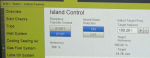
We have discussed the selection of "Island Mode Selection ON" for both machines at the same time--which in my opinion SHOULD NOT be possible--at least NOT when 52G is closed on both machines. BUT, again--sorting this out would really require reviewing the application code in ToolboxST, and I do strongly suspect it's been modified for your power plant.
In my personal opinion, it's crazy to use the 'Island Target Freq Target Setpoint' to load or unload the GT when synchronized with the diesel generators. Again, I don't understand why 'Island Mode' is being selected when GT2 (at the present time) is being synchronized with the diesel generators--which are most likely operating in Isoch Speed Control mode (or at least one of them is; sorry, I forgot you said there were multiple diesel generators--is more than one running when starting a GT?). Is there some kind Below that 'Island Target Freq Target Setpoint' adjustment box there is a value identified as 'Target Reference' and the value matches the value in the 'Island Target Freq Target Setpoint' adjustment box. Below 'Target Reference' is a value identified as 'Target' and the units for 'Target' are MW. This appears to be some kind of load target/reference/setpoint/command value--maybe the Pre-Selected Load Control command value (which, also in my opinion, SHOULD NOT be active when Island Mode (Isochronous Speed Control mode) is selected)? Honestly, there are so many things wrong with this particular display.
As I mentioned before, some control system manufacturers have something called 'Isochronous Load Sharing' which is just really a de-tuned Isochronous Speed Control mode with some signals being "shared" between prime mover control systems. There's also something called 'Isochronous Standby' mode which has been tried to have machines at the ready to immediately take control of plant frequency if the plant gets separated from the grid. There are other similar packages with many different names.
I also wonder if the diesel generator governors (control systems) have their own "power management system" to control load and frequency using an external control system (PMS-like) to send commands to the diesel governors which are essentially operating in Droop Speed Control mode (or "free governonor mode"). But using a frequency target to load/unload the diesel generators, well, it's kind of unheard of. And then there's that 'Target' (load target) with engineering units of MW on the Island Control display--with no place to change the 'Taget' value on the Island Control display.?.?.?!!!
Do you have access to ToolboxST, @EzzatHassim? You don't need any other access than "operator" to just look at the application code and configuration in ToolboxST--and to use Trender.
Anyway, gotta run. It's beautiful outside here today, after several days of really intense rains. I need to enjoy it and get some Vitamin D in the process!
Welcome back, and I understand about being away; it's no problem. I was just wondering if I wrote too much or it was not very relevant and there were too many mistakes to be readable.
Let's start with analyzing this section of the GE Mark* HMI Overview display; I'll try to work from the top down of the grey section. Almost every GE-design HDGT I have ever worked on has a MASTER CONTROL section--on this display it's also labeled 'Turbine Control Mode'. And, it's apparently a drop-down box that probably has OFF, CRANK, FIRE, AUTO and possibly REMOTE, maybe even EXTERNAL LOAD CONTROL (this still puzzles me greatly--if the function, EXTERNAL LOAD CONTROL is used and where the load target/reference/setpoint/command comes from (I suspect it's the DCS--but that's just a guess). In this photo it appears AUTO mode is selected as the MASTER CONTROL mode ('Turbine Control Mode'), and that's also confirmed by the field which is direct to the right of the 'Breaker Status' labeled as 'Control State'--directly below the label it reads 'Auto'.
Directly below 'Turbine Control Mode' is another drop-down box labelled 'Synch Control' [Mode]. At the present time it reads 'Synch Off' but the drop-down selections are probably Auto, Manual, Synch Check, and Synch Off (again these are guesses).
To the right of the 'Synch Control' [Mode] box there is a label 'Start Status' and that's where it reads 'Isochronous Speed Ctrl'.
Below the 'Synch Control' [Mode] box there is a label 'Turbine State'. I have an idea that may have indications such as Pre-Selected Load Control (when NOT in Isochronous Speed Control (Island Mode)), Part Load, Base Load, Full Speed-No Load, etc. (again these are guesses).
Below the 'Turbine State' area there is an area labelled 'Breaker Status' and it is showing '52L Open' in the photo. I have a suspicion that 52L is actually the name of the breaker that supplies 11 kV power to the SFC--but, again, that's a guess. Some GE Mark* HMIs have a feature enabled that when you hover the mouse cursor over a signal or value or status (just move the cursor to be "on top of" the signal/value/status that it will display the Mark* signal name that causes the signal/value/status to change state or value. That would be a huge step forward in trying to understand this 52L issue--at least for me. When you go into ToolboxST it will help to locate the signal faster if we know the exact name (usually it would be something like L52L--but (sorry!) that's just a guess...).
Below the 'Breaker Status' field there is a 'Cooldown Ctrl' area with two buttons: ON and OFF. That's used for putting the machine on COOLDOWN (often called "turning gear") when it's been at zero speed (0 RPM) or for testing or maintenance. If I recall correctly, some GE-design 6FA HDGTs have an actual turning gear mechanism, while some use the SFC for COOLDOWN. Whatever the case may be, it's usually starting COOLDOWN operation usually requires using the SFC to get the rotor turning and then either an AC electric motor-driven turning gear mechanism takes over as the machine coasts down to a low speed or the SFC keeps the rotor turning at a low speed. Because it's customary to use the SFC to get the shaft rotating either for a turbine START or for COOLDOWN operation that's why the 52L status is shown immediately above the 'Cooldown Ctrl' area.... (yet again--just a guess...).
Below the 'Cooldown Ctrl' area is the 'Start Control' area, used for STARTING the turbine-generator after selecting some Master Control mode OTHER THAN OFF and when the display indicates READY TO START (somewhere.?.?.?).
Below the 'Start Control' area is 'ST Temp Match' usually used for helping to get a steam turbine driven by steam created using the exhaust heat from an HRSG ("boiler") which the GT exhausts into. I don't know if that's actually being used or not, but for now it's outside the scope of this thread.
Most of the indications and selections below 'ST Temp Match' are related to temperature matching. The 'FSR Manual Ctrl' area(FSR stands for Fuel Stroke Reference) is typically used only for troubleshooting and is also outside the scope of this thread. The value of FSR Manual Ctrl (also called "FSR GAG") should always be 100% or there will be a Process Alarm indicating otherwise--and it should only be less than 100% if there is some kind of troubleshooting going on.
'Servo Suicide Reset' is an interesting feature I've never actually seen posted directly on a GE Mark* HMI display. Again, it's outside the scope of this thread.
Finally, at the very bottom of the snippet is a button labeled 'TREND' with some kind of icon I don't recognize. I don't know what this does; have you ever seen it used? Is it for PROFICY MACHINE EDITION (CIMPLICITY) trends or does it open ToolboxST Trender???
You wrote: "There are no control command for us on HMI display to change the control mode ( Isoch / Droop) as far as i know, its automatically." I suspect that selecting Isochronous Speed Control, or de-selecting Isochronous Speed Control is done from the 'Island Control' HMI display using the 'Island Mode Selection' buttons, where selecting ON will choose Isochronous Speed Control mode and selecting OFF will select Droop Speed Control mode. But, here is where it's really going to be necessary to have a look at the application code ("programming") in ToolboxST.
We have discussed the selection of "Island Mode Selection ON" for both machines at the same time--which in my opinion SHOULD NOT be possible--at least NOT when 52G is closed on both machines. BUT, again--sorting this out would really require reviewing the application code in ToolboxST, and I do strongly suspect it's been modified for your power plant.
In my personal opinion, it's crazy to use the 'Island Target Freq Target Setpoint' to load or unload the GT when synchronized with the diesel generators. Again, I don't understand why 'Island Mode' is being selected when GT2 (at the present time) is being synchronized with the diesel generators--which are most likely operating in Isoch Speed Control mode (or at least one of them is; sorry, I forgot you said there were multiple diesel generators--is more than one running when starting a GT?). Is there some kind Below that 'Island Target Freq Target Setpoint' adjustment box there is a value identified as 'Target Reference' and the value matches the value in the 'Island Target Freq Target Setpoint' adjustment box. Below 'Target Reference' is a value identified as 'Target' and the units for 'Target' are MW. This appears to be some kind of load target/reference/setpoint/command value--maybe the Pre-Selected Load Control command value (which, also in my opinion, SHOULD NOT be active when Island Mode (Isochronous Speed Control mode) is selected)? Honestly, there are so many things wrong with this particular display.
As I mentioned before, some control system manufacturers have something called 'Isochronous Load Sharing' which is just really a de-tuned Isochronous Speed Control mode with some signals being "shared" between prime mover control systems. There's also something called 'Isochronous Standby' mode which has been tried to have machines at the ready to immediately take control of plant frequency if the plant gets separated from the grid. There are other similar packages with many different names.
I also wonder if the diesel generator governors (control systems) have their own "power management system" to control load and frequency using an external control system (PMS-like) to send commands to the diesel governors which are essentially operating in Droop Speed Control mode (or "free governonor mode"). But using a frequency target to load/unload the diesel generators, well, it's kind of unheard of. And then there's that 'Target' (load target) with engineering units of MW on the Island Control display--with no place to change the 'Taget' value on the Island Control display.?.?.?!!!
Do you have access to ToolboxST, @EzzatHassim? You don't need any other access than "operator" to just look at the application code and configuration in ToolboxST--and to use Trender.
Anyway, gotta run. It's beautiful outside here today, after several days of really intense rains. I need to enjoy it and get some Vitamin D in the process!
@EzzatHassim,
Just checking in to see if you have any questions or clarifications or successes to report....
Just checking in to see if you have any questions or clarifications or successes to report....