Facebook
 Google
 GitHub
 Linkedin
M
Hi everyone..
Currently I'm working on a blending automation project where there are a few fluid components going to flow simultaneously and then mixed inline before delivering to the destination tank. There will be Coriolis flowmeter running on Profibus DP to the PLC Controller (Siemens). However, the bus speed might be limited by Segment Coupler's fixed baud rate as they share the same bus. This is not confirmed yet though as alternative way might be opted to separate the flowmeter from the Segment Coupler.
Then there are Control Valve whose my supplier claimed they could achieve great flow rate accuracy if the opening is within 2-90%. Therefore, the turndown ratio, as claimed by them, is around 100:3 approximately.
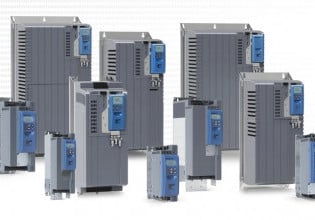
The pump, which are electric pumps will be controlled by VSDs.
My questions are:
First: Do I really need to separate the Profibus DP flowmeter from the SC, which is running at around 45.45 kbit/s and change to DP's maximum speed as long as the length of the bus permits to improve the control and response time?
Second: Is control valve turndown ratio is really that good? What happens to the pressure built up inside the pipeline when the CV opening is at significantly small considering the pump speed remains the same?
Third: Will inverter contribute to a much more better control of flow rate accuracy in this case?
Final Question: What is the realistic flow rate accuracy I can expect from the system? Is the PID controller really going to perform for this system configuration?
I really appreciate and hope anyone who has experience in controlling flowrate using CV and PID controller can comment and share their invaluable knowledge on this forum.
Thanks & Best of Regards,
Marcus
Currently I'm working on a blending automation project where there are a few fluid components going to flow simultaneously and then mixed inline before delivering to the destination tank. There will be Coriolis flowmeter running on Profibus DP to the PLC Controller (Siemens). However, the bus speed might be limited by Segment Coupler's fixed baud rate as they share the same bus. This is not confirmed yet though as alternative way might be opted to separate the flowmeter from the Segment Coupler.
Then there are Control Valve whose my supplier claimed they could achieve great flow rate accuracy if the opening is within 2-90%. Therefore, the turndown ratio, as claimed by them, is around 100:3 approximately.
The pump, which are electric pumps will be controlled by VSDs.
My questions are:
First: Do I really need to separate the Profibus DP flowmeter from the SC, which is running at around 45.45 kbit/s and change to DP's maximum speed as long as the length of the bus permits to improve the control and response time?
Second: Is control valve turndown ratio is really that good? What happens to the pressure built up inside the pipeline when the CV opening is at significantly small considering the pump speed remains the same?
Third: Will inverter contribute to a much more better control of flow rate accuracy in this case?
Final Question: What is the realistic flow rate accuracy I can expect from the system? Is the PID controller really going to perform for this system configuration?
I really appreciate and hope anyone who has experience in controlling flowrate using CV and PID controller can comment and share their invaluable knowledge on this forum.
Thanks & Best of Regards,
Marcus