Facebook
 Google
 GitHub
 Linkedin
Industry Insights: Oxipital AI Explains the Reality of Modern Vision Systems
Recently, Control.com interviewed Oxipital AI to learn exactly how incorporating AI into vision systems and machine learning is improving the food & beverage industries.
Like most of us, I’ve been hearing a lot about AI recently. It seems to be embedded in everything from industrial controls to admin processes, and even most of the applications in our everyday lives. But at the heart of it, I’m still always tempted to ask: “What, exactly, is AI doing to improve this process?”
I got the chance to meet recently with Oxipital AI, a company that specializes in AI vision systems, particularly geared at food & beverage applications, where quality control is paramount to ensuring that companies can effectively sell products to consumers. I spoke with Anthony Romeo, Product Marketing Manager, who was able to share some great details about the offering.

As we discussed the topic of vision in production, it became clearer to me that we can break this process down into three distinct steps.
Data Acquisition and Measurement (What am I looking at?)
The first stage of machine vision requires two elements. First, we must consider the hardware. Oxipital AI, for example, uses both RGB 2D image detection and LiDAR-based 3D vision, which can provide measurements. Next, the software applications run on an IPC, which is connected to the cameras.
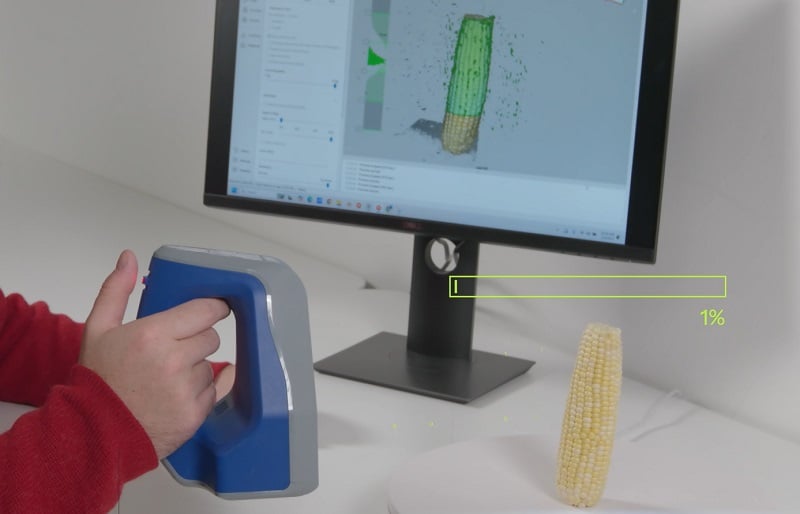
Figure 1. The system must have an input about the product, especially food products with nearly infinite variations.
Inside that IPC is the AI center. This is the stage in which AI is used to visually recognize and quantitatively measure objects, using inputs from both the RGB and Lidar cameras. AI has accelerated the process of training machine vision to recognize objects, placing the right data in the right places. This process used to take a long time, with hundreds or thousands of manual images assessed with good/bad ratings. Now, not only is it faster, it’s also more accurate, providing the necessary output for the next stage. Some companies, like Oxipital AI, even use 3D scanning as a part of the training process, so that the future LiDAR measurements can be compared against sample 3D point clouds of real objects.
Evaluation (Is this good or bad?)
The next part of the adventure is all about criteria and decision-making. In this type of process, AI is not involved in making a decision for you. Instead, the data provided by the AI in the previous step arrives in dimensional units and percentage values based on an ideal rating. The machine builder or end user sets a threshold for each value: what is considered a good product?
Consider, for example, a corn dog. This example was used in my own chat with Anthony from Oxipital AI, and it’s a good example because defects are clearly explained, and this product just happens to be relatable to nearly everyone.
The quantitative corn dog data from the measurement stage may include overall length, bread casing color, and wooden stick straightness. The evaluation places a tolerance value on each of these values. A length between __ and __ is acceptable. Color distortions or surface disfigurations that lower the % match below __ value should be rejected. A broken or missing stick also leads to a rejected product.
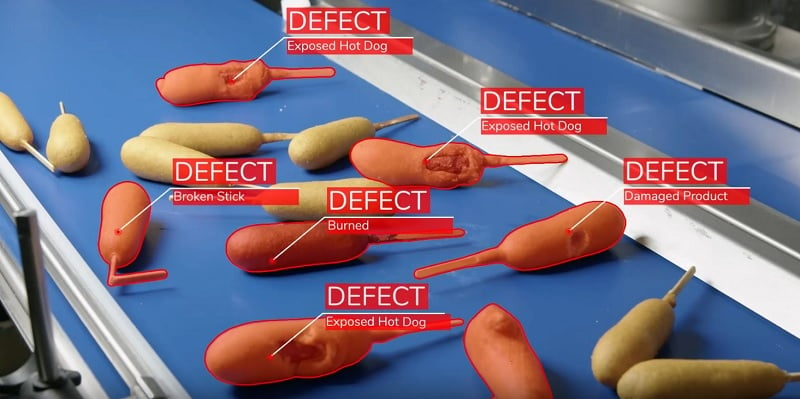
Figure 2. Each characteristic is measured, but then defects must be evaluated based on the data.
For some vision processes, the acceptance or rejection decision could stem from an AI learning process, but this carries the risk of shifting tolerances over time. While AI may be useful, it is, perhaps, not a necessary ingredient in all portions of the process.
Data Analysis (How can it help me in the long run?)
By the end of the second stage, the process knows enough to accept or reject certain product samples. However, that evaluation only provides a solution to current symptoms, not a solution to an overall problem. By looking at the measurement values or acceptance ratings over a period of time, hidden issues can be uncovered.
These insights are not unique to AI software or to vision processes. Anyone working with data collection will recognize the importance of this step.
Some production problems can be due to faulty equipment or process values (oven temperature, conveyor speed, etc.). This could be traced by watching certain types of failures over time. Perhaps the number of burned, discolored products is increasing across all shifts. This points to heating problems.
Some problems might also be due to timing. If a higher rate of rejected products happens at a certain time, there may be a solution found in optimizing equipment use. It might also point to an issue of user error, and training might be the right fix.
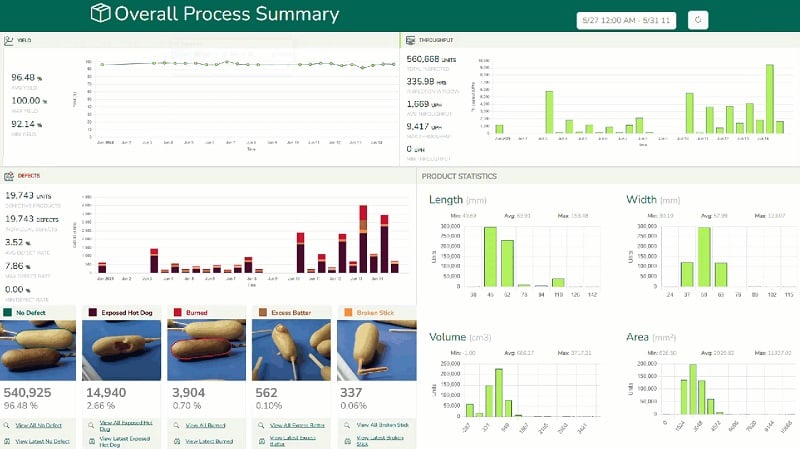
Figure 3. Insights can be an overlooked but very important part of the data process.
Data dashboards are a great way to examine the most common metrics at a quick glance. Deeper details can still be logged and processed later. This is another stage in which AI algorithms may be employed, but there are many external data processing solutions on the market.
Learning From AI
AI, as with any hardware or software in manufacturing, is only a tool to benefit the process. Vision systems are being marketed as AI products, but it’s always important to examine each process and ask how and why AI is being used to benefit the equipment and the end user.
Many thanks to Anthony Romeo from Oxipital AI for the discussion and instruction about where AI plays into the process of vision systems.
Images used courtesy of Oxipital AI
Related Content