Facebook
 Google
 GitHub
 Linkedin
Patlite Expands LR5 Signal Tower Lineup With New LAN Model
LR5-LAN Φ50 signal tower adds direct HTTP, Modbus/TCP, and EtherNet/IP control, eliminating I/O boards in connected factory systems.
Patlite has introduced the LR5-LAN Series Φ50 LED signal tower, bringing direct Ethernet connectivity to traditional stack light signaling. Supporting HTTP(S), Modbus/TCP, socket communication, and EtherNet/IP, the LR5-LAN eliminates the need for discrete PLC output wiring or additional I/O modules. Built-in web configuration, optional buzzer signaling, and network monitoring functions allow the tower to integrate directly into modern industrial Ethernet environments while simplifying installation, maintenance, and system expansion.
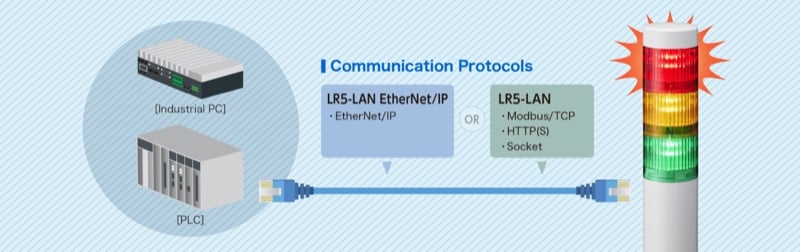
Patlite expands its LR5 series with the LR5-LAN series. Image used courtesy of Patlite
The primary change is the shift from discrete I/O wiring to direct network communication, so instead of using digital output cards in PLC or industrial PC systems, the LR5-LAN can be controlled via HTTP(S), Modbus/TCP, socket communication, or EtherNet/IP, depending on the model selected. This reduces component count, streamlines inventory management, and simplifies system maintenance while keeping signaling integrated within existing factory networks.
Direct Network Integration
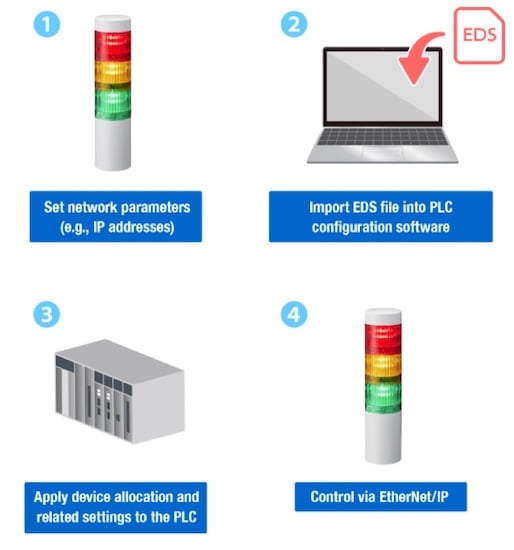
The LR5-LAN is offered in two configurations: a standard LAN model and a dedicated Ethernet/IP model. The EtherNet/IP version will also support EDS file registration, which allows device configuration to be imported directly into PLC software for faster setup. Once network parameters are assigned and the EDS file is loaded, control is handled through standard EtherNet/IP communication.
The Ethernet/IP-enabled LR5 allows for device configurations to be imported through EDS files. Image used courtesy of Patlite
The standard LAN model supports socket, HTTP(S), and Modbus/TCP communication. Configurations for the LR5 series can be managed via a built-in web server, allowing users to log in via a browser and generate control commands directly from the setup screen. This command-generation feature allows developers to verify control behavior without consulting manuals. Sample source code is available for both Windows and Linux environments to support faster integration into industrial PC-based systems.
Signal Control and Monitoring Functions
The signal tower can support up to five tiers and provides seven preset LED flashing patterns, including steady, slow, medium, and fast. Flashing patterns can be executed directly through command control, eliminating the need for clock pulse programming within the PLC. When equipped with the optional buzzer unit, both light and sound signaling can be triggered through network commands.
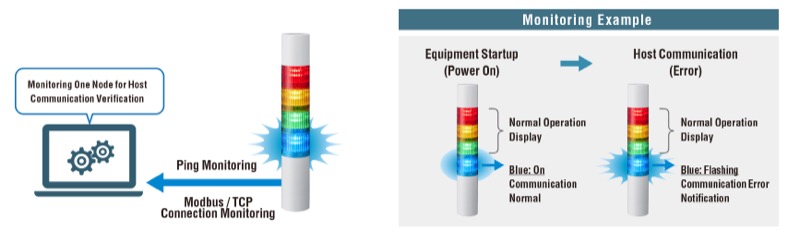
Connection monitoring is as simple as looking at the stack light. Image used courtesy of Patlite.
The tower also monitors the network. It can use simple Ping monitoring or watch a Modbus/TCP connection to ensure communication remains active. If, for some reason, the connection drops or comes back online, the unit can trigger a preset response so operators know something has changed. The LR5-LAN series runs on 24 VDC power, carries an IP65 rating for direct-mount installations, and is built to handle typical industrial temperatures from -20°C to +50°C without needing special protection.
For facilities already built around industrial Ethernet, the LR5-LAN simply moves stack light control onto the same network as the rest of the system. Instead of assigning physical outputs and managing additional interface hardware, control commands are sent over standard protocols. This reduces hardware dependency and makes expansion or modification easier within Ethernet-based automation stack light solutions.