Facebook
 Google
 GitHub
 Linkedin
Advantech QFi Enables Long-Distance Vision for Compact Cameras
Long-distance cameras require high-speed communication technology such as fiber optic cables, but if your camera doesn’t support fiber, you can now convert it with the QFi from Advantech.
Vision systems today communicate with large information packets that are sometimes sent over copper coax cables. While copper coax cables have been a staple in the vision industry for many years, they come with some drawbacks, such as maximum distances. When an application requires long distances between the camera and the frame grabber, your choice of hardware becomes very limited. Advantech has recently introduced the QFi, which allows standard CoaXPress cameras to communicate over distances that are in excess of one kilometer.
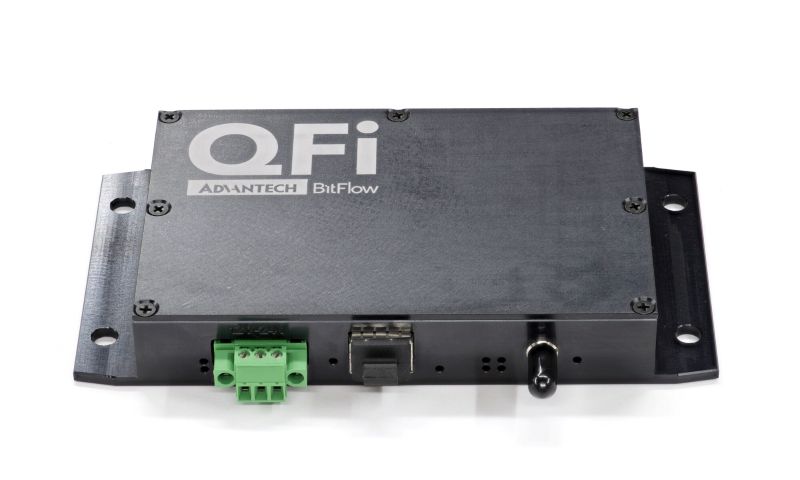
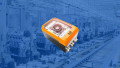
The QFi from Advantech enables compact cameras to see further. Image used courtesy of Advantech
Advantech BitFlow QFi
Advantech’s BitFlow QFi takes standard coax cable connections from a camera, converts the signal, and outputs it on a fiber optic cable. This fiber optic cable can then span many kilometers and is more cost-effective than copper coax cable.
The QFi is designed to work specifically with the BitFlow Claxon frame grabber, which can connect up to four different cameras at the same time. The QFi is compact and has its power input. It can also work with any CXP camera and convert the signals to a standard CoaXPress over Fiber (CoF) stream.
The QFi supports camera speeds from 1.2 to 12.5 Gb/s and camera to QFi distances of up to 40 m. Power for the camera comes from the QFi box and can supply up to 13 W of power. No programming or configuration is required as the QFi will automatically switch CoaXPress speed to match the camera speed.
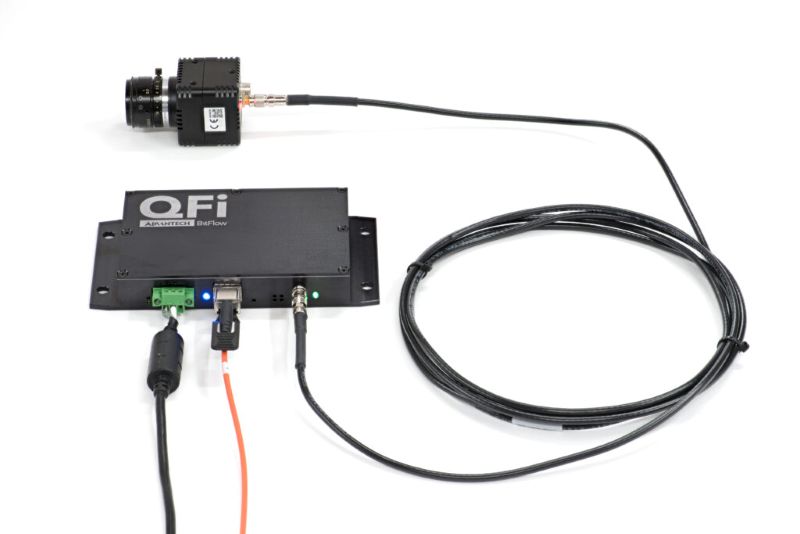
QFi converter box connected to a camera and frame grabber over fiber optic cable. Image used courtesy of Advantech
CoaXPress over Fiber (CoF)
Compact cameras are great when space is limited, but their features are limited, such as the communication connections or the distance they can be from a PC or control system. The CoF infrastructure uses fiber optic technology so that high-quality camera streaming is possible at very long distances. Camera manufacturers don’t always offer a model that uses the CoF infrastructure directly from the camera, and upgrading communication technology in devices is not always feasible, especially if it makes the product larger or requires additional connections for power. Devices like the QFi allow designers to use virtually any camera with CXP infrastructure and convert the signal to CoF.
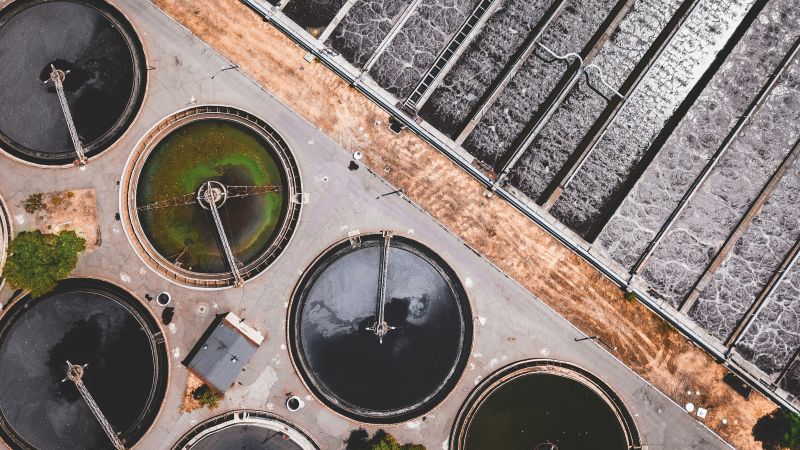
Users will find Advantech’s QFi advantageous in applications that require long-distance vision, such as at water treatment plants. Image used courtesy of Unsplash
Long-Distance Vision
Processing plants such as oil and gas or water management can sometimes span many square miles. Instead of having multiple vision-capturing PCs in the field, it is more cost-efficient to have one centralized location for your vision PC. This design style requires either larger, expensive cameras that have built-in fiber optic connections or a Coax camera and a converter box like the QFi to convert the signal over to fiber optic. By using a converting device, you can save money and still maintain an efficient, high-quality vision stream.