Facebook
 Google
 GitHub
 Linkedin
SensoPart Streamlines Optical Sensor Selection With New DTECT Family
The DTECT family bundles the company's optical sensors under a product naming convention that groups them by color, distance, presence, and 3D object detection.
SensoPart, a leading supplier of optical sensors for industrial automation, specializes in vision, optical, ultrasonic, and inductive sensing technology. Recently, SensoPart bundled its optical sensors into a single product family to simplify sensor selection. The new DTECT family is divided into four categories based on color, distance, volume, and presence detection. By using these categories, SensoPart aims to help customers more quickly identify the ideal sensor for their specific application needs.
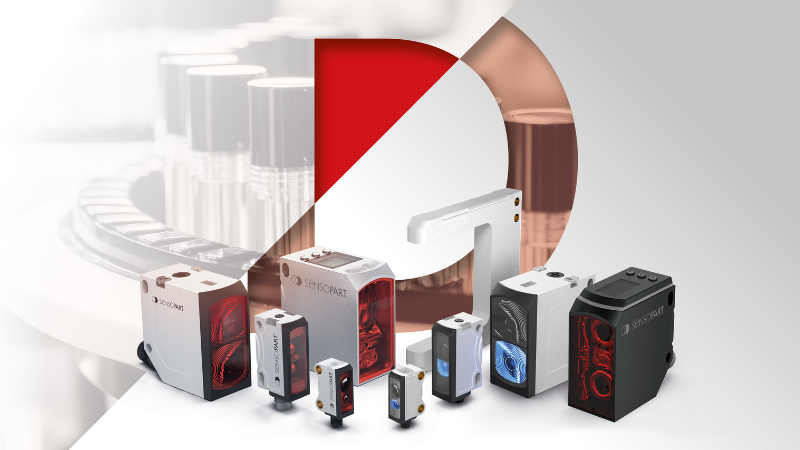
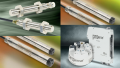
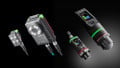
SensoPart has bundled its optical sensor technology into its new DTECT product family. Image used courtesy of SensoPart
The DTECT Product Family
Detection sensors are used in automation to tell the control system when an object reaches a specific position. Some objects are difficult to detect, such as the water level in a clear bottle or thin black carbon sheets on a conveyor belt. These objects still need to be detected, and SensoPart has created the DTECT product family to help customers find the right part.
All of the sensors in the DTECT lineup use optical sensing technology, but in different ways.
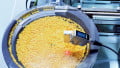
Color Detection: Sensors in the DTECT Color group rely on spectral analysis, evaluating light reflected off objects and comparing it with taught-in references. This sensor type works well for detecting thin or non-conductive materials.
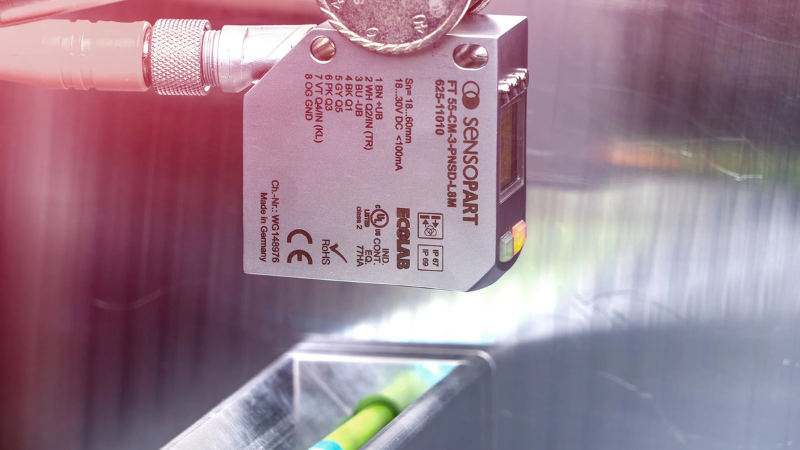
A color sensor being used to determine if the correct color is present. Image used courtesy of SensoPart
Distance Detection: Laser light is highly consistent, making it the preferred choice for SensoPart’s DTECT Distance group. These sensors detect and report the distance of an object to the control system and are widely used in part detection and inspection applications.
3D Detection: Some applications require more information about a part than just its presence. SensoPart’s DTECT Object 3D sensor group measures a part's volume as it moves through the sensor's field of view. As a part passes the sensor, the sensor can determine a part's orientation and identify missing parts and features in real time.
Presence Detection: Considered the backbone sensor of the automation world, photoelectric diffuse sensors are used in virtually any automated solution where components move along a conveyor belt. SensoPart’s DTECT presence sensors use advanced laser light along with LEDs to accurately detect the presence of objects at various distances.
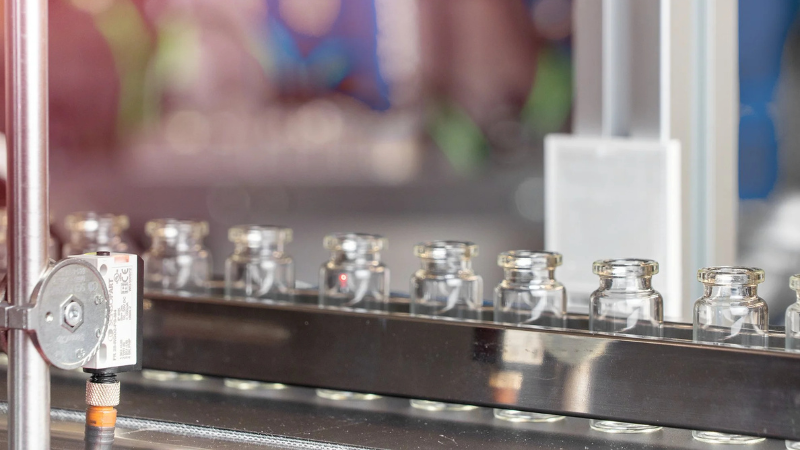
A diffuse light sensor being used to detect clear bottles on a conveyor belt. Image used courtesy of SensoPart
Selecting the Right Sensor For the Job
Some sensing applications are straightforward and only require a standard diffuse or retroreflective sensor. These sensors are widely used and very reliable. Other applications require more advanced sensors, such as detecting a missing feature of a part. Molding parts do not always go as planned, and if the molding material is short, not all of the features will be present.
A 3D object sensor can be used to measure the part's volume and determine whether it is scrap. Detecting paper-thin material on a conveyor belt can be difficult with standard through-beam sensors, but a color-detecting sensor can signal the control system when the material is no longer present.
SensoPart's latest move aims to ease the pain of selecting the right sensor for an application by categorizing optical sensors by their detection capabilities. This strategic grouping enables designers and engineers to source the correct optical sensor with greater efficiency.