Facebook
 Google
 GitHub
 Linkedin
Advantech Unlocks Edge AI Power With Compact DIN-Rail Industrial PC
The latest edge-computing controller from Advantech leverages artificial intelligence to speed up control decisions. The controller can be integrated with a carrier stack for even greater edge AI capability.
Advantech announced its newest industrial edge computer, the UNO-148 V2. This DIN-rail mountable controller is capable of performing fast, real-time calculations using its 13th-generation Intel core and optional embedded MXM GPU based on the NVIDIA Ada Lovelace architecture. These features allow the controller to handle AI capabilities to make control decisions based on large datasets and sensor feedback information.
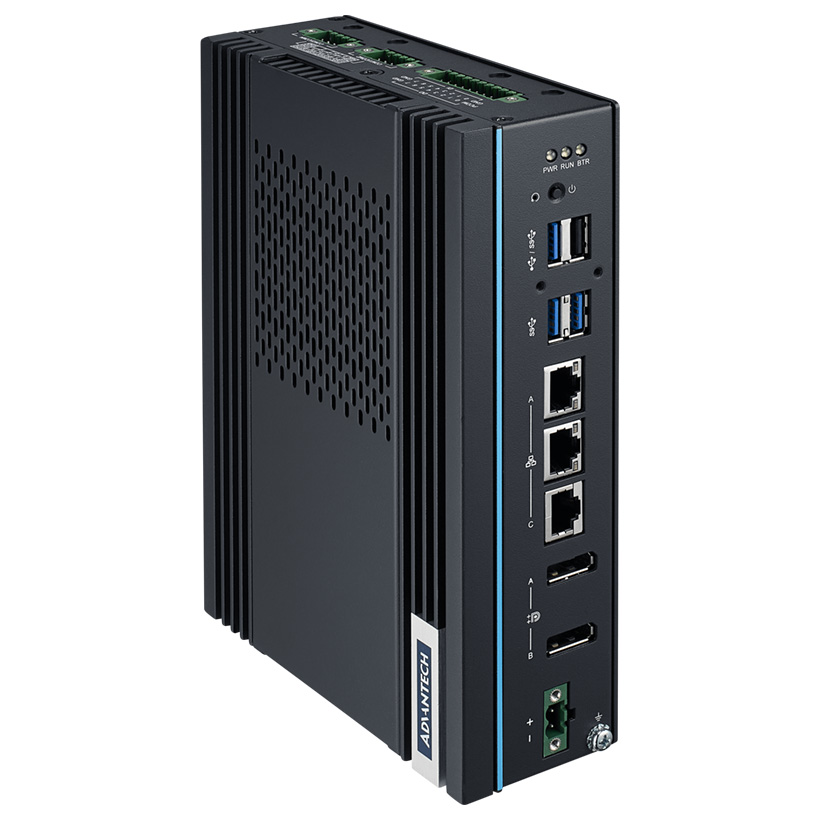
Advantech’s UNO-148 V2 edge controller with AI capabilities. Image used courtesy of Advantech
What Is Edge Computing?
The new UNO-148 V2 is designed to handle edge computing. Edge computing is the movement pushing data processing to the “edge” of the network. In the past, data has been collected and sent to a central database and data processing center. From there, control decisions are made and sent back out to devices. This process is time-consuming and relies heavily on one control system, making it vulnerable to cyberattacks and hard to keep production flowing if that system ever needs to be taken out of service for maintenance or upgrades.
Edge computing pushes some decision-making capabilities outwards and more locally to data collection locations. This speeds up decisions, improves the reliability of the entire system, and offloads some of the processing load, leaving central processors to handle more complicated decisions instead of minute-to-minute operations.
It is similar to the human body's central nervous and reflexive systems. Central processing happens in the brain. However, if a person touches a hot stove, the pain signal is directed to the muscles, causing the person to pull away from the stove long before the brain receives and interprets the message. The reflexive system behaves like edge computing.
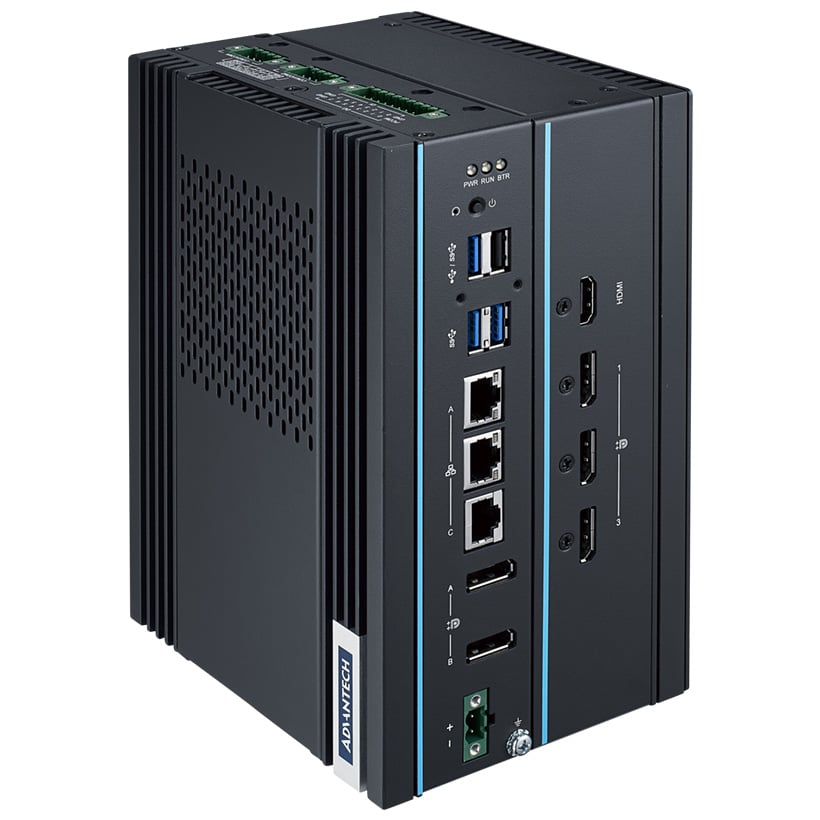
The Advantech UNO-148 V2 integrated with a second-stack extension kit that supports MXM GPUs built on NVIDIA Ada Lovelace architecture. Image used courtesy of Advantech
The UNO-148 V2
Advantech's UNO-148 V2 offers several key advantages over existing edge computing systems, particularly in the manufacturing and industrial processing spheres. First, it has the ability to handle real-time data with low latency. Low latency means decisions are made quickly, just like the reflex system discussed above. The low latency is made possible through the high-end computing power of the 13th-generation Intel processor and the optional MXM GPU card integration. Furthermore, it uses a solid-state hard drive with RAID support, which reduces processing time when data must be retrieved from storage.
Besides processing capability, the UNO-148 V2 is built for industry. It has quite a selection of possible interfacing ports, meaning data and programming can be uploaded to it easily. It also has separate display ports, meaning data can be sent to large monitors on the factory floor, laptop displays, and other devices.
The controller itself is DIN-rail mountable and has a small form factor (53 mm x 140 mm x 200 mm), meaning it can be installed in compact, tight spaces. Second-stack extensions can be added to the existing controller, allowing for more processing flexibility.
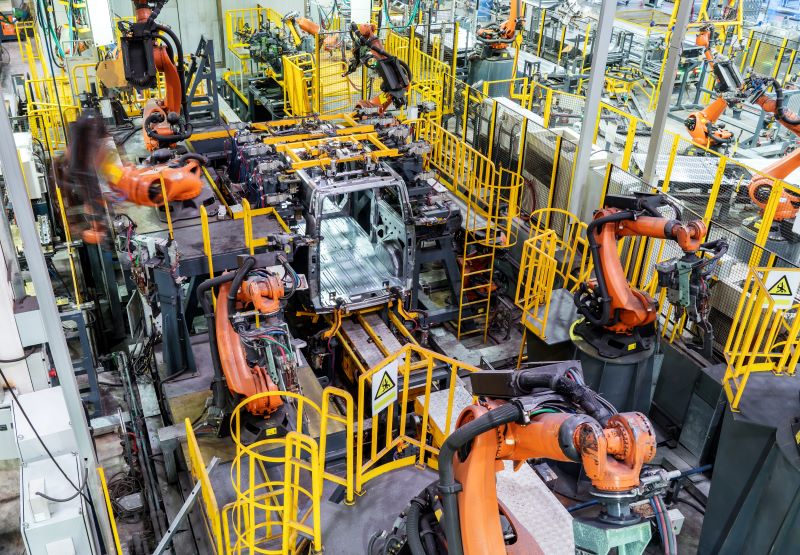
The UNO-148 V2 is suitable for use in various manufacturing and industrial automation processes. Image used courtesy of Adobe Stock
AI-Driven Industries
With the ability to handle complex calculations and large datasets with AI integration, the UNO-148 V2 will benefit virtually any industry that requires precision control and quick process decision-making capability. The small form factor and DIN rail mounts make it easy to physically integrate with existing automation systems. With the purchase of additional modules, this system can be a replacement for legacy controls, boosting the performance of the automation system with real-time performance and AI-enhanced decision-making capabilities.
Related Content