Facebook
 Google
 GitHub
 Linkedin
Autonics PRFD-K Sensors Deliver Equal Metal Detection in Harsh Environments
Autonics’ PRFD-K sensors offer equal detection of iron and aluminum, rugged durability, and plug-and-play reliability for harsh, mixed-metal environments.
Detecting aluminum and iron with the same sensor has long been a challenge on mixed-material production lines. Most inductive proximity sensors detect iron more easily, causing false readings or missed detections when aluminum enters the picture. For manufacturers, this means costly delays, extra calibration, and inconsistent automation performance.
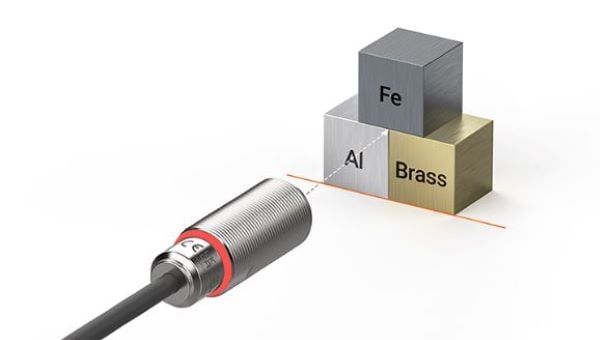
The PRFD-K Series has been specifically designed to detect iron and aluminum with the same sensor. Image used courtesy of Autonics
The PRFD-K Series sensors are designed to eliminate that problem. Featuring “factor 1” sensing, these full-metal cylindrical sensors detect iron, aluminum, and brass at equal distances. That’s especially useful in automotive production and other industries where aluminum and steel parts are used side-by-side. No need to swap sensors or adjust settings; users simply install the sensor and go.
Equal Detection, Simplified Setup
Factor 1 sensing means the sensor doesn’t favor one metal over another. While many sensors detect aluminum at shorter ranges than iron, the PRFD-K Series maintains consistent detection capabilities across both materials. This ensures reliable performance in environments where different metals cycle through the same automation line.
M18 and M30 models offer complete factor 1 performance for iron, aluminum, and brass. For operations that demand efficiency and uptime, this reduces the need for adjustments and eliminates one more potential point of failure.
Built to Take a Beating
Housed in stainless steel 303, they withstand wear from direct contact with parts, tools, and even abrasive wire brushes. Key features include oil-resistant PVC cables for use in environments with hydraulic or cutting fluids, IP66 to IP68 protection against dust and water, and two-color LED status indicators that are visible from multiple angles for quick diagnostics. Thick sensor heads maintain reliable performance even after extended use. For welding lines, the PRFDA□ models feature a non-stick PTFE coating that resists heat, welding spatter, and magnetic noise, allowing them to operate just 10mm from active weld zones—something few sensors can handle.
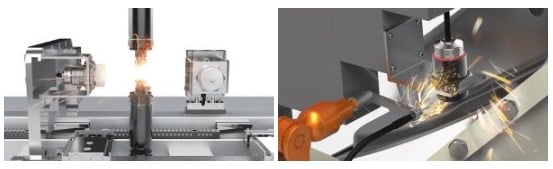
The PRFD-K series will also feature a non-stick PTFE coating, which aids in welding applications for their PRFDA models. Image used courtesy of Autonics
Versatile and Ready for the Real World
Available in M12, M18, and M30 sizes with various connector types, the PRFD-K Series fits easily into a wide range of setups. Whether retrofitting old equipment or designing a new line, these sensors offer flexibility without sacrificing performance. From automotive frame lines to machining centers, they’re built to withstand mixed-metal environments, metal chips, oil, vibration, and other daily wear and tear without requiring constant maintenance or guesswork.
For operations involving both aluminum and iron components, sensor inconsistency can significantly slow down the process. The PRFD-K Series addresses this challenge with equal detection, rugged construction, and plug-and-play reliability, enabling manufacturers to maintain productivity even under pressure.