Facebook
 Google
 GitHub
 Linkedin
Industry Collaborations Advance Automation Processes
Automation companies such as Aeva, SICK, FAST Technologies, NVIDIA, and AWS have entered various partnerships to advance industrial automation.
Aeva Technologies, Inc., SICK AG, FAST Technologies, NVIDIA Corporation, and Amazon Web Services (AWS) have announced their entry into respective developmental partnerships, advancing industrial sensor technologies, software and hardware deployment, and evolving industrial automation. This article will provide an overview of these innovative, future-focused collaborations, highlighting key features of industry-leading manufacturing technologies.
Companies, including NVIDIA and AWS, are forging strong partnerships around innovative collaborations to evolve the industrial automation landscape. Image used courtesy of NVIDIA
FAST Technologies
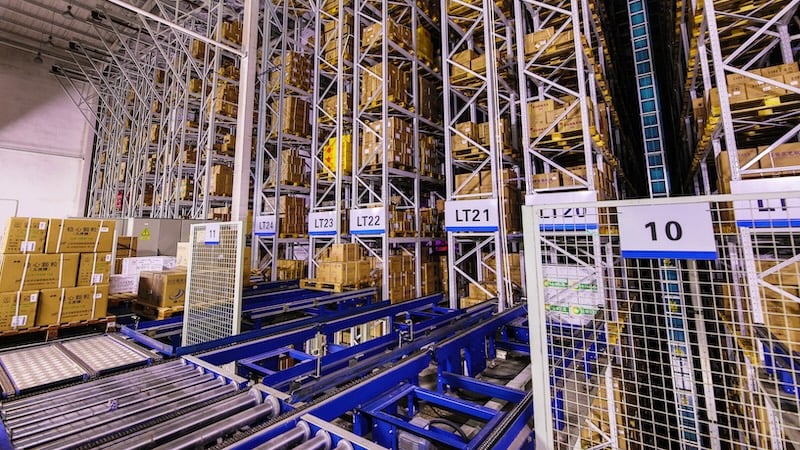
FAST Technologies announced its plans to scale up the Bloc Blinds (BB) production process through the integration of its robotics, automation, and software technologies and solutions. The multimillion-pound project will be delivered at BB’s U.S. production site, which will eventually operate with the capability of turning around customer orders in 24 hours to keep up with demand.
FAST’s Dreamaker system will be incorporated into BB’s operations—an innovative manufacturing technology intended to improve production processes' accuracy, effectiveness, and scalability. Modern technologies like robotics, AI, and real-time data analytics are integrated into this system to maximize customization and automate monotonous activities.
By automating repetitive processes, the Dreamaker platform promotes employee empowerment by freeing staff members to concentrate on higher-value work. Furthermore, even in large-scale manufacturing settings, the system's flexibility guarantees smooth quality control, which helps minimize downtime and tackle issues like worker shortages and energy consumption issues.
Real-Time Data for Rapid Decision-Making
The foundations of seamlessly connected automated industrial systems rely on interoperability between hardware and software, intuitive and centralized operations management, and advanced sensing technology. Precision sensor technology makes the crucial connection between digital systems and physical operations possible, providing accurate real-time information.
Immediate data retrieval is necessary for improving control over processes and operational performance. Advanced sensor networks, frequently made possible by IoT connectivity, are used in modern industrial systems to increase responsiveness and assist predictive maintenance plans, which minimize downtime and maximize productivity. These sensors allow for quick, low-latency decision-making when paired with edge computing, offering prompt and robust responses in complex industrial environments.
Aeva and SICK
SICK has observed the growth and development of Aeva’s technology and seeks to incorporate its core FMCW (Frequency-Modulated Continuous Wave) technology—encompassing radar with a modulating signal that increases/decreases across a set frequency bandwidth—into its portfolio of high-performance, contact-free industrial sensors.
The FMCW technology includes the Aeva CoreVision sensor module and sophisticated signal processing algorithms. This module monitors velocity precisely down to micrometers per second and is designed to provide precise, long-range detection.
The Aeva CoreVision Lidar-on-Chip Technology offers fully automated assembly and an in-built silicon photonics module and complies with stringent automotive standards. Video used courtesy of Aeva
Three standout features of the CoreVision module include
- Diverse Material Sensing, providing contact-free measurement spanning surfaces of differing texture, material, and hue.
- Adaptable Range for short and long-distance detection.
- Adaptable Lighting for varying degrees of light exposure, catering to indoor and outdoor industrial settings.
The Aeva-SICK collaboration is set to advance and disrupt the sensor technology market.
NVIDIA and AWS
NVIDIA has improved the capabilities of its robotics simulation platform, Isaac Sim, by running it on NVIDIA L40S GPU-powered AWS EC2 G6e instances. These instances can be defined as a kind of cloud computing infrastructure that helps developers tackle demanding workloads. Developers may test and simulate AI-driven robots in true-to-life virtual environments thanks to these high-performance computer resources. Support for synthetic data production is one important breakthrough, where OpenUSD (Universal Scene Description) and NIM (Nucleus Interaction Microservices) speed up procedures like information enhancement and virtual scene construction.
The combination of AWS IoT and the NVIDIA IGX Orin and Jetson Orin platforms For scalable device administration, AI model deployment, and real-time edge processing, Greengrass provides control engineers with strong tools. Engineers may improve system responsiveness and accuracy by analyzing information directly at the edge and lowering latency, which is essential for industrial automation and robotics. While smart sensor integration facilitates sophisticated data analysis and maintenance planning, expandable fleet management streamlines updates and monitoring. Engineers might boost automation, decrease downtime, and enhance operations while eliminating less complicated equipment.