Facebook
 Google
 GitHub
 Linkedin
KUKA Releases iiQWorks Engineering Suite for Total Robot Automation
The iiQWorks engineering suite enables offline programming and simulation of KUKA robots. The software is designed to speed up and simplify robotic automation at all steps.
A digital twin is a digital replica of a part or process. Digital twins enable manufacturers who purchase automated equipment to try out modifications to their existing production lines or simulate factory floor layouts. For machine builders, digital twins can be used to simulate machine efficiencies or check for interferences. Recently, KUKA announced the release of a full digital twin software suite that can simulate an entire robotic cell without connecting to a robot.
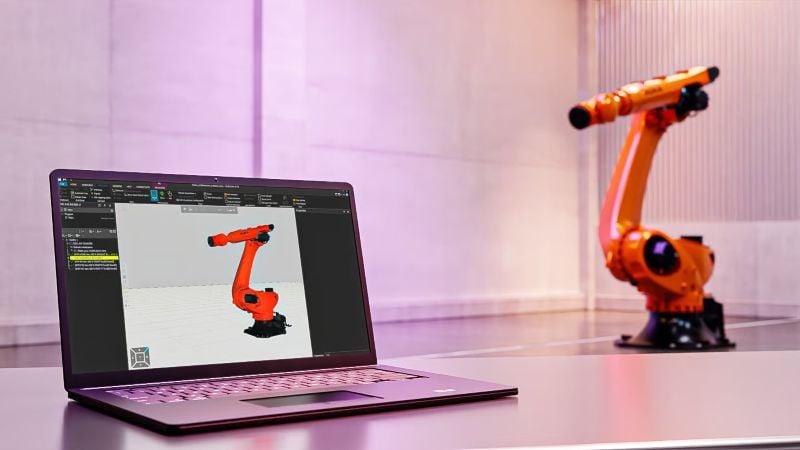
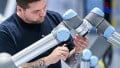
KUKA has released the iiQWorks engineering suite, a software that supports robot system configuration, deployment, and more. Image used courtesy of KUKA
The iiQWorks Engineering Suite
Simulating robot reach and paths is a vital step in the automation design process. There is nothing worse than finding out halfway through a project that your robot isn’t going to reach a station or that it is not fast enough to meet the required cycle time.
KUKA’s iiQWorks.Sim, part of the new iiQWorks Engineering Suite, allows users to create a digital twin of a robot cell and execute all the programmed paths. This software gives machine builders the power to debug their code and perform cycle time analysis before the robot arrives. The iiQWorks software is licensed by add-ons, so you only pay for the features you need. The basic version requires no license and is free for anyone to use. As more advanced functions are required, they can be purchased from KUKA and easily installed without changing existing setups.
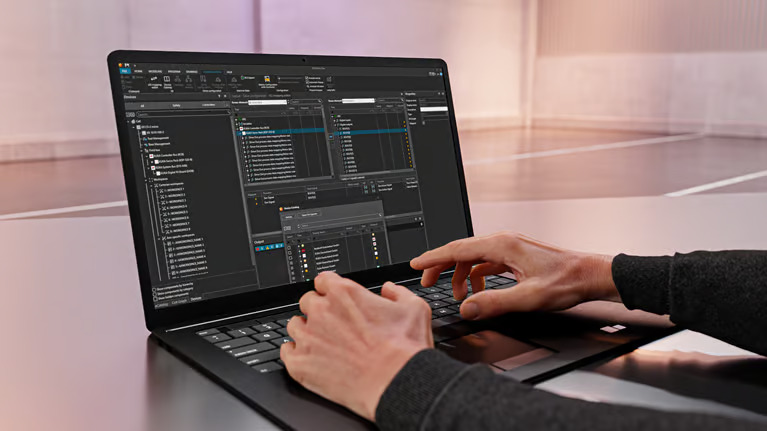
With the iiQWorks software, users can develop robot code offline. Image used courtesy of KUKA
Site Planning and Offline Programming
Knowing where your new equipment will live within your factory is important for proper product flow. You wouldn’t want your product jumping from one end of your factory to the other during production. The iiQWorks software allows greenfield or brownfield factories to simulate where the robotic cell will live, and if it needs to move to a new location, the configuration of the simulation can be quickly modified.
The time to market is also just as important for machine builders as it is for factories. Being able to develop and debug robot code without an actual robot can save hundreds of hours during the time-sensitive integration phase of the project, as well as prevent interruptions during operation.
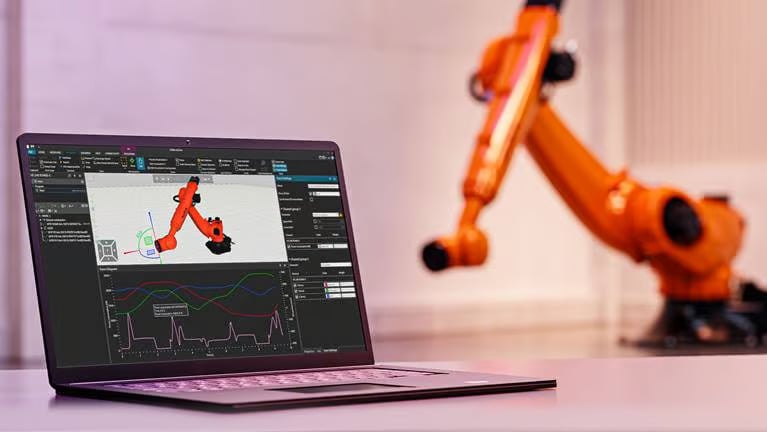
iiQWorks is available for free as a basic version, with the option to pay for additional functions as needed. Image used courtesy of Unsplash
Digital Twin as a Deliverable
During the design phase, mechanical engineers spend hundreds of hours designing parts and assemblies. Once these parts and assemblies are made a reality, the designs sit dormant. This is why machine builders are trying to sell digital twins as a deliverable for a project. Not only would you get your new assembly line, but you would also get a digital copy to use for plant layout, retrofits, and training. This concept gives the end user the power of information concerning their equipment. Oftentimes, the customer doesn’t have as extensive knowledge of the equipment as the OEM, but with a digital twin like the iiQWorks from KUKA, customers can learn about their equipment before they receive it and well after it hits the floor.