Facebook
 Google
 GitHub
 Linkedin
Meet Iggy Rob: Igus’ Low-Cost Humanoid Robot With a Lust for Life
Igus’ new low-cost humanoid robot, Iggy Rob, is made up of the company’s collaborative robot arms and AMR. Iggy Rob can be used in industrial, service, and transportation applications and costs just under $55,000.
The industrial robot has traditionally been a single six-axis arm that is capable of performing heavy and dangerous tasks, increasing production, and decreasing prices. Over the past few years, humanoid robots have started popping up in industrial settings, taking on jobs that require manual dexterity. Recently, the popular motion plastics manufacturer Igus has released an economical humanoid robot that could be used in various industrial manufacturing applications.
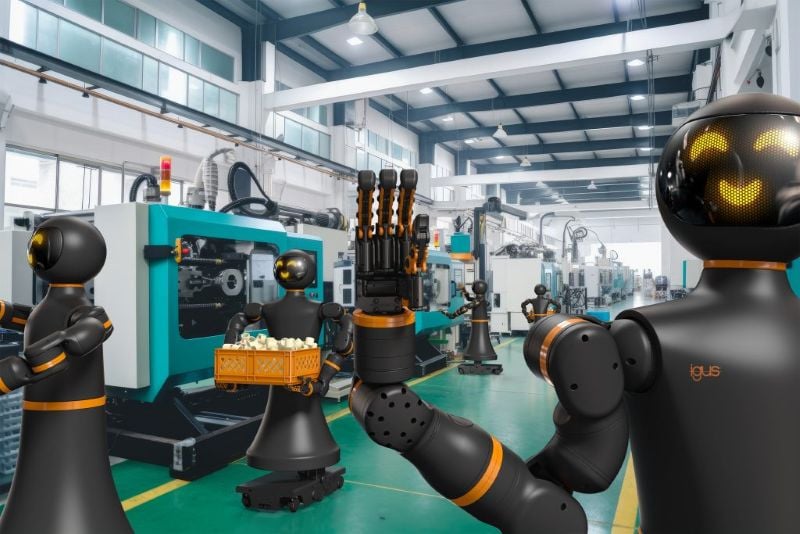
Meet Iggy Rob, Igus’ new humanoid robot that can perform various industrial automation tasks at a low cost compared to other humanoids on the market. Image used courtesy of Igus
Iggy Rob Has a Lust for Life
Igus designed Iggy Rob to be an affordable humanoid robot. The robot stands nearly 5.6 ft tall and is made up of Igus’ other collaborative products, like the ReBel cobot for arms, bionic hands, and the ReBel Move AMR for moving around the factory. For sight, Iggy Rob uses LiDAR sensors and 3D cameras for advanced object detection abilities. Just like a standard industrial worker, Iggy Rob can operate autonomously for eight hours without needing a charge.
Controlling Iggy Rob is done using Igus’ Robot Control software (iRC). The software and controller come as a single unit and can be connected through Ethernet or Wi-Fi. The software is integrated into the controller, so there is no need for licensing or installation.
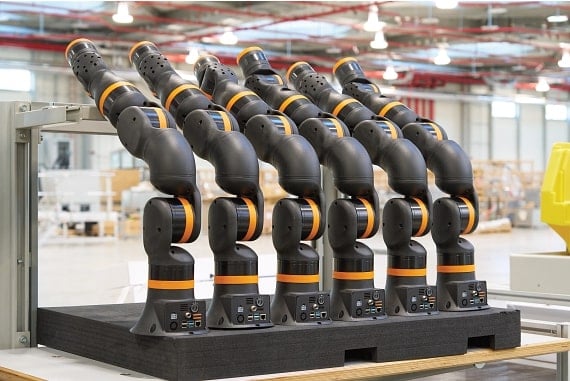
Iggy Rob’s torso is fixed with two Igus’ Rebel cobot arms (pictured above) complete with bionic hands. To get around, Iggy Rob is situated on a Rebel Move AMR. Image used courtesy of Igus
Try Before You Buy
Igus is dedicated to getting automation into factories; the company has a “test before you invest” program, which enables businesses to trial Iggy Rob at their facilities. The trial also comes with support from Igus experts to help reduce the learning curve. At the end of the trial, the business can purchase the robot at a market value of nearly half the price of other humanoid robots ($54,500).
Humanoid Robot Applications
Our world is built for humans, so it makes sense for a humanoid robot to be doing tasks built for humans that we humans don’t want to do or want to do more efficiently. Tasks in the service industry shine for humanoid robots, such as cleaning, canteen operations, reception desks, and transportation of objects.
In industrial applications, machine tending has been making use of collaborative robots for many years, and the humanoid robot could be the next step, as it can move to multiple machines on its own. Having dexterity in the hands of the robot allows for different-shaped parts to be grasped when tending multiple machines, an operation that is more difficult with a single collaborative robot.
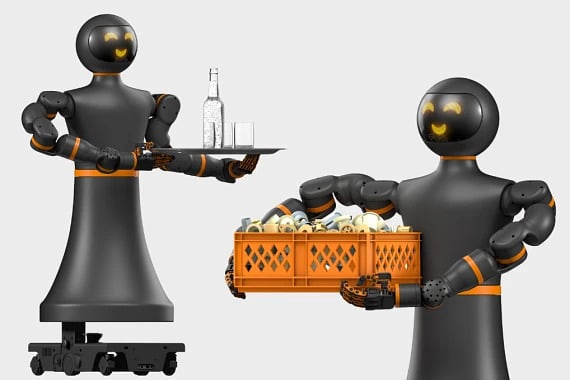
Iggy Rob brings life to service and industrial tasks and costs no more than $55,000 per robot. Image used courtesy of Igus
Humanoid Robots Go To Work
As a machine integrator for over 10 years, I’m not sure what role these robots will play in an automated assembly line. Traditional automated machines are designed for industrial robots, not humans; even operator stations take longer to design because they need to meet specific ergonomic and safety standards. As humanoid-style robots become more popular for large and small manufacturing facilities, however, operators need to start looking at ways humanoid robots can be efficiently and safely used in their applications.