Facebook
 Google
 GitHub
 Linkedin
New M12 Connectors From Belden: Secure, Rapid Cabling
Industrial uptime demands cabling with fast connections under harsh conditions. Belden answered the demands with a new portfolio of M12 connectors, making use of push-pull connector technology.
Belden, a global supplier of industrial and IT-related cables, connectors, racks, and management systems, recently announced the addition of a lineup of push-pull connectors for the common M12 styles of cables used for industrial Ethernet and I/O signaling.
Belden Push-Pull Connectors
Industrial automation has been facing a trend in manufacturing as of late, where OT (field level) devices must transmit high volumes of data reliably and seamlessly to IT equipment. This creates a problem because OT connectors are often designed to withstand harsh environments, while IT connectors are designed for controlled environments. Seeing this recent trend, Belden has released the M12 push-pull connector portfolio.

The M12 push-pull connectors (these ones are x-coded) at both ends of a cable. Image used courtesy of Belden
M12 Push Pull Connector Features
Uptime is extremely important for the automated manufacturing and transportation industries. Troubleshooting device communications in the field, only to determine that the root cause is a loose connector, can cripple a manufacturing schedule. For these reasons, Belden has invested in technology to build a connector that meets the high demand of the industry and is IEC 61076-2-010 rated.
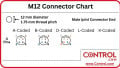
The portfolio of the M12 push-pull connector comes in X-coded for gigabit Ethernet connections, D-coded for standard Ethernet connections, and A-coded for industrial I/O connections. Ethernet or I/O cables can be ordered from Belden with the M12 push-pull connector factory installed. Bulkhead, panel mount, and PCB inserts can also be ordered with the push-pull connector technology which allows manufacturers to design the technology within their devices.
The new design allows for simple installation without the need for specialty torque tools, even in tight spaces. The push-and-pull design doesn’t require screwing connectors together, which often results in longer assembly time and loose connections due to vibrations. However, the specialized sockets are compatible with both threaded cables and the push-pull technology for backward compatibility and ease of design.
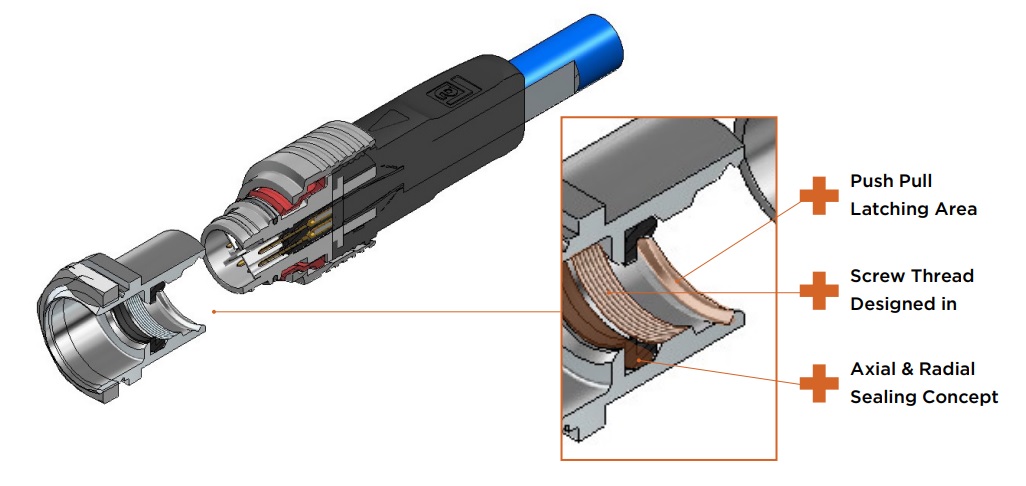
A closer look at the backward compatibility of the push-pull style of connection from Belden. Image used courtesy of Belden
The new connector has the inherent ability to withstand vibrations, so transportation applications will benefit from a connector that doesn’t require screw connections. The push-pull connector is also capable of withstanding harsh conditions that might be seen in transportation applications.
A connector that is not seated properly can cause downtime and might even lead to safety hazards. By using the push-pull connector from Belden, suppliers can provide a safer product, quickly making secure connections even in harsh conditions.
Connectors In Industry
Many devices within an automated cell use a variety of different connectors to connect cables to different devices. The industry standard is an M8 or M12 threaded connector. These connectors are often used in high-density I/O blocks where a special tool is required to ensure that the proper torque is applied to the connector.
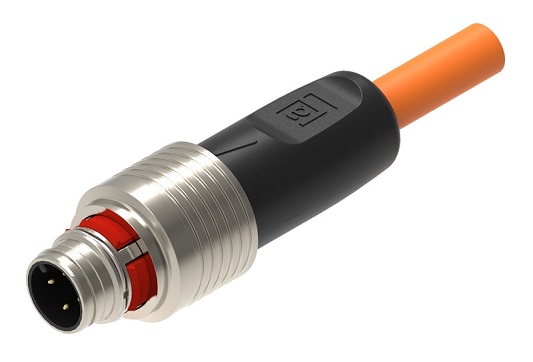
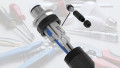
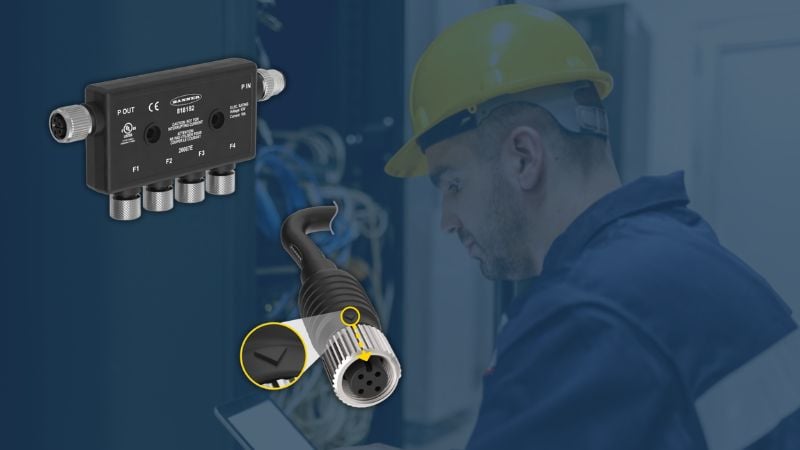
Close-up detail of the push-pull connector with the locking collar and an arrow indicating the coding alignment. Image used courtesy of Belden
With a connector like the push-pull connector offered by Belden, assembly and integration time are greatly reduced. A common issue with threaded connectors is cross-threading between the connector and the port, where the cable is inserted just enough to make contact, but not enough to be tight and secure. This can cause communication issues when vibration backs the connector out of the socket entirely, causing an I/O fault within the control system. These faults can be hard to troubleshoot, especially in the field.
By using a connector that pushes onto the port and locks in place, the connector cannot back out with vibration, reducing errors from installation and ensuring higher reliability and uptime of equipment.