Facebook
 Google
 GitHub
 Linkedin
Rugged M12 Power Connectors Released by Binder
Binder unveils new stainless steel L- and T-coded M12 connectors, engineered for durability and high-performance power transmission in harsh environments.
For industrial automation, durability isn’t optional. It's a necessity. Industrial machines can often operate under harsh conditions, such as extreme temperatures, dust, water, and vibrations. As systems become more compact and powerful, the need for reliable, space-efficient power connectors that can withstand harsh environments is more urgent than ever.
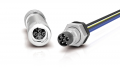
Binder has introduced its new 813 (T-coded) and 823 (L-coded) M12 connector series, which offers customers mechanical resilience and electrical performance. Featuring stainless steel locking mechanisms and IP67-rated protection, these connectors are designed to deliver stable signal and power transmission in even the most punishing environments.
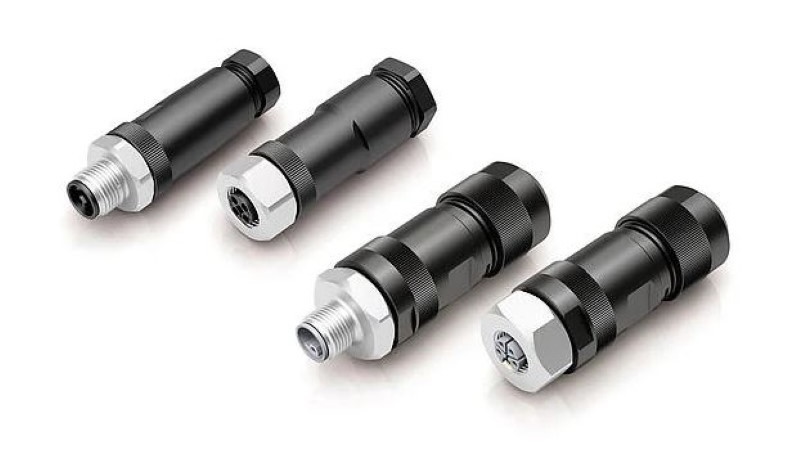
Binder launched its 813 T-coded and 823 L-coded connectors, which have been designed for durability in harsh industrial environments. Image used courtesy of Binder
Built for Harsh Environments
The newly released M12 connectors from Binder are built specifically to handle tough industrial environments. Whether exposed to freezing -40°C temperatures or scorching heat up to 105°C, these components remain reliable. Both the 813 and 823 series have a mechanical service life of over 100 mating cycles, which means that they can be connected and disconnected repeatedly without performance degradation. The stainless steel locking system adds another layer of durability, resisting corrosion and providing secure contact in dusty or wet conditions.
What’s the Difference Between L and T-Coded Connectors?
For those who are unfamiliar with the coding system for industrial connectors. The T-coded M12 connector (Binder’s 813 series) is engineered primarily for DC power supply. It has four poles and is especially useful in automation systems where compact, low-voltage, high-current connections are required. It can handle up to 12.0 A at 63 V, making it ideal for field-level power distribution.
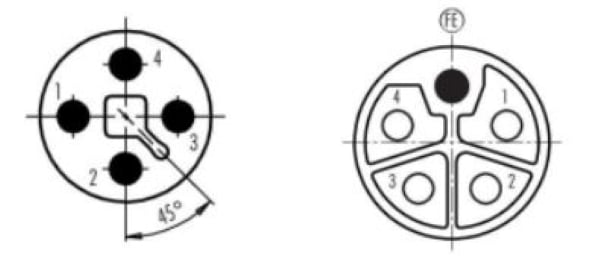
Binders 813 series (left) is a T-coded M12 connector while their 823 series (right) is L-coded. Image used courtesy of Binder
On the other hand, the L-coded connector (Binder’s 823 series) is geared for high-current DC applications, including PROFINET systems where compactness and power are necessary. It supports current loads up to 16 A and accommodates 4 or 4+FE poles, which allows for functional grounding. The wider cable aperture (8–13 mm) and thicker wire compatibility (up to AWG 14) make it well-suited for high-power, space-constrained installations.
Why It Matters for Industry 4.0
As industrial environments shift toward fully connected, automated systems–what we now call Industry 4.0–there’s a growing demand for rugged components that don’t compromise on performance. These connectors come with an IP67 rating, are dust-tight, and can even protect against temporary water immersion, ensuring minimal maintenance and system longevity.
The standardized coding system on M12 connectors, including L and T codes, prevents mismatched connections and even helps maintenance technicians avoid potentially costly wiring errors, as each type fits only into its intended application. Think of it as a safety key where each code matches a specific need, reducing guesswork and installation errors on the factory floor.
Binder’s new M12 L- and T-coded connectors offer a robust, future-ready solution, with their stainless steel durability, IP67 sealing, and precise coding for power applications. As environments grow more extreme and systems become more compact, these connectors meet the evolving needs of industrial automation.
Related Content