 Facebook
 Google
 GitHub
 Linkedin
New Sensors From Autonics, Emerson, and Pepperl+Fuchs
Recent updates in optical positioning, flow monitoring, and machine safety highlight reduced footprints, greater accuracy, and simplified installation.
As automated facilities push for higher throughput in tighter machine envelopes, recent sensor releases focus on simplifying setup and shrinking hardware footprints. This roundup highlights the latest developments across industrial sensing, from upgraded optical position sensors and data center flow meters to adaptable safety systems designed to protect operators without slowing down production.
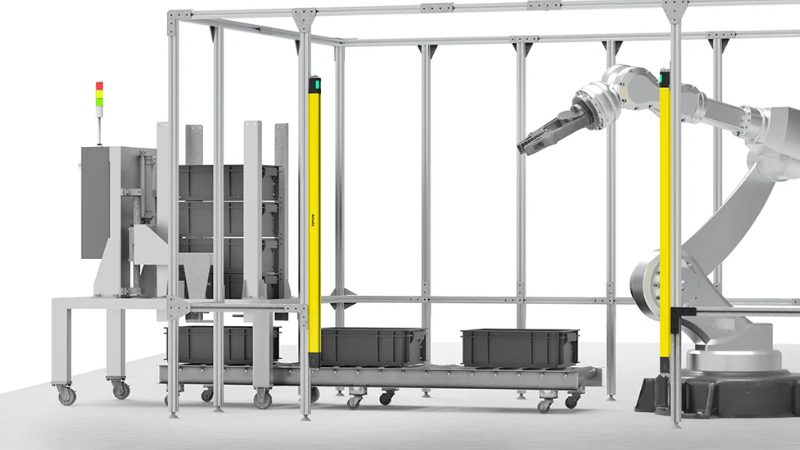
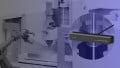
Example application of a light curtain. Image courtesy of Autonics
Autonics Safety Light Curtains
Safety light curtains keep operators safe from hazards while still enabling interaction with automated equipment. Recently, Autonics released a new series of light curtains, with SFL series standard and SFLA series high-performance models available. The new light curtains feature SIL3 or Category 4 protection and are available in three detection types: hand, finger, and body.
Each model features up to four non-safety outputs for monitoring the status of the light curtain. Aligning the curtains is aided by a seven-segment display and top and bottom beam indicators. An upper OSSD indicator displays the status of muting functions. Models are available in sensing ranges up to 25 meters, with IP ratings of 65, 67, 67G, and 69K for wet, harsh environments.
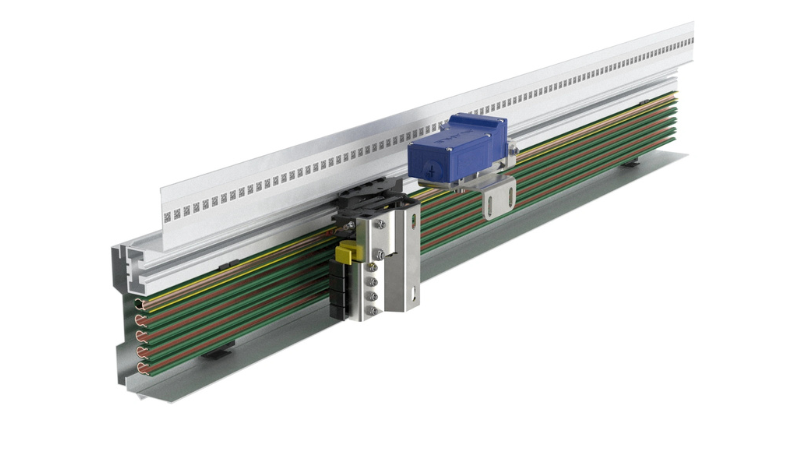
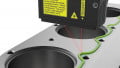
Optical linear position sensor used in crane applications. Image courtesy of Vahle
Vahle Next-Generation Optical Positioning
Some vision applications are quite simple and do not require advanced vision tools and AI. An optical linear position sensor uses optical technology for a specific application. Vahle has upgraded its existing optical linear sensor to use only one camera instead of two. This reduction in cameras allows for a more compact system. The APOS Optic 2.0 uses QR barcode tape technology to read the current position of attached tooling. This sensor is typically used with conveyor or overhead cranes when positioning over a long distance is required.
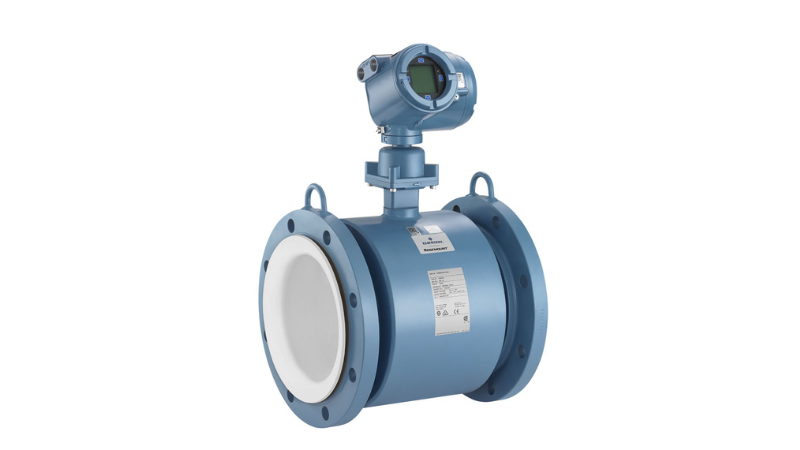
The Rosemount 8795 magnetic flow meter designed for data centers. Image courtesy of Emerson
Emerson Flow Monitoring for Data Centers
Cooling data centers is a massive undertaking, and if for whatever reason the water stops flowing, the servers can overheat very quickly. Emerson has expanded its Rosemount flow meters to include the Rosemount 8795, a magnetic flow meter specifically designed for use with data centers.
The new device uses magnetic flow sensing technology to report the flow of fluid passing through the sensor. Models are offered in pipe sizes from 2 inches to 18 inches in diameter and provide readings with a 0.2% accuracy rating. Even with zero straight-pipe run requirements, the 8795 flow meter has a 0.5% accuracy rating.
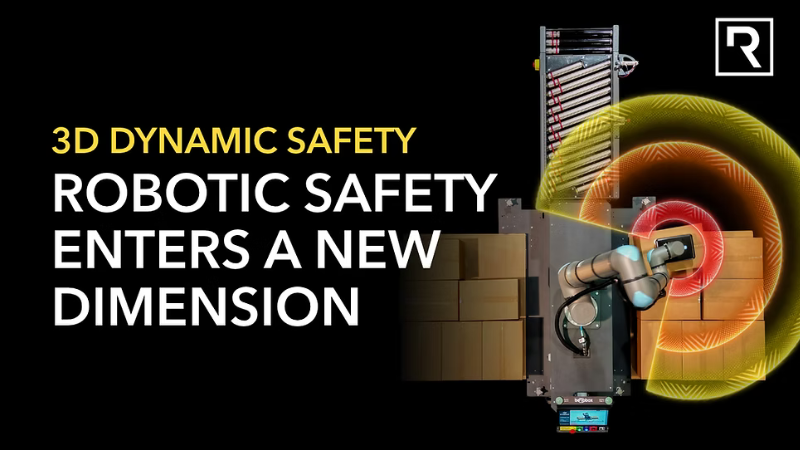
Dynamic robot safety zone with the use of ultrasonic sensors. Image courtesy of Berobox
Berobox Dynamic Robot Safety
Traditional robot safety systems entail creating a fixed safe zone around the robot. As long as personnel stay outside this perimeter, the robot can move freely. Once an object or worker breaches the zone, the robot stops immediately.
Berobox has released 3D Dynamic Safety, a safety module that moves with the robot. Using ultrasonic sensors, the system scans the area around the robot arm as it moves through space. When objects are detected within a defined distance from the robot, the robot is forced to stop. This design is meant to enable faster and easier integration of a robotic system. For now, this dynamic robot safety system is only available for Berobox’s PALTZ robotic palletizer.
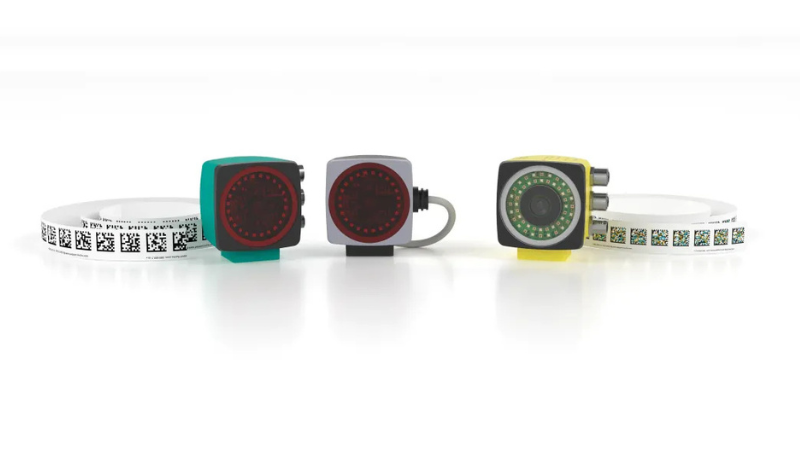
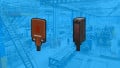
Linear position sensor with smaller, more accurate interfaces. Image courtesy of Pepperl+Fuchs
Pepperl+Fuchs New Look and Upgraded Interfaces
Pepperl+Fuchs recently upgraded its existing PXV and PCV lines of linear position sensors. The position sensors use QR barcode tape to report the position of the attached tooling. The latest additions include an IO-Link and EtherCAT interface packed into a smaller housing, an increased evaluation frequency of 100 Hz, and a passage speed of 12.5 m/s.
To accommodate easier installation and better read quality, the new generation of position sensors will also include a wider field of view. These additions are intended to make the latest generation of position sensors more robust and accurate.