Facebook
 Google
 GitHub
 Linkedin
Robots Have Worked up an Appetite: The Fare? Other Robots
Columbia University researchers have opened the door to robotic self-assembly and repair. Robots can now “consume” other robots and robot parts in a process called Robot Metabolism.
Researchers at Columbia University have developed a self-repairing robot system. Just like how a carnivore extracts nutrients from other creatures, the Columbia University’s Truss Link robot modules scavenge pieces from other robots and use them as replacement parts or as new components to add capability to itself. Like Voltron, multiple robots can come together to form a mega robot to perform a specific task. While each individual robot may lose its unique functions, its components will be assimilated into the larger robot. The researchers refer to this process as “Robot Metabolism.”
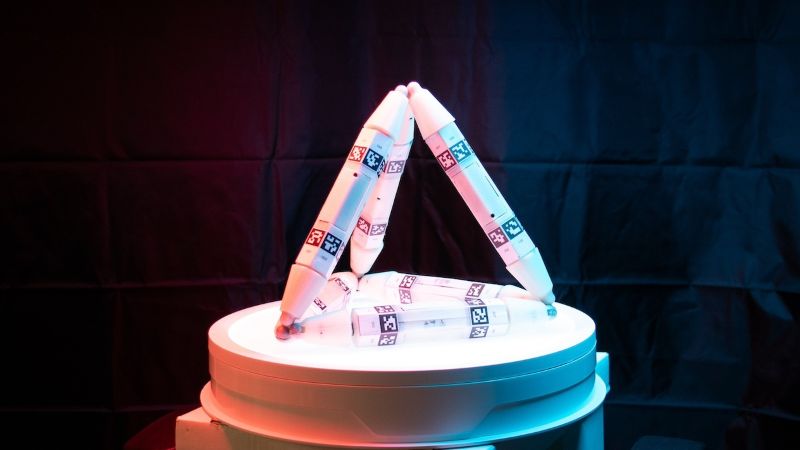
Columbia University researchers have developed “Robot Metabolism,” a process that enables robots to grow and self-heal. Image used courtesy of Columbia Engineering
What Is Robot Metabolism?
A recent article in Science Advances describes Robot Metabolism as machine growth by consuming other machines. To be Robot Metabolism, robots cannot rely on active support from any other system, such as human intervention. They also cannot build new functionality unless it is constructed from the parts of existing robots it has disassembled.
There are strong biological parallels. In the biological world, all known life stems from different combinations of 20 amino acids. These systems repair wounds, evolve, and add new features throughout a being's growth and development. By combining the power of artificial intelligence (AI) with robot metabolism, robots can figure out how to best configure themselves for challenges that may not be known at the time of their construction.
Truss Link Robot Modules
Columbia University has made the first steps towards developing metabolizing robots. They have designed a set of truss links, each with a magnet on both ends. Similar to the magnetic link children's toy, the robot assembles these links to meet specific tasks, changing from two-dimensional triangular-shaped grids into three-dimensional trusses, tetrahedrons, and other such shapes. In one such case, a tetrahedron-shaped robot found another link to use as a "walking stick," such that it could travel over 66% faster than without the additional link.
Using Truss link robotic modules, Columbia University’s newly developed robot system can take on various two and three-dimensional shapes. Video used courtesy of Columbia Engineering
Self-Reproducing Robots
Robots that can change shape, repair themselves, or work together with other robots have virtually limitless possibilities. A robot that can diagnose its own problems and repair itself saves downtime for the system as a whole. If the robot can determine that an existing robot is not in use or that a robot's parts could be better used elsewhere, it can cannibalize the unused or underutilized robot.
Initially, space and disaster recovery operations will benefit from such shape-shifting robots. By building a recyclable, reconfigurable robot, spacecraft weight can be drastically reduced. For disaster recovery operations, such as after heavy flooding, robots can adapt to situations not anticipated by robot builders.
One possible application is to have a robot structure flat-packed into a thin, almost two-dimensional structure for shipping and transportation. When the robot is activated, it assembles itself into a three-dimensional shape. This ability makes placing complex robots into tight spaces possible, much like a ship in a bottle.
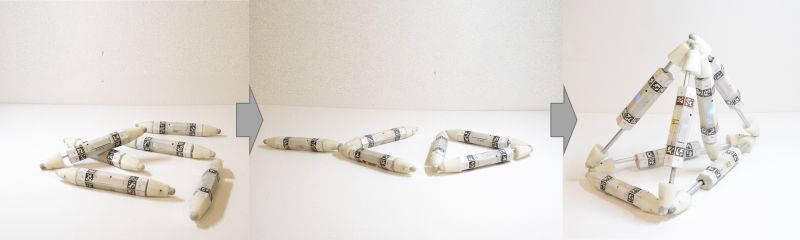

Robots that can self-assemble and repair can be deployed into otherwise difficult-to-access or navigate locations. Image used courtesy of Science Advances
Robot Ecology
As Robot Metabolism progresses, some ethical and legal guardrails will likely need to be put in place. For example, imagine the dystopian future of a person unable to start their car because another robot has decided it needs parts for a more essential purpose. Imagine also the confusion and legal nightmare of having robots from different manufacturers not cooperating and always stealing parts from one another to each meet their purpose.