Facebook
 Google
 GitHub
 Linkedin
Siemens Adds AI and Safety Tools to AMRs and AGVs
At Automatica, Siemens unveils AI integration and safety features for AMRs and AGVs, aiming to streamline deployment and minimize risk.
At the Automatica trade show, Siemens unveiled a major upgrade to its autonomous transport systems by integrating AI-driven Operations Copilot and Safe Velocity software into AMRs and AGVs. These enhancements enable smarter, safer, and more efficient navigation without requiring constant human oversight. By combining environmental awareness with automatic speed control, Siemens’ solution reduces injury risk and speeds up deployment. This move aligns with growing industry demand for automation that minimizes manual material handling and improves shop floor productivity.
AI Integration
Operations Copilot will soon include AI optimized for AMR and AGV use. This AI will be capable of understanding the environment around the AMR or AGV, using input data from cameras and other sensors. From there, it will decide how and where to travel between destinations. It will tie Information Technology (IT) and Operational Technology (OT) together to ensure that the autonomous vehicle takes the safest, most efficient paths possible.
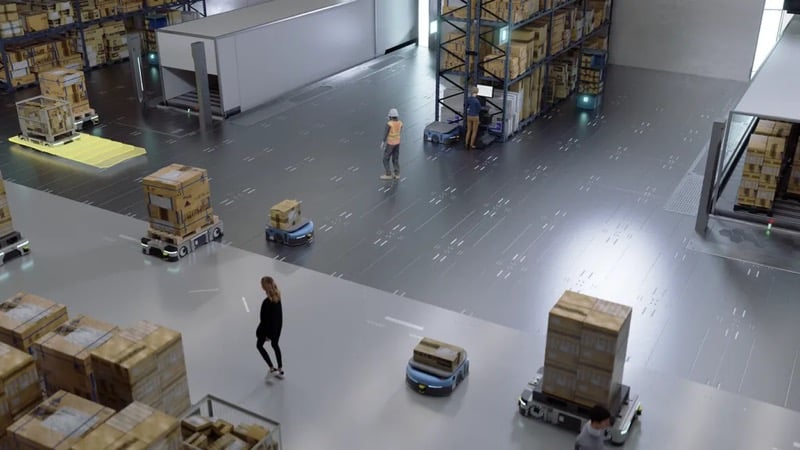
Autonomous movement of goods in a mixed (robot/human) environment. Image used courtesy of Siemens
Ultimately, Operations Copilot will be able to access the technical documentation about the components in an integrated automation system and the real-time data being collected. This gives engineers the tools to rapidly deploy AMRs and AGVs and troubleshoot problems early.
Safe Velocity Software
One of the key parts of this integration is Siemens’ Safe Velocity software. Safe Velocity is designed to monitor conditions around an AMR or AGV, then adjust the speed accordingly. This is performed automatically, without human intervention.
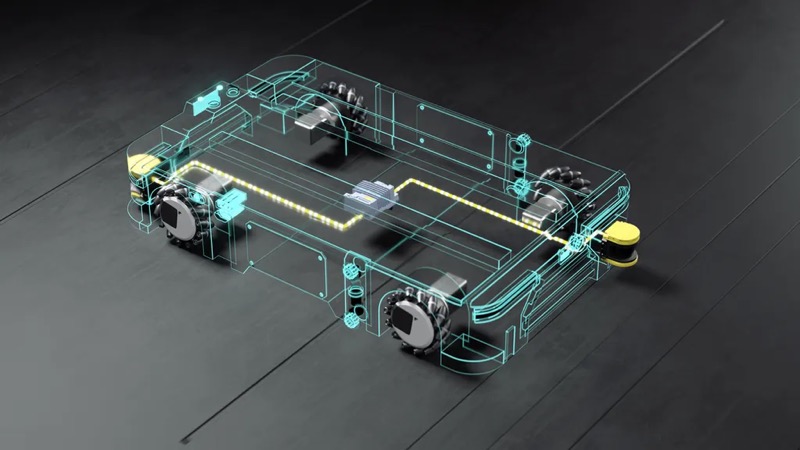
Safe Velocity software leverages a fail-safe method of monitoring vehicle speed. Image used courtesy of Siemens
For example, consider an AGV moving an engine block. Safe Velocity detects a technician who walks into the path of the AGV. Based on the data input, it adjusts the speed to allow the technician to pass, stops entirely, or determines a new path. A few minutes later, it goes down a ramp from one part of the factory to another. As the AGV descends the ramp, it will try to pick up speed, but the Safe Velocity software will not let it exceed a safe threshold.
AMR and AGV Growth Sectors
Siemens is forecasting continued growth in the AMR and AGV markets, and for good reason. Many manufacturing facilities are discovering the advantages of using automated goods transport over manual movement. First, repeated lifting and carrying items is a major contributor to ergonomic injuries. This is a growing concern amongst an aging workforce. Secondly, moving equipment with forklifts, pallet jacks, hand trucks, and other such equipment is another leading cause of workplace injuries. Furthermore, these devices often require specialized training, such as forklift certification, which is costly and time-consuming.
AMR and AGV solutions are poised to eliminate these types of workplace injuries nearly. Repeated actions, such as moving items from the end of an assembly line to a packaging area, no longer have to be performed by a human. Siemens saw the opportunity to integrate their Operations Copilot with these transporters, making them safer and more efficient in the long run.