Facebook
 Google
 GitHub
 Linkedin
SMC Updates JSY Series of Five-Port Directional Control Valves
The additions, including IP67-rated plug-in connectors, flame-retardant one-touch fittings, and space-saving, 64-station manifolds, target robotic applications ranging from material handling to welding.
SMC has expanded its pneumatic manifold catalog. The JSY series now includes improved fittings and plug-in connectors designed to reduce leaks and lower operating costs. Machine designers will also appreciate the new JSY1000-L’s small physical footprint, high airflow rates, and ability to handle up to 64 stations.
Ultimately, the JSY series expansions aim to reduce design, installation, and troubleshooting headaches for engineers and technicians alike.
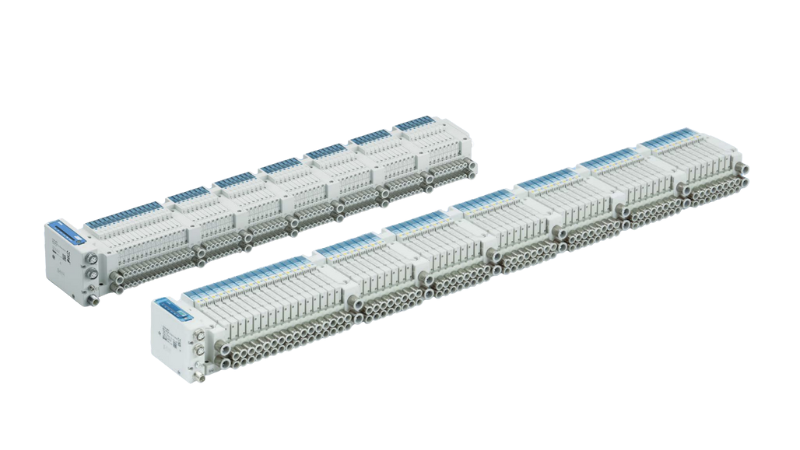
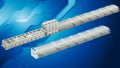
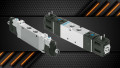
SMC’s new JSY1000-L five-port solenoid valve is 10% shorter than the JSY3000-L. Image used courtesy of SMC
JSY1000/3000-L Series Expansion
The purpose of any pneumatic manifold is to direct compressed air flow to individual stations that “consume” the air for movement. By using a manifold, each individual station does not require its own wiring, compressed air line, and exhaust port. Manifolds remove complexity and reduce installation and troubleshooting time.
SMC’s newest addition to the JSY series of five-port directional control valves is the JSY1000-L. SMC has built the JSY1000-L to be 110 m shorter than the JSY3000-L, yet still able to direct compressed air flow to up to 64 individual stations in multiples of four.
SMC has designed the manifolds to be energy efficient as well. At their peak, they only use 0.4 W. Between proper handling of compressed air, where compressed air is often called the “fourth utility,” and the light electrical usage, these manifolds aim to have low operational costs.
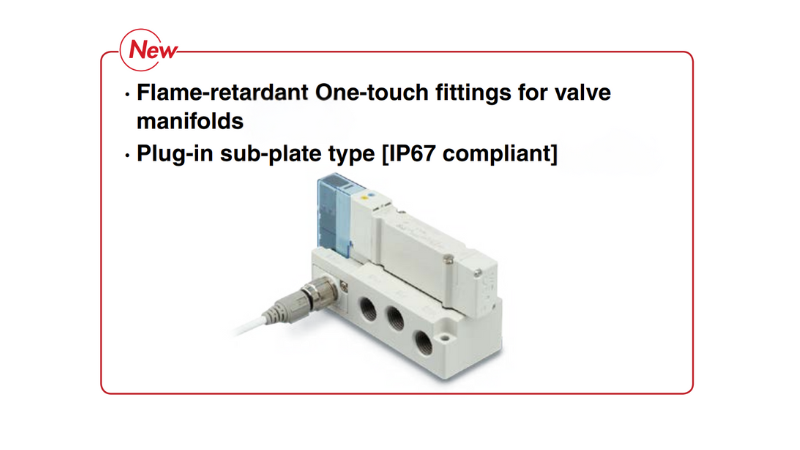
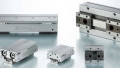
SMC recently expanded the JSY1000/3000/5000 series with flame-retardant one-touch fittings and an IP67-rated plug-in sub-plate type. Image used courtesy of SMC
Additions to the JSY1000/3000/5000 Series
SMC’s newest additions to its JSY1000/3000/5000 series feature a plug-in style connector plate. This new connection plate reduces leaks and is rated to IP67, making it useful in dusty environments and places where moisture might otherwise be an issue. Furthermore, the connections themselves are fire-retardant and require only a single touch to connect.
This type of fitting ensures that compressed air travels where it needs to go, nowhere else, and that contaminants cannot infiltrate the compressed air line. Moisture is one of the biggest threats to compressed air lines, and these fittings aim to prevent condensation or water spray from seeping into the line.
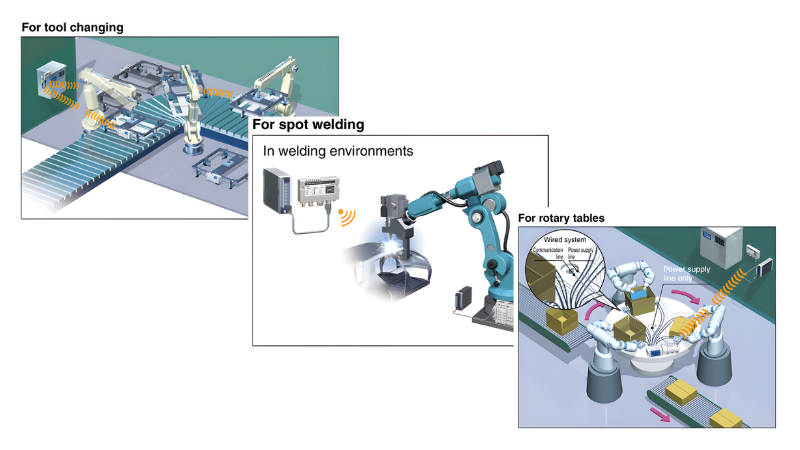
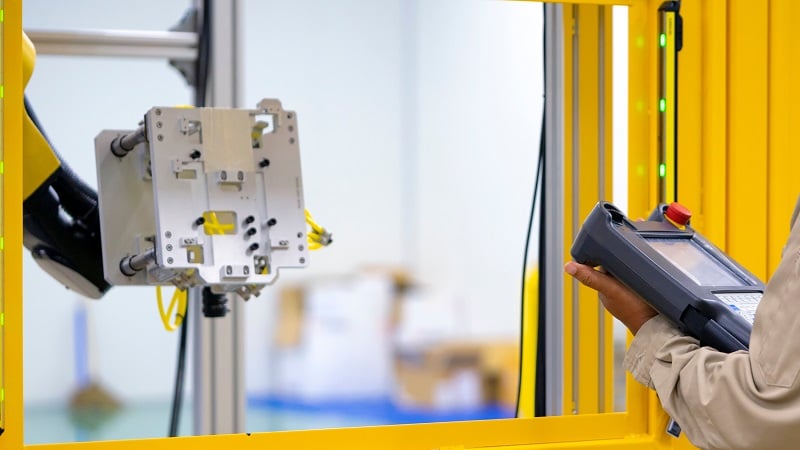
SMC’s newest expansions target a wide range of applications, including tool changes, welding, and machining. Image used courtesy of SMC
Enhancing Robotic Systems
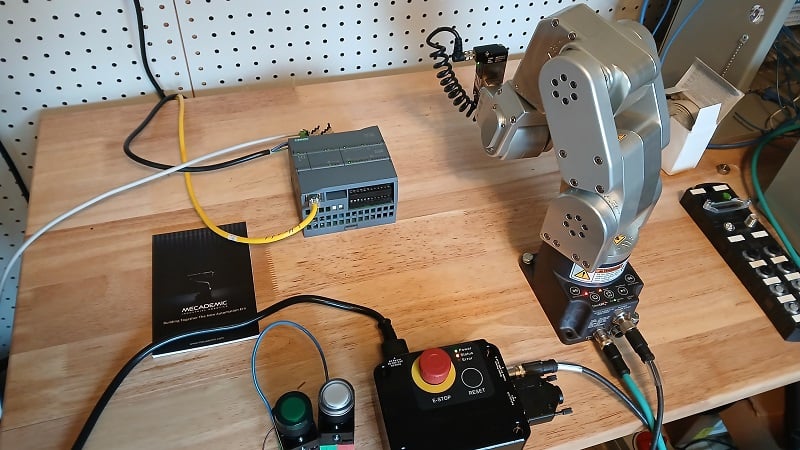
Many robotics applications call for the careful, efficient control of compressed air. Pneumatic systems are fast and, when installed and maintained properly, cost-effective. However, compressed air leaks can quickly degrade performance, and small leaks can be one of the biggest “hidden” expenses in a robotics system. SMC’s new plug-in connectors aim to minimize leaks at the connection point, reducing operating costs.
Additionally, SMC’s newest JSY1000-L series manifolds enable a large number of individual stations that can be managed in a compact form factor. While the manifold directs the compressed air flow, the individual stations control its final use. The JSY1000-L series manifolds can each handle up to 64 stations. Fewer manifolds, power connections, compressed air lines, and exhaust lines are something virtually any machine designer can appreciate.