Facebook
 Google
 GitHub
 Linkedin
Turning a New Page: AI Robots Help Libraries Rewrite Workflow
Techman’s AI mobile robot automates book retrieval in Taiwan’s libraries, boosting accuracy, reducing repetitive tasks, and enhancing customer service.
Techman Robot has made a pivotal leap towards the future of library automation with the implementation of Taiwan’s first AI-backed robotic self-service book retrieval system for public users of Taoyuan City library. This automated, intelligent technological assistance is intended to support librarians and assisting staff to provide innovative, collaborative, “zero-wait, zero-error” book retrieval for customers, enhancing service quality and customer experience.
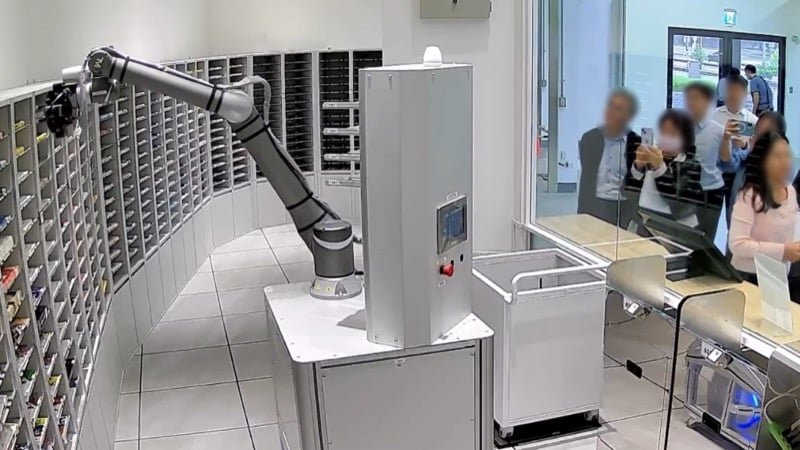
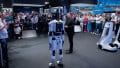
Libraries are ever-evolving, innovative spaces, and robots are going to become a part of the furniture. Image used courtesy of Techman Robot
Community Hubs
Libraries are a foundational pillar of society. They serve as community hubs, where people come together and ideas grow, fostering both individual and community development. Libraries are also a space of knowledge sharing and exchange, fostering innovation. At the individual and community level, sharing intellectually and culturally has the power to impact others in society and create a positive impact on societal/economic development.
From the perspective of public libraries, the dedicated librarians, assistant librarians, library assistants, and library managers want nothing more than to enhance the customer experience in a completely public space. Operational enhancement front line is extremely important for increasing footfall, issue rates, event attendance, and other key performance indicators.
Stepping Towards the Future of Library Automation
The TM AI Cobot combines an autonomous mobile robot with a robotic arm, integrating AI vision and intelligence. This combination allows the mobile robotic assistant to navigate its way through a library setting, identify books on designated shelving areas, pick them up, and move them to the reader request shelf or reader pick up area. The assistive robot also uses an AI-driven automated task scheduling system to organize and implement tasks during the day and after hours. Keeping libraries operational after the normal working day helps users retrieve books, find sanctuary, and access important social and government services they might not otherwise be able to. This also keeps issue rates up, encourages further footfall, and cements libraries as a pivotal community-focused space for the good of all.
The TM AI Cobot features a DC power supply and is compatible with a majority of autonomous guided vehicles and AMRs on the market. The TM AI Cobot leverages AI machine vision with direct integration, meaning that everything is in place with no extra hardware or software required, saving costs and time to deployment during application setup.
The TM AI Cobot uses sophisticated AI-based vision software to locate objects, navigate safely in its environment, and place objects correctly in the right place. Video used courtesy of Techman Robot
The Techman AI Cobot automates library book transfers by utilising Techman Robot's AI vision software, particularly programs TMflow (for programming) and TM3DVision for object detection and handling. In this case, TM3DVision, an AI-powered vision system, uses its sophisticated algorithms to locate objects (such as books) and identify titles/barcodes to move the books to the reader request area. With an integrated 3D camera, TM robots can scan objects and create CAD (computer-aided design) files. The robot can pick out or grip books and deposit books using TMflow's integration of AI for straightforward programming and smart process optimization. These built-in AI functionalities ensure efficient and fault-free transfers with no human assistance required.
Elevating Library Public Offerings
Integrating efficient, tireless, assistive, collaborative robot technologies is what will supercharge public library offerings and provide general interest. Library customers can get up close to the future of automated public services, and benefit from fast, error-free book retrievals, which not only add to customer satisfaction but help library staff by offsetting repetitive tasks, allowing them to conserve energy and give the very best personal human customer service possible during day-to-day signposting and information-sharing tasks.