Facebook
 Google
 GitHub
 Linkedin
Unlimited Power! Regenerative Unit From Beckhoff Recycles Unused Energy
Do you have excessive energy problems? Beckhoff has a solution for you: with their new AX8820, you can dump extra energy back into the electrical grid and save money every month.
Unlike most automation control system manufacturers, Beckhoff has been different since its introduction to the industry in the 1980s. Beckhoff specializes in PC-based automation, and while its programming software still supports the library of IEC programming languages, its control system runs on standard Windows operating systems and common industrial PCs. This unique way of automating motion has allowed Beckhoff to stand out from the crowd of automation companies for well over 40 years. Recently, Beckhoff expanded its catalog of servo drives, not with another energy-consuming device but with a regenerative energy unit to put power back into the electrical system.
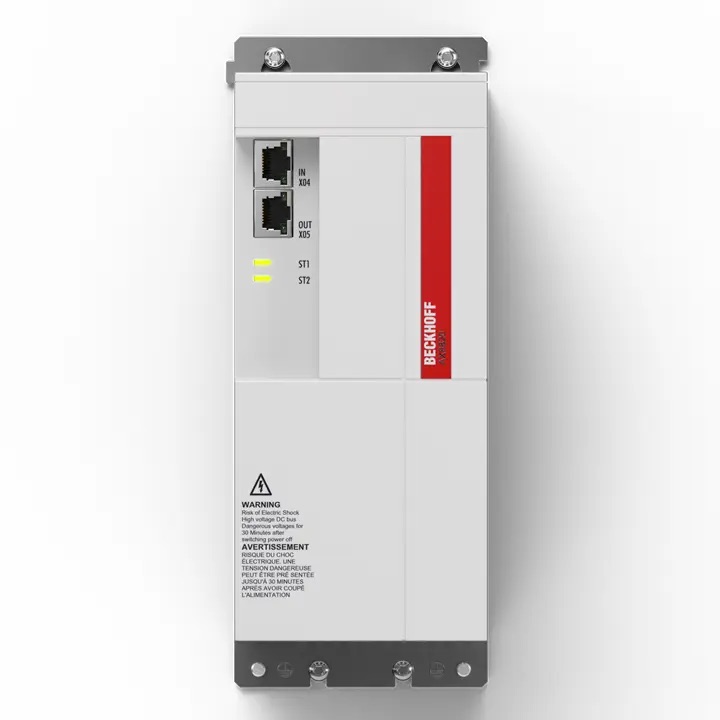
The AX8820 regenerative unit. Image used courtesy of Beckhoff
AX8820
With a form factor similar to and compatible with the AX8000 and AX5000, the AX8820 feeds power back into the electrical grid. This power would typically be dumped into a braking resistor and converted to heat, which is wasteful and inefficient. The AX8820 uses sinusoidal regeneration, which has a lower affinity for causing distortions in the electrical system than typical block-shaped regeneration systems. With a nominal voltage of 400-480 VAC, max wattage of 7 kW, and a DC link voltage of 848 VDC, the AX8820 is capable of regenerating power in virtually any application where the AX8000 or the AX5000 servo drives could be used. While the AX8820 does not require an EtherCAT connection, two EtherCAT ports are provided for parameterization or on-board diagnostic operations.
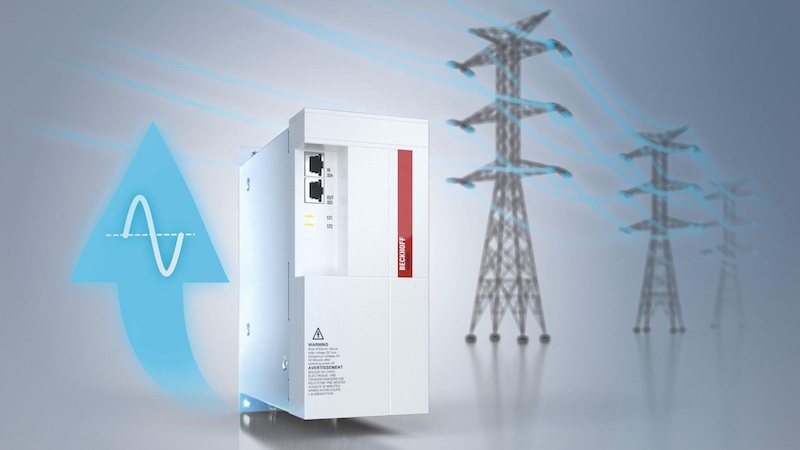
The AX8820 puts power back into the electrical grid. Image used courtesy Beckhoff
Motion Designer
TwinCAT 3 automation software is used to program and commission Beckhoff automation controllers and devices. Within the TwinCAT 3 software is a tool called Motion Designer, which allows designers to configure and run analytic calculations on Beckhoff servo drive systems, including the AX8820. The Motion Designer software will calculate regenerative braking power and provide a dollar amount of estimated money saved if using the AX8820. This allows designers and engineers to show their customers the benefits of using devices like the AX8820.
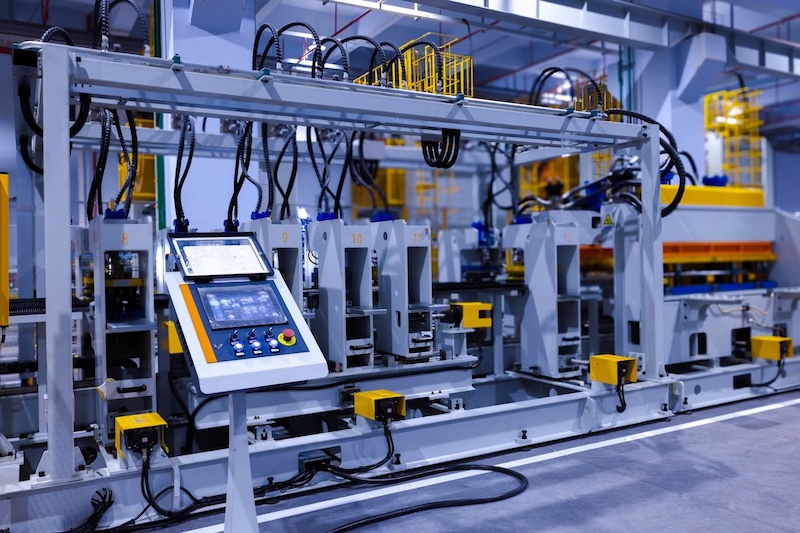
Image of a factory where the AX8820 might be used. Image used courtesy of Unsplash
Monitoring Real-World Values
The TwinCat 3 software also supports live monitoring of systems like the AX5000 or the AX8820. These live values can then be fed into machine learning or predictive maintenance software to help engineers understand when equipment will need to be serviced. The real-world values will also help staff understand the power consumption of the equipment, or in the case of the AX8820, the amount of energy being saved can be tracked and analyzed.
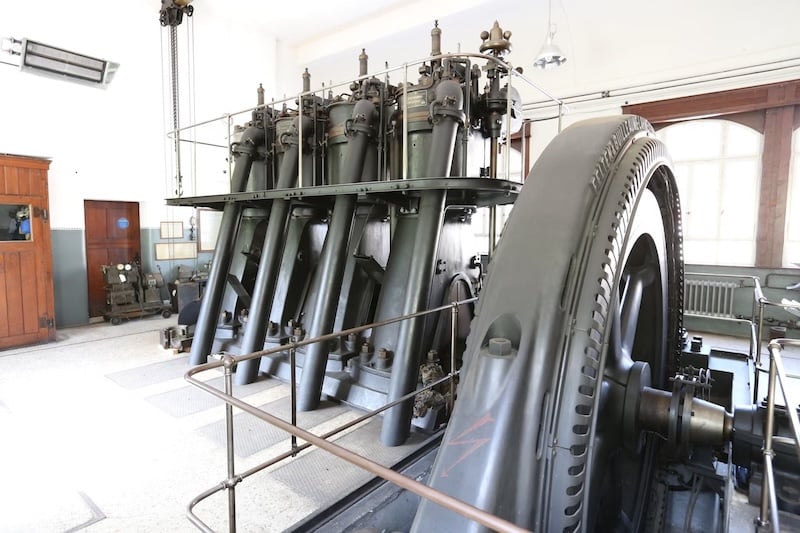
A flywheel used in production. Image used courtesy of Unsplash
When To Use Regenerative Units
Not every servo application requires a regenerative unit, so the application must outweigh the cost. Applications with frequent starts and stops or when the motor produces energy are examples where a regenerative brake or unit would provide benefits. The AX8820 doesn’t even pass energy to the grid until the motor generates more than the overvoltage threshold. Typical applications would be hoists, elevators, and flywheels. These applications have situations where the motor is free spinning and producing voltage instead of consuming it; this extensive voltage can be put back into the electrical grid with a device like the AX8820 from Beckhoff.