Facebook
 Google
 GitHub
 Linkedin
Wenglor Launches Reflex Sensors That Go the Distance
The new P1PH9 reflex sensors use time-of-flight technology to detect objects up to 2.5 m away, even with interference. The sensors feature a large light spot that can detect various shaped objects.
Wenglor Sensoric Group has released its newest time-of-flight (TOF) sensor that can detect far away objects. The P1PH9 reflex sensor is capable of detecting objects as far away as 2500 mm, even with environmental interference like lighting and dust.
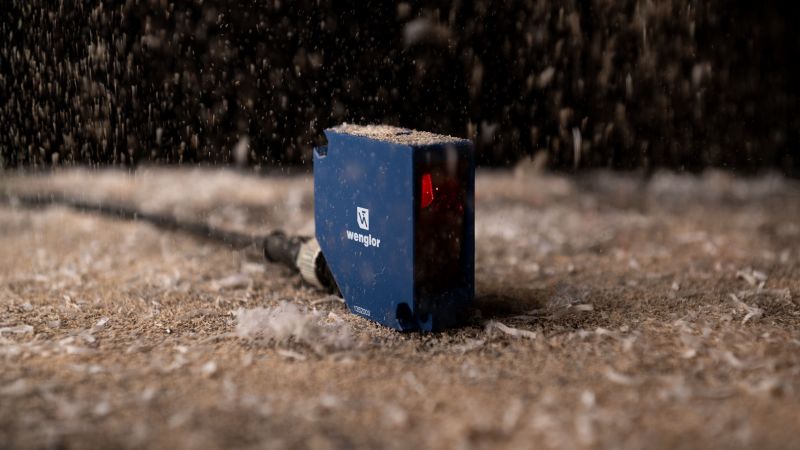
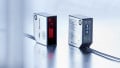
The Wenglor P1PH9 reflex sensor can detect objects up to 2500 mm away. Image used courtesy of Wenglor
Time of Flight (TOF) Sensing
TOF sensing is used to determine whether an object is present or not in a manufacturing process. The sensor is a light transmitter and receiver; it emits light and then watches for the reflections. Because the speed of light is known, the distance to the object can be calculated from the time it takes for the reflection to reach the receiver.
There are a few challenges with TOF sensing. First, the farther away the object, the more likely its signal is to be obscured by noise signals. Ambient light, dust, and even humidity in the air can cause false reflections that make the object’s reflection signal become lost in the noise. Second, black objects produce very little reflection, and shiny objects tend to reflect ambient light at high intensity, making it hard to distinguish light reflected from the sensor’s emission versus light reflected from other sources.
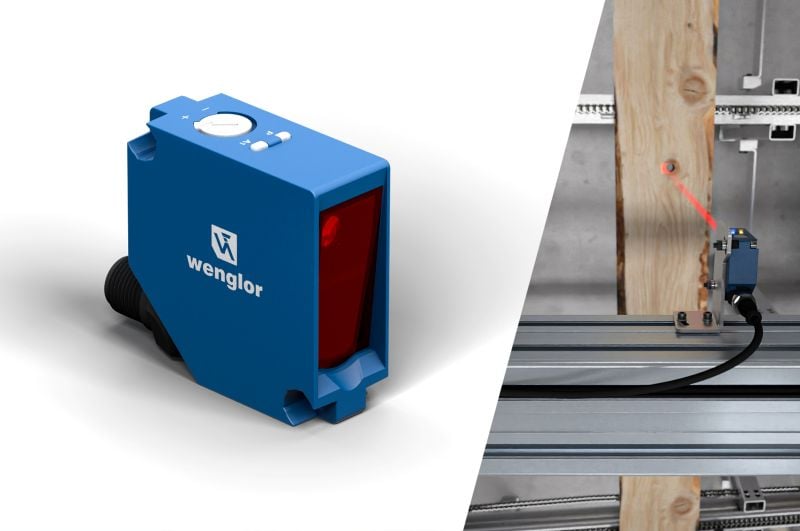
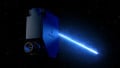
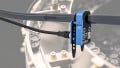
The P1PH9’s large LED light spot helps the sensor detect objects of various shapes and surfaces. Image used courtesy of Wenglor
P1PH9 Reflex Sensors
With Wenglor’s new P1PH9 reflex sensor, long-distance detection of objects is made possible by using a larger LED light spot than competing devices. As such, the larger spot sweeps out a larger volume, meaning there is more chance of a reflection than a smaller spot would provide. Furthermore, the large spot can detect irregular geometries, black surfaces, and other hard-to-detect objects for the same reasons. The P1PH9 can detect objects as far away as 2500 mm.
The P1PH9’s larger spot size also helps reduce some of the common triggers that fool other sensors. For example, consider a sawmill operation where a few of the boards have holes in them. A small spot may pass right through the hole in the board, falsely reporting its absence.
The P1PH9 reflex sensor has a dynamically adjustable brightness for its light. This way, technicians can align it easily during installation and maintenance and adjust it to meet ambient light conditions. The brightness adjustment and the size of the spot help reduce interference from ambient light, reflected light, dust, and other false detections that are common in the manufacturing environment.
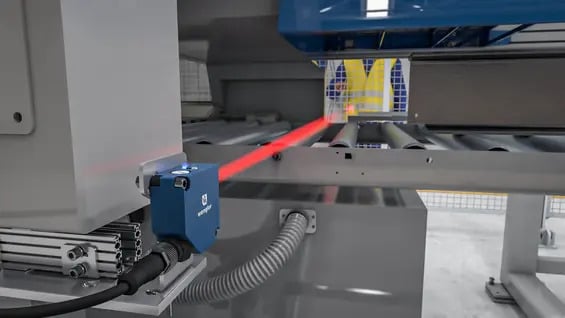
The P1PH9 is designed to detect objects regardless of environmental inference, including lighting and reflections. Image used courtesy of Wenglor
Object Detection and Distance Measurement
TOF sensors often act as a form of “Go/No Go” sensor, and the P1PH9 is no exception. They are designed to detect whether an object is present or not. Because of this, these sensors can be used to check before machining, packaging, and other operations to ensure that the workpiece is in the tool’s work area. This way, a machine does not waste time and energy when no workpiece is present, or worse, damaging ways, robots, and other equipment if the workpiece is missing.
Besides “Go/No Go” purposes, these sensors can also be used to measure the distance to an object. This ensures proper alignment of workpieces and detects interfering objects before a manufacturing operation begins.