Facebook
 Google
 GitHub
 Linkedin
What’s New at wenglor? A Look at ToF Sensors and Fiber-Optic Amplifiers
wenglor has added time-of-flight (ToF) sensors and fiber optic amplifiers to its product offerings. The newest additions are designed to tackle sensing challenges across applications.
wenglor sensoric group has expanded its catalog to include several new products used in modern automation systems. The company’s latest suite of P1PX2 and P1PY2 time-of-flight (ToF) sensors can help both manual and autonomous systems avoid collisions across large distances. Besides these, wenglor has also added the P1XD line of fiber optic amplifiers, designed to fit in small spaces yet provide plenty of amplification for fiber optic signals.
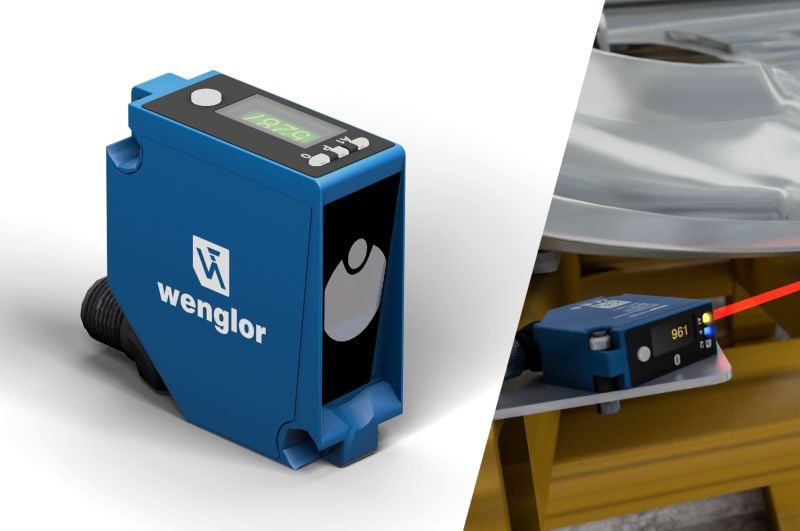
The P1PY2 and P1PX2 are wenglor’s newest TOF sensors for object detection. Image used courtesy of wenglor
Time-of-Flight (ToF) Sensors
ToF sensing is a method to determine the distance between a sensor and an object of interest. This technique can be used for diverse manufacturing operations, such as to provide accurate placement of objects during assembly or to prevent collisions in an autonomous vehicle.
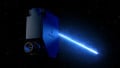
In ToF sensing, the sensor emits a laser and waits for its reflection. Because it knows when the laser pulse was sent, it can calculate the distance traveled by measuring the time that elapsed until a reflection pulse was received. With the time and speed (speed of light) known, the distance can be calculated.
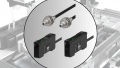
The P1PY2 and P1PX2 series sensors are wenglor’s newest ToF sensors. The P1PY2 sensor has a built-in OLED display, allowing users to read distance measurements easily. The P1PY2 sensor is geared towards part inspection, alignment of objects, and other manufacturing processes. The P1PX2 is the long-distance, reflector-based variant of the P1PY2. It can measure distances up to 100 m, detecting signals that bounce from the reflector. Both sensors are connected through an IO-link connection, are easily adjustable, and provide data in ambient lighting environments up to 100,000 lux.
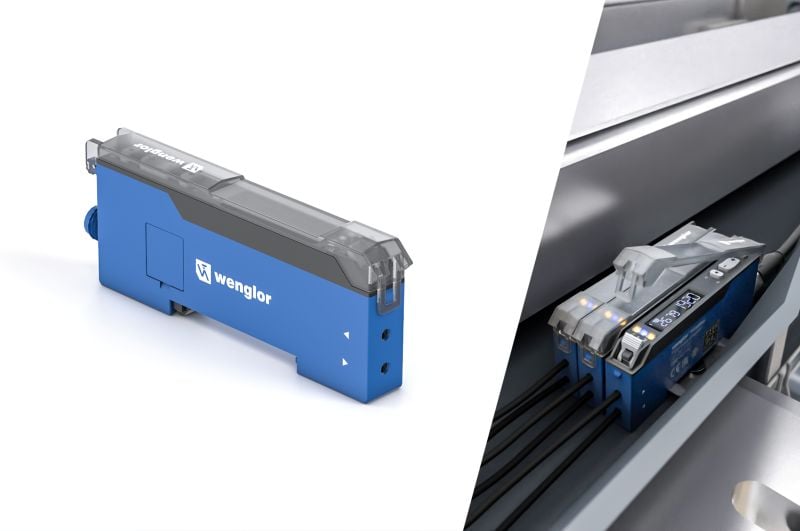
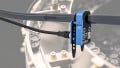
The P1XD series of fiber-optic amplifiers is designed for use in small spaces. Image used courtesy of wenglor
Fiber-Optic Amplifiers
The P1XD and P1XD2 fiber optic amplifier series offer a high gain of optical signals in a small form factor. Its modular design makes integrating with multiple types of sensor heads easy while maintaining a small footprint. Besides this flexibility in product integration and compact size, it can also integrate with both plastic and glass fibers, which is a challenge for some optical amplification systems.
wenglor has included a pink light feature in some models of the new amplifiers, available at the press of a button. The pink light setting allows the sensor to view the blue and red lines in parallel, increasing the range of the transmitted signals.
The primary difference between the two models is that the P1XD2 series amplifiers can act as a stand-alone unit or operate in a mesh, making them more suited for larger automation systems with many fiber optic cables.
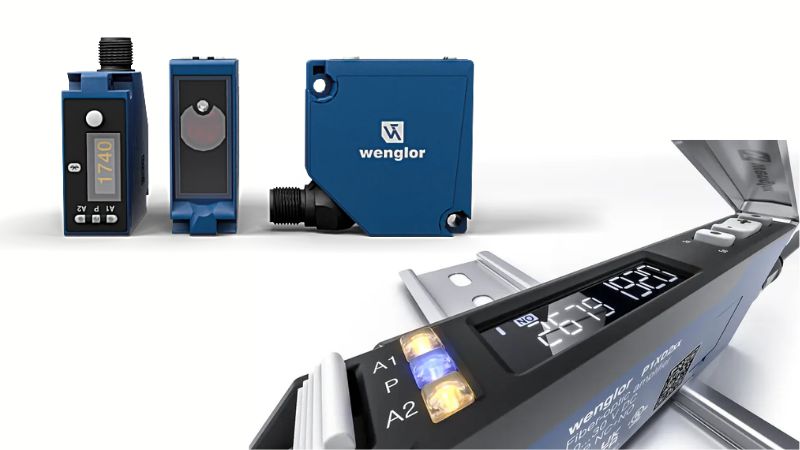
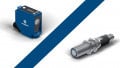
The P1PY2 and P1PX2 ToF sensor series (left) and the P1XD fiber-optic amplifier series are the latest in wenglor’s portfolio of sensor solutions. Image used courtesy of wenglor
Advanced Sensor Solutions
The primary difference between the P1PX2 and P1PY2 ToF sensors makes them suitable for different applications. The P1PX2’s ability to detect reflections from large distances can be used to prevent crane operators from colliding with stationary objects through the thoughtful placement of reflectors. The P1PY2 sensor can be used to ensure parts are properly aligned during assembly with higher resolution and smaller standoff distances.
The P1XD fiber optic amplifiers can be used to ensure data quality and reliable communication between fiber optic devices. The amplifiers are particularly useful for tight spaces due to their compact size. In terms of versatility, they can be paired with numerous sensors and can handle both common fiber materials.