Facebook
 Google
 GitHub
 Linkedin
Yokogawa Debuts OpreX Intelligent Edge Controller A8 With Data Stream
The Linux-based controller features a new data-centric development architecture, enabling application reusability, and an inter-controller time synchronization functionality, coordinating up to 16 units.
Yokogawa has released its newest OpreX intelligent edge controller. The A8 model uses Yokogawa’s new Data Stream platform, which accelerates product development cycles and enhances the reusability of applications. Designed to meet the needs of modern automation and manufacturing, the A8 delivers reliable, real-time control at high speeds.
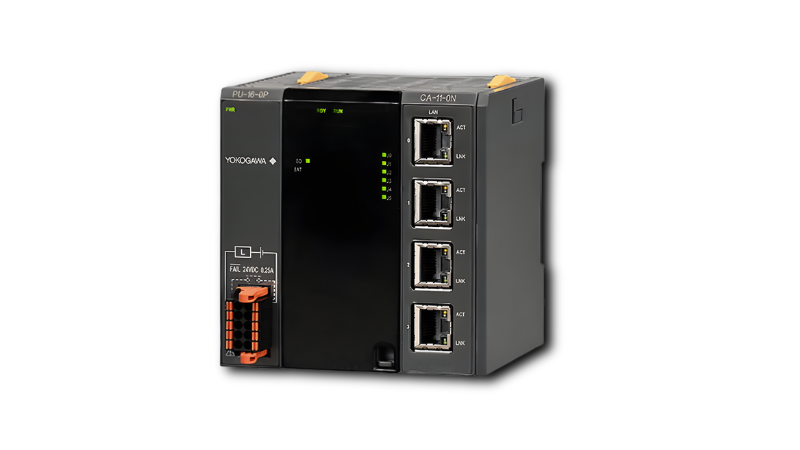
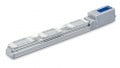
Yokogawa’s A8 model of its OpreX intelligent edge controller lineup. Image used courtesy of Yokogawa
OpreX Intelligent Edge Controller A8
Yokogawa's A8 model is not just another edge computer or a personal computer dressed up as an industrial computer. It expands upon the company’s tried-and-true M3 and e-RT3 families of process control technology, modernizing and increasing the speed of processing. Built on Linux (Ubuntu 24.04) with automatic, real-time patches, the A8 features Yokogawa’s Data Stream platform, designed to accelerate the development of future advancements.
Three major improvements built into the A8 are the Data Stream architecture, advanced time synchronization, and AI readiness.
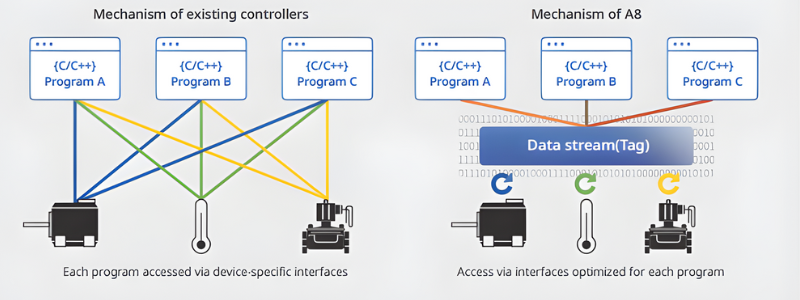
Yokogawa’s Data Stream architecture boosts application reusability via data-centric development. Image used courtesy of Yokogawa
Data Stream Architecture
Yokogawa's Data Stream is a software development environment that unifies I/O across devices and provides a continuous data stream for making well-informed process control decisions. Instead of writing code for specific hardware, code is now unified so that much of it can be reused as new sensors, modules, and hardware are installed.
Without Data Stream, even small coding changes can lead to major headaches. Often, it is easier and more efficient to build all new applications. Because a large part of automation control coding involves interfacing with hardware, the ability to rapidly reuse large segments of code increases the speed at which new applications can be developed.
Advanced Time Synchronization
Every data point collected by the A8 is equipped with a high-precision timestamp, accurate to one millisecond. This degree of accuracy is necessary in high-speed applications, both for synchronizing multiple pieces of hardware and for troubleshooting. Up to 16 A8 computers can be synchronized, enabling coordination of many signals across distant modules in distributed systems. Also, the accurate timestamps make traceability and event sequencing more useful as a troubleshooting tool.
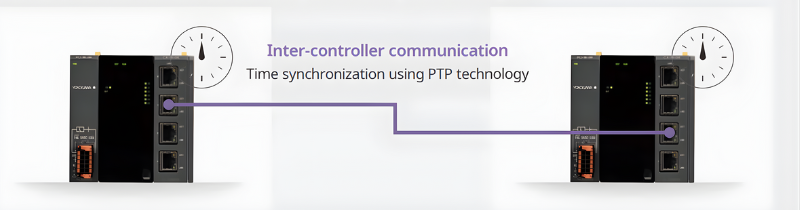
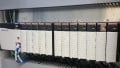
Up to 16 A8 units can be synchronized, enabling distributed control. Image used courtesy of Yokogawa
AI Readiness
Ubuntu 24.04 is one of the most widely used Linux distributions. As such, it is compatible with many of the existing AI platforms. AI helps detect anomalies in processes, predict component failures, and analyze signals for hidden patterns. Because Ubuntu is already designed with AI in mind, combining it with the precision time synchronization ensures that the A8 can provide modeling capabilities. Modeling for predictive maintenance reduces downtime and enables data-driven process control decisions.
Next-Generation Automation
Yokogawa states that the A8 will work in virtually all industrial or manufacturing applications, including chemical processing, energy, materials, pharmaceuticals, and many others. They specifically call out semiconductor manufacturing as a target market. Accelerated development cycles, high precision, and fast process control are key needs in this industry, and Yokogawa has designed the A8 to excel at all of them.
Additionally, the ability to synchronize to one millisecond across A8 industrial computers makes edge computing much more accurate. Engineers know exactly when signals arrive, speeding up troubleshooting applications.