Facebook
 Google
 GitHub
 Linkedin
Operator Actions and Interventions In Functional Safety
Learn how to assess risks and determine SIL by understanding operator actions as initiating events, independent protection layers, or a part of the safety instrumented function loop.
Even with the growing dominance of automation and digital control systems, operators remain the most flexible, adaptive, and experience-driven component of any process plant. Their decisions, responses, and mistakes can profoundly influence plant safety. From a functional safety standpoint, human involvement may either initiate a hazardous event or prevent it.
Understanding when an operator’s activity is classified as an initiating event (IE), an independent protection layer (IPL), or as part of a safety instrumented function (SIF) is critical for accurate risk assessment and safety integrity level (SIL) determination.

Figure 1. Timing sequence for safety assessment. Image used courtesy of the author
This article explores how modern standards—IEC 61511, ISA TR84, and CCPS LOPA guidelines—treat operator actions and interventions within the safety lifecycle, supported by real-world examples, quantitative assumptions, and best engineering practices.
Distinguishing Operator Actions and Interventions
Although often used interchangeably, the terms operator action and operator intervention describe fundamentally different contexts in safety analysis.
| Aspect | Operator Action | Operator Intervention |
| Nature | Deliberate, planned action taken to control, trip, or adjust the process. | Reaction step taken to correct or prevent an abnormal condition. |
| Trigger | Command, procedure, or planned operating condition. | Alarm, deviation, or upset condition. |
| Timing | Occurs during normal or safety sequence. | Occurs after deviation is detected; time-critical. |
| Functional Safety Role | May be part of the SIF if it initiates or confirms a trip. | May be an IPL if it prevents escalation and is independent. |
| Example | Pressing an Emergency Shutdown (ESD) button. | Responding to a high-temperature alarm by closing a valve. |
Table 1. Comparing operator actions and interventions.
In simple terms, operator action is a proactive step (“doing” something), while operator intervention is a reactive one (stepping in to correct something). Both are important, but they appear at different points in the hazard sequence and are treated differently in SIL & LOPA (layer of protection analysis) studies.
When Operator Actions Become Initiating Events
According to IEC 61511-3 and CCPS LOPA, an Initiating Event is “a failure or deviation that causes the process to move toward a hazardous state requiring protection.”
Human error can easily meet this definition. An operator’s inaction or incorrect action can initiate an abnormal condition that demands intervention from safety systems.
Quantifying Operator Errors
In LOPA, operator error is assigned a frequency known as the initiating event frequency (IEF). The IEF represents how often the human error might occur per year. Typical values, based on CCPS & Exida data, are:
| Task Type | Typical IEF (per year) | Reference Source |
| Simple, well-procedure task | 0.01 | CCPS (2019) |
| Moderate complexity | 0.1 | CCPS (2001), exida tables |
| Complex or stressful situation | 0.3 – 1.0 | HFACS / Kenexis data |
Table 2. IEFs for various tasks.
Example:
If an operator inadvertently opens a bypass valve, leading to reactor overpressure, and such an error is expected once every ten years (IEF = 0.1/yr), this value becomes part of the LOPA chain:
Initiating Event Frequency (IEF) = 0.1/year
Here, the designed protection layers must respond, but it does not enter as an IPL in the average PFD (probability of failure on demand) calculation of the SIF. Hence, it determines the required risk reduction factor (RRF) for the overall protection scheme.
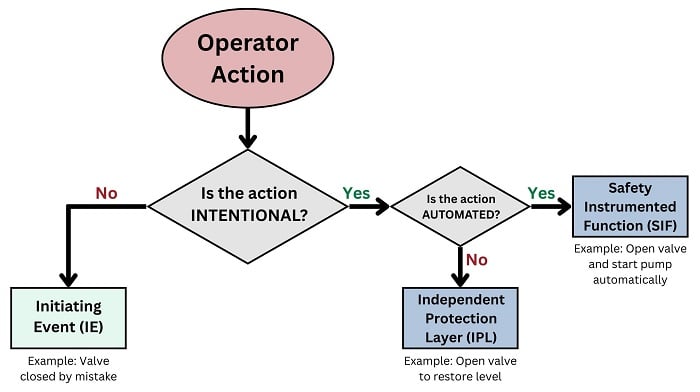
Figure 2. Flowchart of operator actions. Image used courtesy of Control.com
Independent Protection Layers
Operator interventions are credited as manual independent protection layers (IPLs) when they prevent an incident after a deviation is detected. This may include acknowledging an alarm, adjusting a valve, or manually starting a standby pump.
However, human IPLs can only be credited if they satisfy strict criteria defined by CCPS (2001) and ISA TR84.00.03:
- Independence: The operator responding must be different from the person who caused the initiating event.
- Timeliness: The corrective action must be completed within the available Process Safety Time (PST).
- Procedural control: The alarm must be clear, the response steps written, and the operator trained & competent.
- Validation: Evidence should confirm that the operator can reliably detect and act within PST.
Because human performance is variable, risk reduction credit is conservative.
Typical limits might be RRF ≤ 10 (equivalently, PFD ≥ 0.1). Higher credit allowed, only if supported by human reliability analysis (HRA)
Example:
If a high-temperature alarm activates at 180 °C and the operator must close a manual valve within 2 minutes to prevent runaway, this can be credited as a manual IPL only if testing and training demonstrate that operators can consistently act within that time window. However, standards specify that the operator responds within 10 to 15 minutes to consider Operator Intervention as a valid IPL barrier.
If the available PST is shorter, perhaps 10 seconds, such reliance is impractical, and an automatic SIF is required as the operator is unable to initiate action and put the process in the safe state within the stipulated time.
Manual Initiation of Safety Instrumented Functions
Many process units still rely on manual trip actions as part of their emergency shutdown strategy or an operator-initiated action due to the creation of a hazardous situation. For example, this might be an operator pressing a hardwired shutdown or manual trip switch to isolate the process.
In this case, the operator’s action is NOT an initiating event, because it does not cause a hazard. It is a protective action, within the SIF boundary.
IEC 61511-2, Clause 7.4.4.2(c) states:
“If a manual action is part of a safety instrumented function, everything needed to perform this action should be considered as part of the SIF (e.g., pushbutton used by the operator to initiate a shutdown).”
This means that the pushbutton, its wiring, the control logic, and the operator’s procedure and training are all elements of the SIF and must be validated as such.
Practical Example:
- Operator observes reactor pressure rising abnormally & leak exists from the flange.
- Pressure alarm activates on DCS at 9 bars, but the value didn’t reach the trip value.
- Operator presses “Reactor Shutdown” hardwired shutdown pushbutton.
- Logic solver initiates action and isolates feed valves, depressurizing the system.
Here, the operator’s deliberate trip is part of the SIF design, not an initiating event. The SRS (safety requirements specification) should document:
- The indication leading to the manual action,
- The required time to act (≤ PST), and
- The success probability (based on HRA or test data).
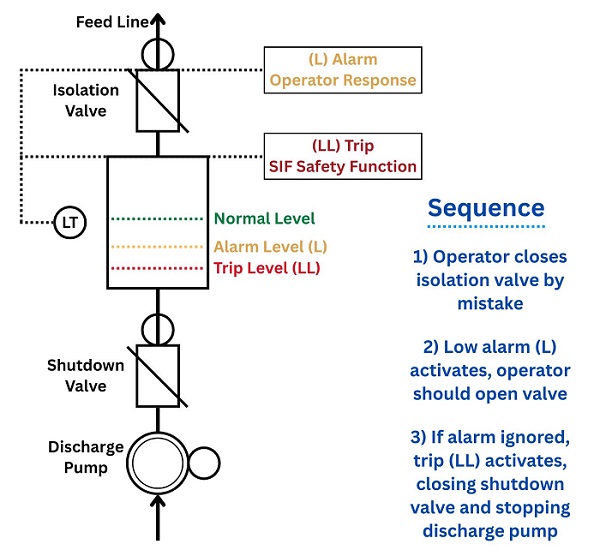
Figure 3. Sample protection system. Image used courtesy of Control.com
Linking IEF, IPL, and SIF in LOPA Calculations
Understanding how human actions fit numerically into the layer of protection analysis (LOPA) chain is vital (Refer IEC 61511, Part 3: Semi-Quantitative Method).
A simplified LOPA relationship is:
Target SIF PFDavg = TEF / IEF × (Other IPLs PFD)
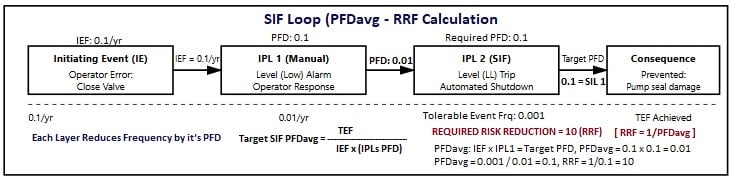
Figure 4. Understanding SIF loop. Image used courtesy of the author
Let’s illustrate this relationship through an example:
Suppose an operator mistakenly closes the inlet feed isolation valve to the tank, initiating a low level alarm. If the operator ignores this alarm, it triggers the level trip on level (LL) to prevent the discharge pump from causing leak seal damage (US $5K), and possible harm to operators due to leakage from the seal.
For this scenario: if the tolerable event frequency (TEF) is 1×10⁻3 per year, and the operator error frequency (IEF) is 0.1 per year, one alarm IPL (PFD=0.1), the target SIF probability of failure on demand becomes:
Target PFD (SIF) = TEF / (IEF × IPL PFD) = 1×10⁻3 / (0.1×0.1) = 0.1 → SIL 1.
This shows how operator error defines the frequency of demand, while the SIF provides the final protective integrity.
| Parameter | Symbol | Value |
| Tolerable Event Frequency | TEF | 1 × 10⁻3 /yr |
| Initiating Event Frequency (operator error) | IEF | 0.1 /yr |
| Manual alarm IPL (operator response) | PFD | 0.1 |
| Target SIF PFDavg | — | 1 × 10⁻3 / (0.1×0.1) = 0.1 → SIL 1 |
Table 3. Event frequency variables.
Human Reliability and Process Safety Time
Human reliability analysis (HRA) is essential whenever significant credit is claimed for operator actions.
Key influencing factors include:
- Alarm clarity and priority: unambiguous, audible, and prioritized signals.
- Operator workload: number of concurrent tasks during abnormal situations.
- Environmental factors: lighting, noise, stress, fatigue.
- Training and procedural discipline: frequency and accuracy of operator drills.
The operator’s action time must always be less than the process safety time (PST), defined as the time available between detection of deviation and the point when the system becomes unsafe.
For example, if PST = 10 seconds, manual action is no longer feasible, and automation becomes mandatory.
Practical Engineering Guidelines
To apply these principles consistently in safety design and SIL assessment:
If the operator causes the deviation: Treat as an initiating event and assign IEF (e.g., 0.1 /yr).
If the operator responds to prevent escalation: Treat as an independent protection layer with conservative credit (RRF ≤ 10).
If the operator manually trips the system: Treat as part of the SIF; include in SRS and validation.
Ensure independence: The same person must not both cause and mitigate the hazard.
Document PST and response time: Prove that the operator can act within safe limits.
Support claims with HRA or empirical data: Avoid optimistic assumptions.
Favor automation for high SIL targets or short PSTs: Manual actions are best reserved for long-time or low-frequency scenarios.
Global References and Supporting Standards
The treatment of human actions in process safety is supported by several international references:
- IEC 61511 (Parts 1–3): defines SIFs, SRS content, and treatment of manual actions.
- ISA TR84.00.03 & TR84.00.04: guidance on alarm response, testing, and human factors.
- CCPS (2001, 2019): quantitative criteria for IEF and IPL credit.
- Institutional publications / whitepapers / articles: practical PFD assumptions and case studies.
- UK HSE HSG48: human factors and reliability in control room operations.
Conclusion
Operators remain an essential part of process safety, bridging the gap between automation and human judgment. Their actions may initiate an event, prevent escalation, or deliberately bring the plant to a safe condition.
For effective safety design:
Define the operator role clearly, whether an IE, IPL, or part of an SIF.
Use conservative data and validate performance through training and analysis.
Ensure sufficient time and ergonomic support for response actions.
Automation may deliver consistency, but experienced and well-trained operators continue to provide the resilience and decision-making capability that define a truly safe and sustainable operation.
Featured image used courtesy of Adobe Stock