Facebook
 Google
 GitHub
 Linkedin
Throwback: A Look at Electric Motors in the Early Days of Mining
Take a step back and check out a bit of the history of motors in the mining industry, from driving compressed air to generating various DC and AC voltages for mineral transportation.
If you ever get the chance to drive Interstate 90 across the panhandle of Idaho in the northwest US, you’ll drive through the small town of Wallace, ID. This town traces its roots to a (literally) rich history of silver mining, and you can still stop by the local park and explore the massive mechanical and electrical devices that chewed through mountains in search of valuable ore in the past.
Visualizing the technology of the world as it migrated from steam to electricity is exciting in any industry, but particularly so for the remote and often dangerous work of mining. Check out a few examples of some really big motors, generators, and batteries that powered the industry.
Remote Electricity
When discussing mining in the early days of modern industry, it’s important to note that electricity was readily available, but it was very expensive and difficult to route to remote locations. When prospecting a new mine location, steam power was the first choice until the new site proved that it would indeed be profitable to install power to the location. For this reason, many devices could be driven by either steam or electrical power with only a few changeovers to the device itself.
Above Ground: Compressors
Air played (and still plays) a pivotal role in mining. It is necessary to breathe, and it provides a safe power source when working far underground, where wires cannot be run, and you cannot risk an electrical spark. Outside of the mine, huge air compressors could drive massive volumes of fresh air into the cave and refill the compressed air tanks that drive the mining carts.
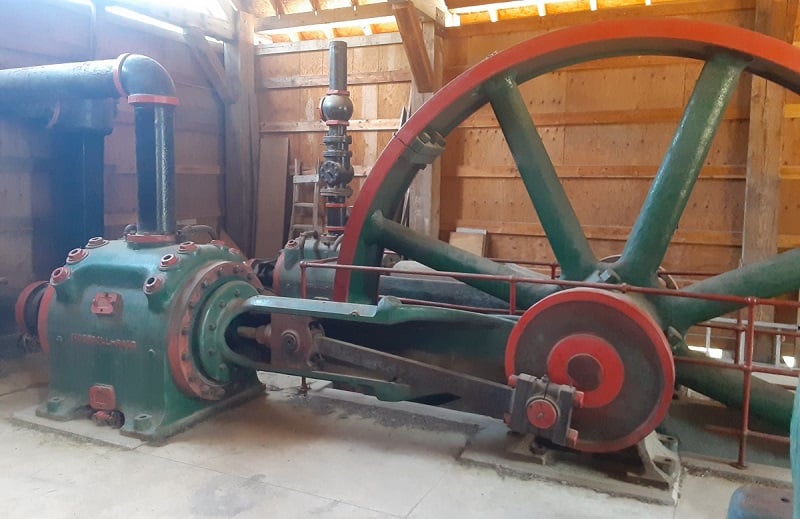
Figure 1. Motor-driven air compressor for mining. Compressor units on the left, large flywheel on the right.
An example of this is a two-stage Ingersoll Rand compressor attached to a large flywheel driven by ropes that act like the teeth of a serpentine drive belt. Two pulleys reduce the flywheel speed from the original speed of a brushed DC electric motor and act as a mechanical clutch.
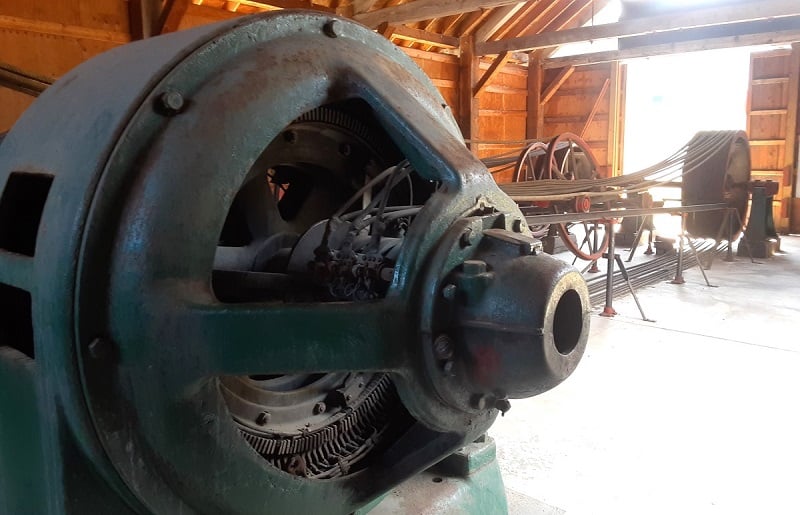
Figure 2. Brushed DC motor driving rope-belt pulleys to spin the air compressor.
The drive unit is a DC motor with brushes for commutating the rotor coils. This motor is also capable of driving a brake resistor in case the flywheel energy were to require a more rapid release.
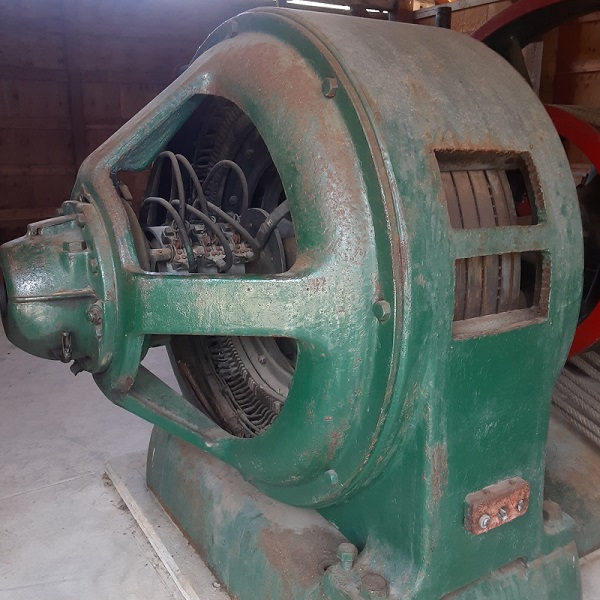
Figure 3. DC motor with power inputs at the lower-right and commutator brushes on the shaft in the center.
DC Generator
In addition to the drive motor itself, the system also included a motor/generator combination unit that converted incoming AC voltage into the DC required for the motor. To drive a synchronous 60 Hz AC motor directly would have required a significant mechanical speed reduction in the form of a gearbox or chain drive. To reduce this complexity, the AC voltage could generate a DC voltage to directly drive a motor at the desired RPM.
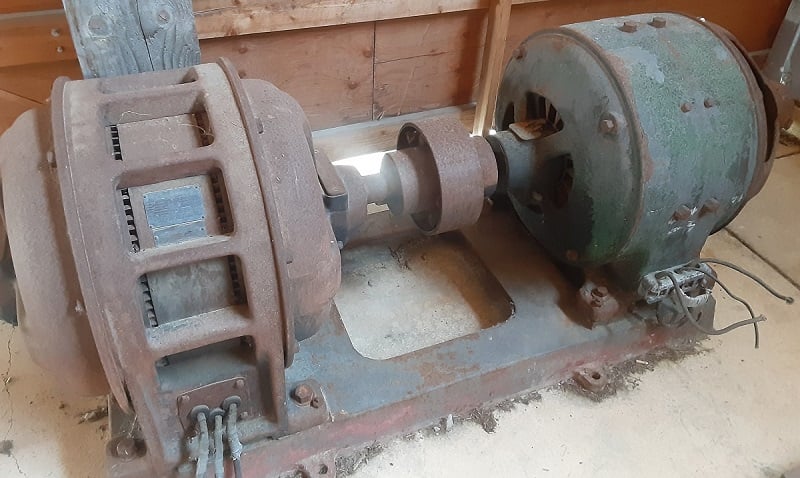
Figure 4. An AC motor (left) is coupled to a DC generator (right) to directly drive the compressor motor.
Pulleys and Resistors
Still above ground, the miners required a way to haul ore and other loads vertically out of a shaft. With electric motors, pulleys could wind steel cables. This works well for hauling the heavy loads up, but when the carts and buckets are sent back down, some sort of speed control is required.
Today, we can recapture rotational energy to slow down loads using a brake resistor (or even regenerative braking). Similarly, the speed of cable release could be limited with the use of a braking resistor. Mechanical brakes could be an option, but the heavy loads would guarantee a sizeable amount of friction and wear on the components.
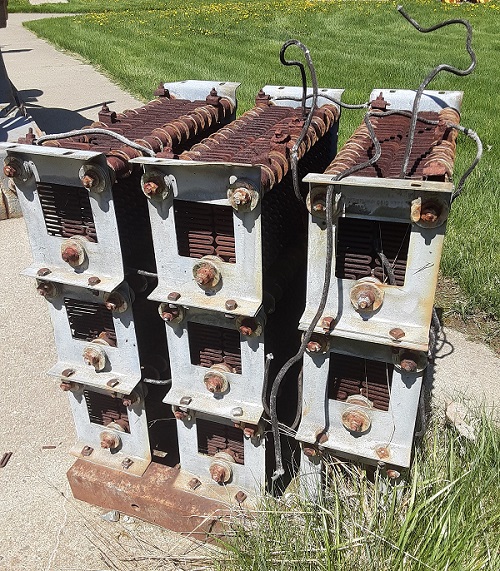
Figure 5. Brake resistor for limiting the release speed of a hoist cable.
Underground: Mine Carts
Hauling the ore and the people was done with mining carts in horizontal sections of tunnel. Two primary methods of powering mine carts were electricity and air.
Air is inherently safer, since the power source does not generate sparks which can ignite explosive environments (although metal-on-metal motion of the wheels can still emit sparks). A compressed air tank could be loaded, then released to drive an air motor and spin the mine cart wheels. A gearbox provided low, high, and reverse gears.
Alternatively, a battery box could be charged to drive electric motors. Brushed DC motors do create sparks, and the batteries had a limited charge and release time, so caution had to be taken to ensure that the method would be safe and reliable.
Mining: Powering the World
Mining is a primary source of extracting minerals for power plants, obtaining metal ore, and finding valuable gems. It’s no surprise that the ways in which this industry uses electricity and control systems have certainly advanced over the past 100 years. Historical sites, like this small silver mine exhibit in Wallace, ID, are a clear testament to this progress.
However, at the same time, it also illustrates how motion and drive technologies still rely on the simple fundamentals to spin motors and charge batteries, just as they have since the earliest days of electricity.
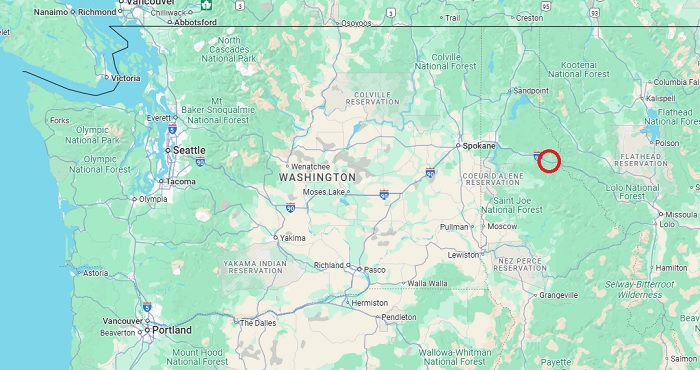
Figure 6. If you're ever driving through Wallace, ID, stop and check out the Silver History Site!
All images used courtesy of the author.
Related Content