Facebook
 Google
 GitHub
 Linkedin
Precision Alignment: The Key to Energy and Cost Reduction
Alignment is an often overlooked element in operations, leading to both energy efficiency and equipment longevity in rotating machinery.
Increasing operational efficiency is top of mind for many companies, and searching for new ways to cut costs and streamline maintenance has become the norm for companies facing tightening budgets and fewer employees. But in the search for new cost-saving solutions, companies should not overlook the utility savings from precisely aligning the rotating machinery in their facilities.
Misalignment is the driving force behind 50% of failures in rotating equipment. Not only does it increase wear and tear on equipment (and shorten equipment lifespan as a result), but it also has a measurable impact on utility costs. Companies that implement precision alignment programs see immediate benefits throughout their plants, from reduced maintenance to lower utility costs.
Misalignment Waste: More Than Just Electricity
Most companies do not measure the electrical current individual machines use. But if they did, they would find that misaligned machines draw significantly more energy to operate than those that are precision aligned.

Figure 1. Alignment can help when multiple motors are linked to a single large assembly. Image used courtesy of Fluke Reliability
In misaligned equipment, the forces required to rotate the shaft and turn the bearing with its rolling elements are significantly higher. Instead of the energy being transferred into the driven machine, this extra force produces increased heat and excessive vibration as the machine works overtime to overcome the forces working against it. Excessive heat and vibration are signs of wasted energy and result in higher utility costs.
Heat is a symptom of friction, which also causes damage to components like bearings and seals. This means that, in addition to higher utility costs, misalignment increases maintenance costs as teams have to actively work against the misaligned machines to keep equipment operational by performing repairs and replacing parts before they reach the end of their planned lifespan. Not only is energy being wasted from a utility standpoint, but misalignment also drives up labor and spare parts costs.
Experienced technicians may be able to tell when a motor is running hotter than it should or vibrating excessively. The problem is, these warning signs occur far sooner than even the best technicians can visually recognize them. Tools like a thermal imager or a vibration meter can help teams identify early signs of misalignment and catch problems before they escalate.
When the shaft of the driving motor and the driven machine are aligned with precision, energy efficiency dramatically increases. Precision alignment decreases the forces fighting against the motor, with the load being transferred into the driven machine and maximizing efficiency rather than increasing heat or creating vibrations. As a result, the machine runs more smoothly, consumes less energy, requires less maintenance, and extends asset life.
Critical Machines: Not the Only Alignment Needs
Many companies already align their most critical assets. Often, these assets are the largest, most expensive machines in plants. Companies are wise to protect their investments and focus on maintaining this equipment in its most optimal condition, especially since failures in this equipment often result in costly downtime and production bottlenecks.
But from an energy efficiency standpoint, these machines are just the tip of the iceberg. Most of them, particularly in petrochemical plants, are fed by hundreds of other machines throughout the plant, such as smaller motors and pumps that move fluids and gases to the production machinery. Aligning the higher quantity of small machines is just as vital from an energy conservation standpoint as keeping the larger machines aligned.
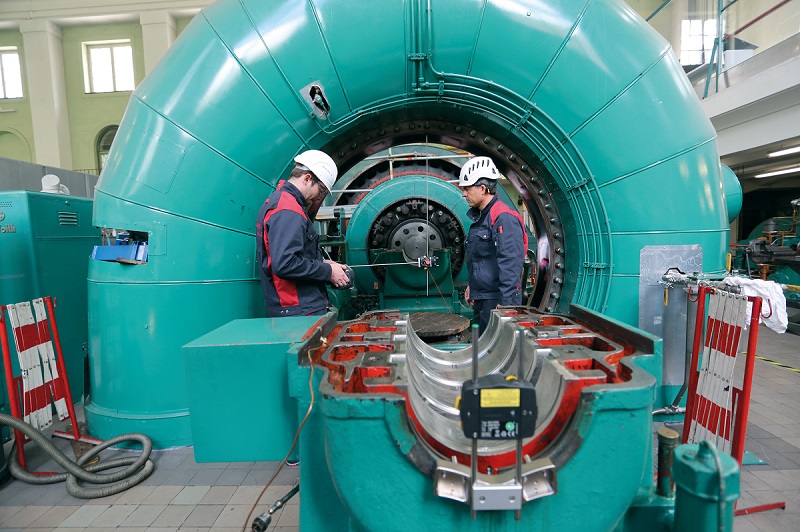
Figure 2. Alignment ensures that moving parts operate with minimum friction and energy loss. Image used courtesy of Fluke Reliability
Energy is consumed by all rotating equipment in the plant, regardless of how large or small the machine is. Online energy efficiency calculators can help calculate the utility cost savings for your specific energy costs. One alignment for a motor that runs 24 hours per day could save hundreds of dollars per year in utility costs. And for companies with numerous or hundreds of similar-sized motors operating under the same loads, the savings increase exponentially.
Companies can use these types of calculators to measure the potential ROI of improving their alignment programs. This data-driven approach shows how small changes in alignments can add up over the months and years, providing a compelling financial case for investing in precision alignment tools, training, and processes, ultimately turning routine maintenance into a strategic advantage.
Alignment Programs: Many Methods, Same Result
Companies’ ability to implement alignment programs depends heavily on the knowledge and experience of their maintenance teams. There are several different approaches companies can take to performing alignments.
Outsourcing: Companies with lean maintenance teams may outsource alignment work. However, outsourcing can be expensive, and these programs are often limited to only the most critical assets. As a result, companies that rely solely on outsourcing may miss the broader benefits of aligning all the rotating equipment in their plant.
In-house: A minority of companies have the staffing, training, and tools to perform all of their alignments in-house.
A blended approach: Many companies find that a blend of in-house and outsourced alignments works best. They outsource their largest or most critical equipment, which may need specialized knowledge or tools to align. Meanwhile, their internal maintenance team can align standard machinery throughout their plant. This approach helps the company realize utility and maintenance cost savings throughout the facility, not just the smaller number of critical machines.
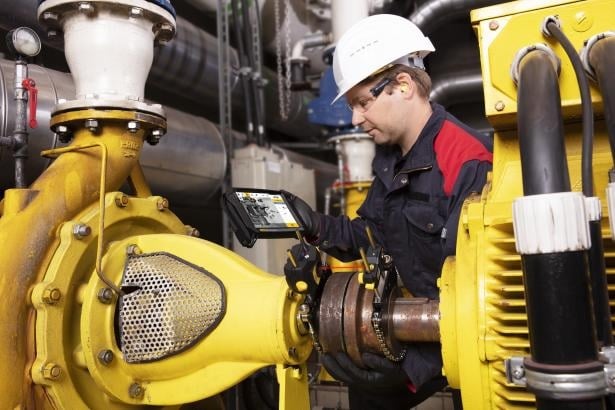
Figure 3. Technician using a laser alignment tool on rotating equipment. Image used courtesy of Fluke
Modern Tools for Smarter Alignment
Precision alignment used to require extensive training and painstaking measurements. Today’s maintenance teams, however, have access to advanced alignment tools that simplify the process without compromising accuracy. At the forefront of this shift are single-laser, dual-detector systems designed for speed and ease of use.
These tools streamline setup by using intuitive interfaces and guided workflows that walk technicians through the alignment process step by step. With fewer components and automatic data capture, alignment can be completed more quickly and with greater confidence. Digital reporting features also make it easier to document work, track trends over time, and share results across teams or departments.
Modern alignment tools are faster and more accessible to maintenance teams, even those that are resource or time-constrained. With them, teams can perform alignments even on less-critical machinery and begin recognizing utility savings across the entire plant.
By removing the guesswork and reducing reliance on specialized expertise, these tools help teams perform alignments more consistently. The result is a faster path to better machine health, improved energy efficiency, reduced downtime, and a maximized asset lifecycle.