Facebook
 Google
 GitHub
 Linkedin
Methods of Precision Alignment: Mechanical, Laser, and Vibration Analysis
Alignment procedures for pulleys and shafts are a key to preventing costly breakdowns. An effective strategy pairs alignment with vibration analysis to both prevent and predict these downtime events.
Every year, the industry loses millions to a problem that most organizations can’t see: misalignment.
For the past century, alignment has been treated as a narrow technical task. You would see a technician check motor shafts or pulley systems before startup, make adjustments with straightedges and feeler gauges or mechanical dial test indicators, and then move on. Alignment was a rare discussion outside the maintenance department, and it certainly was not considered a factor in corporate strategy.
But now, that perception is rapidly disappearing. Today, reliability leaders are beginning to recognise that precision alignment is a driver of equipment health, energy efficiency, workforce effectiveness, and sustainability.
Meanwhile, misalignment has emerged as one of the most insidious hidden costs for rotating machinery in the industry: increasing vibration, accelerating bearing and seal wear, consuming excessive power, and shortening the productive life of expensive assets. What once seemed like a minor detail now stands out as one of the clearest levers for reducing the cost of ownership and extending uptime.
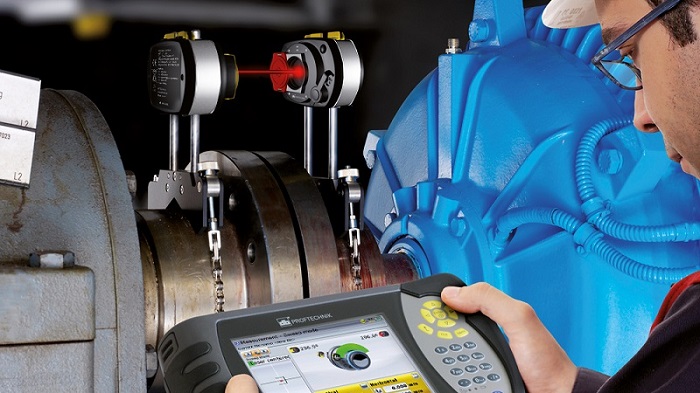
Figure 1. Alignment is an important step in maintaining rotating equipment.
Precision Alignment as a Strategic Discipline
Organizations that prioritize reliability choose to incorporate alignment practices into the entire lifecycle of assets, starting at installation, continuing through operation, and extending into long-term monitoring. In this sense, precision alignment becomes proactive, enabling the reduction of sudden, costly outages and simultaneously ensuring machines operate closer to their designed efficiency.
When every hour of uptime counts, precision alignment becomes a management issue. It’s not about standalone couplings and pulleys; it's about energy performance, workforce capability, and protecting the ROI on infrastructure.
Methods of Precision Alignment
The technology used in alignment has evolved, with various offerings that enable precision and accuracy for all sorts of organizational needs. However, a central debate within reliability programs concerns which alignment method is “best.” In truth, no single method stands alone. Mechanical, laser, and vibration-based approaches each provide value, but only in combination do they create a complete strategy.
Mechanical
Mechanical alignment is the oldest and most accessible practice. Traditional methods include straightedges, feeler gauges, and the readings from mechanical dial test indicators, which technicians can perform adjustments at low cost, for small, non-critical assets.
While these methods helped establish early alignment principles, these methods are ineffective for critical machines. Mechanical dial test indicator methods are time-consuming, and they depend heavily on operator skill. Even the most elaborate of mechanical methods cannot deliver the precision needed for mission-critical equipment.

Figure 2. Alignment can be accomplished with both mechanical and optical methods.
Laser
Laser alignment has become the fundamental cornerstone for modern reliability practices. It democratizes expertise and embeds reliability into daily work, ensuring technicians are guided through the process, eliminating the need for rough pre-alignments and providing corrective feedback in real time.
The accuracy and repeatability of laser systems have made them indispensable for all rotating machinery: from coupling and belt-driven machinery to multi-coupled machine trains
Vibration Analysis
Vibration analysis is not a direct alignment method, but it serves to close the loop for other alignment procedures. It is the partner to precision alignment. It does not correct misalignment, but it provides continuous insight once machines are in operation. Thermal expansion, load changes, or natural wear can result in the equipment becoming out of tolerance, sometimes gradually, sometimes suddenly. Vibration monitoring detects these deviations by recognising their distinct signatures. When integrated into predictive maintenance programs, vibration analysis not only confirms the quality of corrective actions but also signals when realignment is necessary.
Together, laser alignment systems establish precision at the core of operations, and vibration analysis provides the monitoring that sustains reliability over time.

Figure 3. Vibration analysis data effectively supplements the alignment process.
Shaft and Belt Alignment: Where the Methods Matter
Understanding the tools is one part of the story. Equally important is knowing where to apply them. Shaft and belt alignments present different challenges, but both are critical to long-term performance and reliability
- Shaft alignment dominates most conversations and focus because it concerns the most valuable assets: pumps, compressors, turbines, and other rotating equipment, where even slight misalignment creates significant loads and resulting stresses. Misalignment here can quickly lead to bearing lubrication and failures, as well as seal damage, resulting in catastrophic failure and breakdowns. Every coupling-driven machine should be laser-precision aligned, ensuring accuracy where the stakes are high and the precision tolerances are unforgiving.
- Belt alignment, by contrast, is not often raised and discussed. Plants may operate fleets of belt-driven fans, blowers, or conveyors. Individually, these machines may appear minor, but collectively they account for large shares of energy consumption and frequent maintenance interventions. Improper belt alignment increases friction, accelerates wear, and forces early replacement of belts and pulleys. Across numerous units, the cumulative cost is substantial. Laser belt alignment tools can provide a cost-effective and accurate solution.
A mature precision alignment program addresses both sides of the reliability coin: shaft and belt. To neglect one is to the detriment of the other.
From Task to Strategy
The true divide between reactive and proactive organisations is not the choice of method but the philosophy of use. In reactive environments, alignment is performed at installation or after a failure. Machines run until they fail, and alignment becomes part of the repair process, an afterthought. In proactive environments, alignment is woven into a continuous loop of correction, monitoring, and optimisation. The biggest shift is in predictive environments, where vibration analysis validates and monitors conditional changeover time, and precision laser alignment tools are standard practice. This integration produces fewer failures, lower energy usage, reduced spare-parts consumption, and extended machine life.
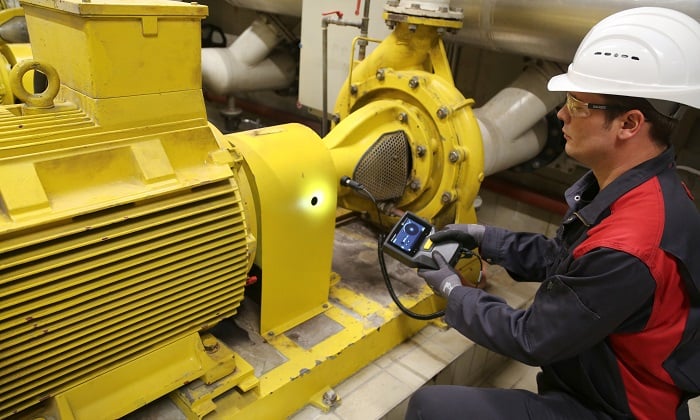
Figure 4. Vibration analysis is a key tool for predicting failures, while alignment is critical in preventing them.
At this stage, the benefits reach beyond technical reliability into organisational culture, recasting alignment from a purely maintenance task into a management priority. It becomes a matter of risk governance, a tool for building workforce capability, and a visible contributor to sustainability commitments.
A Test Case for the Future
We are seeing how precision alignment is quickly becoming a proving ground for the future of industrial reliability. Increasingly, adaptive laser systems are adding intelligence, guiding users dynamically rather than following static procedures. Added to this, continuous vibration monitoring is being incorporated into connected platforms that feed predictive analytics back into the system.
This evolution shows that precision alignment is more than a maintenance practice. It is a cost-effective, strategic, data-driven discipline that supports productivity, energy efficiency, and competitiveness. Those who dismiss alignment as a minor necessity and impact will remain caught in cycles of premature failure and reactive repair maintenance, while industry leaders strive to embed precision alignment into the fabric of their operations; for every belt, every coupler, and every rotating machine.
All images used courtesy of Fluke
Related Content