Facebook
 Google
 GitHub
 Linkedin
Remote Industry and the Growing Popularity of Cellular Systems
Previously reserved for personal and commercial deployments, learn how cellular IoT connectivity technologies are influencing industrial trends, organizations, and integrators.
The first industrial revolution was propelled—literally and figuratively—by steam power. Steam engines allowed the British to dig deeper for coal, keeping energy costs low while enabling semi-automated factories. In a similar sense, the fourth industrial revolution is expanding how we record and use data at scale.
This fourth revolution, or Industry 4.0 as it is often called, represents the adoption of new technologies that allow for smart, interconnected systems. This includes the Internet of Things (IoT). IoT represents the network of physical objects that exchange data. This networking can be accomplished through technologies like Ethernet, WiFi, Bluetooth, and cellular connectivity.
Cellular: A Modern Solution
Cellular connectivity is a relative newcomer in IoT. Early cell networks weren’t ideal for IoT-enabled devices. They were bulky, offered limited coverage and security, and had high power requirements. This has changed over the years, and cellular is looking more and more ubiquitous as networks evolve to specifically cater to IoT devices.
Currently, technologies like LTE-M (4G) are commonly used for IoT. LTE-M offers broad coverage and relatively low power draw with advanced encryption. There is some tension with 5G networks being used for cellular IoT. 5G is more powerful but consumes more energy and data, significantly impacting cases where many data packets must be sent over time. But future iterations of 5G are on the roadmap to launch before 2030 and will bring even more capability for cellular IoT. 5G NR is a new global standard aiming to increase speed, capacity, and efficiency.

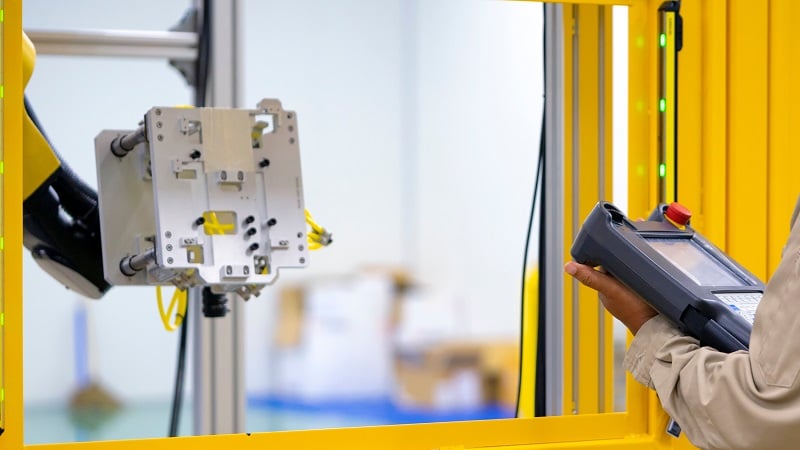
Figure 1. Thousands of new locations and applications for automation have expanded thanks to cellular connectivity. Image used courtesy of Adobe Stock
Interconnected Web of Layers
In the abstract, IoT structures are made up of five layers that illustrate how data is captured, processed, and ultimately used.
- Perception layer: physical infrastructure.
- Transport layer: communication and networks.
- Processing layer: storage, processing, computing.
- Application layer: deployment domains like smart cities and agriculture.
- Business intelligence layer: visualization of information provided to the user.
The transport layer is particularly important for industry, as it represents the ways in which IoT devices connect to each other, third-party systems, and cloud services.
Growth Trends in Cellular IoT and Beyond
There are a huge number of resources being put into cellular IoT development to match market demands. The global IoT market is experiencing exponential growth, with the number of connected devices expected to reach 41 billion by 2027. This surge is driven by the need for real-time data access and the integration of IoT in various sectors, such as healthcare, transportation, and industrial automation. The transition from 4G to 5G networks is further accelerating this growth, providing the necessary bandwidth and low latency required for advanced IoT applications.
The rapid adoption of cellular IoT also means a correlated increase in revenues. Counterpoint Research forecasts that cellular IoT will surpass $26 billion USD by 2030, up 90% from $13.7 billion in 2023.
More and more, cellular-powered IoT devices are an appealing option for system integrators looking to create new solutions, revamp existing setups, or bring data insights to legacy hardware. Cellular modules are already an integral part of digitalization. In 5 years, they should nearly double in popularity, according to companies like Qualcomm and AMD.

Figure 2. The first prototype of a network-connected smart device heralds from Carnegie Mellon University. Sensors were installed on a Coca-Cola vending machine in the CS department to provide temperature and inventory status data. Image used courtesy of CMU
Benefits and Drawbacks of Cellular IoT
The capture and use of edge data can be accomplished in a virtually unlimited number of ways. There is no “one size fits all” solution. Cellular IoT does have limitations and risks, but there are major benefits as well.
Isolated, Quick-to-deploy Solutions
Cell networks allow organizations to deploy IoT hardware without the need for extensive IT infrastructure approval. This flexibility allows for quicker implementation, enabling easier and faster data acquisition. An isolated solution also keeps avenues open for hardware, software and cloud services, and communication protocols, since they won’t be directly linked to a larger system. This is a huge boon for third-party system integrators who provide IoT solutions to businesses and other organizations.
Failsafe Communication With Network Failover
Ensuring continuous uptime is vital for industrial applications, where downtime translates to unnecessary expenses and losses in productivity. Cellular IoT can be used as a failsafe or backup in the event of a loss of connectivity through the primary network. This redundancy maintains uninterrupted data transmission, increases uptime, and ensures reliable operation of critical systems.
Installation Flexibility
Cellular IoT devices can be deployed in remote or hard-to-reach locations where traditional wired connections are impractical. This flexibility is particularly beneficial for industries such as agriculture, oil and gas, and environmental monitoring, where devices need to operate in challenging, remote environments. For example, the USGS deploys an ultra-low power wireless system; a LoRaWAN gateway forwards data via a cellular backhaul.
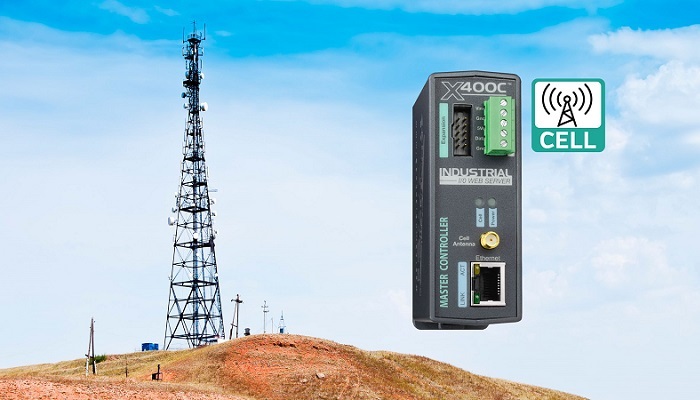
Figure 3. Installing cell controllers in hard-to-reach locations can enable automation even in extreme conditions. Image used courtesy of ControlByWeb
Quantifying Up-front and Long-term Costs
As mentioned above, cellular IoT devices are easy to set up and require no retrofitting or hardwiring to enable. They are independent solutions with low up-front costs. The tradeoff is that cell devices require a paid data plan through a carrier, which adds up over time. But it’s a tradeoff that increasingly makes sense for the many end users who need the flexibility that cellular IoT offers.
Assessing Risk Tolerance
Connecting any device to the internet does impose certain risks. As demand for internet-enabled solutions increases, so too do the incentives for bad actors. IoT malware attacks saw a 45% increase from June 2023 to May 2024, according to a recent ThreatLabz report. However, this doesn’t make cell an inherent security risk, since modern networks use strong encryption protocols, and overall security is actively improving in real time as 5G iterations are developed.
Cellular IoT for Industry
The heightened demand and projected growth of cellular IoT installations provides a testament to its numerous advantages. As industries continue to adopt and evolve Industry 4.0 technology, cellular IoT is set to rise, driven by the need for reliable, secure, and flexible connectivity solutions.