Facebook
 Google
 GitHub
 Linkedin
Maxolution MR P1600 Targets Heavy-Duty Mobile Robotics
A new AMR from Maxolution combines high payload capacity, EtherCAT integration, and wireless charging for industrial automation.
Maxolution’s MR P1600 mobile robot reflects the growing shift toward scalable, high-capacity intralogistics automation. Designed to handle payloads up to 1600 kg, the system integrates wireless inductive charging, standardized communication protocols, and modular load handling. These features reduce downtime and simplify expansion from small deployments to large fleets. As manufacturing and warehouse environments demand more flexibility and uptime, solutions like the MR P1600 highlight how mobile robotics is evolving into a core component of modern industrial operations.
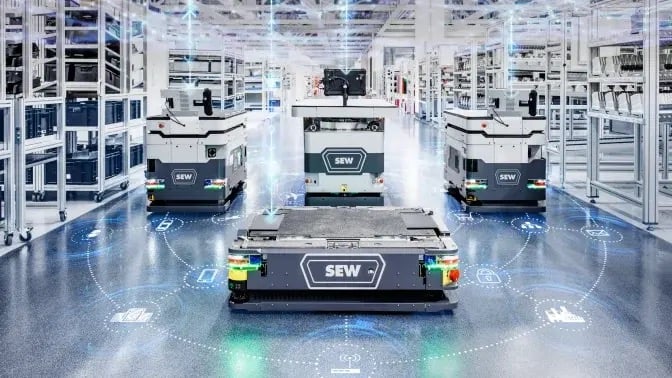
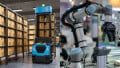
Mobile robots offered by Maxolution. Image used courtesy of Maxolution
It seems the next wave of robotics is here in the form of mobile robotics. A mobile robot is a robot that moves heavy loads, such as pallets or bins, around the factory floor and in logistics applications. A typical mobile robot will have sensors to detect objects, vision systems to navigate, and fleet management software to control and map the area the robots operate in. Maxolution, a SEW-EuroDrive company, has recently released the MR P1600, a mobile robot with faster charging and simple integration.
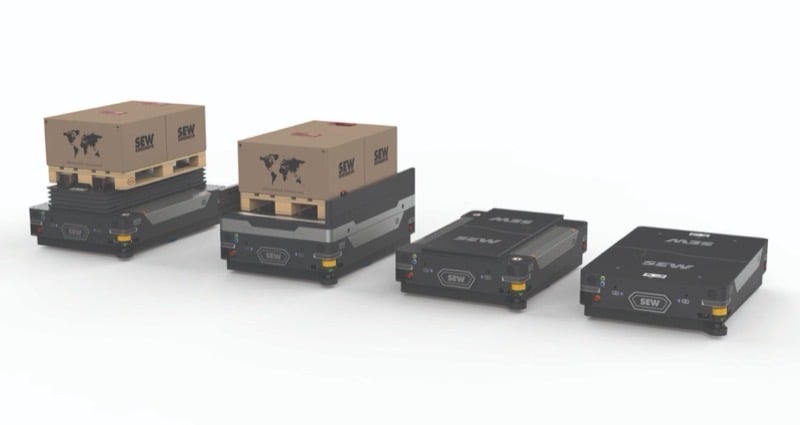
The MR P1600 line-up. Image used courtesy of Maxolution
Maxolution’s MR P1600
The latest mobile robot from Maxolution is designed for lifting and moving pallets within the manufacturing and logistics industries, with a payload capacity of 1600 kg and a maximum speed of 1.6 m/s. The P1600 can position itself to within ±4 mm of a docking or charging station. Interfacing with the P1600 is possible through its integrated EtherCAT and FSoE, which support EtherCAT’s safety protocol. Hardwired safe I/Os are also available for systems that do not use FSoE communication.
The fleet management software communicates with the robots over a WLAN and VDA 5050, a common communication interface for automated guided vehicles. The P1600 also interfaces with the Movitrans contactless charging station from Maxolution. The Movitrans is an inductive charging station that reduces charging errors due to misalignment.
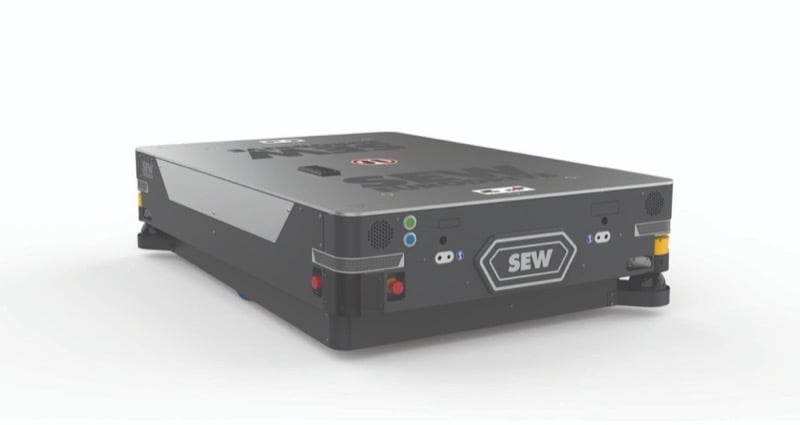
The MR P1600 without a payload. Image used courtesy of Maxolution
Start Small And Scale Large
Scaling a process can be difficult, depending on the process. Mobile robots often require extensive mapping of the working area and integration into the existing machine control system. As the system is scaled up, these integrations will need to be repeated. The MR P1600 uses a standard platform to help reduce the pain of upscaling the mobile robot process.
The MR also includes modular load-handling options, allowing the robot to be configured for different applications with minimal impact on the existing tooling. This standardization allows factories and warehouses to start with small fleets and gradually grow to larger ones as their facilities expand.
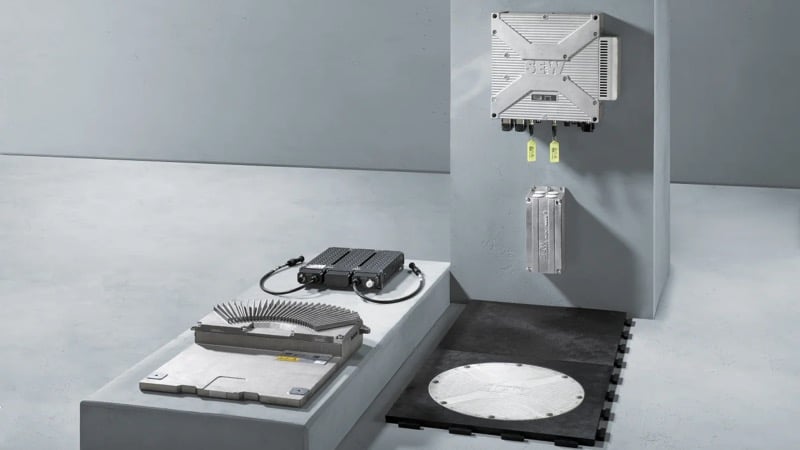
The Movitrans spot contactless charging. Image used courtesy of Maxolution
Inductive Charging
Downtime of your mobile robot system is a typical operational issue. The Movitrans spot contactless charging station uses inductive charging technology to charge the P1600 without making contact with the docking station. There are no locking mechanisms and no contacts to clean. Energy is transferred wirelessly through an air gap to charge the P1600 mobile robot quickly.
Mobile robots are becoming increasingly popular in the logistics and manufacturing industries. They offer an efficient way to transfer goods and raw materials to where they are needed. A common challenge with mobile robots is upscaling and downtime during charging. The MR P1600, combined with a wireless charging station like the Movitrans spot, offers a solution to these problems by including standardization, fleet management software, and a modular payload option, allowing factories and warehouses to start with a small fleet and expand to larger ones later.