Facebook
 Google
 GitHub
 Linkedin
The 100,000-Hour Myth: Decoding Industrial LED Life Cycles
Why do "forever" LEDs fail? A technical guide on L70 standards, multi-voltage IC drivers, and a comparison of industry-leading LED manufacturers.
We have all been promised that LEDs last virtually forever, yet many of us have replaced "20,000-hour" household bulbs after just six months. This creates a natural skepticism when we see an industrial manufacturer claim a 100,000-hour lifespan for a 22 mm LED pilot light.
In the industrial world, failure rarely means the light simply stops working. In the lighting world, it’s about lumen depreciation, a process where the light slowly dims until it is no longer a safe indicator. Understanding how a professional-grade indicator reaches the claimed 11-year lifespan requires looking past the bulb and into the driver electronics.
Why Should LEDs Last Longer?
Incandescent lights create light and heat by sending current through a resistive filament material that glows brightly without burning in the absence of air inside the bulb. When the incandescent bulb is energized, the filament expands slightly due to the heat. It retracts when switched off. This small change in size causes fatigue over time, failing at last after many on/off cycles.
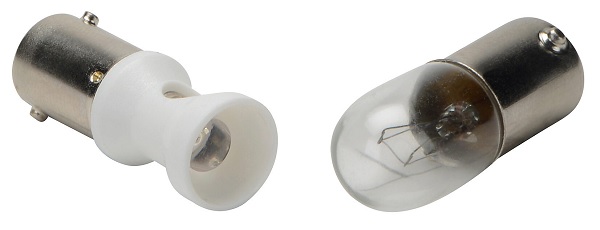
Figure 1. LED bulbs (left) and incandescent bulbs (right) are both designed to work in 22 mm fixtures.
In contrast, the LED relies on the physics of semiconductor materials, with no moving parts. When voltage is applied to a certain side of the LED, electrons are conducted across a semiconductor material junction. Any excess conduction energy is emitted as light with a specific wavelength (color). In an ideal world, this arrangement should last forever. However, in the real world, there are many underlying influences like operating temperature swings, material impurities, and supply fluctuations that will reduce the operating life to a finite, yet still impressive span.
The Multi-Voltage Mystery: How it Actually Works
A raw LED is a delicate, current-driven device. Unlike the resistive filament of an incandescent bulb, the LED has no resistance of its own. If you double its design voltage, you will fatally overcurrent the diode in milliseconds. Therefore, most LED modules are designed with a specific in-line resistor, carefully chosen for the supply voltage. So, how then does an industrial module accept a range from 20 VDC to 277 V AC?
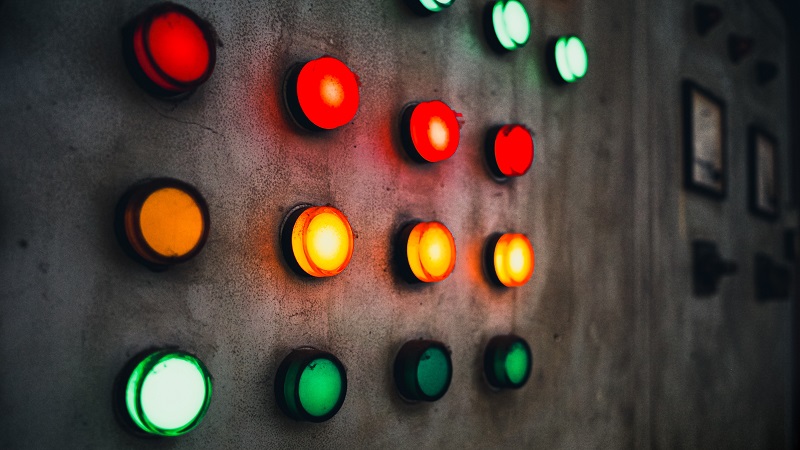
Figure 2. Industrial indicators are designed for systems with a wide range of voltages. Image used courtesy of Adobe Stock
High-spec units, like those from c3controls, use integrated circuit (IC) current regulation. This internal driver circuit acts as a "gatekeeper," electronically and dynamically stepping down any incoming voltage to the exact current the LED needs.
Not only does this provide acceptance for multiple voltages, but it also eliminates the need for large resistors that dissipate the excess energy as heat. As with all semiconductors, elevated temperatures are the primary killer of LED longevity.
Testing the Claims: What 100,000 Hours Means
Manufacturers don't wait 11 years to finish a test; they use the Arrhenius Model. This mathematical formula allows for accelerated life testing by running the LEDs at extreme temperatures (e.g., 85°C) for 1,000 hours. Engineers then project the decay curve to determine the L70 rating, the point where the LED retains only 70% of its initial brightness.
Selecting the Right Tool: c3controls Series 22
Selecting the right indicator requires weighing global variety against specialized engineering.
Examining a Global Standard
To highlight the c3controls hardware, we have selected a benchmark global product line from a respected manufacturer of 22 mm pilot devices.
- Specific Blocks: Competitors typically provide specific voltage blocks (e.g., 12-30 V or 120 V), allowing for highly tailored electrical isolation.
- Customization: Competitor units are famous for laser-etched lenses, providing high-contrast iconography directly on the unit.
- Product Breadth: The competing ecosystem is a comprehensive global platform that includes pushbuttons (both illuminated and non-Illuminated), selector switches, pilot lights, emergency stop operators, and palm switches, all designed for high visibility and modular flexibility in standard industrial environments.
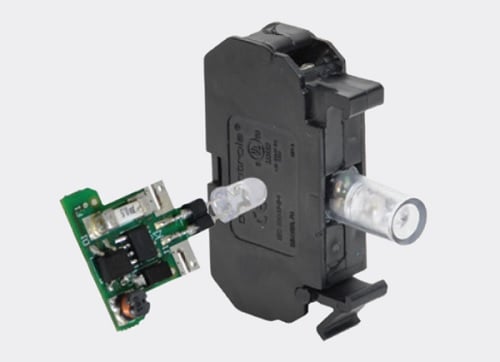
Figure 3. The multi-voltage LED module. Image used courtesy of c3controls
The Heavy-Duty Specialist: c3controls Series 22
Where c3controls stands out is in inventory simplification and extreme environment reliability.
- Universal Strategy: Rather than stocking separate bulbs for every voltage, c3controls' multi-voltage modules handle applications from 20 V to 277 V in a single part.
- The "Insurance Policy": These units are backed by a limited lifetime warranty, a claim supported by their superior heat-dissipating materials and solid-state drivers.
- Product Breadth: The c3controls Series 22 includes two primary categories: 22 mm IEC and 22 mm NEMA pilot devices, which encompass a full suite of solutions including push buttons, selector switches, pilot lights, emergency stops, compact control stations, and specialty operators.
| Feature | Industry-standard Series | c3controls Series 22 |
| Voltage Solution | Standard Specific Blocks | Universal (20V - 277V) |
| Max Lifespan | 100,000 Hours | 100,000 Hours (L70) |
| Inventory Need | Voltage-Dependent | One Part Fits All |
| Warranty | Standard Industrial | Limited Lifetime |
The Verdict
The choice between these platforms is an engineering trade-off. If your project requires a massive variety of custom etched icons and specific voltage blocks,it may be logical to turn to other manufacturers who specialize in such customization. However, if your goal is to drastically simplify your spare parts inventory while ensuring a "maintenance-free" decade of life in high-heat environments, the universal electronics in c3controls provide a better long-term insurance policy.
Related Content