Facebook
 Google
 GitHub
 Linkedin
ABB Cooks Up a Flipping Awesome Robotic Burger-Maker
Never trust a skinny cook…unless it’s a robot. ABB has teamed up with the Californian-born BurgerBots fast-food restaurant to automate burger making.
Have you ever been underwhelmed by the burger at your local fast-food joint? A slab of mystery meat slapped between some stale bread with a square slice of orange dairy product that cannot be legally called “cheese,” all assembled by an overworked teenager with a bad cough? Well, if you have, the new BurgerBots fast-food restaurant in Los Gatos, California, may be your new go-to.
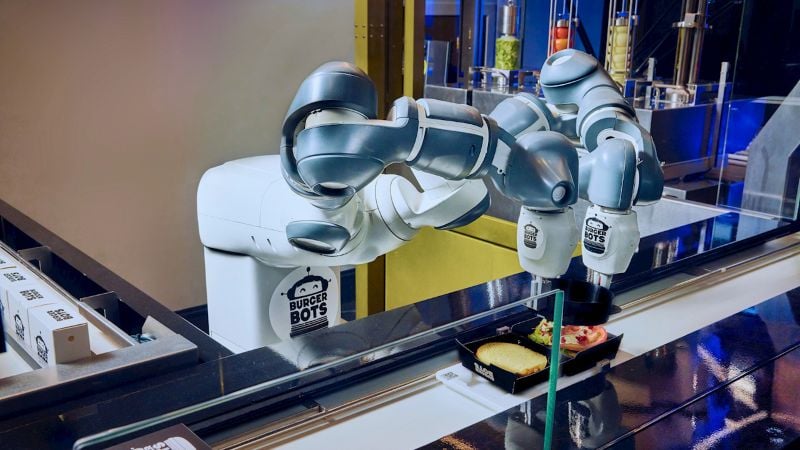
The BurgerBots fast-food restaurant in Los Gatos, California, utilizes ABB’s IRB 360 FlexPicker and YuMi cobot to automate burger assembly. Image used courtesy of ABB and photographer Mithy Evans
BurgerBots to the Rescue
BurgerBots’ robotic burger maker represents a collaboration between ABB’s IRB360 FlexPicker delta robot and ABB’s YuMi dual-arm collaborative robot. The burger maker is part of BurgerBots' automated kitchen concept, where robots, instead of humans, prepare burgers. In this kitchen, customers scan a QR code and determine which ingredients they would like to see on the burger.
From there, a freshly cooked patty is grilled and placed in a box that rides on an assembly line. The data from the QR code is then applied to the IRB360 FlexPicker. It places the ingredient toppings and passes the box down the line. The YuMi Collaborative Robot then performs the final assembly of the ingredients, delivering a perfectly assembled burger in just 27 seconds, with no ketchup smeared on the outside of the bun. The robotic burger maker also monitors inventory and lets workers in the kitchen know when toppings and condiments are running low.
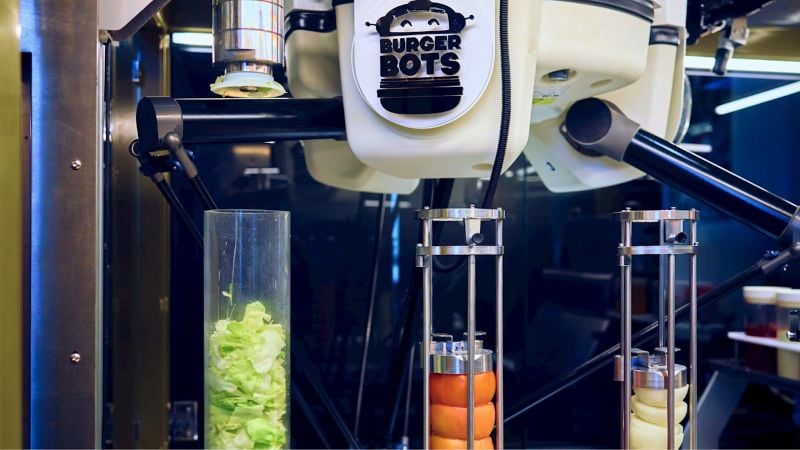
Lettuce, tomato, and onion ready to be distributed on the burgers, according to customer selection. Image used courtesy of ABB and photographer Mithy Evans
Robots in the Kitchen?
BurgerBots was first envisioned by Elizabeth Truong, an entrepreneur who saw the capabilities of robotic automation and figured out how to apply it to the fast food industry. High pressure on employees, high turnover, wasted ingredients, and quality errors plaguing the food service industry all served as Truong’s inspiration.
For those who have beef with robots in the kitchen, consider what automation engineers do in all applications. They automate dull, dirty, and dangerous tasks. Anyone who has worked in a restaurant or a burger stand can name a dozen repetitive tasks that they perform. Every burger is assembled in the same manner from a selection of ingredients, just like every picker robot in the shipping department selects the proper parts to package.
Fast food positions are often low-paying yet have a high potential for quality and safety issues. Foodborne illnesses from improperly prepared food or sicknesses from employees mean high risk for little reward. If the number of hands that touch the food can be reduced, food will be safer.
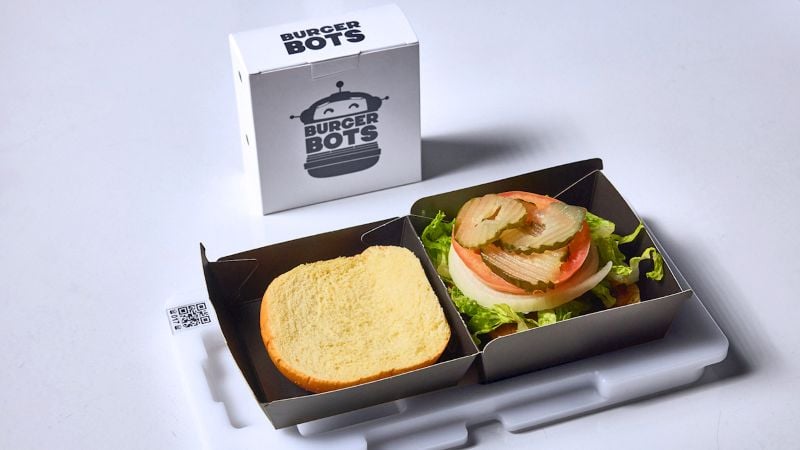
ABB and BurgerBots’ robotic burger maker assembles burgers in just 27 seconds, topping each patty according to customer selection. Image used courtesy of ABB and photographer Mithy Evans
Automation in Food Service
At first glance, it might appear as though BurgerBots’ concept is a parlor trick, a gimmick for trade shows, but of limited use outside of a few laughs. You'd be hard-pressed, however, to find a fast food manager who doesn't need more hands in the kitchen, especially during holidays, weekends, and late hours. According to a recent ABB survey of hospitality managers, 89% are open to robotic assistance.
Additionally, ABB and BurgerBots' robotic burger assembly is hygienic; it will never show up to work with a cold or forget to wash its hands. On top of that, BurgerBots’ robotic burger-making process takes just 27 seconds, getting food into the mouths of customers at top speeds.
In other words, you can bet your buns that these robots have the potential to revolutionize the fast-food industry.