Facebook
 Google
 GitHub
 Linkedin
Arduino Launches Ventuno Q AI-Ready Single-Board Platform
Arduino introduces the Ventuno Q, a single-board platform combining Linux computing and microcontroller control for AI and robotics.
Arduino has introduced the Ventuno Q, a single-board platform that combines a Linux-based processor with a microcontroller for AI and robotics applications. By integrating computing and real-time control on one board, the system enables developers to run edge AI models, process sensor data, and execute control tasks without relying on cloud connectivity. With support for tools like Arduino App Lab and compatibility with existing hardware ecosystems, Ventuno Q marks a significant step into AI-driven embedded development.
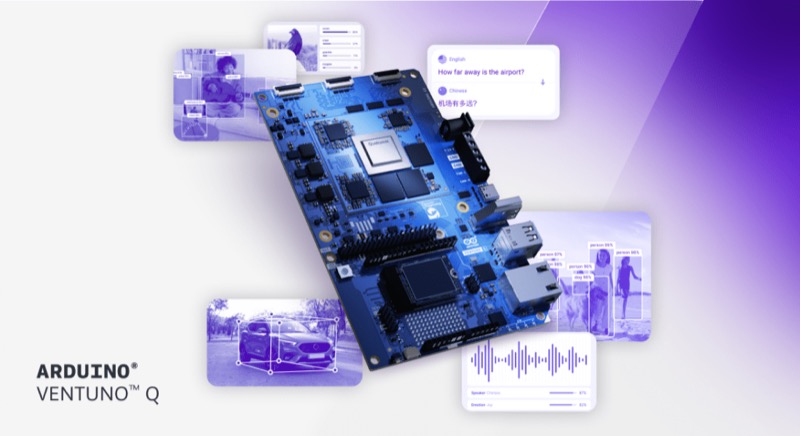
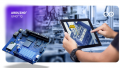
The Ventuno Q is a microcontroller and Linux computer on a single board. Image used courtesy of Arduino
Arduino Microcontroller
For 21 years, Arduino has been a global supplier of single-board microcontroller development boards. The Arduino Uno is often one of the first control/programming platforms that budding engineers experiment on, at home or in the classroom. With 2026 being the 21st anniversary of the Arduino company, they will be releasing the first Arduino single-board computer purpose-built for AI and robotic applications.
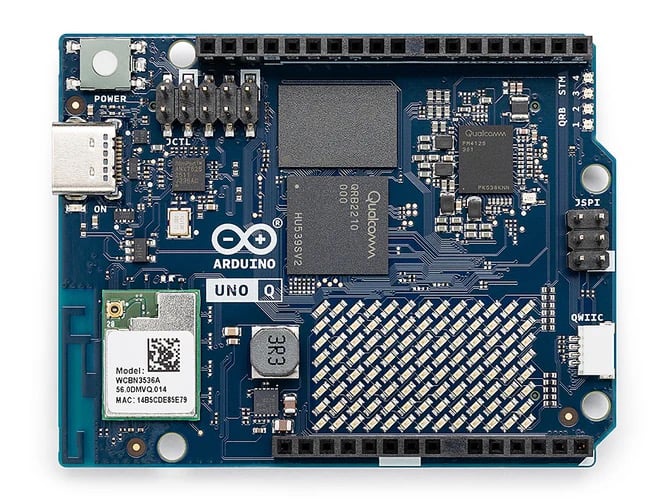
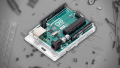
The Arduino Uno Q is a single-board microcontroller. Image used courtesy of Arduino
A Computer And Microcontroller On A Single Board
The Ventuno Q is a single-board computer featuring a Qualcomm Dragon Wing IQ8 processor and an STM32H5 microcontroller. It comes standard with 16 GB of RAM and expandable storage of up to 64 GB. With the two processors installed on the board, the Ventuno can run two different operating systems: the main processor runs Ubuntu or Debian, while the microcontroller runs the Arduino Core on Zephyr OS. This collaboration reduces the need for additional hardware running your control system while a PC runs data collection, user interface, or cloud management. The Ventuno Q can be expanded by using the full catalog of Arduino shields and carriers; additional third-party shields, such as Raspberry Pi Hats, can also be installed on the device. Single-board computers and microcontrollers are entering the market as AI expands across all industries. With the features and hardware installed, the Arduino Ventuno Q allows for a solid AI development platform.
Synchronizing Control And Computing
The Ventuno has both a PC processor and a microcontroller processor on the same board. This architecture allows for true synchronization between your control system and your server. On a single platform, you can monitor and gather data about the world around your system, then analyze that data to make decisions in real time, without the need for a communication protocol.
The components chosen in the Ventuno Q allow users to build AI devices that do not require a cloud connection, an ongoing concern for cybersecurity-conscious industries. You get all the computing power you need plus WiFi 6, Bluetooth 5.3, industrial I/O, CAN FD, PWM, and a high-speed GPIO interface. For vision applications, multiple MIPI-CSI camera interfaces are provided, and a 2.5 GB Ethernet port.
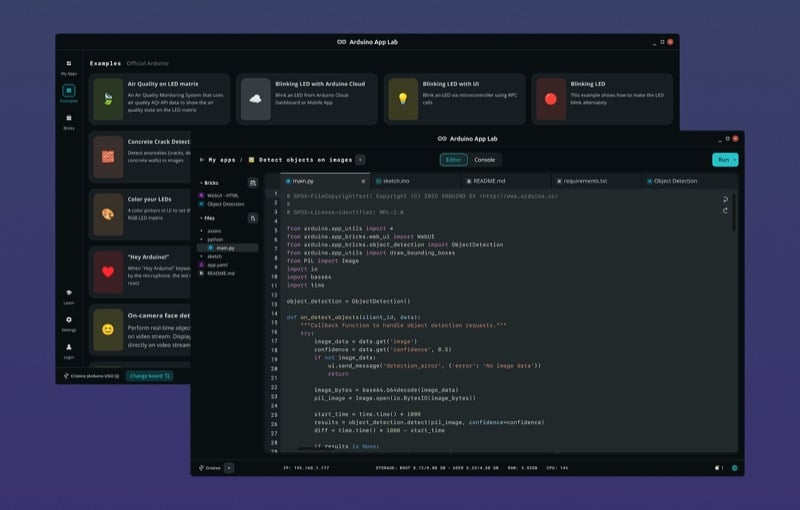
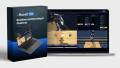
Arduino App Lab 5.0 programming environment for UNO Q boards. Image used courtesy of Arduino
Arduino App Lab
The Ventuno Q will fully support the latest addition to the Arduino software library, the Arduino App Lab. By using this development studio with your Ventuno Q, you will have access to pre-built LLMs, VLMs, automatic speech recognition, text-to-speech, and gesture estimation libraries. All of these AI models will be available offline, so there is no need to have your device connected to the internet. For applications where you want to teach and build your own AI models, Arduino App Lab is fully integrated with Edge Impulse Studio, enabling you to create and use custom AI models with the Ventuno Q.
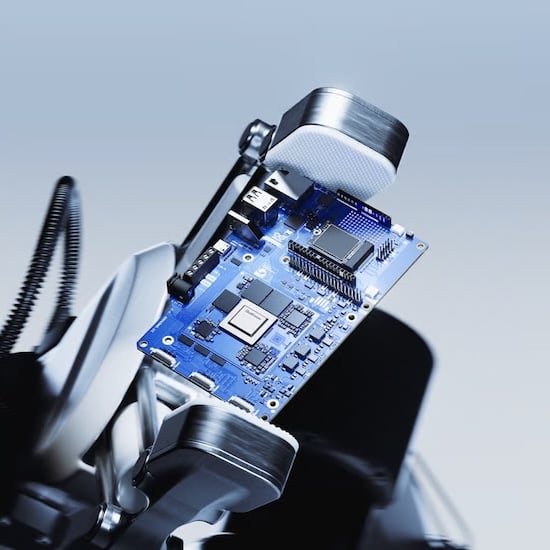
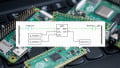
The Ventuno PC and microcontroller, showcasing its size. Image used courtesy of Arduino
Arduino Leaps Into AI
Until the release of the Ventuno, Arduino products were simple single-board microcontrollers that used C++ to communicate with devices, drive outputs, and read sensor values. These controllers are powerful enough to control robotic applications yet simple enough that virtually anybody could program them with minimal programming knowledge. With the release of Ventuno Q, Arduino joins the many companies that have invested in the popularity of AI solutions. The Ventuno is designed for AI applications such as vision systems and robotics, and can even serve as a controller for interactive kiosks, with enough computing power to support offline AI tools that can be used to build a true offline AI solution.