Facebook
 Google
 GitHub
 Linkedin
C‑Motive Presents Electrostatic Motor Innovation at PACK EXPO
C‑Motive demonstrated the capabilities of electrostatic motors at PACK EXPO in Las Vegas. The technology offers high torque, low heat, low noise, and magnet-free efficiency for packaging motion.
Motor technology underpins much of what the packaging industry demands: reliable torque, energy efficiency, low maintenance, and minimal footprint. As packaging lines are pushed toward higher throughput, gentler handling, and more sustainable operations, the motors that drive conveyors, fillers, sealers, fans, and pumps must perform under steady load, often at low speeds, while avoiding excessive heat, noise, or downtime. At PACK EXPO Las Vegas, C‑Motive is preparing to highlight how its electrostatic motor technology is positioned to meet those evolving requirements.
Electrostatic Motor Applications
Electrostatic motors are relatively new on the industrial market compared to more established motor technologies (like induction motors). Some previous demonstrations of this technology illustrated how these motors operate with very low heat generation, high torque at low speeds, and have no need for gearboxes or active cooling. They also reduce reliance on heavy, expensive materials like copper, electrical steel, and permanent magnets from typical motors.
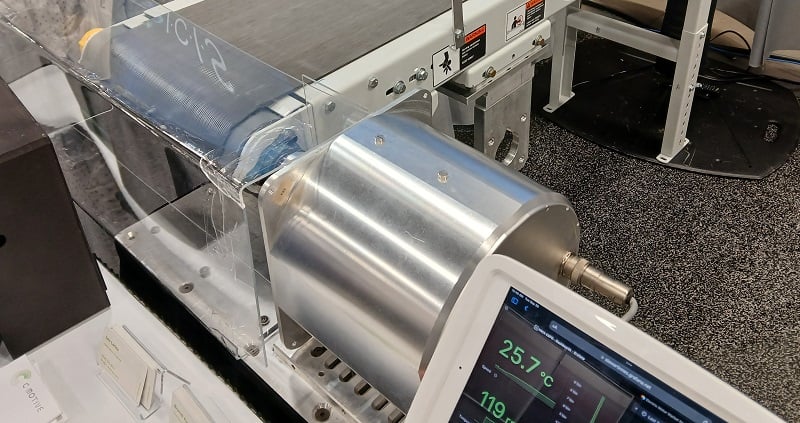
C-Motive motor attached to a conveyor application.
C-Motive at PACK EXPO
At PACK EXPO, C‑Motive’s booth built upon many early demonstrations using electrostatic motors aimed specifically at several packaging industry applications: direct‑drive conveyor motor modules, low‑speed fans or blowers for drying or cooling, and pumping applications where fluid needs to be moved slowly but with consistent torque.
C-Motive’s demos are built on the motor platform that ranges from 1-2 HP, sized for direct motor replacement in conveyors, with energy‑use comparisons, thermal imaging of heat output, and side‑by‑side comparisons with conventional electromagnetic motors under similar load and operating conditions. The motor drive is another necessary part of the operation, required for developing the proper voltage control and ensuring safety.
The Technology of Electrostatic Motors
It may aid many engineers to read a more technical deep-dive into the operating principle of these electrostatic motors.
C‑Motive’s motors contain rotor and stator plates constructed out of printed circuit boards (PCBs) with three-phase voltage traces on the plates. A dielectric liquid fills the inside of the motor, acting as an electrical insulator and a medium to enable higher voltage and force transmission than air gaps would allow.
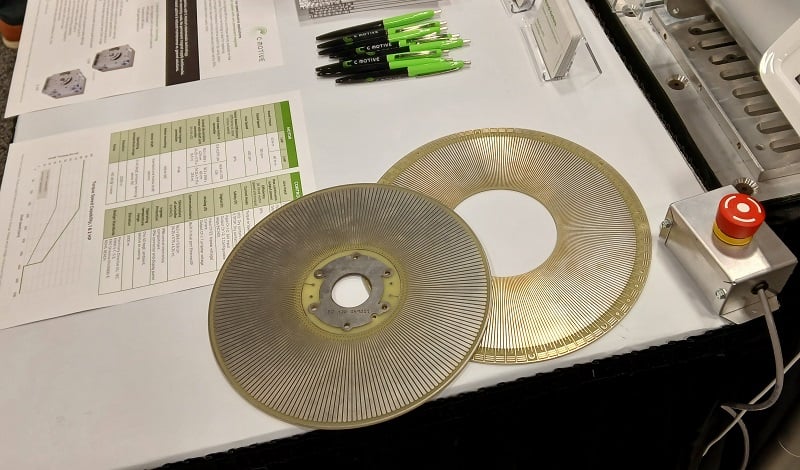
Stator and rotor plates for these motors.
There are no copper coil windings as in conventional motors, no steel laminations, no permanent magnets, and no need for active cooling. Because of these reductions, electrostatic motors are able to reach over 90% efficiency in many low‑speed, high‑torque applications.
The motors also offer very little noise, virtually no torque ripple, and low losses when holding position.
Electrostatic Motors in the Future of Industry
C‑Motive’s presentation of electrostatic motors at PACK EXPO is a promising testament to new technology advancements throughout the industry. Although motor technology has, for generations, enjoyed a few incremental improvements, the introduction of entirely new concepts can be a breath of fresh air for many applications. For packaging operations, that means motors that run with higher efficiency, less noise, higher reliability, and with fewer moving parts.