Facebook
 Google
 GitHub
 Linkedin
Banner Engineering Introduces “Flat Pack” Photoelectric Sensor
The Q2F Flat Pack photoelectric sensor features an ultra-thin 4 mm housing designed for installation in low-profile machinery and constrained spaces.
Banner Engineering’s newest photoelectric sensor has slimmed down. The Q2F Flat Pack sensor is designed to fit in tight spaces, such as near rails, fixtures, and brackets where other sensors will not work. Whether used as a proximity sensor, an edge detector, or for another similar application, the Q2F can work in a variety of environments, detecting only what needs to be detected.
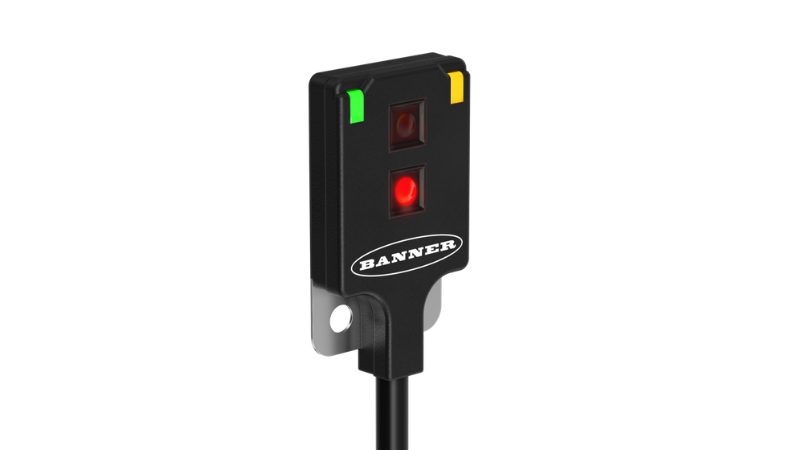
Banner’s Q2F Flat Pack photoelectric sensor features an ultra-compact design for space-constrained setups. Image courtesy of Banner Engineering
Q2F Flat Pack Photoelectric Sensor
The slim packaging of the Q2F photoelectric sensor is an obvious advantage. The small footprint allows it to slide into spaces where other sensors will not fit, making it possible to collect more data on existing automation systems.
However, simply making a slimmer sensor package is not enough to ensure reliable sensor performance. One of the key features of the Q2F is its sharp cutoff distances. The sensor can be ordered with 10 mm, 15 mm, 30 mm, and 45 mm cutoff distances, where objects beyond this are totally ignored.
Other sensors may be forced to fit in a small physical space, but without this cutoff distance, they will often produce false positives from objects that are much farther away. It is the classic “cannot see the forest for the trees” problem in reverse: the sensor sees the forest a long way away and treats it as individual trees, when really the user cares about the trees right in front of them.
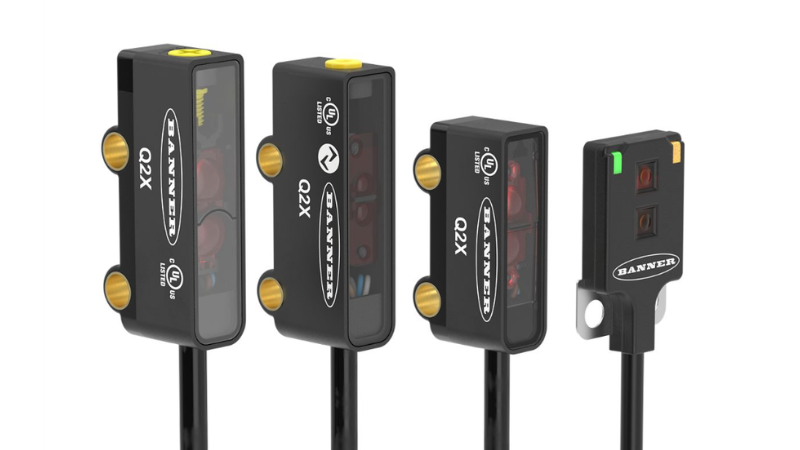
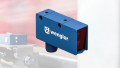
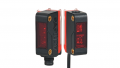
The Q2F (far right) is the newest addition in Banner’s Q2 miniature photoelectric sensor lineup. Image courtesy of Banner Engineering
Speedy and Reliable Sensing
Banner is well known for its reliable photoelectric signal detection, and the Q2F is no exception. The new sensor features single-side transmission, meaning there is no need for complicated systems with separate transmitters and receivers or reflectors. It can detect in a variety of lighting conditions, including under fluorescent lights, which can fool many sensors.
Reflective coatings, difficult-to-detect colors, and other such challenges are not a problem for the Q2F either. Additionally, the sensors can be used in tandem, making them scalable, without worrying about crosstalk. Sensors respond in 850 μs, making them lightning quick as well.
Outside of the standoff distance, physical size, and detection capabilities, the Q2F has multiple mounting options, including M8 and M12, as well as M2 and M3, with the mounting bracket included with the sensor. There are multiple wiring options, and the sensor is rated to IP65, so it is designed to work in industrial environments.
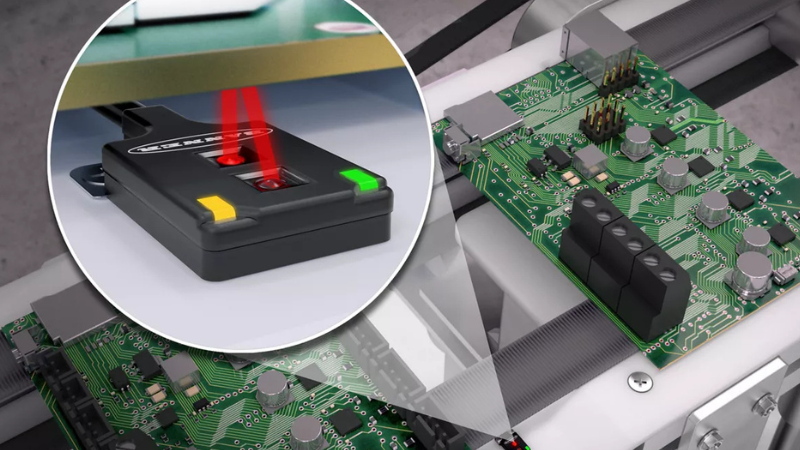
The Q2F is compact enough to mount 10 mm below PCBs on an automated optical inspection machine. Image courtesy of Banner Engineering
A Compact and Cost-Efficient Design
The Q2F’s small footprint and sharp cutoff distance make it ideal for retrofitting existing automation hardware. For example, adding a proximity sensor for detecting bins along a conveyor line may prove challenging with a standard-sized sensor. The line was already designed, and sticking a bulky sensor in place may not be feasible. The smaller Q2F, with all of its mounting options, is an attractive alternative to redesigning the entire physical system to gather a few diagnostic metrics.
At a starting price of under 120 USD, the Q2F sensors are an inexpensive upgrade that can reduce process variability. Quick, reliable detection in a small form factor is something that most industries can appreciate.