Facebook
 Google
 GitHub
 Linkedin
Festo Launches Stepper Motor Series for Multi-Protocol DC Servo Drives
Festo has added a new stepper motor series to its light-duty servo motion solutions. The series rounds out the company's one-stop shop that enables customers to tailor purchases to their application needs.
German-born automation company Festo has released a new stepper motor for its CMMT-ST multi-protocol DC servo drive. The latest release adds to Festo's one-stop shop for light-duty servo motion solutions, which includes compact multi-protocol drives and actuators.
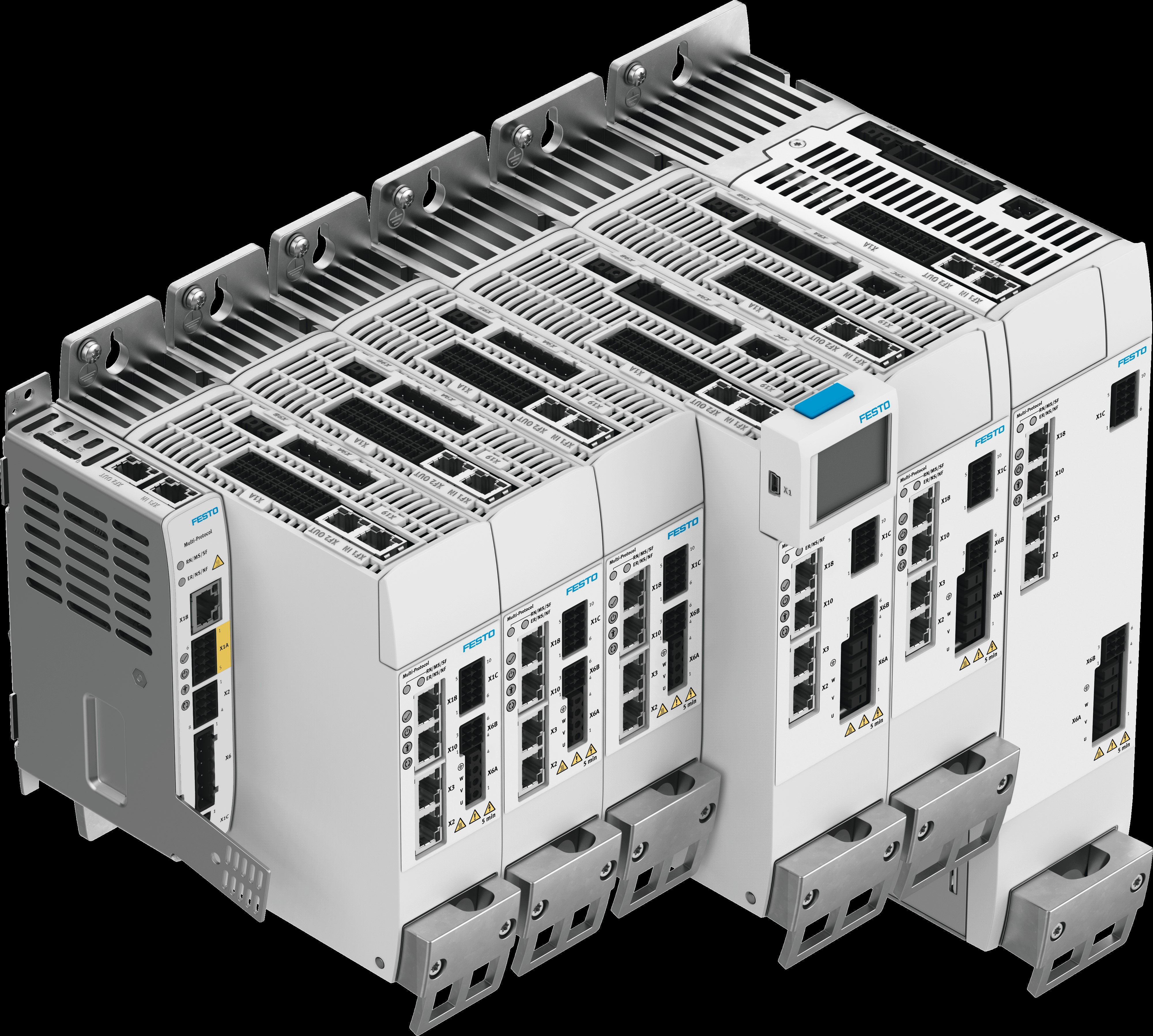
A size comparison of the CMMT-ST DC servo motor drive (left) and the CMMT-AS AC servo drive (right). Image used courtesy of Festo
Servo-Motion Solutions
Festo’s one-stop shop features the company’s CMMT-ST multi-protocol DC servo drives, diverse actuators, an Automation Suite configuration tool, technical support, global product availability, and now, the new EMMT-ST stepper motor series. Festo expects the latest addition to benefit a wide range of industries, including electronics, medical, and packaging.
Multi-Protocol DC Servo Drives
Festo has made sure users have several options to control its CMMT-ST DC servo drives, ensuring a broad range of possibilities for drive communication. The drives are configurable for EtherNet/IP, EtherCAT, PROFINET, and Modbus TCP. In order to select the desired protocol, manufacturers can use the included software’s drop-down menu, which shows the different options, and then pick their desired protocol for fast results.
The ability to select multiple protocols for a single drive helps manufacturers reduce spare parts inventories since a single type of drive can be used for many different applications. The CMMT-ST and AC version, the CMMT-AS, boast a top-tier price/performance ratio in the industry and are available to be shipped worldwide.
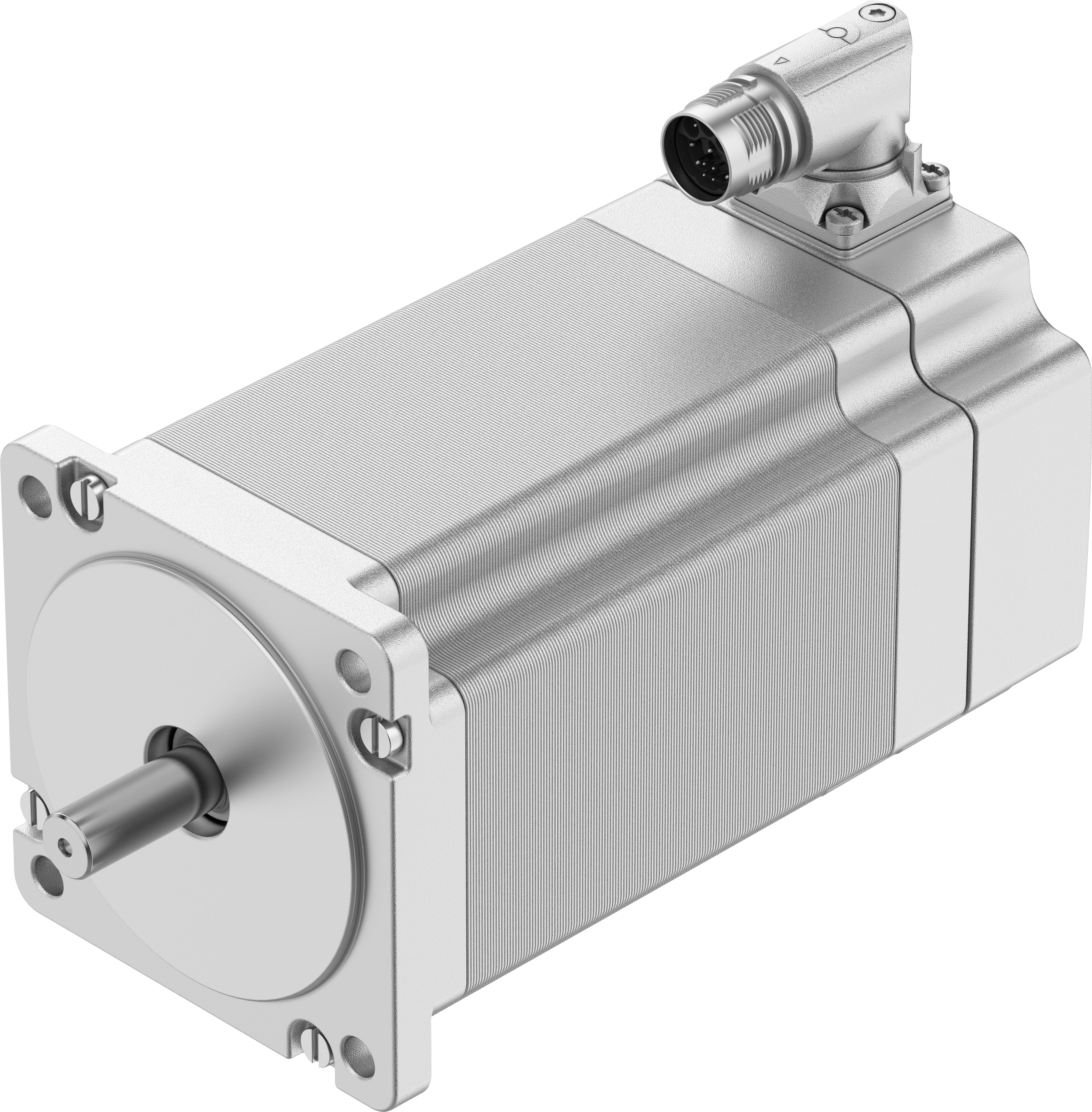
The EMMT-ST stepper motor includes a swivel connector, enabling 310 degrees of cable rotation for ease of installation. Image used courtesy of Festo
New Stepper Motor Series
The EMMT-ST is Festo’s latest series of stepper motors. The stepper motors incorporate absolute encoders (single-turn and multi-turn), IP65 protection, holding brakes, and single-cable control. The included encoders are battery-free, which helps keep the equipment simple and reduces maintenance down the line by eliminating the need for battery replacement schedules. Since the included encoders are absolute, rehoming routines can be eliminated, helping save start-up time.
Festo has designed its motors to include flexible mounting options and robust construction, providing users with various installation possibilities. The motor’s IP65 rating ensures it can be safely used in harsh industrial environments, and an optional holding brake enables the motor to be used in vertical mounting scenarios. Additionally, a swivel cable connector provides 310-degree freedom around the motor's single cable for even greater installation flexibility.
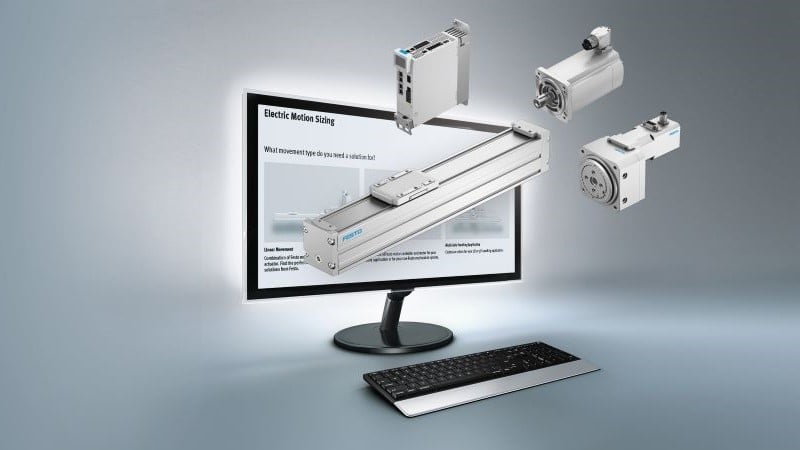
Festo’s Electron Motion Sizing design and simulation tool can be used to find the right combination of equipment for servo motion needs. Image used courtesy of Festo
Festo Electric Motion Sizing
With Festo's Electric Motion Sizing design and simulation tool, users can input application parameters to find the ideal combination of servo drive, motor, and actuator tailored to their budget. After the combination has received the go-ahead, users can then order all components and accessories as a complete bill of materials generated by the software. Since CAD files are provided immediately, engineering can progress while Festo prepares the parts for streamlined group shipping and installation. This helps to reduce wasted time in the design process of automated equipment.