Facebook
 Google
 GitHub
 Linkedin
Mean Well Releases PLC With Open-Source OpenPLC Architecture
The modular PLC-DPLC-32MT/ET series offers expandable I/O capability up to 256 I/O points. The PLCs are programmed with the OpenPLC Editor, supporting the five IEC-61131 programming languages.
Mean Well, a power supply manufacturer headquartered in Taiwan, recently released a fully expandable PLC for small to medium-sized automation projects. The new PLC features expandable I/O to suit a variety of applications and is programmed using OpenPLC Editor, an open-source programming software that complies with the international standard IEC61131-3.
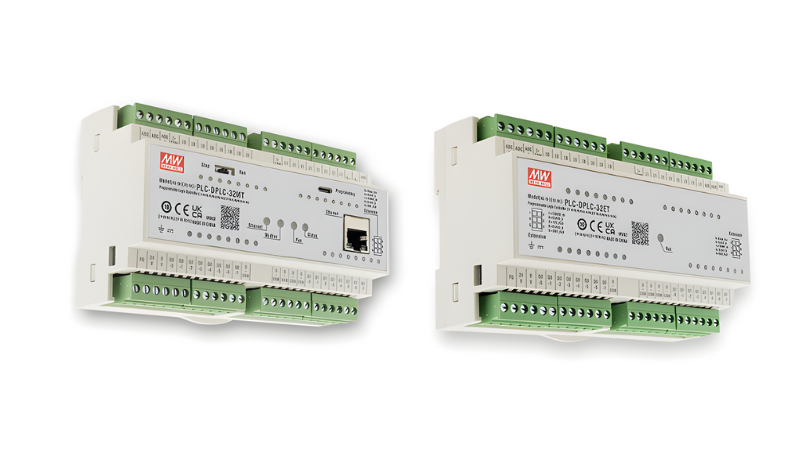
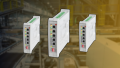
Mean Well’s new PLC series, the PLC-DPLC-32MT (left) and the PLC-DPLC-32ET (right). Image used courtesy of Mean Well
Mean Well’s PLC-DPLC Series
Mean Well’s new PLC-DPLC-32MT/ET series comes with both embedded and expandable modules. With the PLC, users get 16 digital inputs, including four high-speed inputs, two analog voltage inputs, and 16 digital outputs, four of which are high-speed outputs. The rated input current is 2.1 mA, and the rated output current is 0.5 A per channel.
Each expansion module connects an additional 16 inputs and 16 outputs to the main PLC. A total of seven expansion modules can be connected to the main PLC for a total of 256 inputs and outputs.
For communicating with field I/O and servo motion control, the PLC supports the Modbus communication protocol. The PLC is powered with standard 24 VDC and consumes 15 W of power.
PLC Memory
The memory offered in a PLC is often a fraction of the size of PC memory. This is because in a PLC, you are generally dealing with bits and bytes of memory at a time, not applications that use up gigabytes of memory. The DPLC series comes standard with 512 KB, which is more than adequate for simple input and output control, but will become overrun if handling large data tracking or data storage within the PLC.
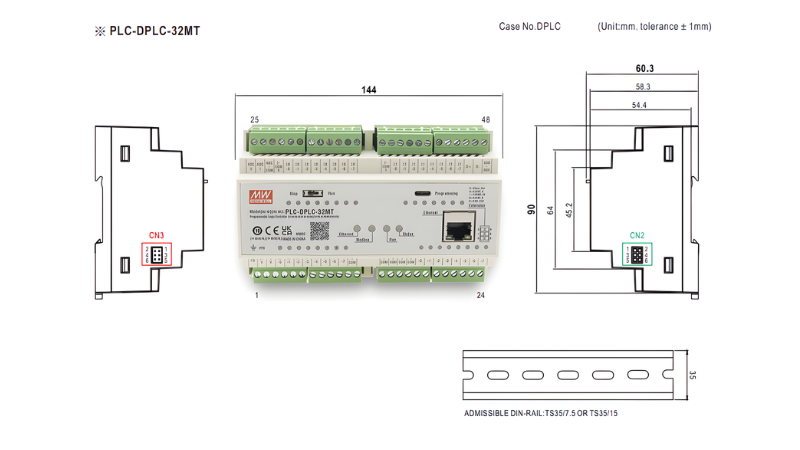
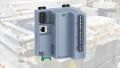
Mean Well’s PLC-DPLC series is designed for easy installation via DIN Rail mounting. Image used courtesy of Mean Well
Open-Source PLC Software
Many PLC manufacturers use proprietary programming software that often requires users to purchase a license. Mean Well PLCs, on the other hand, use the open-source programming software OpenPLC, which is now called Autonomy, a cloud-based approach to PLC programming. The desktop version is still available for download. Mean Well does not specify if the cloud version will work with its new series.
OpenPLC can run on Windows, macOS, Linux, and Linux ARM operating systems. Users can download the software for free and can integrate with many different PLCs, not just Mean Well PLCs. Once downloaded and installed, you can use any of the five supported IEC programming languages to build control programs and interface with other hardware. Similar to paid software, you can create custom data types and structures, use an included library of standard function blocks, and even simulate your offline developed code.
Control Systems Other Than the Big Three
In the automation world, Rockwell, Siemens, and Mitsubishi Electric tend to be the big three PLC manufacturers, but there are other options that will work just as well in most applications. There might be a little bit of a learning curve when it comes to how the IDE works and where tools are laid out, but at the end of the day, you will be able to build programs that read inputs and set outputs just like any other PLC.