Facebook
 Google
 GitHub
 Linkedin
Robots Ahoy! Hyundai and NEURA Automate Shipbuilding
A new collaboration between NEURA and Hyundai brings AI-powered humanoid and four-legged robots to challenging shipbuilding environments.
NEURA Robotics, a German cognitive robotics company, has partnered with the South Korean-based major shipbuilding companies HD Hyundai Samho and HD Hyundai Robotics to create and test robots designed for shipbuilding environments. Unveiled at Automatica 2025 in Munich, this collaboration seeks to implement advanced cognitive robots in physically demanding and labor-intensive industries. Hyundai's shipbuilding and automation expertise, combined with NEURA's AI-powered robotic systems, aims to enhance productivity, safety, and efficiency in large-scale industrial construction.
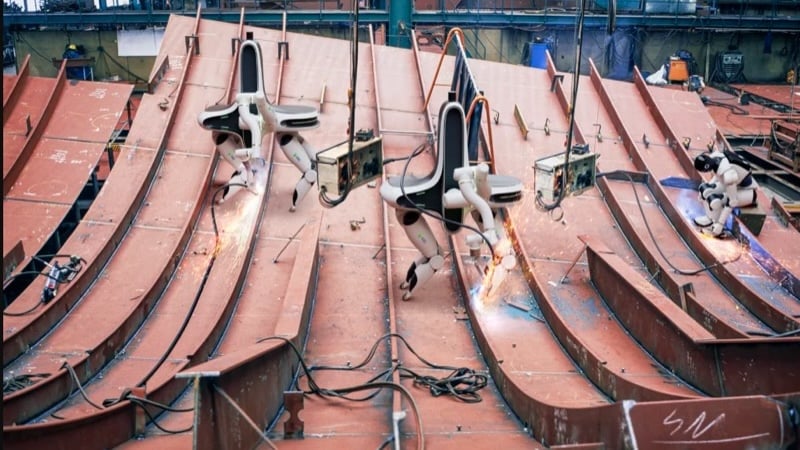
Welding operations at a shipyard performed by both humanoid and quadruped robots. Image used courtesy of NEURA Robotics
Testing Humanoids and Quadrupeds in Challenging Environments
In this partnership, NEURA Robotics will bring its cognitive robotic platform, which includes the 4NE1 humanoid robot. The shipyard testing environment will be provided by HD Hyundai Samho, leveraging their extensive experience in shipbuilding. Meanwhile, HD Hyundai Robotics will support development by offering technical resources, systems to validate performance, and data sets for path-learning.
The new partnership aims to test humanoid and quadruped robots in uneven, dynamic, and challenging shipyard environments. One of the key areas to be evaluated by these tests is the mobility of robots through confined spaces and ship hulls. Other tested aspects include how the robot can safely interact with human workers while performing precision tasks such as welding, logistics, and inspection.
Humanoid robots, such as NEURA's 4NE1 platform, can, for instance, leverage their cognitive multimodal AI capabilities and human-like form factor to perform complex tasks, including lifting, walking, and onsite collaboration. On the other hand, Quadrupeds benefit from their four-legged mobility to navigate the uneven surfaces common in shipyards.
Addressing Labor Gaps and Safety Risks
Like many other industries, shipbuilding industries are facing a decline in skilled labor and persistent safety risks in manual operations. Tasks like grinding, welding, and inspection pose a notable challenge due to exposure to heat and other hazardous conditions. This partnership allows high-risk tasks to be allocated to cognitive robots, enabling resilient and safer shipyard operations.
Leadership Statement and Long-Term Impact
David Reger, founder and CEO of NEURA Robotics, emphasized that this partnership showcases the potential of cognitive robots operating in challenging industrial settings. He believes collaboration with Hyundai will open up new possibilities in intelligent automation.
HD Hyundai Samho's Executive Director, Sanghun Ryu, highlighted the practical benefits of the collaboration, stating that they aim to create a safer and efficient shipyard environment by developing specialized welding robots tailored to meet the industry's unique quality demands.
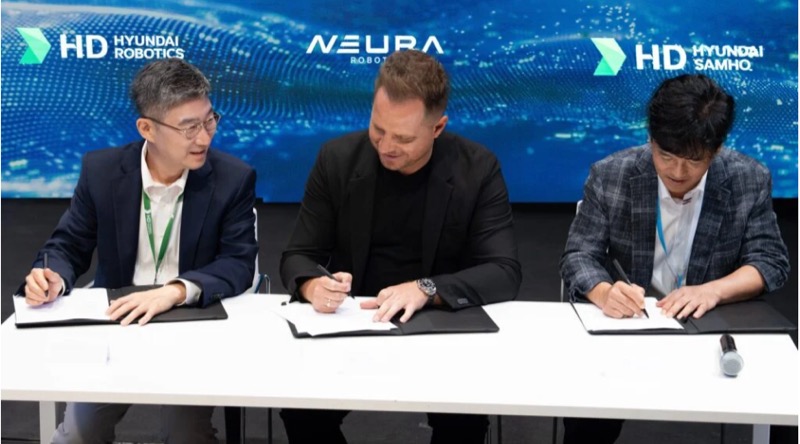
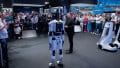
During Automatica 2025 in Munich, leaders from NEURA and Hyundai Robotics finalized their strategic agreement. Image used courtesy of NEURA Robotics
Younghoon Sang, Executive Director at HD Hyundai Robotics, noted that the partnership promotes innovation and highlights their position as a leader in robotics-based automation solutions for shipyards. Younghoon mentioned that they aim to support the sustained success of the shipbuilding industry.
Setting Sail for the Future of Cognitive Robots
As manufacturers increasingly adopt adaptable and AI-driven automation, this collaboration marks a significant milestone in manufacturing, where robots are no longer confined to clean and repetitive environments. With testing underway, NEURA and Hyundai are setting new standards for using cognitive robots in one of the most challenging industrial settings. By validating quadrupeds and humanoids in shipbuilding, this partnership may pave the way for addressing challenges in labor-intensive industries and provide safer, smarter, and more resilient manufacturing operations.