Facebook
 Google
 GitHub
 Linkedin
Yokogawa Releases OpreX Batch MES for Improved Chemical Processing
The new OpreX Batch MES software package is designed to reduce errors and headaches in small-batch manufacturing of fine chemicals like fragrances and semiconductor photoresists.
Yokogawa has released OpreX Batch MES, a new software package that aims to improve the quality of small-batch chemical processing. The OpreX Batch MES is part of Yokogawa's Oprex Asset Operations and Optimizations suite. Yokogawa's operations software is applicable in a variety of chemical processing industries, though it specifically targets small-batch processing in high-mix, low-volume applications.
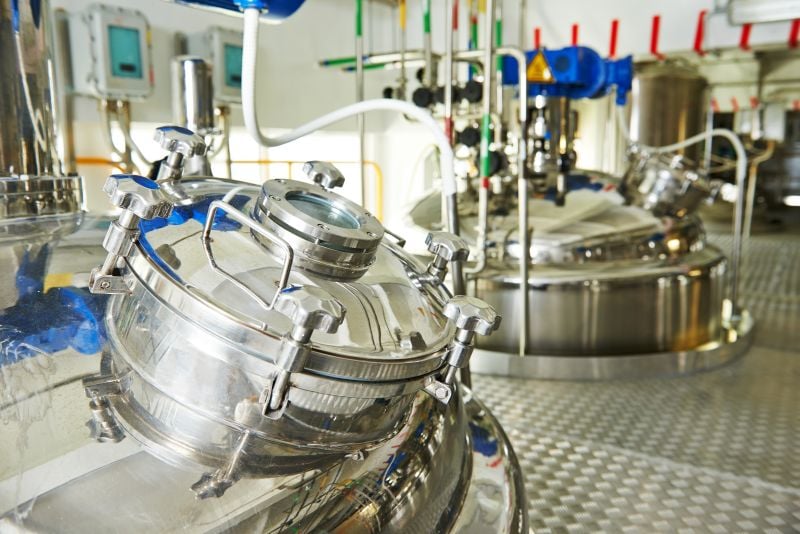
OpreX Batch MES is designed for batch manufacturers specializing in fine chemicals. Image used courtesy of Adobe Stock
Chemical Batch Processing
Plenty of industrial and manufacturing processes benefit from economies of scale. Steel, for example, would be cost-prohibitive to make in small batches and is only affordable and widely used due to its cost savings during scale-up. Not all products benefit from the economy of scale to this degree.
Some precision chemicals cannot have large variations across different lots, and others are more forgiving of such variations. Pharmaceuticals, semiconductor chemicals (such as photoresists), dyes, fragrances, and other such substances are extremely sensitive to variations and are also purchased in small quantities.
One of the challenges in chemical processing is ensuring that components are well-mixed across the batch. Chemicals separate due to charge build-up, density differences, hygroscopic properties, and other such mechanisms. In continuous or large batch processing, some of the unmixed product is discarded or reworked. For specialty chemicals, this represents a large financial loss. Proper mixing is vital to the success of small-batch chemical processing.
OpreX Batch MES
Yokogawa’s OpreX Batch MES software package provides a low-code approach to standardizing batch processing. In this approach, recipes and standard operating procedures (SOPs) are quickly and easily modified to meet the specific needs of different batches of chemicals. OpreX offers two key advantages: flexible management and the ability to link and characterize knowledge.
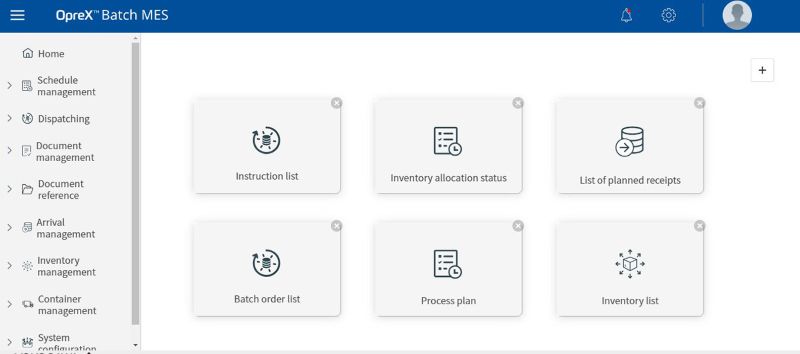
The main operating screen of Yokogawa’s OpreX Batch MES. Image used courtesy of Yokogawa
In terms of flexible management, OpreX Batch MES can simplify the modification of recipes. Rather than requiring highly trained programmers to make changes to process equipment, a lightly trained technician can make the necessary adjustments to a recipe for a new product line. This allows the manufacturer to quickly deliver small batches to the customer.
In batch processing, it is common for knowledge to exist in silos, where only certain people know the necessary steps and quirks required for producing the chemical. OpreX Batch MES helps break down the silos of information, creating templates for SOPs and chemical recipes that are accessible to all necessary technicians and engineers. This way, small batches of specialty chemicals can be processed regardless of who is out on sick leave or vacation. Besides this, updates to the knowledge pool can be in the form of text, photos, video, and audio, making it easier to make quick updates accessible to a wide range of audiences.
Improved Batch Manufacturing
Semiconductor photoresist is made in small batches and is highly dependent on consistent mixing. Typical photoresist chemistry begins to degrade when exposed to oxygen, so semiconductor manufacturers opt for small batches with numerous batch changes in their lithography processing. This minimizes the effects of degradation over time. Chemical manufacturers who develop photoresist will be able to have more consistent batches, with less waste by using the OpreX Batch MES to help manage their mixing and batching processes.