Facebook
 Google
 GitHub
 Linkedin
Industry Insights: The Challenges of Automating Data Centers
Data centers have been a focus of industrial automation in recent days. Control.com spoke with experts at Weidmuller to learn more about how control technology can solve data center challenges.
Data centers have recently become a major talking point in computer technology, power industries, and control system development. Many of the challenges that face data center automation are unique compared to general industrial automation, but what are those challenges, and how are they solved?
To help me learn more, I turned to the experts at Weidmuller, a company with a strong legacy in control system tooling and technology. I spoke with Pete Tecos, the Director of Data Centers and Energy at Weidmuller and posed some questions about the key drivers, challenges, technologies, and the future outlook of data center automation, gaining insights from Weidmuller’s vast knowledge of the skills required for success in data center automation.
Figure 1. Control.com’s Director of Engineering Content and Pete Tecos, Director of Data Centers and Energy at Weidmuller.
Control: What Are the Recent Major Factors Accelerating Data Center Automation?
Weidmuller: Several converging trends have accelerated the adoption of automation in data centers:
AI Workloads: Generative and agentic AI require massive compute power and real-time responsiveness, pushing data centers to evolve beyond traditional architectures, capacities, and capabilities. Automation will be the backbone of this evolution.
Cloud & Edge Expansion: Hybrid and multi-cloud architectures, along with edge computing, demand automated orchestration across distributed environments.
Smart Devices & IoT: Billions of connected devices generate real-time data, requiring automated systems for ingestion, processing, and storage.
Energy & Sustainability Pressures: Automation helps optimize cooling, power distribution, and energy usage, all critical as energy demand surges.
Control: What Data Center Challenges Are Solved by Automation Technology?
Weidmuller: Automation addresses several persistent challenges. The challenges might not be completely unique to data centers at a high level, but they are
- Automation enables controlled responses to operational mechanisms within operational parameters (normal operation) and when critical infrastructure failures happen (massive power outages/water intrusions/environmental hazards).
- Automation can tie together many disparate multi-vendor systems together to realize a data center solution. For instance: The HVAC system now can talk to the fire suppression system to ensure ventilation isolation in the event of a fire.
Where does automation play a role in solving these challenges?
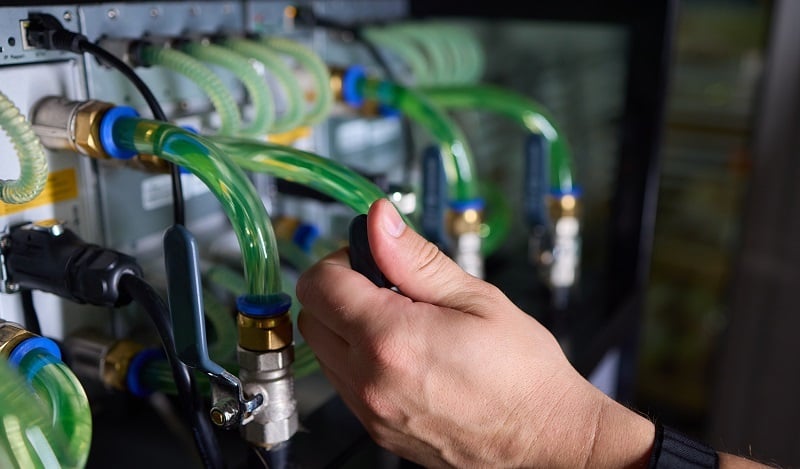
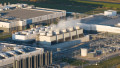
Figure 2. Modern data center automation is the integration of computer equipment with power and infrastructure reliability, like cooling systems. Image used courtesy of Adobe Stock
Reduced Headcount
By leveraging automation, organizations gain proactive alerts on performance issues and anomalies—areas where manual monitoring often falls short. Remote access and monitoring allow teams to address onsite issues without the need for specific onsite personnel.
Cost Savings
Automation can remove the need for manual processes in upkeep, maintenance, and monitoring of critical subsystems that data centers require in order to continue reliably operating without failure. Automation systems can accelerate response times to critical infrastructure failures by detecting, notifying, and in some instances, restoring operations. It can also provide redundancy in order to automatically compensate for systems that are down in order to minimize unplanned downtime and maximize uptime.
Data is also a critical component of automation, increasing and improving planning ability by utilizing the collected operational data to target key metrics in decision-making, such as optimizing efficiency in power consumption, HVAC usage, surveillance, and operations.
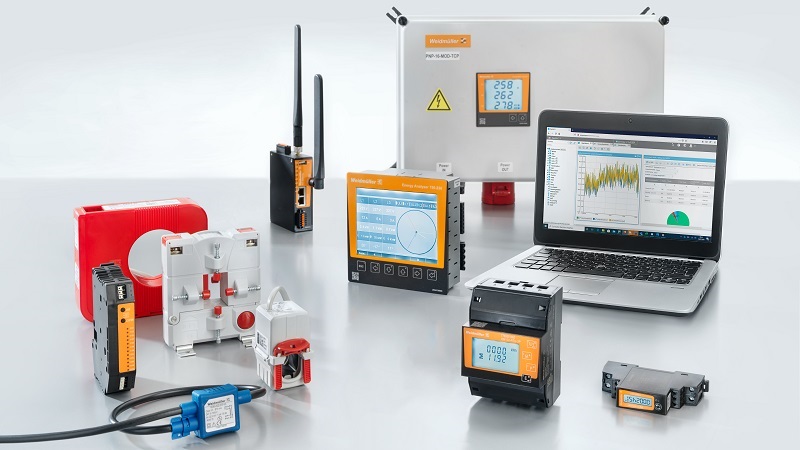
Figure 3. IIoT solutions help with energy management software and simple data acquisition, pre-processing to generate added value. Image used courtesy of Weidmuller
Replication and Scalability
With data centers often being composed of duplicate computing blocks, automation is well-suited to scale up and tie these extensible systems together for seamless monitoring.
There are a few areas of automation that solve some specific data center challenges.
Manual Configuration & Provisioning: Infrastructure-as-Code (IaC) automates server setup, reducing errors and deployment time.
Fragmented Toolsets: Unified orchestration platforms replace siloed scheduling tools, improving workload management.
Power & Cooling Constraints: AI-driven systems optimize energy usage and cooling dynamically.
Security & Compliance: Automated patching, monitoring, and policy enforcement reduce vulnerabilities.
Skills Gaps: Automation reduces reliance on manual labor and enables remote management, helping mitigate staffing shortages.
Control: How Does Control Technology (Like Weidmuller’s) Factor Into Automation Solutions?
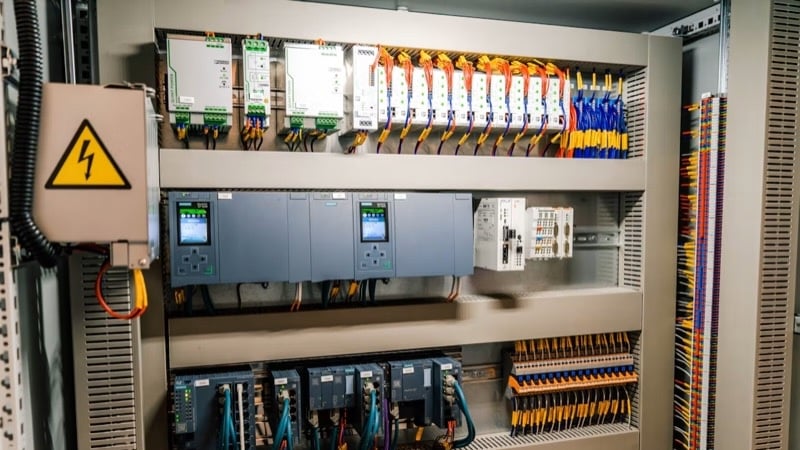
Weidmuller: PACs (programmable automation controllers) play a significant role in modern data center automation because they bridge the gap between industrial control technology and IT infrastructure management. Additionally, Industrial PCs (IPCs) and automation platforms play a key role in enabling edge intelligence and control:
- Unlike traditional PLCs, PACs have higher processing power and can run complex algorithms locally. In a data center, PACS like Weidmuller’s M3000 and M4000 can process data from thousands of sensors at the edge, reducing latency by making decisions without sending everything to the cloud, and enabling predictive maintenance by analyzing trends in power usage or cooling efficiency.
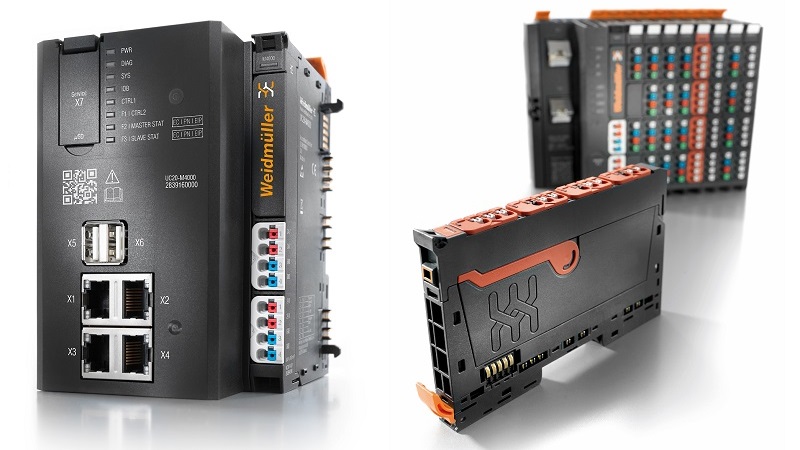
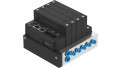
Figure 4. Weidmuller PAC and remote I/O options. Image used courtesy of Weidmuller
- Open, independent, flexible platforms, like Weidmuller’s Linux-based uOS, bridge the gap between traditional control systems and IoT. They allow for running both conventional automation code, like CODESYS, alongside modern containerized applications on the same device, providing a versatile platform for edge computing and data processing. This enables capabilities such as cloud-based remote maintenance, integration of 3rd party software, and efficient data handling directly at the machine level.
- Edge processing also uses IPCs, like the u-view series, to support real-time data acquisition and control at the edge.
- IoT integration, namely protocols like MQTT, OPC UA, and Modbus, enables seamless cloud connectivity.
- Passive cooling and reliability with fanless design and SSD architecture reduce maintenance and improve uptime.
- Security routers offer secure communications to keep data center core operating systems patched and up-to-date, protected against malicious actors.
- Power supplies that feature internal diodes enable seamless interconnection for redundancy and reliability without extra components.
- UPS (uninterruptible power supply) systems keep critical 24V supplies operational, providing bumpless power.
- Cloud connectivity tools like PROCON-Connect enable secure communication with platforms like Azure IoT Hub.
Strategically, Weidmuller’s modular automation solutions help hyperscalers and colocation providers accelerate speed to market.
Control: What Does the Future Hold for Data Center Automation?
Weidmuller: The future of data center automation is growth-oriented:
Market Growth: Projected to grow from $11.4B in 2024 to over $50B by 2034.
AI-Driven Expansion: AI workloads will comprise nearly 30% of data center demand by 2027 and could consume as much as 70% of global data center capacity by 2030
Tech Evolution: Automation tech will continue evolving with AI-based orchestration and predictive maintenance.
No Plateau in Sight: Hyperscale investments and edge deployments are accelerating, not slowing.
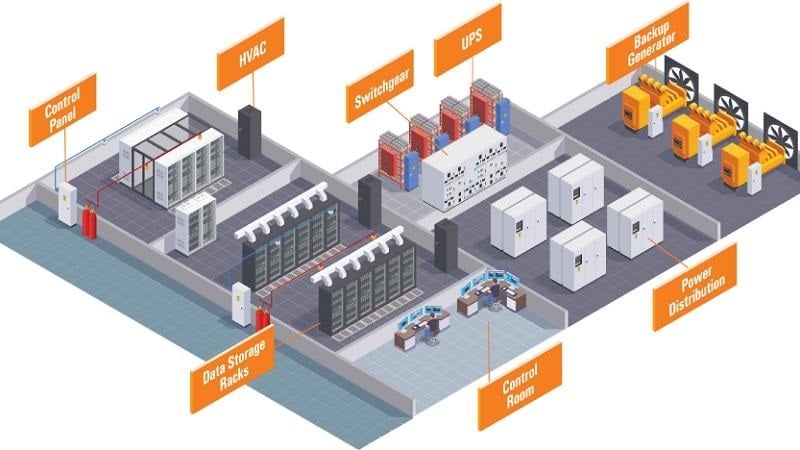
Figure 5. Data centers combine elements of typical control systems with power reliability necessary for operation. Image used courtesy of Weidmuller
Control: What Skills Are Demanded by Data Center Automation Operations?
Weidmuller: There is certainly a good deal of overlap with traditional manufacturing automation, but also some divergence.
The shared skill set can include:
- PLC programming and control system knowledge
- Networking and industrial protocols (e.g., Modbus, PROFINET)
- Electrical and mechanical systems knowledge
- Change management practices/processes
- Soft Skills: Problem-solving, adaptability, collaboration
Skills uniquely demanded by data center automation:
- Infrastructure-as-Code (Terraform, Ansible)
- Cloud & Hybrid Ops (AWS, Azure, Kubernetes)
- AI & ML Ops and GPU infrastructure
- Cybersecurity & Compliance frameworks
- Broad interdisciplinary knowledge of onsite power generation, fire suppression, control room/clean room-like operational practices, HVAC, and security.
Data Center Automation of the Future
The technology used in data center automation is rapidly expanding, thanks to increasing adoption of cloud and AI technology, and it’s important to always keep an eye on growing industries.
Once again, my sincerest thanks for the insight from Pete Tecos at Weidmuller, and I look forward to learning more about some of the unique ways in which industrial automation is solving problems in key industries.