Facebook
 Google
 GitHub
 Linkedin
Datalogic Extends Safety Laser Scanner Coverage With New SLS10
The SLS10 safety laser scanner features a 10-meter safety range, 275° coverage, fast response times, and advanced configuration tools to protect larger industrial workspaces with fewer devices.
Safety scanners usually come with a tradeoff. The farther they need to see, the more difficult it becomes to maintain fast response, accurate detection, and practical installation costs. Large machines and long production lines often end up needing several scanners just to cover the full risk area. Datasensing, Datalogic’s Sensor & Safety and Machine Vision business unit, is targeting that problem with the SLS10 safety laser scanner.
The SLS10’s 10 m safety range, combined with a 275° scanning angle and 70 mm detection capability, means a single unit can provide up to 240 m² of safety coverage. Instead of building a safety layout around multiple scanners, manufacturers can use the SLS10 to cover larger zones with fewer devices.
Datasensing’s SLS10 safety laser helps manufacturers protect larger industrial areas with fewer devices. Video courtesy of Datasensing
Larger Safety Zones With Fewer Devices
The SLS10 safety laser scanner targets work areas where operators and machines work side by side. This includes robotic cells, palletizers, conveyors, laser cutting machines, woodworking machinery, and larger automated production systems.
In these environments, scanner placement can quickly become complicated. A wider and longer detection area gives system integrators more room to work with. It can also reduce hardware cost, wiring, setup time, and future maintenance.
The SLS10 is not limited to one detection profile either. Along with the 10 m safety range for 70 mm detection, the SLS10 also supports 5 m at 30 mm, 5.5 m at 40 mm, 7.5 m at 50 mm, and 8.75 m at 60 mm. That range of detection options helps users match the scanner to different safety needs rather than forcing every installation into one fixed configuration.
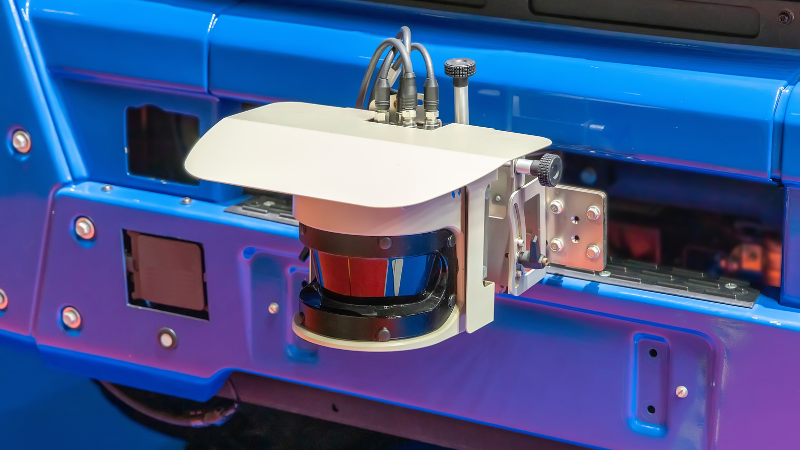
Safety laser scanners mounted on mobile equipment help AGVs, AMRs, and automated forklifts detect surrounding areas for safer navigation in industrial environments. Image courtesy of Adobe Stock
More Than Personnel Protection
The SLS10 is also being positioned for navigation support in mobile automation. Datasensing highlights an angular resolution of up to 0.059°, which affects how finely the scanner can separate measurement points. Better angular resolution can help automated vehicles build a more accurate view of their surroundings.
That makes the scanner useful beyond fixed machine guarding. High-payload AGVs, AMRs, and automated forklifts all depend on reliable environmental awareness, especially in facilities where people, machinery, and vehicles share space.
Faster Response and Smaller Machine Footprints
Response time is another major part of the SLS10 announcement. Datasensing lists an 84 ms response time, which it describes as best in class for safety distances above 9 m. This matters because slower response often forces scanners to be mounted farther away from hazardous areas to maintain compliance. A faster response can allow the scanner to be installed closer to the hazard while still meeting safety requirements.
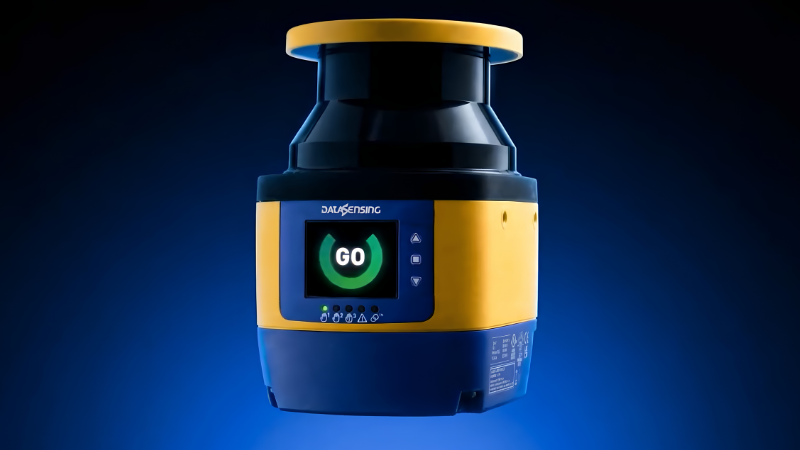
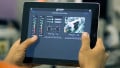
The updated DL Sentinel user interface simplifies safety zone configuration and management for complex SLS10 installations. Image courtesy of Datasensing
Easier Setup Through Updated Software
Datasensing is also updating the configuration side with a redesigned DL Sentinel user interface through its ONEGUI platform. The goal is to make safety zones easier to configure and manage. Users can monitor Master and Remote devices at the same time, which should help when setting up larger or more complex installations.
The SLS10 also includes OptimaTune technology, which automatically selects a balance between safety distance, response time, and environmental conditions. That helps reduce the amount of manual tuning needed during commissioning.
Selected models also support positional zone set switching by encoder. This patent-pending feature allows automatic zone changes without adding separate sensors, which can simplify applications where the protected area changes based on machine or vehicle position.
Built for Industrial Reliability
The SLS10 complies with both SIL-2 and PLd safety standards, putting it in the category needed for industrial safety applications where reliability cannot be treated as an option.
Datasensing also points to dust immunity as a practical advantage. Speaking from experience, false triggering is not just annoying in a factory—it can stop production, interrupt workflows, and create unnecessary troubleshooting. A scanner that is less sensitive to dust-related disturbances can help keep systems running.
The broader point is that the SLS10 is not only about seeing farther. It is about covering more area with fewer devices while keeping response time, configuration, and reliability under control. For manufacturers trying to protect larger automated systems without adding more complexity, this combination is what makes the SLS10 useful.