Facebook
 Google
 GitHub
 Linkedin
Gefran’s HWJ and HMJ Transmitters Tackle Extreme Polymer Heat
New HWJ and HMJ transmitters from Gefran bring HART connectivity and SIL-rated safety to high-temperature polymer melt pressure applications.
Operating close to molten polymers leaves little margin for error, especially where temperatures soar and hazardous-area requirements apply. Gefran’s new HWJ and HMJ melt pressure transmitters are built for these demanding environments, combining high-temperature capability with functional safety approvals and HART communication. By adding digital diagnostics on top of standard 4-20 mA signaling, the transmitters aim to improve pressure visibility, simplify maintenance, and reduce risk in polymer processing lines.
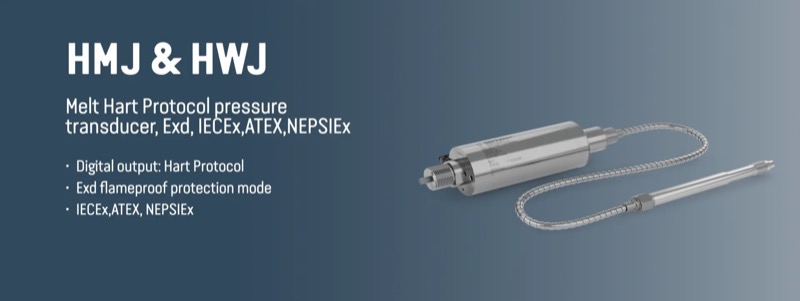
HWJ and HMJ bring clearer melt pressure data to high-temperature polymer lines. Image used courtesy of Gefran
Gefran designed the new Melt HWJ and HMJ pressure transmitters to solve these challenges. Both the HMJ and HWJ transmitters have been developed for high-temperature polymer processes and add HART communication to systems that usually use only analog signals. The goal is straightforward: keep the wiring and routines that plants already know, but make the pressure signal clearer and more helpful when issues arise.
Hazardous Areas Come to Life in Industrial Environments
In many polymer facilities, flammable gases or combustible dusts are part of normal operation, so the sensor has to be comfortable living in that environment. Gefran's new HWJ and HMJ transmitters have been designed with protection options that cover flameproof, intrinsically safe, and dust-tight approaches under ATEX, IECEx, and NEPSI. These sensors also carry SIL2 and PL-D approvals for functional safety work, which means integrators and maintenance personnel can now avoid the “one transmitter for control, another for safety” system that can show up in larger lines.
Same Old 4-20 mA with a Hidden Second Channel
The HWJ and HMJ transmitters will still use a standard 4-20 mA current loop with a HART digital overlay. This will help maintain compatibility with existing control systems and add a secondary channel for detailed device data, allowing users to access diagnostics, adjust configuration settings, and monitor the sensor’s health in real time. With this dual-layer communication, system data can improve troubleshooting by helping users identify the causes of unstable or drifting pressure readings by distinguishing between process fluctuations, wiring or grounding issues, and sensor degradation. As a result, users can resolve problems more quickly and adopt a proactive maintenance strategy, thereby reducing the risk of performance decline.
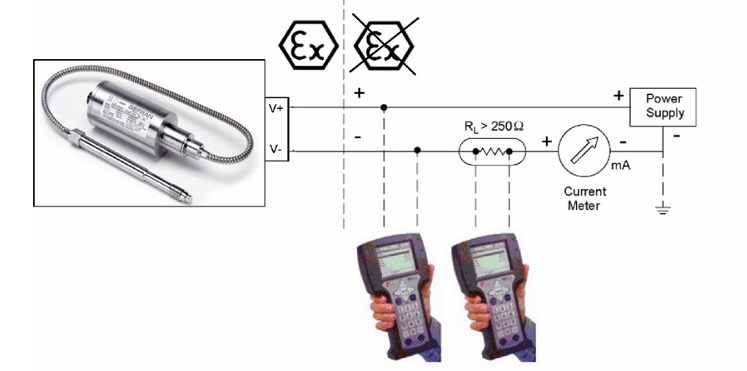
HART communication gives the system a digital diagnostic layer. Image used courtesy of Gefran
How They Keep Their Cool when the Process Won’t
Both Gefran’s HWJ and HMJ use hydraulic pressure transmission and strain-gauge measurement techniques to ensure sensitive components are insulated from extreme temperatures while delivering reliable pressure readings. The pressure is transmitted through the filling system, with the strain-gauge element performing the requisite electrical conversion. This also emphasizes stability during prolonged operational periods, as in the context of polymer production, gradual drift constitutes a particularly challenging failure type. In other words, as operations may appear to function normally until product quality begins to decline or the production line starts to exhibit unanticipated behavior, thereby facilitating the mitigation of these issues.
Temperature Limits, Ranges
Now, the two families aren’t identical, with the HWJ series rated for melt temperatures up to 315 °C. In contrast, the HMJ series extends the diaphragm temperature rating up to 400 °C, which opens the door for hotter processes or situations where you want extra thermal margin. Pressure ranges can also reach 1000 bar (about 15,000 psi) and have an accuracy of ±0.25% of full scale under certain configurations, with a typical 3:1 rangeability.

Thermoforming often drives melt temperatures into the 300 °C-plus range, leaving little room for instrumentation operating on the edge. Image used courtesy of Adobe Stock
Gefran also offers mechanical configurations to suit various installation constraints, including rigid and flexible rod designs and exposed-tip and flanged variants. Certain models will also allow pressure and temperature to be measured at the same location, reducing the need for separate sensors. Process-wetted components use stainless-steel diaphragms with protective coatings designed to handle abrasive fillers and chemically aggressive polymers.
In environments characterized by elevated melt temperatures, stringent hazardous area requirements, and the necessity for continuous operation, there is a low tolerance for compromise in pressure instrumentation to maintain the safety of their systems. The HWJ and HMJ transmitters will offer high-temperature resilience, hazardous-area certifications, and functional-safety approvals, combined with standard analog signaling and HART communication, to ensure companies can obtain accurate pressure measurements from their systems.